
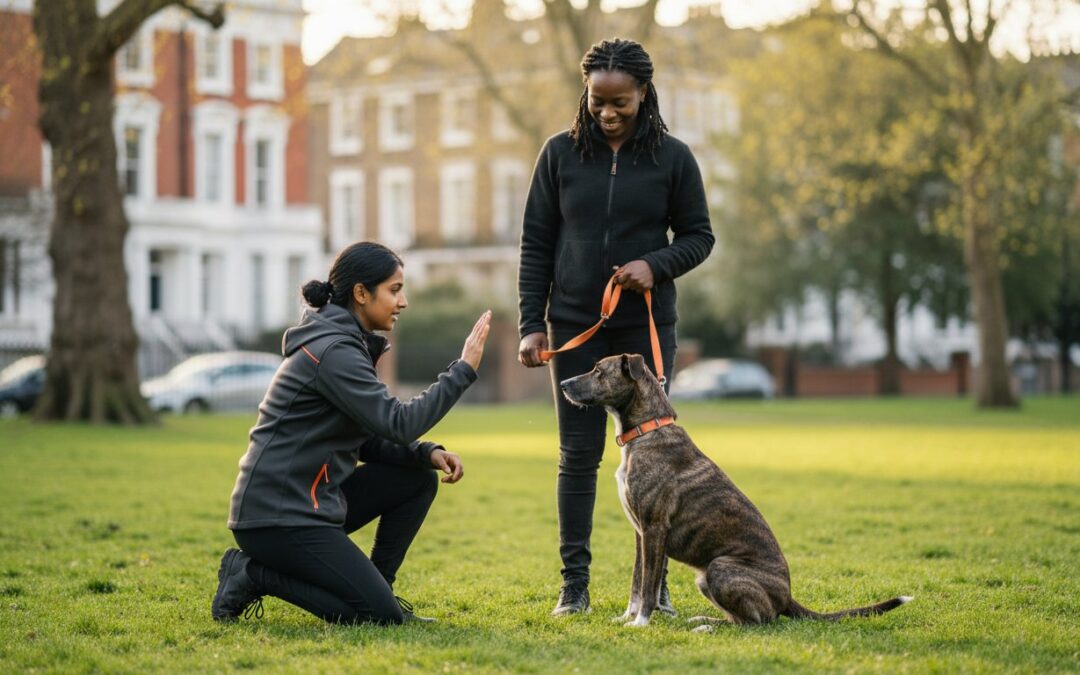
Last Tuesday, Sarah found herself hiding behind a lime tree in Highgate Wood, heart racing as she tried to distract her lunging dog from a group of joggers. For the 44% of UK owners who report their dogs show signs of fear, this sense of public embarrassment is a heavy, daily burden. You likely feel that same pressure to have a “perfect” pet in a city that never stops. When your dog struggles with the intensity of London life, it’s easy to feel isolated or confused by conflicting advice. Seeking professional dog behaviour training is the first step toward reclaiming your peace of mind and supporting your dog’s emotional health.
We’re here to show you that even the most complex canine issues have manageable, ethical solutions. You’ll learn how to resolve reactivity and flat-based anxiety using force-free methods that prioritise your dog’s perspective. This guide explores the vital distinction between basic obedience and true behaviour modification, offering you a tailored path to a calmer urban life. By focusing on connection rather than correction, you’ll develop the tools to navigate any London park with confidence and build a bond based on genuine trust.
Key Takeaways
- Understand why professional dog behaviour training prioritises emotional modification over simple cues to address the root causes of fear and anxiety.
- Identify the unique urban stressors affecting London dogs and learn how to better support your companion’s decompression needs within the city.
- Recognise why bespoke, one-to-one support is often more effective than group classes for resolving complex behavioural challenges within your home environment.
- Learn how to vet potential specialists using an ethical 5-point checklist, focusing on ABTC accreditation and specific experience with urban cases.
- Discover the H&H Dog approach to expert advocacy, providing a clear, science-based path from initial assessment to a lasting, tailored action plan.
Understanding Dog Behaviour Training: Why It’s More Than Just Obedience
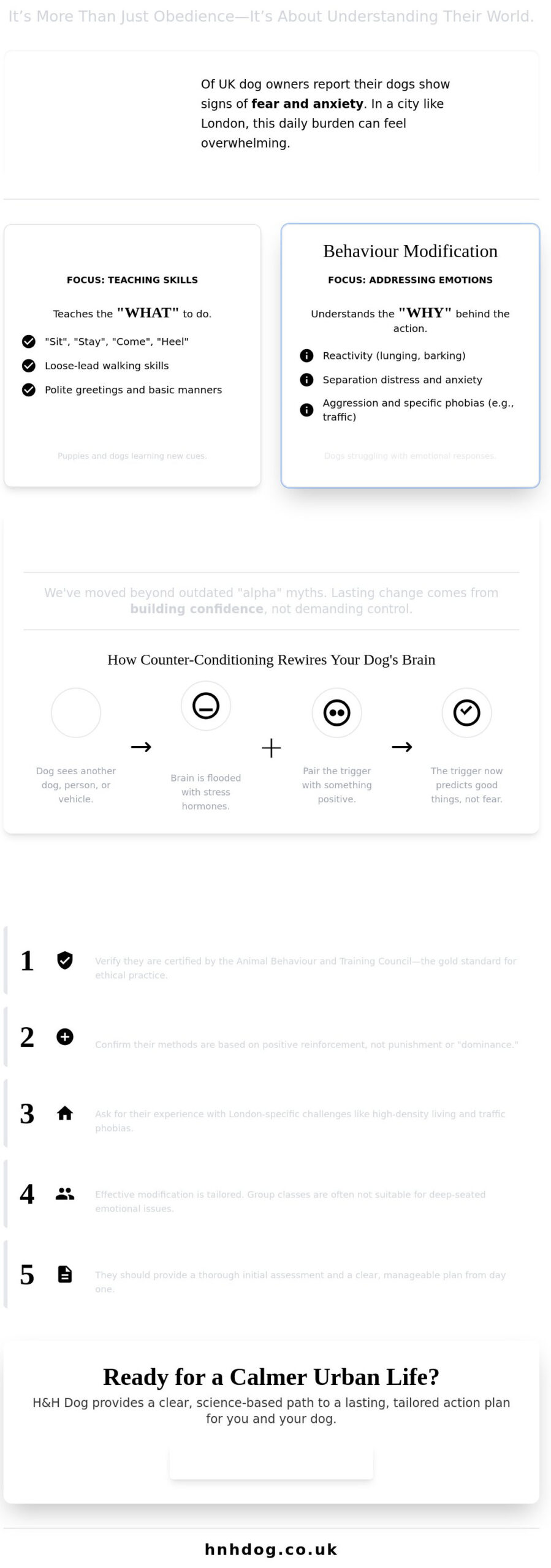
Living with a dog who struggles with reactivity or anxiety feels overwhelming for many owners in North London. You might feel you’ve failed at basic training because your dog won’t “listen” during your morning walk. However, effective dog behaviour training isn’t about control; it’s about understanding the emotional drivers behind the actions. While Dog training often focuses on teaching specific tasks like “heel” or “down,” behaviour modification looks much deeper. We ask why the dog is barking, rather than just how to stop the noise.
By addressing the root cause, whether it’s fear, frustration, or deep-seated anxiety, we create lasting change. As your Expert Advocate, I help you see the world through your dog’s eyes. This role is about more than just giving instructions; it’s about acting as a steady hand to guide you through complex canine psychology. This partnership builds a foundation of trust that a simple command never could. We focus on the dog’s internal state, ensuring they feel safe before we ask them to perform. It’s a tailored journey that prioritises your dog’s welfare alongside your peace of mind.
The Science of Force-Free Behaviour Modification
Modern canine psychology has moved past the “alpha” myths of the 1970s. We now know that dominance theories are not only outdated but can actively harm the bond you share with your companion. Instead, we use positive reinforcement to build confidence and resilience. When a dog is in a high-stress environment, their brain is flooded with cortisol. This physiological response makes it impossible for them to process complex cues or “obey” in the traditional sense. We focus on shifting that internal state first to make learning possible.
Counter-conditioning is the process of changing a dog’s emotional response to a trigger. By pairing a previously scary stimulus with something your dog finds rewarding, we rewire the brain’s automatic fear response. This scientific approach ensures your dog isn’t just suppressed, but genuinely happy and relaxed in formerly stressful situations.
When to Call a Behaviourist vs. a Dog Trainer
The distinction is simple: you hire a trainer for skills, but you consult a behaviourist for emotions. If you want your dog to walk nicely on a lead or come when called, a trainer is your first port of call. If your dog lunges at other dogs because they’re terrified, you need a behaviourist. Common signs that require professional intervention include:
- Displaying aggression towards people or other animals.
- Specific phobias, such as fear of traffic or loud noises.
- Severe separation distress that prevents them from settling alone.
We advocate for a holistic approach to canine welfare. This often starts with puppy training as a vital preventative measure. Early socialisation and positive experiences help prevent these complex issues from developing, ensuring your urban dog feels safe and confident in a busy city environment. Addressing small concerns early is always more effective than fixing established patterns later.
Common Behavioural Challenges for London Dogs: Navigating the Urban Jungle
Living in North London presents a unique set of sensory challenges for our canine companions. High-density housing and the constant backdrop of sirens create a baseline of stress that rarely dips to zero. On narrow pavements, your dog is forced into close proximity with strangers and other pets, often exceeding their natural threshold for comfort. This relentless London pace leads to over-stimulation, where a dog’s nervous system remains on high alert. Without adequate decompression time in quiet green spaces, which are at a premium in the city, minor irritations quickly escalate into significant reactivity.
Managing a reactive dog in North West London parks can feel like an isolating battle. Whether you’re navigating the busy paths of Primrose Hill or the crowded trails of Hampstead Heath, the pressure to have a perfectly behaved dog is immense. We understand this struggle. It’s not a failure of your commitment; it’s a result of an environment that demands much from a species designed for wider horizons. Effective dog behaviour training acknowledges these urban pressures rather than ignoring them, focusing on the dog’s internal emotional state to create lasting change.
Leash Reactivity on Busy London Streets
Narrow pavements are a primary catalyst for reactivity. When space is restricted, dogs can’t use natural flight responses, leading to trigger stacking where multiple small stressors build up until a bark or lunge occurs. Your own anxiety often travels down the lead. Increased lead tension signals to your dog that a threat is present, creating a feedback loop of stress. Professional dog training North London focuses on building focus and engagement, helping your dog choose you over the distractions of the city. To ensure you’re using the most ethical methods for your pet, review this position statement on How to Choose a Trainer to find a professional who prioritises modern welfare standards.
Separation Anxiety in Apartment Living
London flats bring specific pressures, particularly the fear of noise complaints from neighbours. This often forces owners to rush the process of leaving their dogs alone, which can worsen the issue. It’s vital to distinguish between a dog who is simply bored and one experiencing genuine separation distress. Creating a safe zone with calming scents and enrichment toys can help when square footage is limited. If you’re feeling overwhelmed by your dog’s distress, our tailored behavioural support offers a clear, actionable path toward a calmer home life for both of you.
One-to-One Consultations vs. Group Classes: Choosing the Right Path
Many owners initially look toward group classes when they encounter challenges, assuming that more exposure to other dogs is the solution. However, for a dog struggling with reactivity, fear, or high arousal, a busy training hall can be counter-productive. These environments often trigger a “flooding” response, where the dog becomes so overwhelmed by stimuli that their ability to learn actually shuts down. Effective dog behaviour training requires a foundation of safety and calm, which is rarely found in a room full of barking strangers.
In a private consultation, the environment is entirely controlled. We begin in your home, where your dog feels most secure, before moving to your actual walking routes in North London. This real-world practice is vital. It allows us to address specific triggers, such as a particular narrow alleyway or a busy park entrance, rather than practicing in an artificial setting that doesn’t mirror your daily life.
The most significant shift in a 1-to-1 session is that you, the owner, become the primary student. We focus on refining your observation skills so you can identify subtle shifts in your dog’s body language 0.5 seconds before a reaction occurs. Our approach is grounded in modern science and follows the ethical standards established by the UK Dog Behaviour & Training Charter. This ensures every technique we use prioritises your dog’s emotional health and avoids outdated, forceful methods.
The Benefits of a Bespoke 1-to-1 Approach
- Zero Judgement: Owners of “difficult” dogs often carry a heavy burden of stress. Private sessions provide a safe space to learn without the pressure of an audience.
- Individual Pacing: We move only as fast as your dog’s nervous system allows. If your dog needs 15 minutes to settle before we even step outside, we respect that timeline.
- Expert Oversight: You have the undivided attention of a professional with 20+ years of experience, ensuring every nuance of your dog’s behaviour is noted and addressed.
Integrating Socialisation Through Group Walking
While 1-to-1 sessions build the foundation, we recognise the importance of gradual social exposure. This is where professional dog walking can act as a powerful secondary tool. Unlike “forced” socialisation in a park, professional walking focuses on parallel movement. This technique allows dogs to exist in the same space without the pressure of direct eye contact or physical interaction.
We use these controlled walks to reinforce the dog behaviour training protocols established in our consultations. By walking with a stable, professional walker, your dog learns that the presence of others doesn’t have to lead to conflict. It’s about building a quiet confidence, one step at a time, until the world feels like a much smaller, more manageable place for your companion.
How to Evaluate a Dog Behaviourist in London: A 5-Point Checklist
Selecting a professional for dog behaviour training is a significant decision that impacts your dog’s long-term emotional health. The UK dog training market remains unregulated, which means anyone can claim expertise without formal oversight. To protect your dog’s welfare and your own peace of mind, you must look for specific markers of quality and ethics. This ensures your dog receives support rooted in modern science rather than outdated, harmful myths.
- Verify ABTC Accreditation: Look for practitioners registered with the Animal Behaviour and Training Council (ABTC). This body sets the standard for over 30 professional organisations, ensuring members have met rigorous educational and ethical benchmarks.
- Urban-Specific Experience: London presents unique stressors like heavy traffic, sirens, and high-density housing. Ask potential behaviourists about their success rates with dogs living in flats or those struggling with the 8.9 million residents sharing our pavements.
- A Balanced Communication Style: The right professional acts as an Expert Advocate. They should clearly explain the “why” behind your dog’s actions, helping you see the world through your dog’s eyes while providing practical support for your human lifestyle.
- Force-Free Commitment: Ensure they explicitly use positive reinforcement and science-based methods. Your dog’s trust is fragile; it shouldn’t be compromised by techniques that rely on fear or physical discomfort.
- Local Testimonials: Seek feedback from owners in your specific neighbourhood. Success stories from Crouch End, Highgate, or Islington prove the behaviourist understands the local environment and its specific challenges.
Red Flags to Avoid in Dog Training
Avoid any professional who promises a “guaranteed fix” or “quick results” for complex behavioural issues. True emotional change takes time and patience. Steer clear of anyone suggesting prong collars, slip leads, or e-collars; these tools rely on pain to suppress symptoms. If a trainer focuses solely on “stopping” a bark without investigating the underlying fear or frustration, they’re merely masking the problem. This often leads to more significant behavioural fallout later on.
The Importance of Local Expertise
A North London specialist understands the specific pressures of our local green spaces. Managing a dog on the busy pavements of Upper Street is a different skill set than walking in a quiet rural field. They’ll understand the social dynamics of Hampstead Heath or the specific triggers found in Camden’s narrow streets. This local knowledge allows them to set realistic, bespoke homework that fits your London schedule. It ensures your training plan is practical and achievable within your daily routine.
If you’re ready to start a tailored journey based on science and empathy, book a consultation with our North London team today.
Bespoke Behavioural Support with H&H Dog: Our London Philosophy
For over 20 years, H&H Dog has served as a dedicated advocate for canine welfare across London and Hertfordshire. We don’t believe in quick fixes or outdated, confrontational methods. Instead, our approach to dog behaviour training focuses on understanding the internal emotional state of your pet. This legacy of expertise means we’ve seen almost every challenge imaginable, from urban reactivity to complex separation anxiety, and we’ve developed the calm confidence needed to guide you through them.
Our consultation process begins with a deep-dive assessment. We look at your dog’s history, environment, and specific triggers to build a tailored action plan. This isn’t a one-size-fits-all checklist. It’s a bespoke roadmap designed to foster mutual respect and clear communication between you and your companion. We help you decode your dog’s body language so you can respond with patience rather than frustration.
A Holistic Approach to Canine Welfare
Emotional health doesn’t exist in a vacuum. It’s influenced by every interaction your dog has, including grooming and daily exercise. Our mobile grooming vans are designed to eliminate the sensory overload of traditional high-street salons, effectively preventing grooming phobias before they start. By removing the stress of travel and the noise of other barking dogs, we ensure that physical maintenance remains a positive experience.
We focus on the synergy between mental enrichment, physical exercise, and structured behaviour modification. A dog who is mentally satisfied and physically comfortable is far more receptive to learning new ways of interacting with the world. Our philosophy rests on providing individual care tailored to the unique temperament of every London dog.
Starting Your Journey Toward a Calmer Life
Your first behavioural consultation is the beginning of a professional mentorship. You’ll receive a clear, functional explanation of the “why” behind your dog’s actions, helping you feel more in control of the situation. We don’t judge the struggles you’re facing. We provide the steady hand and ethical, science-based solutions you need to move forward with confidence.
H&H Dog offers more than a single session; we provide a long-term partnership for London families. We ensure you have support as your dog’s needs evolve, helping you maintain the progress you’ve worked hard to achieve. This commitment to ongoing connection is what transforms a stressful household into a calm, harmonious home. If you’re ready to see the world through your dog’s eyes and build a better life together, the next step is simple.
Ready to transform your relationship? Book a professional dog behaviour consultation in London.
Build a Stronger Bond in the City
Navigating life in the capital requires more than just a set of basic commands. It demands a deep understanding of how your dog perceives the busy London environment. Successful dog behaviour training isn’t about suppression; it’s about building a partnership based on trust and clear communication. By identifying the emotional triggers behind your dog’s actions, you can replace urban stress with calm confidence. Every dog deserves to feel safe and understood in their own home.
At H&H Dog, we’ve spent over 20 years providing professional support across London and Hertfordshire. Our force-free, science-based methods prioritise your dog’s welfare above all else. We offer a holistic approach to care that extends beyond training sessions, including mobile grooming and structured group walking to support your dog’s total well-being. This tailored support ensures that every solution respects your dog’s unique personality and your specific lifestyle. You don’t have to face these challenges alone. With the right mentorship, a harmonious life with your canine companion is well within reach.
Book your bespoke London dog behaviour consultation today
Frequently Asked Questions
What is the difference between a dog trainer and a dog behaviourist?
A dog trainer typically focuses on teaching specific skills or cues like sitting, staying, or walking on a lead. A dog behaviourist looks at the emotional reasons behind a dog’s actions, such as fear, anxiety, or frustration. Behaviourists often hold advanced certifications from bodies like the ABTC and work on complex psychological issues. We focus on why your dog feels a certain way, rather than just how they act.
How much does dog behaviour training cost in London?
Professional dog behaviour training in London typically costs between £150 and £450 for an initial comprehensive consultation. These rates reflect the high level of expertise and the detailed follow up support provided by qualified practitioners in the capital. While prices vary by practitioner, investing in specialist support early can prevent more costly issues later. We provide bespoke plans tailored to your dog’s specific needs and your home environment.
Can aggressive behaviour in dogs be fixed with training?
Aggressive behaviour can be effectively managed and modified using modern, force free techniques. We don’t fix dogs like machines; instead, we help them feel safer and more secure in their environment. By understanding your dog’s body language and triggers, we can replace defensive reactions with calmer choices. Success depends on consistency and patience, focusing on the human-canine bond to build mutual trust and safety.
How many sessions will my dog need to see an improvement?
Most owners see a noticeable improvement in their dog’s emotional state within 3 to 5 structured sessions. Every dog is a unique individual, so the timeline for progress depends on the complexity of the issue and how much time you can dedicate to practice. We offer a clear roadmap so you can track your progress. Our goal is to empower you with the skills to support your dog independently.
Do I need a referral from my vet to see a behaviourist?
Yes, a veterinary referral is a standard requirement for professional behavioural work in the UK. Research indicates that up to 80 percent of behavioural issues are linked to undiagnosed pain or medical conditions. This step ensures we aren’t asking your dog to learn while they’re physically uncomfortable. It creates a collaborative support network involving you, your vet, and your behaviourist to ensure your dog’s total wellbeing.
Is my dog too old for behaviour training?
Your dog is never too old to learn new ways of interacting with the world. While older dogs may have more established habits, their brains remain capable of learning through positive reinforcement and enrichment. We adapt our techniques to suit your senior dog’s physical abilities and energy levels. It’s often deeply rewarding to see an older dog regain their confidence and curiosity through a tailored support plan.
What should I bring to a one-to-one behaviour session?
Please bring a standard 2 metre lead, a comfortable harness, and a generous supply of high value treats like cooked chicken or cheese. Avoid using extendable leads or aversive equipment like slip leads during our time together. It’s also helpful to have your dog’s favourite toy and a familiar mat or bed where they feel relaxed. These simple tools help us create a positive, low stress environment for your first session.
How do I manage my dog’s reactivity while waiting for a consultation?
To manage reactivity while waiting for your consultation, try to increase the distance between your dog and their known triggers. You can also walk at quieter times of day to reduce the number of stressful encounters your dog faces. Focus on providing calming enrichment activities at home, such as scent work or licking mats, to lower their overall cortisol levels. This proactive approach helps your dog feel more settled before we begin our work.