
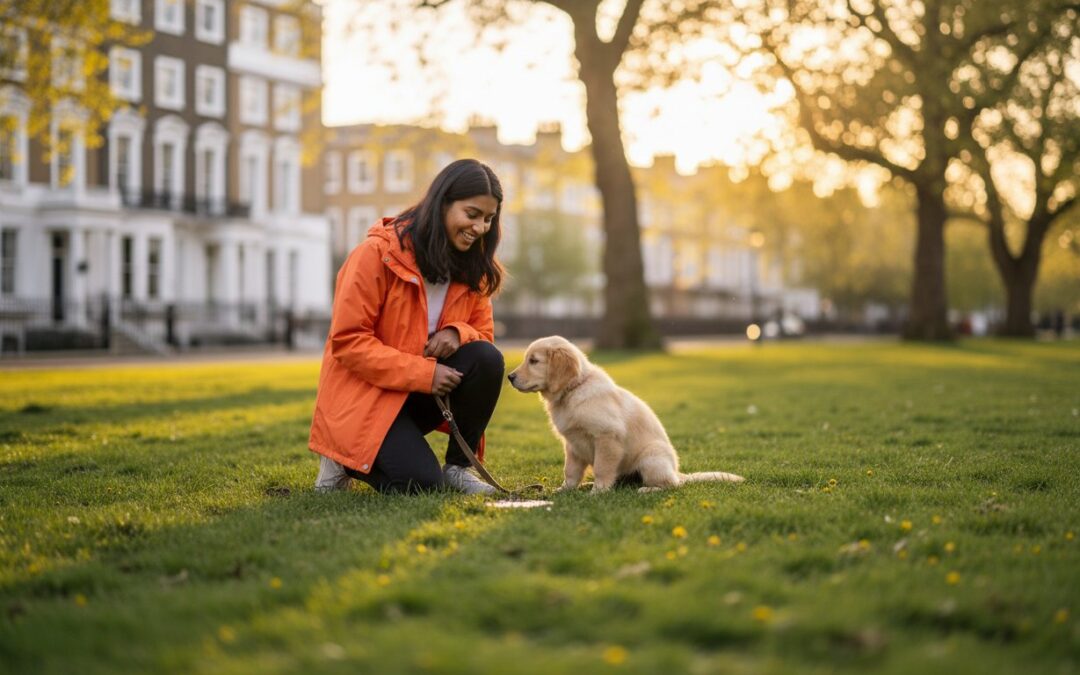
It is 3:00 AM in a second-floor flat in Hackney, and you are staring at a fresh damp patch on your rented parquet flooring while your puppy looks up expectantly. You aren’t alone. The 2023 PDSA Animal Wellbeing Report found that 24% of dog owners find house training to be a significant challenge during the first year. Successfully toilet training puppy companions in a bustling city like London requires more than just patience. It demands a bespoke strategy that respects both your professional work-from-home schedule and your dog’s internal emotional state.
We understand that balancing a fast-paced career with the needs of a new pet in a compact urban environment can feel overwhelming, particularly when your sleep is constantly interrupted. This guide offers a force-free, routine-based framework designed to help you master the process while protecting your home and your peace of mind. It’s about more than just clean floors. We will explore how to establish a predictable, tailored schedule that fits a modern London lifestyle and fosters a deeper connection with your new companion.
Key Takeaways
- Learn to view house training as a vital communication process, ensuring your routine aligns with your puppy’s natural biological capacity.
- Master the logistics of toilet training puppy life in London by learning how to navigate communal hallways and high-rise lifts before accidents happen.
- Protect your bond by using science-based cleaning methods and gentle redirection rather than outdated, confrontational punishment.
- Recognise when your dog’s unique needs call for bespoke, professional support to ensure a stress-free transition to city living.
Toilet Training Your Puppy in London: The Foundations
Success with toilet training puppy companions in a bustling metropolis requires shifting your perspective from control to communication. We don’t view this process as a series of physical habits to be enforced, but as a vital dialogue between you and your new arrival. Understanding the biological reality of your puppy is the first step toward a dry floor. Most puppies under 12 weeks of age lack the muscular development to hold their bladder for more than 60 to 90 minutes. Expecting a young animal to wait longer is physically impossible, regardless of their intelligence or desire to please you.
Our philosophy at H&H Dog is rooted in force-free, positive reinforcement. We move away from the outdated concept of “corrections” or punishment, which only serves to damage the bond of trust. Instead, we focus on setting the environment up for success. Understanding House-training basics helps you realise that every accident is simply a missed opportunity for communication. In London, this process is often complicated by high-density living and sensory overload. A puppy who is overwhelmed by the sound of a passing sirens or the vibration of the Tube beneath the pavement will struggle to relax enough to eliminate.
The “Expert Advocate” Perspective
We prioritise your puppy’s internal emotional state over their outward actions. If a puppy feels anxious about the chaotic noise of a London street, their body enters a “fight or flight” mode that physically inhibits their ability to settle. This isn’t stubbornness; it’s biology. According to the 2023 PDSA Paw Report, 27 percent of owners find house training one of the most challenging aspects of early ownership. We overcome this by building a life together based on patience. By advocating for your dog’s comfort, you ensure they feel safe enough to focus on the task at hand. This tailored approach transforms a stressful chore into a foundation of mutual respect.
Essential Gear for the Urban Puppy
Choosing the right tools for a city environment is a strategic decision. While puppy pads offer convenience in high-rise apartments, they can sometimes confuse a puppy’s substrate preference, making the transition to grass more difficult later. If you have a balcony or easy street access, immediate outdoor training is often more effective. You’ll need a secure, 1.5-metre fixed lead to keep your puppy safe on busy pavements while giving them enough space to sniff and find their spot. High-value rewards are non-negotiable. Use small pieces of plain chicken or cheese to immediately reinforce the correct choice, ensuring the reward happens within two seconds of them finishing. This clear feedback loop is the fastest way to achieve consistent results.
Establishing a Successful House Training Routine
Predictability is the foundation of a puppy’s confidence. When you begin the process of toilet training puppy companions, consistency acts as the bridge between confusion and clarity. The “Toilet First” rule is your most effective tool; it requires taking your puppy to their designated spot immediately after they wake up, finish a meal, or stop a play session. By prioritising these transitions, you align your training with their natural biological rhythms.
Accompanying your puppy outside is vital for providing immediate, warm praise the moment they finish. This immediate feedback helps them connect the action with the reward. Using a specific cue word, such as “be quick” or “toilet,” helps your puppy understand the task at hand before they even begin. By following the RSPCA’s guide to toilet training, we see that positive reinforcement is the most effective way to build these habits without causing anxiety or fear.
Managing resources is equally important for a predictable outcome. Feed your puppy at the same times every day and monitor their water intake, especially in the evening. This structure allows you to anticipate when they will need to go, reducing the likelihood of mistakes. If you find the process overwhelming, our bespoke puppy support can help you create a plan that fits your specific London lifestyle.
The 15-Minute Rule for Success
Puppies have limited bladder control; 15 minutes after play, sleep, or food is the “golden window” where an accident is most likely to occur. You must remain observant for subtle body language cues like intense sniffing, sudden circling, or wandering toward a quiet corner. Success is defined as a consistent 48-hour window without a single indoor accident.
Night-time Training Strategies
Your puppy’s sleeping area should feel secure and appropriately sized to encourage their natural instinct not to soil where they sleep. During the first few weeks, expect at least one middle-of-the-night trip, often around 3:00 AM, to prevent discomfort. Keep these nocturnal outings calm and functional; avoid eye contact or exciting play to ensure the puppy understands this is not a social call. This quiet approach facilitates a smoother transition from broken nights to a full night’s sleep as their physical capacity grows.
Navigating Urban Obstacles: Flats, Balconies, and London Life
Living in a high-rise flat or a converted Victorian terrace adds layers of complexity to the toilet training puppy process. Unlike suburban owners who can simply open a back door, Londoners often face a vertical journey involving lifts, communal hallways, and busy pavements. Success in the city requires a proactive strategy that accounts for the physical distance between your living room and the nearest patch of grass. If your puppy is under 12 weeks old, their bladder control is minimal; they may only be able to hold it for 60 to 90 minutes during the day. Anticipating these windows is the difference between a successful outing and a cleanup in the lobby.
The Lift and Hallway Strategy
The journey from a fourth-floor flat to the street is a high-risk zone for accidents. Puppies often feel the urge to go the moment they transition from the “den” of your flat into the hallway. To prevent leakage in shared spaces, carry your puppy until your feet hit the grass. This physical contact inhibits their instinct to squat and ensures you respect your neighbours and communal flooring. Following structured veterinary expert housetraining steps helps you establish a tight schedule, reducing the likelihood of being caught in a slow-moving lift with a desperate pet. If an accident does occur in a public area, use an enzymatic cleaner immediately to remove the scent and maintain the hygiene of your building.
Balcony toileting can be a helpful temporary tool, especially during the early weeks or for 3 AM breaks. However, it should not become a permanent habit. If you rely solely on a balcony, your puppy may struggle to generalise that “outside” also means the park or the street. Use a real grass patch system rather than puppy pads to keep the texture association consistent. This makes the eventual transition to the pavement much smoother for their developing brain.
Building Confidence in Busy Areas
London is a sensory whirlwind. A siren reaching 120 decibels or a passing red bus can easily distract a young dog, causing them to “forget” why they are outside. When a puppy feels overwhelmed, their nervous system enters a state of high alert, which naturally suppresses the urge to eliminate. To combat this, you must focus on desensitisation. Finding “quiet pockets” in North London, such as the secluded corners of Waterlow Park or quiet residential mews, allows your puppy to relax enough to focus on the task at hand.
A confident puppy is always a faster learner. By integrating your toilet routine with broader Puppy Training in London, you help your dog view the city as a safe environment rather than a series of threats. Once they are comfortable with the urban hum, they will stop holding their bladder out of fear and start communicating their needs more clearly. Patience is vital during this stage; your role is to act as a steady guide through the chaos, ensuring every successful outdoor break is met with quiet, calm encouragement.
Handling Accidents and Setbacks with Kindness
When you discover a puddle on your Victorian floorboards or a stain on the rug, your immediate emotional response is often frustration. It’s vital to remember that your puppy isn’t acting out of spite or trying to dominate the household. Dogs don’t possess the cognitive capacity for revenge. Most accidents occur because the puppy’s bladder capacity was reached or they simply didn’t understand how to communicate their needs in that moment. Punishing a puppy for an indoor accident is a significant error that destroys the training bond. If you scold them, they don’t learn that toileting indoors is wrong; they learn that toileting in front of you is dangerous. This often leads to “secret” accidents behind the sofa, making toilet training puppy progress much harder to track.
The “No-Drama” Clean-up Protocol
The way you react to an accident dictates how quickly your puppy recovers. If you catch them in the act, calmly interrupt them with a soft sound and gently lead them outside to their designated spot. If you find the mess after the fact, the window for learning has closed. Don’t rub their nose in it or shout. Instead, follow these steps:
- Remove the puppy from the room so they don’t “help” you clean.
- Use a high-quality enzymatic cleaner rather than standard bleach or ammonia-based products.
- Blot the area thoroughly to ensure the scent is removed from the subfloor or carpet fibres.
- Maintain a neutral, calm composure to avoid creating a high-stress environment.
The science of scent is crucial here. Standard cleaners often leave behind trace amounts of ammonia. Since urine also contains ammonia, a puppy’s sensitive nose perceives these spots as a permanent “bathroom” signpost. Enzymatic cleaners are a London owner’s best friend because they break down the organic proteins that cause the odour, effectively erasing the chemical map that leads the dog back to the same spot.
When is it Separation Anxiety?
In a busy city like London, our puppies often have to adapt to the sounds of sirens, neighbours, and changing schedules. If your puppy is perfectly clean while you’re home but has accidents the moment you leave, you might be looking at separation anxiety rather than a training lapse. Emotional distress causes a loss of bladder control. You can distinguish this by looking for other signs of stress, such as vocalisation, panting, or destruction around exit points like the front door.
Building “home-alone” confidence is a gradual process. Start by leaving the room for just 60 seconds and rewarding calm behaviour. As your puppy learns that your departure isn’t a permanent abandonment, their physiological control will improve. If you feel overwhelmed by your puppy’s progress, our team offers bespoke training support to help you navigate these emotional hurdles with confidence.
Regression is a normal part of development, particularly during teething at 16 to 24 weeks or during the “teenage” hormonal shifts at six months. Treat these moments as a signal to tighten your routine rather than a sign of failure. Consistency and patience are the only ways to ensure long-term success.
When to Seek Professional Puppy Support in North London
Even with a dedicated approach, progress can sometimes stall. Every dog is an individual, and the sensory overload of London life can occasionally overwhelm a young puppy’s developing nervous system. If you find that accidents are increasing after a period of success, or if your puppy seems fearful of the outdoor environment, it is time to transition from general advice to expert intervention. A delay in toilet training puppy progress often stems from underlying stress or a simple misunderstanding in communication between owner and dog.
Professional support provides a fresh perspective on your specific living situation. Whether you are navigating a high-rise apartment in Islington or a busy terrace in Highgate, our experts look at the environment through your puppy’s eyes. We identify the subtle triggers that might be causing them to hold their bladder outdoors and help you rebuild their confidence with kindness and patience. Identifying these hurdles early prevents long-term habits from forming.
Bespoke Training Solutions
H&H Dog focuses on the individual needs of your household rather than applying a rigid, one-size-fits-all template. Our Dog Training in North London service addresses complex urban hurdles like lift phobias or noise sensitivity that often disrupt a clean routine. A behavioural assessment is particularly valuable for persistent house-training issues. This deep dive helps us understand if the problem is physical, emotional, or a result of the environment, allowing us to create a tailored roadmap for your success. We believe that every toilet training puppy challenge has a manageable, ethical solution when approached with the right expertise.
The H&H Support Network
Consistency is the cornerstone of any successful training plan. When work commitments take you away from home, our Professional Dog Walking service ensures your puppy’s schedule remains uninterrupted. Our walkers aren’t just there for exercise; they are trained to reinforce your specific toileting cues. This ensures your puppy never feels forced to hold their bladder beyond their physical capability, preventing the regression that often happens during long workdays.
Hygiene also plays a vital role in your puppy’s comfort and your home’s cleanliness. For puppies still mastering their aim, our mobile grooming service provides a stress-free way to keep them clean and comfortable. We focus on positive associations, teaching your puppy that being handled and cleaned is a safe, pleasant experience. This early socialisation to grooming prevents future anxieties while maintaining high standards of hygiene in your urban home.
If you feel overwhelmed by the challenges of a busy city lifestyle, remember that you don’t have to manage this alone. Expert guidance can turn a stressful period into a rewarding bonding experience for you and your new companion. Contact H&H Dog today for expert puppy training support in London and let us help you build a lifetime of mutual understanding and clean habits.
Building a Clean and Confident Future Together
Mastering the nuances of urban living requires a dedicated approach that balances your puppy’s biological needs with the realities of London architecture. Success comes from establishing a predictable routine and viewing every slip-up as a communication gap rather than a behavioural failure. By prioritising force-free methods and understanding the “why” behind your dog’s actions, you create a foundation of mutual respect that lasts a lifetime.
Effective toilet training puppy techniques are most successful when they’re tailored to your specific environment, whether you’re navigating a high-rise flat or a garden in Watford. At H&H Dog, we bring over 20 years of professional training and grooming experience to help you navigate these early challenges. Our specialists use modern behavioural science to provide gentle, effective support across North London and North West London. You don’t have to manage the stress of house training alone.
Ready to transform your routine into a rewarding partnership? Book a bespoke 1-to-1 puppy training session with our London experts today. We’re here to ensure you and your puppy enjoy a clean, happy home together.
Frequently Asked Questions
How long does it typically take to toilet train a puppy in a flat?
You should expect the process of toilet training a puppy to take between 16 and 24 weeks for complete reliability in a London flat. This timeline accounts for the extra time needed to navigate lifts or communal stairs. While most puppies show significant improvement within 14 days of a consistent routine, their physiological ability to hold their bladder doesn’t fully mature until they reach approximately 6 months of age.
Should I use puppy pads if I live in a high-rise London apartment?
Puppy pads are often a setback in high-rise living because they teach your dog that relieving themselves on indoor surfaces is acceptable. Unless you’re on a very high floor with no balcony access, it’s better to head straight outside. Transitioning from pads to grass later often takes twice as long. If you must use them, real grass patches are a more effective, science-based alternative for your balcony.
What should I do if my puppy only toilets on the carpet?
Your puppy likely chooses the carpet because the soft, absorbent texture feels similar to the grass or soil they instinctively prefer. To fix this, restrict access to carpeted rooms using baby gates and use an enzymatic cleaner to remove 100 percent of the scent. If the smell remains, your puppy will return to the same spot. Increasing your outdoor trips to every 45 minutes ensures they don’t have the chance to seek out the rug.
Can I toilet train my puppy if I work a 9-to-5 job in London?
You can successfully manage toilet training a puppy while working a 9-to-5, but it requires a dedicated support network. A puppy aged 12 weeks can physically only wait about 3 hours before needing a break. You must arrange for a professional walker or a neighbour to visit at least twice during your workday. Without this support, your puppy’s distress will increase, potentially leading to long-term anxiety and slower learning outcomes.
Why does my puppy pee as soon as we come back inside from a walk?
This behaviour happens because the sensory environment of London, from traffic to pedestrians, is often too distracting for a young dog to relax. Your puppy feels safe once they’re back inside your quiet home, which triggers their bladder to release. To help them, find a quiet, boring corner away from the main pavement. Spend 15 minutes in one spot rather than walking, as constant movement can distract them from the task.
Is it too late to house train an older rescue dog in the city?
It’s never too late to support an older rescue dog, as their physiological bladder control is already fully developed. While a puppy needs months, an adult rescue can often learn your house rules within 21 days of consistent positive reinforcement. The key is to treat them like a brand new puppy initially. Reward every outdoor success with high-value treats to build a new, confident association with the city pavements or local park.
How do I stop my puppy from being too scared of sirens to toilet outside?
Focus on building your dog’s confidence through gradual desensitisation to the 110-decibel sounds of city life. If a siren starts, stay calm and offer a very high-value reward immediately to create a positive association. Don’t force them to stay outside if they’re trembling. Instead, keep sessions short and stay close to your building’s entrance. Over 4 to 6 weeks, their internal emotional state will usually shift from fear to neutral observation.
What is the best way to clean up puppy accidents on hardwood floors?
The most effective method is using a dedicated enzymatic cleaner that breaks down the uric acid crystals found in dog waste. Standard household cleaners often contain ammonia, which smells like urine to a dog and encourages them to soil the same spot again. Blot the area with paper towels first, then apply the enzyme solution and let it sit for 10 minutes. This ensures the floor is chemically clean from your dog’s perspective.