
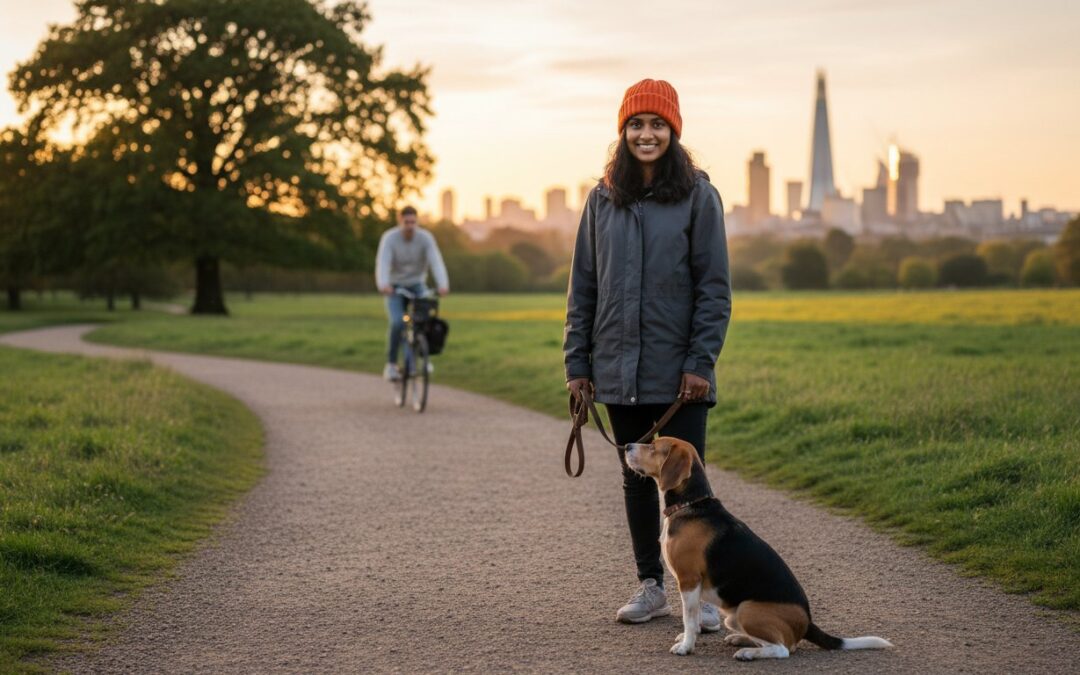
Imagine standing on the edge of Hampstead Heath on a busy Saturday morning, watching your dog’s ears pin back as a cyclist whizzes past. The lead tightens in your hand, your heart rate climbs, and you feel that familiar flash of anxiety about how they might react. You likely already feel that London presents a unique set of challenges for a dog, from the 1.5-metre wide pavements of Islington to the sensory overload of a crowded park. Searching for dog training classes near me is often the first step toward reclaiming your peace of mind, but it requires finding a mentor who truly understands the specific stressors of our capital.
You deserve to feel confident in your dog’s ability to remain calm, and your dog deserves to feel safe in your care. This guide will show you how to evaluate local training options based on modern, science-based principles that prioritise your dog’s emotional welfare. We will examine the specific criteria you need to look for in a London trainer, ensuring you develop a partnership built on mutual respect rather than fear. From managing lead reactivity to mastering recall in the city’s vast green spaces, we’ll outline the path to a more connected, peaceful life with your companion.
Key Takeaways
- Understand why searching for dog training classes near me is about more than convenience; it is a vital step in reducing travel stress so your dog arrives in a calm, receptive state.
- Learn how to evaluate professional credentials and why a strictly force-free, science-based approach is essential for building a lasting bond of trust with your dog.
- Determine whether the social environment of a group class or the focused attention of a bespoke 1-to-1 session better suits your dog’s unique temperament and London lifestyle.
- Discover how to manage your expectations and select the appropriate equipment to transform training from a stressful task into a rewarding, long-term journey.
- Gain insight into how over 20 years of London-specific expertise can provide tailored, ethical solutions for the complex behavioural challenges of metropolitan living.
Finding the Right Dog Training Classes Near You in London
Searching for dog training classes near me in a city as vast as London requires a strategy that goes beyond a simple map search. In a busy metropolitan area like North London, “local” is best defined by a 15 to 20 minute radius from your home. This geographical limit isn’t just about your convenience; it’s a vital consideration for your dog’s emotional state. A long, stressful commute on the North Circular or a crowded journey on the Overground can spike a dog’s cortisol levels before the session even begins. When a dog arrives at a training facility already overstimulated by travel, their ability to focus and learn diminishes significantly. Choosing a nearby location ensures your pup starts their lesson with a calm, receptive mindset.
Beyond the logistics of travel, these classes serve as a cornerstone for urban canine life. They provide a controlled environment where socialisation happens safely under professional supervision, preventing the “free-for-all” chaos often found in public parks. Modern dog training is a communication-based partnership built on mutual respect rather than a dominance-based hierarchy that relies on fear or intimidation. By attending a local class, you’re joining a community of like-minded owners who value ethical, science-based methods to help their dogs thrive in a fast-paced environment.
The Importance of Urban-Specific Obedience
A dog that sits perfectly in a quiet rural field often struggles when faced with the sensory overload of the city. Urban obedience is a distinct skill set. Training must account for the specific pressures of London life, such as the sudden wail of an ambulance siren, the rattle of a skateboarder in Camden, or heavy foot traffic on a narrow Watford pavement. High-quality dog training North London focuses on these “real-world” distractions, teaching your dog to look to you for guidance when the environment becomes unpredictable. We prioritise teaching dogs how to settle in busy cafes and walk calmly on a lead through bustling high streets.
What to Expect from a Professional London Class
When you enrol in dog training classes near me, the quality of the environment is just as important as the curriculum. Professional UK trainers typically limit class sizes to 4 or 6 dogs. Smaller groups are essential for nervous or easily distracted dogs, as they allow the trainer to provide bespoke support to every handler. Most foundation courses in the UK market run for a duration of 6 weeks, which provides a logical progression from basic cues to more complex environmental management. During these sessions, you’ll explore various dog training methods that prioritise positive reinforcement. This transition from simple commands to managing your dog’s internal emotional state ensures they don’t just “obey,” but actually feel comfortable and secure in your partnership.
Key Criteria for Choosing a Professional Dog Trainer
Finding the right support requires looking beyond a simple search for dog training classes near me. It’s about finding a partner who understands that your dog is a sentient being with a complex emotional life. The modern standard is a force-free approach. This isn’t just a trend; it’s a commitment to the UK dog welfare guidelines, which emphasise the need for a suitable environment and protection from pain or suffering. Ethical trainers rely on positive reinforcement, using high-value rewards to build a reliable connection between you and your dog.
Before you commit, verify the trainer’s credentials. Look for certifications from reputable bodies like the Association of Pet Dog Trainers (APDT) or the Animal Behaviour and Training Council (ABTC). These organisations require their members to adhere to strict ethical codes. Always ask to observe a class before bringing your dog. A professional will welcome this transparency. During your visit, watch the dogs’ body language. You want to see loose, wiggly bodies and wagging tails, not dogs that are cowering or showing signs of “learned helplessness.”
Understanding Training Philosophies
Science-based training focuses on how dogs actually learn through operant conditioning. Reward-based systems encourage your dog to think and choose the correct behaviour, rather than simply reacting to avoid a threat. Expert advocacy means putting the dog’s emotional state before outward compliance. We avoid “cutesy” tropes that treat dogs like small humans. Instead, we use professional, evidence-based methods that respect their biological needs. Fear-based corrections might stop a behaviour in the short term, but they often lead to long-term anxiety or redirected aggression.
Trainer Experience and Local Knowledge
London presents unique challenges for dogs. A trainer needs to understand the specific temperaments of breeds common in the capital, from high-energy Cockapoos to sensitive Italian Greyhounds. Experience matters when dealing with urban triggers like sirens, delivery bikes, and crowded pavements. A trainer with 20+ years of experience provides a steady hand in complex behavioural cases. They have seen the evolution of the industry and know how to tailor a plan to your specific environment. This is especially vital for puppy training, where early socialisation in a city setting dictates future confidence.
Avoid any trainer who uses “balanced” or “alpha” terminology. These concepts were debunked by researchers like David Mech as early as 1999. Using “corrections” or “dominance” can cause significant behavioural fallout, including a breakdown in trust. If a trainer suggests using slip leads, prong collars, or physical manhandling, it’s a clear red flag. Your goal is a partnership based on mutual respect. If you feel overwhelmed by the choices, a bespoke consultation can help you identify the specific needs of your urban dog.
Group Classes vs. 1-to-1 Training: Which Suits Your London Lifestyle?
Choosing the right format for your dog’s education is a pivotal decision that influences their long term emotional well-being. While your initial search for dog training classes near me might lead you toward traditional group settings, the best choice depends entirely on your dog’s current confidence levels and your specific lifestyle goals. London presents unique challenges, from crowded pavements to high-rise living, which require a thoughtful approach to learning.
The cost-benefit analysis often comes down to time versus initial investment. In London, group courses typically average £180 for a six-week block, whereas bespoke 1-to-1 sessions often start at £90 per hour. While the hourly rate for private tuition is higher, the progress is frequently 40% faster because the trainer focuses solely on your dog’s specific triggers and your personal schedule. For a busy professional in Canary Wharf or Marylebone, three targeted private sessions often yield better results than two months of generic group work.
The Benefits of Group Socialisation
Group environments offer a controlled microcosm of the city. They provide a safe space for your dog to learn that the presence of other dogs does not always necessitate a direct interaction. This helps build a neutral emotional state, which is essential for calm walks through Hyde Park or sitting quietly at a local cafe. You aren’t just teaching cues; you’re proofing them against real-world distractions.
- Focus under pressure: Learning to listen while other dogs are moving nearby mimics the unpredictable nature of London streets.
- Community building: You gain a support network of local owners who understand the specific trials of urban pet ownership.
- Safe exposure: Following RSPCA training guidelines, group classes use reward-based methods to ensure socialisation remains a positive experience rather than an overwhelming one.
Why Bespoke 1-to-1 Sessions May Be Better
Group classes aren’t always the kindest choice. If your dog is highly reactive or anxious, being thrust into a room with six other dogs can be detrimental to their progress. In these cases, 1-to-1 sessions provide the necessary sanctuary for learning. We can address specific urban hurdles that a general class cannot cover, such as anxiety in glass-walled lifts or toilet training within a North West London flat.
Private training allows us to observe your dog in their natural environment. We see how they react to the doorbell or the sound of traffic outside your window. This tailored approach ensures that the dog training classes near me you choose actually solve the problems you face daily. It’s about building a connection based on your dog’s unique personality and your specific home setup, ensuring they feel supported every step of the way.
How to Prepare Your Dog for Their First Training Session
Entering a professional training environment is an exciting step for any owner, but it requires a shift in mindset. You should view training as a marathon, not a sprint. Research suggests it takes approximately 6 to 8 weeks for a new behaviour to become a reliable habit in a dog’s repertoire. Success is built on small, incremental wins rather than overnight transformations. When you search for dog training classes near me, remember that the goal is to build a lifelong bond, which takes patience and consistent effort.
Your choice of equipment directly impacts your dog’s ability to learn. Opt for a well-fitted Y-shaped harness or a standard flat collar and a fixed 1.5-metre lead. Avoid retractable leads, as these provide inconsistent tension that confuses the dog. Leave any aversive equipment, such as slip leads or prong collars, at home. These tools rely on discomfort, which contradicts the ethical, science-based approach needed for effective urban obedience.
Motivation is the engine of learning, so come prepared with a hierarchy of rewards. Pack three levels of treats:
- Low-value: Their standard daily kibble.
- Medium-value: Plain boiled chicken or dried liver.
- High-value: Potent rewards like small cubes of cheddar or sprats.
It is a common misconception that a dog should be worn out before a lesson. A tired dog is not a “good” dog for training; they need to be rested and alert to process new information and manage the sensory input of a group environment.
Setting the Scene for Success
London environments are naturally high-arousal. Arrive at your venue 10 minutes early to follow a calm arrival protocol. Allow your dog to sniff the immediate area, as this natural behaviour lowers their heart rate and helps them settle. On the busy pavements leading to the class, apply the “Distance is Your Friend” rule. Aim to maintain a 2-metre buffer from other dogs to prevent your pet from becoming over-stimulated before the session even begins. Your dog looks to you for safety, so projecting a calm, confident presence is essential for their emotional regulation.
The Owner’s Role in the Classroom
In a modern training setting, the professional is coaching you just as much as they are training the dog. You are the primary communicator in your dog’s life, and the trainer’s role is to refine your timing and body language. Consistency is the foundation of progress. If you use different cues or hand signals than other family members, the dog will struggle to generalise the behaviour. Once you have mastered a skill in class, practice in diverse North London locations. Moving your training to spots like Primrose Hill or local parks helps your dog learn to listen even when squirrels or other walkers are present.
Bespoke Training Solutions with H&H Dog
H&H Dog brings over 20 years of London-specific canine expertise directly to your doorstep. While your search for dog training classes near me might initially lead you toward generic group sessions in a park, our approach prioritises the individual needs of your dog within the unique pressures of capital city life. We specialise in 1-to-1 training and behavioural consultations because urban environments demand more than basic commands; they require emotional resilience and a deep bond of trust.
Our methodology integrates seamlessly with our wider care packages. We can coordinate your specific training goals with our dog walking and grooming services to ensure your pet receives a consistent message throughout their day. Every H&H expert adheres to a strict force-free, ethical promise. We advocate for the dog’s perspective at every turn, ensuring that communication is built on positive reinforcement rather than outdated, confrontational methods. It’s about teaching your dog how to navigate a human world with confidence.
Why Our London Clients Trust Us
London owners face challenges that rural trainers rarely encounter. We recently supported a client with a highly reactive rescue dog who struggled with the sensory overload of the London Underground. Through a bespoke, eight-week desensitisation plan, we helped the dog remain settled during a busy commute between Angel and Canary Wharf. This level of specific, real-world application is why our mobile services are so highly valued by busy pet parents. We don’t believe in “quick fixes” that merely mask symptoms; we focus on long-term relationship building that addresses the root cause of a behaviour.
Getting Started with Your Training Journey
Choosing the right dog training classes near me means finding a partner who understands your lifestyle. Your journey begins with a comprehensive behavioural assessment. During this initial 90-minute consultation, an H&H expert observes your dog in their home environment to understand their unique personality and triggers. We’ll discuss your specific goals, analyse your dog’s body language, and create a tailored roadmap for your progress together. This structured start ensures that every subsequent session is efficient and effective.
Transform Your Urban Walks into Harmonious Adventures
Navigating London’s busy streets requires more than just basic obedience; it demands a deep connection built on trust and clear communication. You’ve seen how the right environment, whether through bespoke 1-to-1 sessions or structured group settings, can change your dog’s perspective on city life. By focusing on science-based, force-free methods, you ensure your pet feels safe while learning the skills needed for urban living. It’s about seeing the world through their eyes. This helps solve behavioural challenges at the root.
Searching for dog training classes near me often feels overwhelming, but finding an expert advocate makes all the difference. H&H Dog brings over 20 years of professional London pet care experience to every session. We prioritise your dog’s welfare and your peace of mind, using positive reinforcement to create lasting results. Our tailored approach means we don’t believe in one-size-fits-all fixes. Instead, we provide the specific support your unique dog needs to flourish in the capital.
Ready to start your journey? Book a 1-to-1 Training Session for Your London Dog today. You’ve got this, and we’re here to help you every step of the way.
Frequently Asked Questions
How much do dog training classes usually cost in London?
Group classes in London typically range from £120 to £250 for a six-week block, while bespoke 1-to-1 sessions usually cost between £80 and £150 per hour. These rates reflect the high cost of urban venue hire and the expertise of qualified professionals. Investing in professional guidance early often prevents more expensive behavioural interventions in the future. It’s a vital step for any city-dwelling owner looking to build a reliable bond.
Is my dog too old to start training classes?
No dog is ever too old to learn, as the idea that you can’t teach an old dog new tricks is a biological myth. Dogs maintain neuroplasticity throughout their lives, meaning they can form new neural pathways at any age. Training senior dogs provides essential mental enrichment and helps maintain their cognitive health. We simply adapt the physical pace to ensure your older companion remains comfortable, engaged, and supported.
What happens if my dog is too reactive for a group class?
If your dog is too reactive for a group setting, we recommend starting with 1-to-1 sessions to build a foundation of calm in a controlled environment. Group classes can be overwhelming for dogs that struggle with over-excitement or fear. A tailored approach allows us to address the root cause of the reactivity first. Once your dog feels safe, we can gradually transition toward socialisation in a group class with confidence.
Do I need to bring anything specific to a dog training session?
You should bring a variety of high-value treats, a standard flat collar or harness, and a fixed-length lead. We ask that you avoid retractable leads because they make it difficult to maintain clear communication with your dog. Bringing a favourite toy or a clicker can also be helpful. Having these essentials ready ensures you can focus entirely on your dog’s body language and progress during the lesson without any unnecessary stress.
How long does it take to see results from dog training?
You will often see initial shifts in your dog’s focus within the first two sessions, but reliable habits typically take 4 to 6 weeks of daily consistency to form. When searching for dog training classes near me, it’s important to remember that professional sessions are only one part of the puzzle. Long-term success depends on your commitment to practicing the techniques in your own time to reinforce the connection you’ve built.
Can I bring my children to the dog training classes?
We encourage family involvement, though it’s often best if only one or two adults handle the dog during the initial learning phase to keep instructions clear. Children can learn how to interact safely and respectfully with the family pet under supervision. However, we must balance this inclusion with distraction management. This ensures the dog stays focused on the primary cues being taught without becoming overwhelmed by multiple different voices.
What is the difference between a dog trainer and a dog behaviourist?
A dog trainer focuses on teaching specific skills and obedience cues, while a behaviourist addresses deep-seated emotional issues like severe separation anxiety or aggression. Trainers are your first port of call for puppy foundations or general manners. If your dog’s actions are driven by complex fear or trauma, a behaviourist provides a more clinical approach. They work to change the dog’s underlying emotional state rather than just their outward actions.
Is positive reinforcement effective for “stubborn” breeds?
Positive reinforcement is highly effective for every breed because it focuses on what motivates the individual dog rather than using outdated methods of force. So-called stubborn breeds, like Beagles or Terriers, often just require a more valuable “paycheck” for their cooperation. When we use rewards like food, play, or praise, we build a partnership based on mutual respect. This approach turns training into a game your dog actually wants to win.