
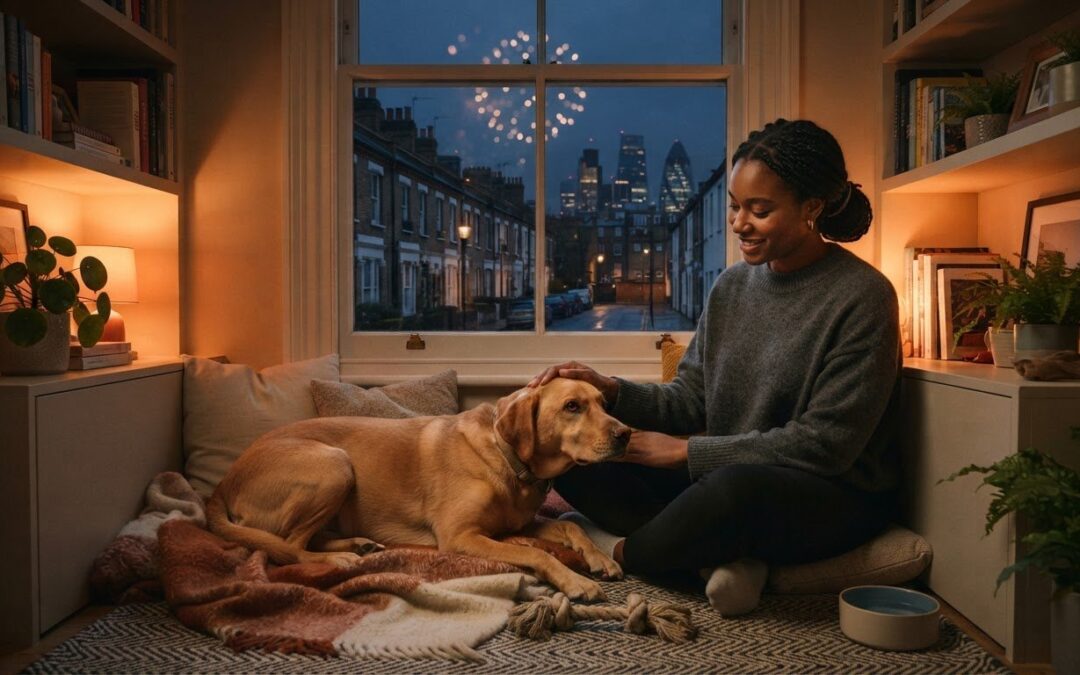
Start with safety: to learn how to keep your dog calm during fireworks in London, bring them indoors before dark, secure doors, windows and fences, and check that their microchip details are up to date. Dogs Trust also advises against forcing a frightened dog outside during fireworks. These practical steps can reduce distress and the risk of escape.
It’s understandable to focus on the loud bangs, but fear can show up in quieter ways too, such as hiding, trembling or seeking reassurance. Your dog isn’t being difficult; they’re reacting to sounds and flashes they may find frightening. With preparation, you can make the experience more manageable.
This guide explains how to recognise possible signs of fear and why fireworks can affect dogs so strongly. You’ll also find practical steps for preparing a safe hiding place, supporting your dog during displays and planning for occasions such as Bonfire Night, New Year’s Eve and other fireworks events in London. Every dog responds differently, so let their behaviour guide the support you offer.
Key Takeaways
- Reduce escape risks by planning ahead for fireworks and making sure your dog can’t slip out when startled.
- Create a quiet hiding place your dog can choose to use, and make it familiar before fireworks begin.
- Notice changes in your dog’s behaviour to recognise when noise may be causing fear or anxiety.
- Prepare for major fireworks occasions with a calm, tailored plan that supports your dog before and during the display.
1. Preventing escape and keeping identification current
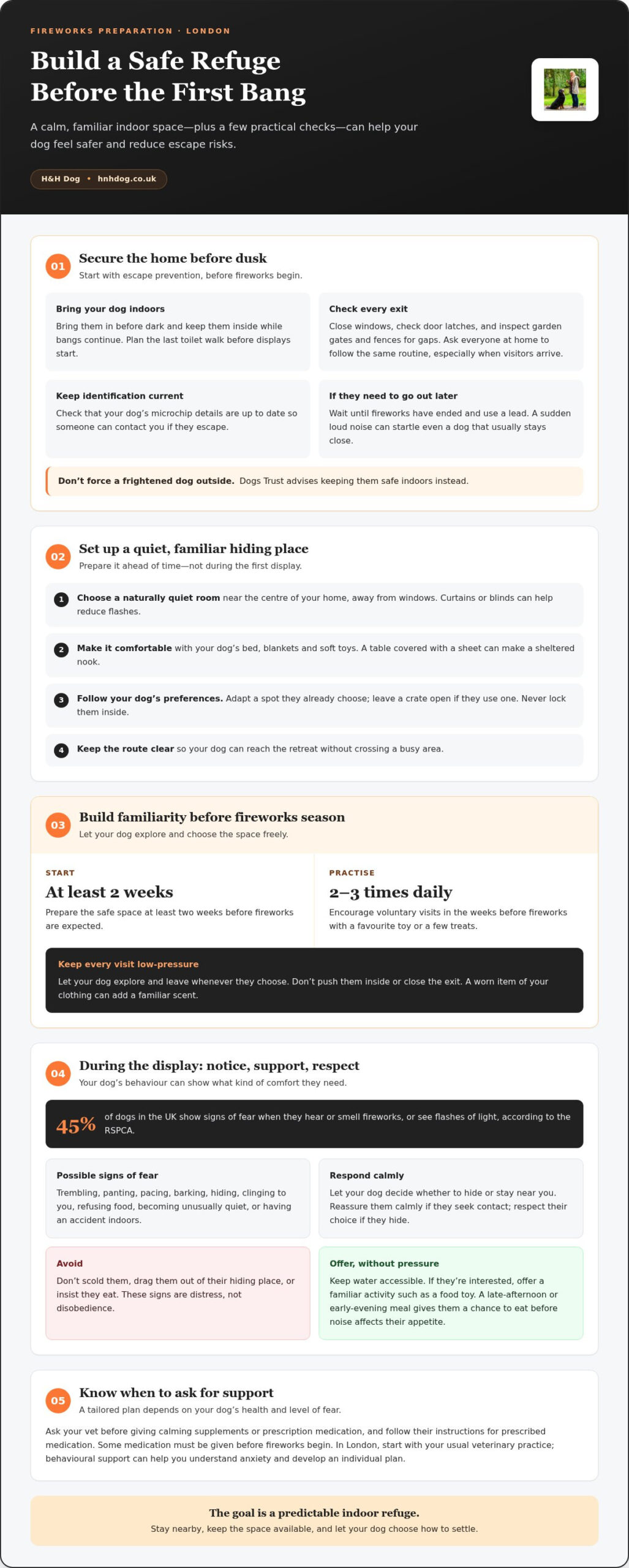
Bring your dog indoors before dark when fireworks are expected, and keep them inside while bangs continue. Dogs Trust advises against forcing a frightened dog outside. Plan the last toilet walk before displays begin. If your dog needs to go out later, wait until the fireworks have ended and use a lead. A sudden loud noise can startle even a dog that usually stays close.
UK Government says the usual fireworks curfew is 11pm, extended to midnight on Guy Fawkes Night. In London, report suspected illegal fireworks to your local council; contact the police if there’s immediate danger to people or animals.
Secure your home before dusk. Close windows, check that doors latch properly, and inspect garden gates and fences for gaps. Ask everyone at home to follow the same routine when entering or leaving, especially when visitors arrive. Dogs Trust recommends checking doors, windows and fences and keeping your dog’s microchip details up to date. Current details help someone contact you if your dog escapes despite your precautions.
Cats need a plan too. Bring them indoors before dark, shut cat flaps, and provide a litter tray so they can stay in during fireworks. A collar and identity tag, alongside current microchip details, can help if a cat does get out. In the UK, cats over 20 weeks old must be microchipped. Secure windows and a familiar hiding place also give cats a safer indoor retreat from loud noises.
Prepare before fireworks season rather than waiting for the first bang. Stay calm, keep your dog company and let them choose a safe indoor spot. If they hide, don’t pull them out or scold them. Stay nearby and offer a favourite blanket or toy. These steps can reduce escape risks and provide a calmer, more secure environment.
2. Why are fireworks stressful for pets?
Fireworks combine sudden sounds, bright flashes and unpredictable timing. A dog can’t understand that each bang is temporary, so they may feel scared or anxious, even inside a familiar home. A busy London display adds movement, unfamiliar smells and little room to retreat. Taking your dog there risks intense distress, bolting into a crowd or traffic, and injury while trying to escape. Staying home gives them more control over where they settle.
Set up a safe space before Bonfire Night, not during the first display. Choose a naturally quiet room near the centre of your home, away from windows where flashes and sounds may feel more immediate. A room with curtains or blinds you can close makes it easier to reduce visual stimulation. Keep the route to the hiding place clear, so your dog can reach it without crossing a busy area.
Make the spot familiar and comfortable. Your dog’s bed, blankets and soft toys can create a calming retreat; a table covered with a sheet can also make a sheltered nook. If your dog already chooses a particular corner or covered space, adapt it rather than insisting on a new location. Leave a crate open if your dog uses one. Never lock them inside, as being unable to leave can add stress.
Prepare the safe space at least two weeks before fireworks are expected. Let your dog explore freely, then associate the area with favourite toys or a few treats. You can encourage voluntary visits two to three times daily in the weeks leading up to fireworks, without pushing them inside or closing the exit. A worn item of your clothing can add a familiar scent.
During fireworks, let your dog decide whether to hide or stay near you. Don’t drag them out to prove they’re safe. If they seek contact, reassure them calmly; if they prefer hiding, respect that choice. The aim is a predictable indoor refuge where your dog can respond to loud sounds in the way that feels safest.
3. WHY DO DOGS FEAR FIREWORKS?
Fireworks arrive without warning, combining sharp bangs, flashes and unfamiliar smells. Dogs can’t predict when the next sound will come, which may trigger anxiety and a need to hide. The RSPCA estimates that 45 percent of dogs in the UK show signs of fear when they hear or smell fireworks, or see flashes of light.
Watch for changes in your dog’s usual behaviour as the evening becomes noisy. They may tremble, pant, pace, bark, hide, cling to you or refuse food. Some dogs become unusually quiet or have an accident indoors. These signs communicate distress, not disobedience. Don’t scold a frightened dog, even if they make a mess; Dogs Trust advises that telling them off may increase their fear.
Make the hideout a familiar choice before fireworks begin. In the weeks leading up to a display, encourage your dog to enter it two to three times daily with a treat or favourite toy. Keep the route clear and let them leave whenever they choose. Close the curtains and turn on the lights to reduce flashes, then stay nearby if your dog seeks comfort. Dogs Trust advises calmly reassuring a dog that comes to you; ignoring them won’t help.
If a display is expected, offer your dog their meal in the late afternoon or early evening, before the fireworks start. This gives them a chance to eat before noise affects their appetite. Don’t insist if they’re too anxious to eat. Keep water accessible and offer a familiar activity, such as a food toy, if they’re interested.
Ask your vet about calming supplements or prescription medication before giving your dog anything. The right advice depends on your dog’s health, behaviour and level of fear. Follow your vet’s instructions for prescribed medication, as some must be given before fireworks begin. In London, start with your usual veterinary practice. H&H Dog’s Behavioural Consultations can help you understand your dog’s anxiety and develop an individual behaviour plan.
4. Preparing for major fireworks occasions
Plan around the calendar, not just the evening of a display. In the UK, Bonfire Night falls on 5 November, but fireworks can continue throughout the month. New Year’s Eve is 31 December, while Diwali falls in October or November and changes date each year. Knowing likely occasions helps you prepare before your dog hears the first bang.
Mark expected events on a calendar and begin preparing in advance. Dogs Trust advises closing windows and curtains, turning on lights and keeping your dog company during fireworks. Choose a familiar room and play rhythmic music at a moderate volume to help mask sudden noises. Keep the volume comfortable for your dog and stay calm; your behaviour can influence how settled they feel.
For longer-term preparation, the RSPCA suggests introducing firework recordings gradually. Start at a low volume while your dog is relaxed, then increase it in small steps and vary the sound over time. Pair the recordings with something your dog enjoys, such as a favourite toy. If they show fear, stop and try again another day rather than pushing through their anxiety.
On the day, exercise your dog during daylight and keep their routine familiar. Offer their meal before fireworks start, then bring them indoors before displays begin. Set out water and a suitable activity, but don’t insist on play if your dog wants to rest or hide. A dog who ignores toys during loud noises is showing they need less pressure.
After the display, return to your dog’s normal routine in the days that follow, as Dogs Trust advises. Notice whether their behaviour settles or whether each occasion brings persistent fear. If fireworks anxiety needs a tailored plan, arrange a behavioural consultation for individual support.
H&H Dog: Full Groom
H&H Dog offers Full Groom for dogs with grooming needs separate from fireworks anxiety. A grooming appointment isn’t a treatment for noise fear, so focus first on your dog’s safety and emotional support during displays. If grooming is already part of your dog’s routine, keeping it separate from fireworks preparation can help avoid unnecessary changes during a stressful period.
Choose grooming according to your dog’s needs and usual care routine, rather than expecting it to calm them during a display. For persistent fireworks anxiety, speak with your vet or consider a Behavioural Consultation to explore an individual behaviour plan.
For information about Full Groom, contact H&H Dog.
Build a calmer routine for the occasions ahead
Your dog’s response to fireworks can guide how you prepare for the next busy season. Notice what helps them feel secure and keep those supports familiar rather than introducing several changes at once. If your dog’s fear remains intense, make their welfare the priority and seek guidance suited to their needs. A thoughtful plan for how to keep your dog calm during fireworks in London starts with understanding what makes your dog feel safe.
H&H Dog offers Full Groom, Bath & Brush and Puppy’s First Groom to meet dogs’ grooming needs. These services are separate from fireworks support, but can be part of your dog’s wider care routine. Choose the support that fits your dog and the care you’re looking for.
For information about H&H Dog’s services, contact H&H Dog. You can continue building a reassuring routine with patience and care.
Frequently Asked Questions
How can I tell if my dog is afraid of fireworks?
Look for changes from your dog’s usual behaviour during or after bangs. They might become restless, check doors repeatedly, refuse a familiar game or stay unusually close to you. Note what happened just before the change, such as a distant crack or a flash through the window. A simple record of triggers and responses can help you describe the pattern clearly to your vet.
WHY DO DOGS FEAR FIREWORKS?
Dogs may fear fireworks because sudden, intense sounds and flashes are difficult to predict or understand. A dog can’t know when the next bang will happen or why, so the experience may feel threatening rather than celebratory. Previous frightening experiences can also shape a dog’s response. Fear is an emotional reaction, not deliberate misbehaviour, and every dog may respond differently.
Why are fireworks stressful for pets?
Fireworks can be stressful because the noise, flashes and activity may disrupt a pet’s sense of safety. Dogs and cats can react differently: one may hide, while another may pace or seek company. A busy London display adds crowds and unfamiliar surroundings, leaving a dog with fewer chances to retreat. Keeping pets away from displays lets them respond in a familiar environment.
How can I prepare my dog for fireworks in London?
To plan how to keep your dog calm during fireworks in London, agree with your household who will stay with them and manage the doors. Decide which rooms your dog can access and keep their routine as familiar as possible. If your dog is sensitive to particular sounds, note those triggers and discuss them with your vet ahead of time. A shared plan helps everyone respond consistently.
What should I do on fireworks night to keep my dog calm?
When planning how to keep your dog calm during fireworks in London, follow their cues rather than expecting them to behave normally. If they approach you, offer calm company; if they choose to settle alone, give them space in a secure part of the home. Avoid inviting visitors to interact with a dog who is hiding or tense. Don’t pressure them to eat or play.
How can I create a safe, quiet space for my dog during fireworks?
Choose a spot your dog can reach without passing through a busy part of the home. Keep familiar bedding or a well-liked toy there, and make sure water is accessible. Check the space from your dog’s perspective: can they settle without being disturbed by people opening doors or switching lights on and off? Let your dog choose whether to use it rather than placing them there.