
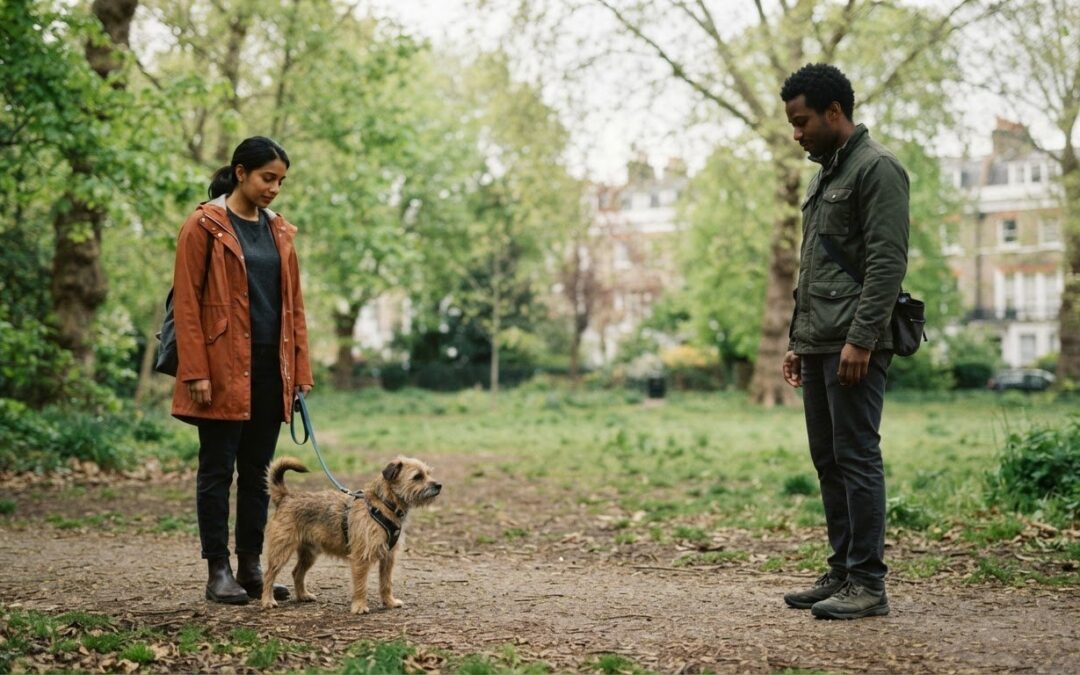
A dog walker for dogs who are scared of men should be calm, patient and happy to let your dog set the pace. Choose someone who won’t force an introduction, reach towards your dog or expect them to accept touch before they feel safe. A gradual, low-pressure approach helps your dog feel more secure.
Arranging walks can feel stressful when a man’s presence makes your dog tense, hide or bark. Fear isn’t bad behaviour, and your dog shouldn’t have to endure a close encounter to prove they can cope. Look for a walker who understands your dog’s signals, respects their need for space and plans walks around their comfort. Sharing your dog’s triggers and routines helps keep outings calm and predictable.
Key Takeaways
- Choose a walker who gives your dog time and space to approach, rather than forcing an introduction.
- Agree on calm first-meeting steps, including avoiding direct eye contact, reaching towards your dog or offering touch too soon.
- Share your dog’s triggers, comfort signals and walking routine so their needs can shape each outing.
- Notice how your dog responds during an introduction and allow them to move away if they need more space.
Dog walker for dogs who are scared of men
Choose a walker who treats your dog’s fear as useful information, not disobedience. Freezing, retreating or barking around men can be signs that your dog needs more distance. A suitable walker notices these signals and adjusts their approach instead of insisting on a greeting or expecting your dog to settle straight away. Look for calm handling, patient introductions and a willingness to follow a plan based on your dog’s responses.
Start by describing what your dog does when a man comes near. Give examples, such as hiding behind you when a male visitor arrives or barking when a stranger approaches on the pavement. If you know it, explain the distance at which your dog first becomes tense. Mention what helps, such as turning away or moving to a quieter street. These details help the walker anticipate difficult moments before your dog feels overwhelmed.
Plan the first meeting around your dog
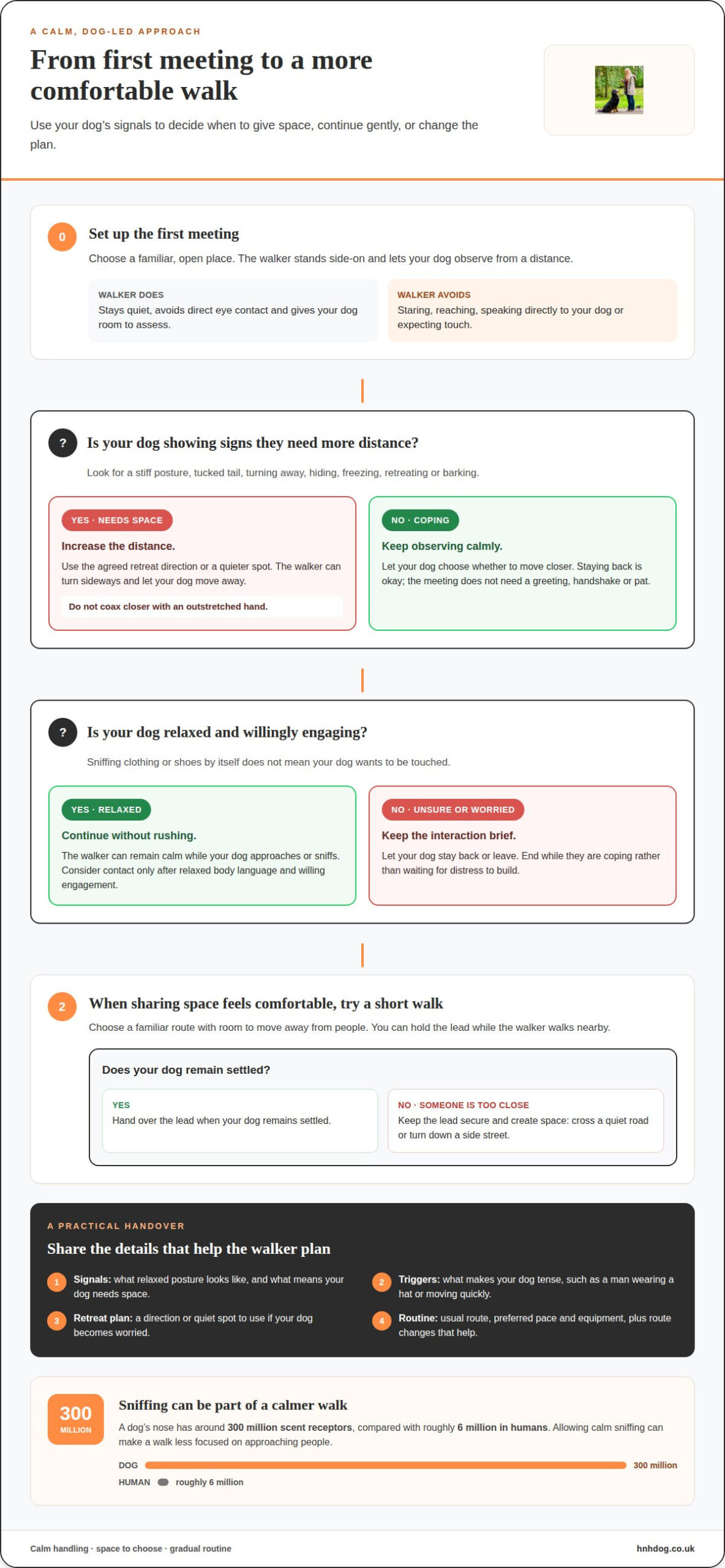
Arrange an introduction in a familiar, open place, rather than bringing the walker straight into your dog’s home. Begin with the walker standing side-on and allowing your dog to observe from a distance. Ask them not to stare, reach towards your dog or speak directly to them. A low, enthusiastic voice can feel intense to a nervous dog, so quiet behaviour gives your dog more room to assess the situation.
Let your dog decide whether to move closer. They may sniff the walker’s clothing or shoes, but sniffing alone doesn’t mean they want to be touched. Wait for relaxed body language and willing engagement before considering contact. If your dog stays back, let them. They’re still gathering information, and a calm first meeting doesn’t need a handshake or a pat.
- Share your dog’s signals. Explain what a relaxed posture looks like for them, and which changes mean they need more space.
- Agree on a retreat option. Pick a direction or quiet spot the walker can use if your dog becomes worried.
- Keep the first interaction brief. End while your dog is coping, rather than waiting for distress to build.
Watch your dog’s body language throughout the introduction. A stiff posture, tucked tail, turning away or repeated attempts to hide are signs to increase the distance. Don’t ask the walker to coax your dog closer with an outstretched hand. Instead, they can turn sideways and let your dog approach or leave without pressure. If your dog chooses to sniff and stays relaxed, the walker can continue calmly without reaching over their head.
Build a walking routine gradually
When your dog can comfortably share space with the walker, practise a short walk together. You can hold the lead while the walker walks nearby, then hand it over when your dog remains settled. Choose a familiar route with room to move away from people. If someone approaches too closely, the walker can cross a quiet road or turn down a side street.
Give the walker practical notes about your dog’s usual route, preferred pace, equipment and triggers. A man wearing a hat, carrying tools or moving quickly may be harder for your dog to pass than someone walking calmly. Share what your dog does in those situations and which route changes help. A dog’s nose has around 300 million scent receptors, compared with roughly 6 million in humans, so sniffing can be part of how they explore their surroundings. Allowing calm sniffing can make a walk less focused on approaching people.
Don’t use petting as a test of progress. If your dog is relaxed and actively engaging, a gentle touch under the chin or on the chest may feel less confronting than a hand coming over their head. Stop if your dog turns away or stiffens. A suitable walker respects that choice, keeps the lead secure and gives your dog the option to move away. Calm, low-pressure experiences help the walker become predictable without expecting your dog to tolerate contact.
The page advises letting a nervous dog sniff a new person from a distance and at the dog’s own pace, without direct eye contact, talking at the dog or petting before comfort, especially in a deep, enthusiastic voice. A commenter said her rescued coonhound remained fearful of her husband after 2 1/2 months; another said her rescued German Shepherd was 15 months old when she rehomed her because the dog was terrified of her husband.
H&H Dog: Full Groom
H&H Dog offers Full Groom for coat care, a separate need from finding a suitable walking routine. Grooming won’t resolve a dog’s fear of men, so keep choosing a walker according to your dog’s comfort and responses. If you’re also considering Group Dog Walking, your dog’s ability to feel settled around people and other dogs matters when deciding whether a group setting suits them.
Choose a walking routine based on your dog’s comfort, and arrange grooming separately when your dog needs coat care. Keeping these decisions distinct helps you focus on what each service is for and choose what suits your dog.
Contact H&H Dog or visit hnhdog.co.uk to learn more about Full Groom.
Build a routine that respects your dog
Choosing a dog walker for dogs who are scared of men is about finding a dependable match, not expecting your dog to feel comfortable on demand. As walks become part of your routine, note which settings help your dog feel settled and which make outings harder. This can guide thoughtful adjustments over time, with your dog’s wellbeing at the centre of each decision.
H&H Dog also offers Full Groom, Bath & Brush and Puppy’s First Groom for separate grooming needs. These services aren’t a substitute for choosing a suitable walker, but they may be relevant to your dog’s wider care. To discuss your dog’s needs and the available services, contact H&H Dog.
Small, respectful choices can make everyday care more manageable for both you and your dog.