
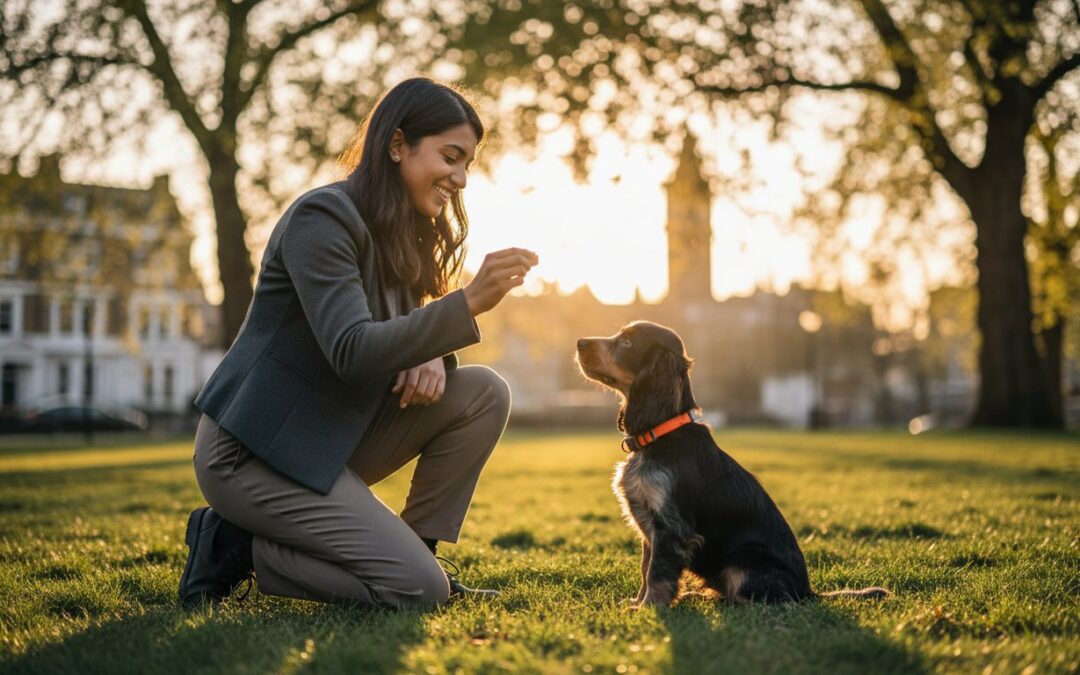
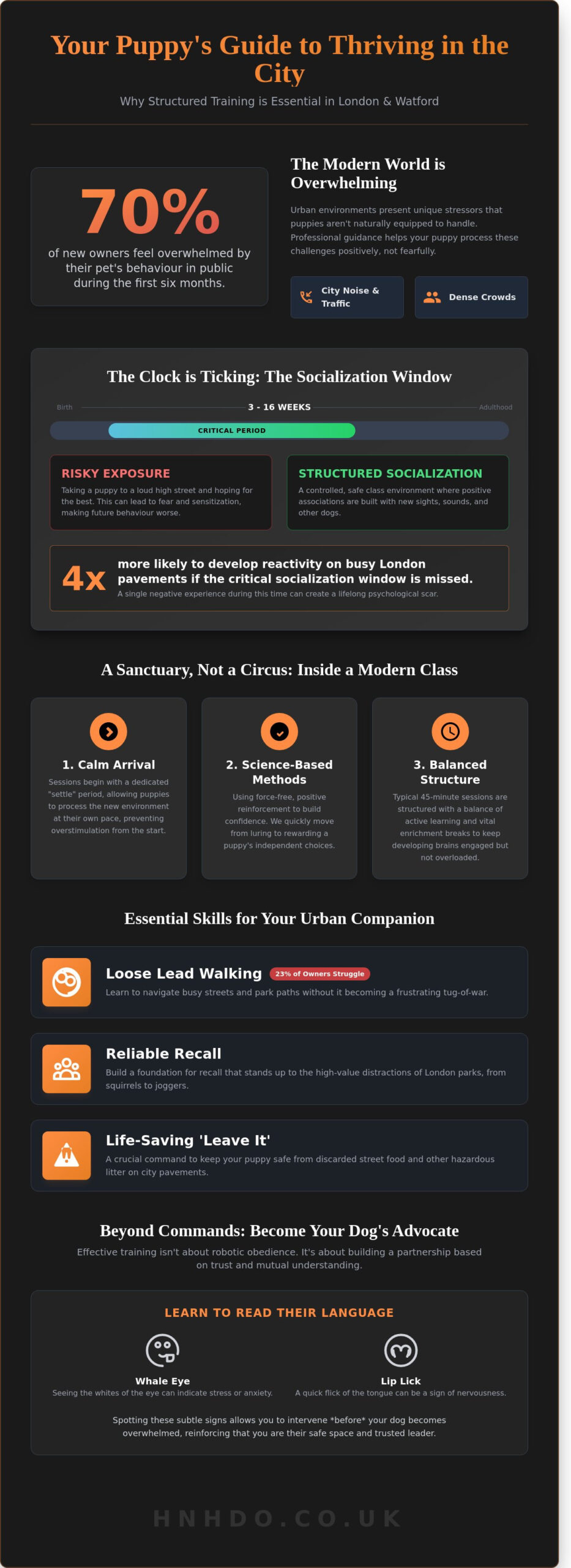
Last Sunday, a new owner in a busy North London park found herself apologising as her spaniel puppy ignored every call, entirely distracted by a passing jogger. It is a common scene; roughly 70% of new dog owners report feeling overwhelmed by their pet’s behaviour in public spaces during the first six months. Enrolling in professional class puppy training is the most effective way to move past this frustration and build a reliable connection. You likely feel the weight of conflicting online advice and perhaps worry your puppy will be the “naughty” one who simply cannot settle in a group environment.
We agree that the modern world is a lot for a young dog to process, and you deserve a clear path forward. This guide explores how our sessions in London and Watford foster a foundation of calm confidence and a lifelong partnership through force-free, science-based methods. You will discover how to read your dog’s subtle body language and follow a tailored roadmap for their emotional development. We will show you how to ensure your companion remains focused and relaxed, even amidst the unique, fast-paced distractions of the city.
Key Takeaways
- Understand why the unique sensory challenges of London and Watford require a structured approach to build your puppy’s confidence in busy environments.
- Explore the benefits of professional class puppy training to bridge the gap between simple treat-luring and making reliable, positive choices.
- Evaluate the unique benefits of group socialisation versus bespoke 1-to-1 support to find the environment that best suits your puppy’s individual temperament.
- Discover the essential items for your “Puppy Class Kit Bag” and how to set realistic goals that prioritise connection over perfection.
- Gain insight into a gentle, science-based philosophy that views training through your dog’s eyes to foster a lifelong, respectful partnership.
What is Class Puppy Training and Why Does it Matter in London?
Professional class puppy training provides a controlled, safe environment where young dogs learn to process the world without becoming overwhelmed. It’s a structured foundation for communication rather than a chaotic playgroup. For dogs living near the M1 corridor or the bustling streets of Watford, these early sessions are vital. Urban environments present unique stressors like heavy traffic on the A411 and dense crowds that rural dogs simply don’t face. Professional guidance ensures your puppy views these stimuli as neutral or positive rather than a threat.
There’s a significant difference between simple exposure and true socialisation. Taking a puppy to a loud high street and hoping for the best often leads to sensitisation, where the dog becomes more fearful over time. Data from the Royal Veterinary College’s VetCompass programme indicates that behaviour-related issues are a leading cause of death in dogs under three years old. Structured classes mitigate these risks by using positive reinforcement to build confidence. You aren’t just teaching them to exist; you’re teaching them to thrive amidst the London hum.
The Critical Window of Socialisation
Puppies go through a biological critical period for socialization between 3 and 16 weeks of age. During this time, their brains are incredibly plastic, forming permanent associations with the world around them. If a dog misses this window, they’re 4 times more likely to develop reactivity on busy London pavements later in life. A single negative experience during the fear period can leave a permanent psychological scar that dictates how the dog reacts to strangers or other animals for the rest of its life.
Beyond “Sit” and “Stay”: Building a Bond
Effective class puppy training shifts the focus away from robotic commands. It’s about developing a mutual understanding where you become your dog’s Expert Advocate in stressful situations. Instead of just demanding a sit, you learn to read subtle body language that signals your dog is feeling pressured. This connection is your most powerful tool when faced with the high-prey distractions of Cassiobury Park. When your puppy chooses to engage with you over a scurrying squirrel, you’ve achieved a level of partnership that simple obedience can’t provide. We help you build that trust through tailored, ethical methods that respect the dog’s perspective.
Inside a Modern Puppy Class: What to Expect
Stepping into a professional class puppy training environment for the first time should feel like entering a calm sanctuary rather than a chaotic playground. We begin each session with a dedicated “settle” period. This allows your puppy to process the sights and scents of the room at their own pace. A typical 45-minute session balances active learning with vital enrichment breaks. This structure ensures their developing brains don’t become overstimulated. You will notice a shift in technique as the weeks progress. We start by “luring” with a treat to guide a movement, but we quickly transition to rewarding the puppy’s independent choice to offer a desired behaviour. This builds genuine confidence and cognitive flexibility.
Safety is our primary focus. We manage the environment using visual barriers and specific spacing to ensure every puppy feels successful. Our force-free, positive reinforcement methods aren’t just about being “nice”; they are rooted in the science of how dogs learn. By removing fear from the equation, we strengthen the bond between you and your dog. If you are looking for this level of individualised support, you can explore our tailored training programmes to find the right fit for your family.
Core Skills for the Urban Puppy
Walking through the busy Watford town centre requires more than just basic obedience. A structured class puppy training curriculum focuses on “Loose Lead Walking” so your outings don’t become a tug-of-war against the urban bustle. Data from the 2023 PDSA PAW Report suggests that 23% of owners struggle with lead pulling, making this a vital focus for city life. We also build a “Recall” foundation designed for the specific distractions found in Cassiobury Park. Teaching a reliable “Leave It” is equally essential. It acts as a life-saving tool when your puppy finds discarded street food or litter on a North West London pavement.
Learning to Read Canine Body Language
Understanding what your dog is “saying” is the key to a peaceful life together. We teach you to spot subtle signs of stress, such as a lip lick or a “whale eye,” before they escalate into barking. You will learn to distinguish between healthy, bouncy play and a puppy that is reaching their emotional limit. These “reset” breaks are crucial for long term social health. Finally, we master the “settle” command. This is the difference between a stressful outing and a relaxing afternoon at a dog-friendly Watford cafe, where your puppy can rest quietly while you enjoy a coffee.
Group Classes vs. 1-to-1 Training: Which is Right for You?
Deciding between a group setting and individual coaching is a pivotal step in your puppy’s development. Every dog possesses a unique temperament, and your choice should reflect their current emotional resilience and your specific lifestyle goals in Watford. While one format offers the buzz of social learning, the other provides a quiet, tailored space to address the nuances of your home life.
The Power of the Group Environment
A structured class puppy training environment acts as a vital rehearsal for the busy streets of North London. While it’s tempting to wait until your dog is “perfect” to join others, you would miss the critical window for social learning. In a group, your puppy learns to filter out the presence of other dogs; a skill they will need when walking through Cassiobury Park on a busy weekend. You aren’t just training your dog; you’re observing how 4 or 5 other puppies communicate, which sharpens your ability to read subtle body language. This shared experience often builds a community of local owners, which is essential for arranging safe, controlled “pack walks” as they mature.
When to Choose Bespoke 1-to-1 Support
Sometimes, the four walls of your home are the most important classroom. If you’re struggling with toilet training in a third-floor flat or your puppy feels overwhelmed by the world, a bespoke 1-to-1 session provides the necessary calm. We focus on your specific lifestyle needs. This might involve:
- Practising calm transitions on a Watford Overground platform.
- Managing over-excitement when guests ring the doorbell.
- Building confidence for the 15% of puppies who show extreme shyness in public.
Starting in a familiar environment prevents stress levels from reaching a “flooding” point. It allows us to build their confidence at a pace that respects their internal emotional state before they ever step foot in a busy class puppy training hall.
Don’t fall for the myth that a distracted dog isn’t ready for a group. If your puppy only listens in a quiet kitchen, they haven’t yet mastered the cue. Classes provide a safety net where distractions are intentional and managed by a professional. Many owners find that a hybrid approach offers the best results. They might use a 1-to-1 session to tackle a specific garden-based habit, then use the group setting to proof their “stay” amidst the excitement of their peers. This dual approach ensures a holistic education that covers both private life and public socialisation.
When it comes to managing garden-based habits, such as keeping a puppy away from flowerbeds or ensuring they stay within property boundaries, modern containment systems can be an effective part of a broader training plan. To see how these work, you can learn more.
Preparing for Your First Puppy Class in London or Watford
Transitioning from the open spaces of Watford’s parks to a structured environment requires a shift in mindset. When you begin your class puppy training journey, preparation is the bridge between a stressful outing and a successful bonding experience. Most training centres in Hertfordshire require puppies to have completed their full vaccination course, typically meaning you must wait 10 to 14 days after their second injection before entering the venue. This protocol protects the 100% of attendees from preventable diseases like parvovirus.
Logistics play a significant role in your puppy’s mood. If you’re travelling to a Watford centre via the A411 or coming from London on the Overground, aim to arrive 15 minutes early. This buffer allows your dog to decompress after the vibration of the car or the bustle of the station. Managing your expectations is equally vital. In week one, focus on your puppy’s emotional state rather than their performance; 90% of their learning during the first session involves simply feeling safe in a room with strangers and other dogs.
London-Proofing Your Training Gear
Ditch the retractable lead for a fixed 1.5m or 2m soft fabric lead to ensure better communication. A Y-shaped harness is essential as it prevents pressure on the sensitive thyroid and trachea during city walks. Pack a “hierarchy” of treats: use standard kibble for easy tasks and high-value boiled chicken or cheese for when distractions are high. Bringing a familiar scent, such as a blanket from their crate at home, provides a “safe base” that helps them settle on the cold floor of a community hall or training centre.
The Pre-Class Routine
Your puppy needs to be in the “Green Zone,” a state of calm physiological arousal. Avoid a heavy 30-minute walk before class; instead, offer a 5-minute “sniffari” to let them empty their bladder without draining their mental energy. Feed a smaller meal three hours before the session so they’re motivated by treats without being uncomfortably hungry. Professional class puppy training is most effective when the dog isn’t fighting a “food coma” or extreme fatigue.
Ready to build a lifelong bond based on trust and clear communication? Book your tailored session with the experts at H&H Dog today.
The H&H Dog Approach: Expert Puppy Mentorship
Our methodology isn’t a collection of tricks; it’s a legacy built over 22 years of hands-on experience across North London and the Watford borders. We’ve refined a science-based framework that prioritises the dog’s internal emotional state. By acting as an Expert Advocate, we ensure your puppy feels safe while learning. This means we never use fear, physical force, or intimidation. Instead, we utilise force-free techniques to build a foundation of mutual trust. Your puppy learns to make good choices because they want to, not because they’re afraid of the consequences.
Choosing the right class puppy training environment is vital for long-term success. Our sessions focus on communication rather than just robotic obedience. We also integrate our training with our professional grooming and walking services. This holistic approach ensures your puppy enjoys a consistent, high-quality lifestyle across every touchpoint of their care. When the walker, the groomer, and the trainer all speak the same language of positive reinforcement, the puppy thrives.
Bespoke Support for Watford and London Owners
Local knowledge matters when you’re training a dog in the UK. We understand the specific bylaws of Watford Borough Council and the unique layouts of local spaces like Cassiobury Park. This insight allows us to tailor our advice to the real-world environments you face daily. Whether you’re moving from initial class puppy training to advanced behavioural support, our team provides a non-judgmental space. We’ve supported over 1,500 local owners since 2002, ensuring every partnership is built on patience and ethical practice.
- Expertise: Two decades of experience in canine psychology and welfare.
- Transition: Seamless progression from puppy basics to advanced off-lead reliability.
- Support: A welcoming community where no question is too small or challenge too complex.
Starting Your Journey Today
You can book your initial consultation via our digital portal in under five minutes. Once you’ve signed up, you’ll receive our comprehensive 12-page onboarding guide. This document prepares you for your first session by explaining what to bring and how to manage your puppy’s energy before we meet. Our team is ready to help you build a lifelong bond based on respect and clarity. We believe every dog deserves a voice and every owner deserves a mentor.
Take the first step toward a confident, happy dog. Enrol your puppy in our North London training classes today.
Empower Your Puppy’s Future with Expert Mentorship
Choosing the right foundation for your dog’s development involves more than just teaching basic commands. It’s about understanding their unique personality and ensuring they feel secure in the bustling environments of Watford and North London. Whether you select the social dynamics of group sessions or the focused attention of 1-to-1 mentorship, the goal remains a confident, well-adjusted companion. Effective class puppy training provides the essential socialisation your dog needs to navigate life with ease and curiosity.
At H&H Dog, we apply over 20 years of professional behavioural experience to help you decode your puppy’s body language. We don’t use outdated, forceful tactics. Instead, our team delivers force-free, science-based methods tailored to your dog’s specific emotional needs. This bespoke approach ensures your pet receives individual care while you gain the confidence to support them. Our expert local care serves families across Hertfordshire and North London, providing a calm, ethical path toward a harmonious household.
Ready to transform your relationship? Book your bespoke Puppy Training session with H&H Dog and begin building a life of mutual understanding. Your puppy’s journey toward becoming a balanced adult dog starts with a single, positive step.
Frequently Asked Questions
Is my puppy too young to start training classes?
Puppies can often start a class puppy training programme from as early as 8 to 10 weeks old. This period represents a critical sensitive window for socialisation that begins to close around 16 weeks of age. Starting early helps your dog learn to process the sights and sounds of Watford parks with confidence rather than fear.
What if my puppy barked or misbehaved during the entire class?
We don’t view barking as misbehaviour; it’s simply your puppy’s way of communicating that they’re feeling overwhelmed or overstimulated. If your dog spends the session vocalising, we’ll adjust their environment by using visual barriers or increasing distance from other dogs. This ensures they remain below their stress threshold so they can actually absorb the lesson.
Can my children come along to the puppy training sessions in London?
We welcome children to our London training sessions as they’re a vital part of your puppy’s daily life. It’s important that every family member uses the same cues to avoid confusing the dog during their development. We ask that children are supervised by a second adult so you can focus entirely on your puppy’s body language and needs.
How many puppies are usually in a group training class?
Our group sizes are strictly limited to 6 puppies per session to ensure a calm and productive learning environment. This 6:1 ratio allows our trainers to provide the bespoke attention your dog deserves while preventing the chaos of larger groups. Small classes help your puppy feel safe, which is essential for building a positive association with other dogs.
Do I need to have my puppy fully vaccinated before attending?
Most puppies can attend their first class puppy training session one week after their first set of vaccinations. We follow the 2023 WSAVA guidelines which prioritise early socialisation in controlled, sanitised environments over waiting for full immunity. Always check with your vet first to ensure your puppy’s health is protected before they meet their new classmates.
How long does it take to see results from puppy training classes?
You’ll often notice small shifts in your dog’s focus and engagement within the first 45 minute session. However, it typically takes a 6 week course of consistent, positive reinforcement to solidify new habits and build a reliable connection. Training is a lifelong journey of mutual understanding rather than a series of quick, forceful fixes.
What is the cost of puppy training classes in North West London?
A standard 6 week course for puppy training in North West London typically costs between £160 and £210. This investment covers the hire of a secure indoor venue, expert guidance from a qualified behaviourist, and comprehensive digital support materials. These sessions provide a foundation that often prevents more expensive behavioural issues from developing as the dog matures.
Can I switch to 1-to-1 training if the classes are too much for my dog?
You can certainly transition to a tailored 1-to-1 programme if the group setting feels too intense for your dog’s specific temperament. Approximately 15% of puppies find the presence of other dogs too distracting during their initial learning phase. Moving to private sessions allows us to focus entirely on your dog’s unique emotional needs in a quiet, controlled space.