
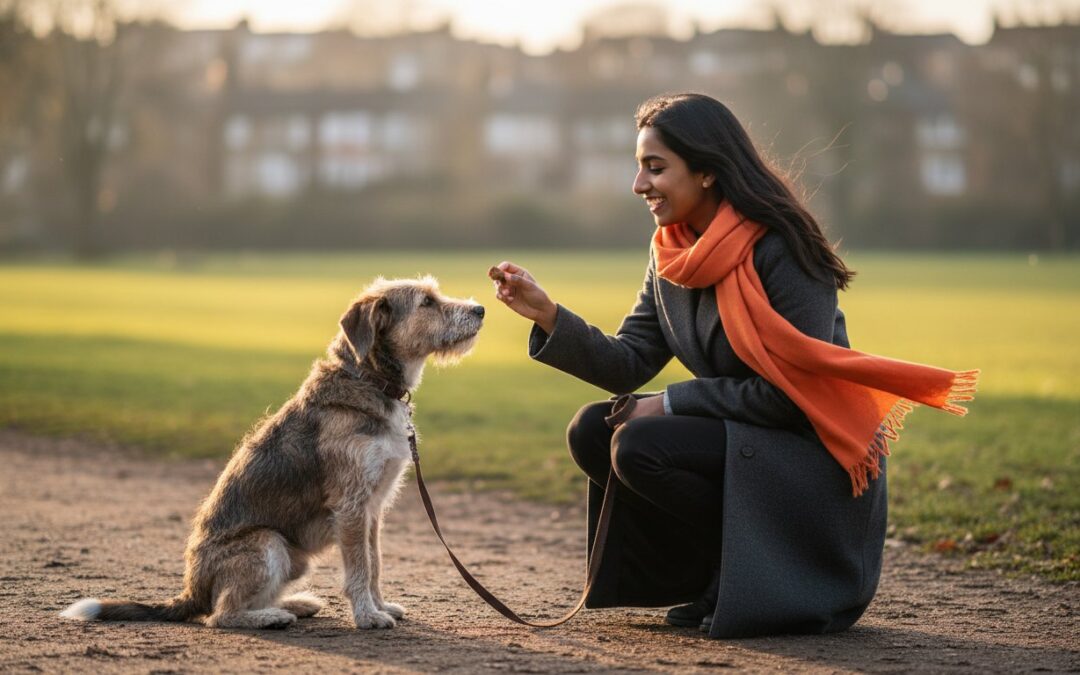
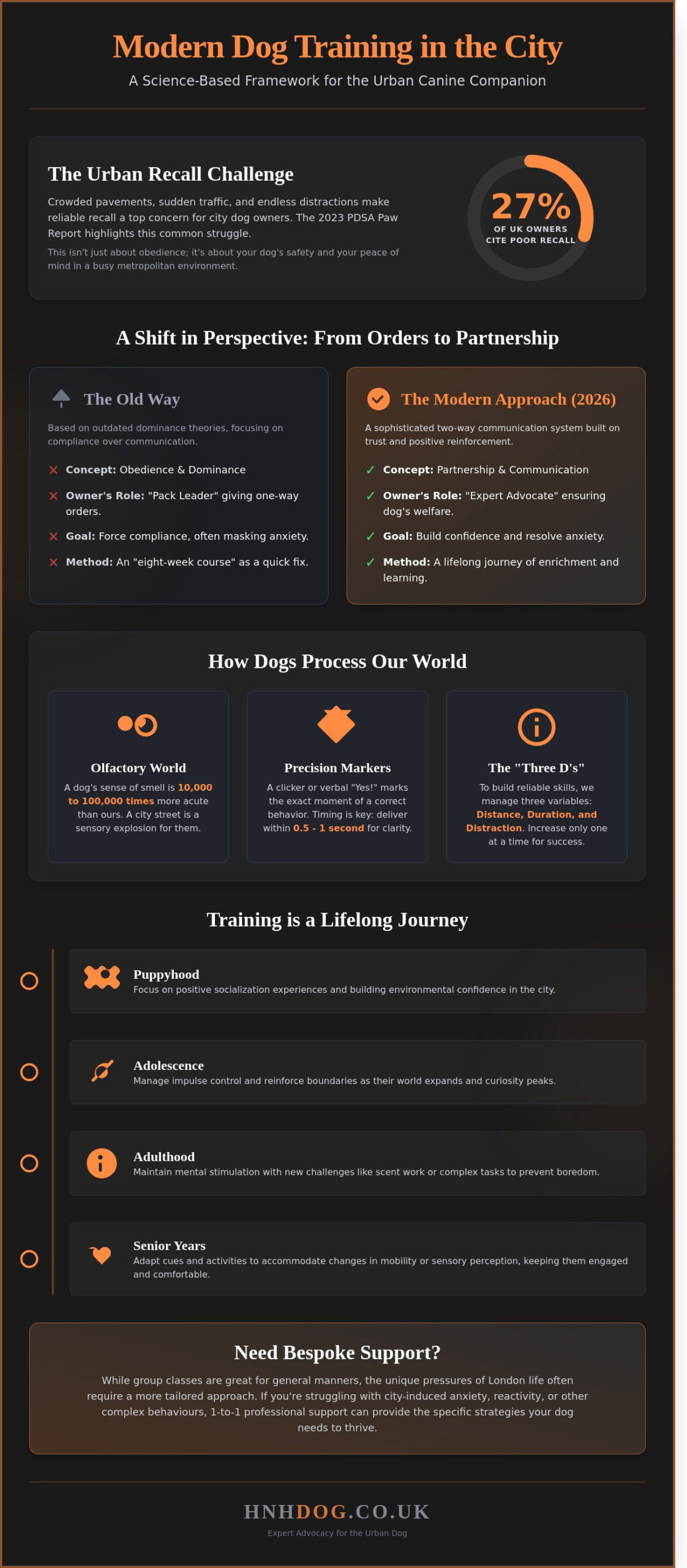
Last Saturday morning, you likely found yourself walking a crowded pavement in Islington, feeling the familiar strain on the lead as your dog reacted to a passing bus. It’s a common struggle in our busy city; the 2023 PDSA Paw Report found that 27% of UK owners feel their dog’s lack of recall is a major concern. You understand that training dogs in a metropolitan environment requires more than just basic commands. It demands a deep understanding of how your pet perceives the world. You want your dog to feel safe and confident, whether you’re exploring the narrow streets of Soho or enjoying the greenery of Hampstead Heath.
We agree that the capital presents unique challenges that standard obedience classes often overlook. This guide provides a science-based framework to help you build a lifelong bond while mastering essential urban manners. You’ll learn how to replace city-induced anxiety with calm, ensuring your pet is a relaxed companion on public transport and in your local cafe. We will explore tailored strategies for reliable recall and lead walking that prioritise your dog’s emotional health and your own peace of mind.
Key Takeaways
- Shift your perspective from giving orders to building a two-way communication system that prioritises your dog’s emotional security.
- Learn how to use precise markers and an understanding of canine body language to bridge the communication gap between you and your companion.
- Discover how to navigate the unique “distraction minefield” of the capital by training dogs to remain calm and focused in busy environments like the London Underground.
- Master the “Five-Minute Rule” to seamlessly integrate meaningful learning into your daily routine without it feeling like an additional chore.
- Identify the signs that your dog needs bespoke 1-to-1 professional support for complex behaviours rather than a generic group class approach.
What Does Training Dogs Actually Mean in 2026?
In 2026, the concept of training dogs has evolved far beyond the traditional “sit and stay” commands of the past. We now recognise it as a sophisticated two-way communication system. It’s a dialogue where we learn to listen to our dogs as much as we expect them to listen to us. This modern approach moves away from the outdated idea of a human as a “pack leader” and instead establishes the owner as an Expert Advocate. Your role is to prioritise your dog’s welfare and emotional security, ensuring they feel safe enough to learn.
The professional pet care industry has seen a massive shift. We’ve traded the word “obedience” for “partnership.” While obedience implies a one-sided demand for compliance, partnership acknowledges the dog’s agency and emotional state. This foundation supports every single interaction you have with your pet. Whether you’re visiting a groomer in Chelsea or navigating a busy lead walk through Hyde Park, a dog who understands this partnership is more resilient. Training is the bedrock of a stable life, reducing stress for both the animal and the owner.
The Core Philosophy of Positive Reinforcement
Modern dog training relies on the science of reward-based learning. It creates lasting results because it motivates the dog to make the right choice rather than forcing them to avoid a wrong one. Positive reinforcement is the addition of a reinforcing stimulus following a behaviour that makes it more likely that the behaviour will occur again in the future. By focusing on modern dog training methods, we build a history of success that bolsters a dog’s confidence.
Force-free methods are particularly vital for the sensitive or nervous dogs often found in urban environments. Using pressure or fear can cause a dog to “shut down,” masking their anxiety rather than resolving it. Training dogs through kindness ensures that trust remains intact, which is essential when facing the unpredictable stimuli of a city like London.
Why Training is a Lifelong Journey, Not a Quick Fix
The old mindset of the “eight-week puppy course” is disappearing. Data from the 2023 PDSA PAW Report indicates that 94% of UK pet owners believe training is essential for a dog’s welfare, yet many stop once basic manners are learned. In 2026, we view education as ongoing enrichment. A dog’s needs change significantly as they age:
- Puppyhood: Focus on socialisation and environmental confidence.
- Adolescence: Managing impulse control and reinforcing boundaries.
- Adulthood: Maintaining mental stimulation through scent work or complex tasks.
- Senior Years: Adapting cues to accommodate changes in mobility or sensory perception.
Consistency is the key to maintaining a well-adjusted urban dog. London life is fast-paced. A dog who receives regular, tailored support is far better equipped to handle the tube, busy cafes, and crowded parks. It’s about building a life together, one successful interaction at a time.
The Science of Learning: How Dogs Process Information
Dogs don’t perceive the world through a human lens. While we rely heavily on visual and verbal cues, a dog’s primary interface with the world is olfactory. Their sense of smell is roughly 10,000 to 100,000 times more acute than ours, meaning a walk down a London high street is a sensory explosion of information. When training dogs, we must acknowledge that they are also reading our micro-movements. A slight shift in your shoulder or a change in your breathing tells them more than a shouted command ever could.
Precision is the foundation of clear communication. This is where markers, such as a clicker or a sharp verbal “yes,” become invaluable. A marker acts as a bridge, telling the dog exactly which movement earned the reward. For this to be effective, timing is critical. Research suggests the marker should occur within 0.5 to 1 second of the desired behaviour. This clarity reduces confusion and accelerates the learning process, making the dog an active participant in the session.
To build reliable skills in an urban environment, we use the “Three D’s” framework:
- Distance: How far the dog is from a distraction or the handler.
- Duration: How long the dog can maintain a specific behaviour, such as a “wait.”
- Distraction: The complexity of the environment, from a quiet garden to a bustling park.
We must also address the “Alpha” or “Dominance” theory. This concept was based on flawed studies of captive wolves in the 1940s and has been scientifically debunked for decades. Modern canine science proves that dogs are social partners, not competitors for rank. Using confrontational methods doesn’t teach; it suppresses behaviour through fear, which often leads to long-term anxiety. Understanding UK law on controlling dogs in public highlights that true control comes from a dog that is focused and calm, rather than one that is intimidated.
The Role of Motivation and Value
Identifying what drives your dog is the key to successful engagement. In a quiet living room, a piece of kibble might be enough. On a busy North London street, the environmental “noise” is much higher, so we must increase the reward value. Using high-value motivators like small pieces of cheese or a favourite toy helps maintain focus. We also monitor the frustration threshold. If a dog becomes too frustrated, their ability to process new information shuts down. Short, successful sessions are always more productive than long, taxing ones.
Building a Language of Connection
Effective training dogs involves reading subtle body language cues. Lip licking, yawning, or turning the head away are often signs of stress, not “stubbornness.” There’s a fundamental difference between a dog who won’t listen and one who can’t listen because their nervous system is overwhelmed by the city’s pace. By establishing clear, non-verbal signals, you build a support system that enhances your bond. If you’re looking to develop this level of mutual understanding, our tailored training support can help you navigate these urban challenges with confidence.
Navigating London: Training for the Urban Environment
London functions as a high-intensity distraction minefield. While a rural walk offers quiet trails, a stroll through Camden or Islington involves narrow pavements, sirens, and constant foot traffic. Successfully training dogs in this environment requires more than basic obedience; it demands emotional resilience. High-density living means your dog encounters more stimuli in ten minutes than a country dog might see in a week. To ensure these interactions remain positive, we follow the AVSAB position statement on humane dog training, which emphasises reward-based methods to build trust in busy settings. Socialisation here isn’t just about meeting other dogs. It’s about helping your companion remain neutral while a red double-decker bus brakes nearby or a cyclist passes inches from their tail.
Managing lead reactivity is a priority for London owners. When pavements are less than two metres wide, your dog can’t always use natural body language to create space from others. This often leads to frustration or fear. We focus on teaching a ‘side’ cue and building a strong focus on the handler. By rewarding your dog for choosing to look at you instead of the passing distraction, you transform a stressful walk into a collaborative exercise. This preparation is also vital for professional services. A dog that’s comfortable with urban handling will settle far more quickly with a mobile groomer or during a group walk.
Mastering Recall in London’s Great Parks
Open spaces like Hampstead Heath or Regent’s Park offer a vital escape, yet they present significant challenges. Your dog must choose you over a darting squirrel or discarded picnic scraps. We recommend using a five-metre or ten-metre long-line lead during the foundation stages. This provides freedom while ensuring safety in unfenced areas. Reliable recall is a life-saving skill, especially when competing with the high-value scents found in a royal park. Practice your training dogs drills during quieter hours, such as 7:00 am on weekdays, to build success before adding the complexity of weekend crowds.
Cafe Culture and Public Transport Manners
London’s hospitality scene is increasingly dog-friendly. However, a relaxed brunch requires a solid ‘settle’ command. You can build this by rewarding calm behaviour on a specific mat at home before transitioning to a quiet local pub.
For the Underground, start with short visits to station entrances to desensitise them to the unique ‘whoosh’ of air and mechanical clatter. Patience ensures they view the Tube as a predictable transition rather than a source of fear.
Flat Living and Indoor Enrichment
With roughly 54% of London dwellings being flats according to recent housing data, many dogs must learn to ignore corridor echoes and lift pings. Alert barking often stems from a need to protect the ‘den.’ You can mitigate this by using white noise machines or food-dispensing toys to provide mental stimulation. When outdoor space is limited, your dog’s energy levels must be managed carefully. If you’re balancing a busy career with urban pet ownership, consult our guide on Professional Dog Walking in London to ensure your dog receives the structured exercise they need. This holistic approach prevents boredom-related behaviours before they start.
Practical Daily Drills for Every London Dog Owner
Effective training dogs doesn’t require hours of dedicated time in a park. It thrives on consistency within your existing schedule. By adopting the “Five-Minute Rule,” you can achieve more progress than a single, exhausting hour on a Saturday. Short, frequent bursts of engagement keep your dog’s stress levels low and their motivation high. This approach respects their cognitive limits and fits perfectly into a busy London lifestyle.
Your home should be a training-rich environment where every interaction is an opportunity for connection. Instead of simply handing over a meal, use a portion of their kibble for a quick “stay” or “middle” drill. When you head out for a walk, view it as an active partnership rather than just a toilet break. A ten-minute walk where your dog is focused on you is far more exhausting for them than thirty minutes of pulling on the lead. Engaging their brain while they move through the city helps them process the urban environment with much more confidence.
The Essential ‘Urban Toolkit’ of Commands
Navigating the capital requires a specific set of skills to keep your dog safe and calm. The “Look at Me” command is your most valuable asset for redirecting attention away from passing buses or crowded pavements. It establishes a reliable line of communication when the world feels overwhelming. Similarly, “Leave It” is a non-negotiable safety skill. London streets can be littered with discarded food or hazardous debris; a solid “Leave It” prevents a costly trip to the vet. Finally, loose lead walking ensures that city strolls are comfortable for both of you. It protects your dog’s neck and your own shoulders, turning a stressful commute into a pleasant journey.
Enrichment and Mental Games
Mental stimulation is often the missing piece in a dog’s behavioural health. Using puzzle feeders or scent work can tire a dog out more effectively than a long run. These activities trigger the release of dopamine and lower cortisol, which reduces the likelihood of destructive behaviours at home. Even in a compact North West London living room or a small patio, you can play “find it” games by hiding treats under towels or inside cardboard boxes. This encourages your dog to use their nose, fulfilling a natural instinct that is often suppressed in urban settings. Tailoring these games to your dog’s unique personality helps build their confidence and strengthens your bond through shared success.
When to Call the Experts: Professional Support in London
Understanding the threshold between basic obedience and complex behavioural modification is vital for your dog’s welfare. While teaching a puppy to sit or stay is a wonderful bonding exercise, urban living often presents challenges that require a more nuanced approach. If your dog struggles with reactivity on lead, separation anxiety, or intense fear of city noises, a general class might not provide the sanctuary they need to learn. H&H Dog has spent 20 years refining a bespoke methodology that prioritises the dog’s emotional state over simple compliance. We advocate for 1-to-1 sessions because they allow us to address the root cause of a behaviour in a controlled, low-stress environment. For a busy Londoner, this focused attention often leads to faster, more sustainable results than a generic six-week course.
Bespoke Training Plans for Unique Dogs
A “one-size-fits-all” mentality often fails in a city as sensory-heavy as London. A rescue dog from a rural background faces a completely different psychological hurdle than a high-energy working breed living in a flat. Our approach involves creating a tailored roadmap that respects your dog’s individual temperament. Whether we’re supporting a nervous pup or channeling the drive of a spirited terrier, we use positive reinforcement to build a bridge of communication between you and your pet. You can find more specific local details in our Guide to Dog Training in North London, which outlines how we adapt our methods for urban environments.
The H&H Difference: A Holistic Approach
We believe that training dogs shouldn’t happen in a vacuum. A dog’s behaviour is inextricably linked to their physical comfort and social routine. This is why our mobile grooming service is designed to be a therapeutic extension of their training, reducing the cortisol spikes often associated with traditional salons. Similarly, our structured group walks aren’t just about exercise; they’re about maintaining socialisation and manners under expert supervision. By looking at the dog’s life through a holistic lens, we ensure that every interaction, from a bath to a stroll through the park, reinforces their confidence and emotional health.
Taking the Next Step
Starting your journey with H&H Dog begins with a comprehensive behavioural consultation. Whether you’re based in Watford or the heart of London, our first assessment focuses on observing your dog’s natural body language and identifying their unique triggers. We provide a clear, actionable path forward that eliminates the guesswork for you. It’s never too late to refine your relationship or help a senior dog find their confidence. Booking a session is an investment in a calmer, more connected life together. We’re here to act as your steady hand and expert mentor every step of the way.
Building a Confident Future for Your London Dog
Living in the capital presents unique challenges for our canine companions, from the bustle of the Underground to the distractions of a crowded park. Mastering urban manners isn’t just about obedience; it’s about ensuring your dog feels safe and understood amidst the city’s intensity. By focusing on positive reinforcement and clear communication, you’re investing in your dog’s long-term emotional health. Our team has spent over 20 years refining force-free, science-based methods to help owners navigate these specific hurdles. Whether you’re based in North London or Watford, our approach ensures that training dogs becomes a rewarding journey of mutual respect rather than a series of stressful corrections.
Every dog has a unique internal world, and understanding their perspective is the first step toward a calmer life together. You don’t have to navigate these challenges alone. Book a bespoke 1-to-1 training session with our London experts today and start building a stronger connection. Your dog’s confidence is the greatest gift you can provide.
Frequently Asked Questions
Is it ever too late to start training an older dog?
It’s never too late to start training an older dog; their brains remain capable of forming new neural pathways throughout their lives. Senior dogs often benefit from the mental enrichment that modern training provides, which can help delay cognitive decline. While a ten-year-old rescue might take longer to unlearn established habits, a tailored approach focusing on their physical comfort ensures they remain engaged and happy.
How long does it take to see results from positive reinforcement training?
You’ll often see small shifts in your dog’s focus during your first session, but establishing reliable habits usually takes four to six weeks of consistent practice. Scientific studies on canine learning show that repetitive, rewarding experiences strengthen the bond and ensure the behaviour becomes a default choice. When training dogs in London’s busy environments, your patience allows the dog to process complex stimuli without feeling overwhelmed or rushed.
Can I train my dog myself or do I always need a professional?
You can certainly teach basic cues at home using reputable online resources, but a professional provides the nuanced observation of body language that books cannot offer. An expert advocate helps you identify subtle signs of stress before they escalate into reactive behaviours. For complex urban challenges, having a mentor ensures your training plan is technically sound and ethically focused on your dog’s emotional well-being.
What should I do if my dog is too distracted by other dogs in London parks?
Increase the distance between your dog and the distraction until they can comfortably look at you for guidance. London parks like Hyde Park or Victoria Park are high-arousal environments where a dog’s threshold is easily reached. By using high-value enrichment and rewarding calm observations from a distance, you teach your dog that you’re the most interesting person in the park, regardless of other dogs.
How much does professional dog training cost in London?
Professional dog training costs in London vary depending on the level of expertise, with one-to-one sessions typically ranging from £60 to £150 per hour according to 2023 industry surveys. Group classes often provide a more budget-friendly entry point, usually costing between £120 and £200 for a six-week course. These rates reflect the trainer’s commitment to ongoing education and the bespoke nature of modern, force-free support.
What is the difference between a dog trainer and a behaviourist?
A dog trainer focuses on teaching specific skills and manners, such as walking on a loose lead or sitting on cue. In contrast, a qualified behaviourist addresses the deep-seated emotional causes behind complex issues like separation anxiety or aggression. If your dog’s actions stem from fear or distress, a behaviourist will create a clinical plan to modify their internal emotional state rather than just their outward actions.
How can I stop my dog from barking at people in our London flat building?
Start by managing the environment to reduce the trigger sounds, perhaps by using white noise machines or window film in your hallway. Barking in flats is often a response to territorial threats or uncertainty about noises in communal areas. Training dogs to associate the sound of a closing lift or a footstep with a positive reward changes their emotional response from alarm to calm anticipation.
My dog is scared of the grooming van; can training help with this?
Yes, training based on gradual desensitisation and counter-conditioning can help your dog feel safe around the grooming van. This process involves introducing the van at a distance where your dog feels no fear and slowly pairing its presence with high-value rewards. By respecting your dog’s pace and monitoring their body language, you build the confidence they need to handle grooming sessions without significant stress.