
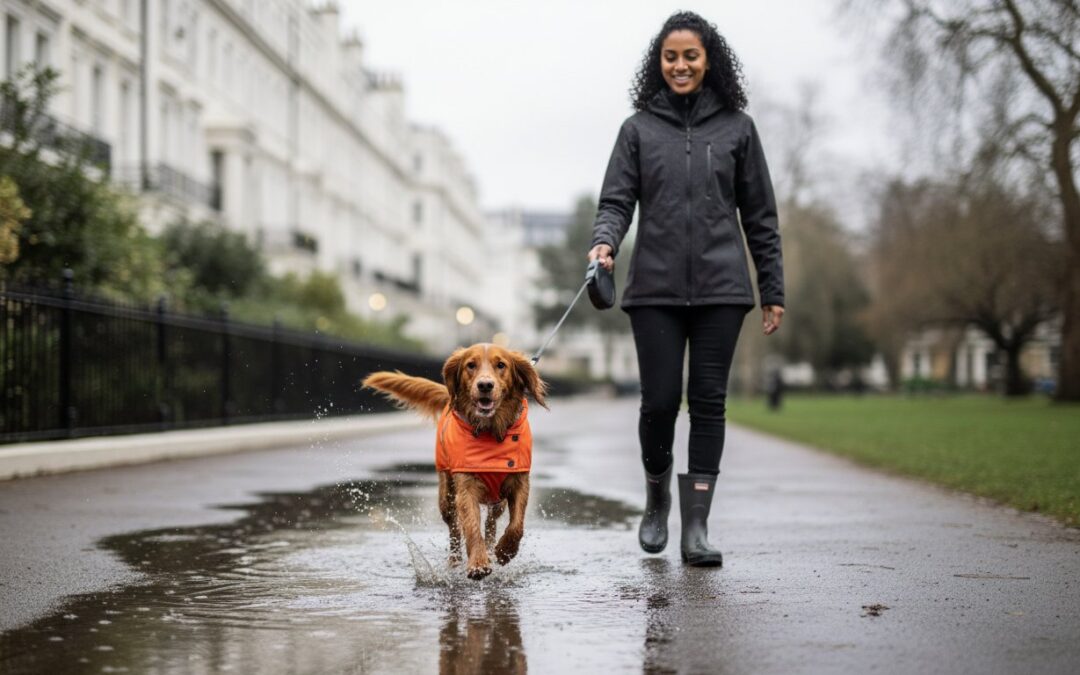
You’ve just stepped back into your London flat after a ten minute dash around the block, and the “wet dog smell” is already claiming every square inch of your living room. It’s a familiar frustration for many pet owners, but finding effective rainy day dog walking solutions London residents can trust is about more than just a sturdy umbrella. You want your companion to stay active, but the reality of muddy paws and a dog who refuses to budge in the drizzle can be exhausting. We understand that balancing your pet’s needs with a clean home feels particularly challenging during the wettest months.
This 2026 survival guide promises to help you master the rain by focusing on high performance gear, indoor enrichment, and professional care. We’ll walk you through the latest waterproof essentials, explain how to tire out a restless pup indoors, and show you how services like a professional bath and brush or a structured group dog walking session can keep your dog content and your carpets pristine. You’ll gain the tools to ensure your pet remains a happy, tired, and clean companion, regardless of what the British weather has in store.
Key Takeaways
- Learn why urban mud and city grit require a more proactive defensive strategy than rural soil to protect your dog’s sensitive paw pads.
- Identify the specific technical features to look for in rain gear to ensure your dog stays dry without the risk of overheating.
- Discover effective rainy day dog walking solutions London residents use to meet their pet’s exercise needs through indoor scent work and mental stimulation.
- Master a professional five-step drying protocol that prioritises undercoat health and prevents common skin irritations like hotspots.
- Understand how professional services like a Bath & Brush or structured group walking provide essential support for your pet’s hygiene and activity levels.
Navigating the London Drizzle: Why Wet Weather Requires an Urban Strategy
London averages over 150 rainy days a year. This statistic isn’t just a weather report; it’s a significant logistical hurdle for anyone seeking effective rainy day dog walking solutions London can actually provide. When the clouds darken over the Thames, your dog’s routine shouldn’t have to suffer. However, successful urban walking during these periods requires a fundamental shift in perspective. Instead of focusing on how many miles you’ve covered, we encourage you to focus on the quality of the interaction. A shorter, more engaged walk is often far more beneficial for your pet’s mental state than a long, miserable slog through a heavy downpour.
City mud is fundamentally different from the soil you’ll find in the countryside. In London, rain mixes with road salt, engine oils, and abrasive pavement grit. This creates a caustic sludge that can irritate sensitive paw pads and compromise canine health and wellness if left to sit on the skin or fur. It’s not just about keeping your carpets clean; it’s about protecting your pet from the invisible irritants found on our city streets. Understanding this chemical difference is the first step in developing a professional grade hygiene routine for your pet.
The Challenges of Rain in North and North West London
If you frequent Hampstead Heath or Highgate Wood, you’re likely familiar with the unique, clay-heavy mud of North London. This substance is exceptionally sticky and tends to trap moisture against the skin. Navigating these areas during a storm also means managing crowded, narrow pavements. When everyone has an umbrella up, a reactive dog can easily feel trapped or overwhelmed by the sudden change in visual stimuli. We recommend using high-visibility gear even during the day, as London’s winter afternoons can turn dark and grey in minutes.
Understanding Your Dog’s Wet Weather Threshold
Your dog’s refusal to leave the porch isn’t a sign of defiance. It’s often a response to sensory overload. The sound of rain hitting a waterproof coat or the cold sensation of water on their underbelly can be genuinely distressing for some temperaments. Look for signs of anxiety, such as tucked tails or excessive lip licking. You can help your dog by building positive associations through gradual desensitisation. Start with short, rewarding sessions near the door on drizzly days. This patient approach ensures they feel safe and supported, rather than forced into an uncomfortable situation.
The Essential Rainy Day Kit for London Dogs and Owners
Equipping yourself with the right tools transforms a soggy chore into a manageable routine. While many owners focus solely on keeping water out, the most effective rainy day dog walking solutions London residents adopt prioritise breathability. A cheap plastic coat often traps heat and moisture against your dog’s skin, leading to discomfort or skin irritations. Look for technical fabrics with high waterproof ratings that still allow for air circulation. For the human end of the lead, footwear must bridge the gap between the slick pavements of central London and the deep mud of the local parks. Waterproof boots with aggressive lug patterns provide the necessary grip to prevent slips during enthusiastic greetings.
Visibility is a critical safety concern during London’s grey winter afternoons. LED collars and reflective leads ensure you and your pet remain visible to cyclists and motorists in low-light conditions. Before heading out in extreme conditions, consult the Kennel Club storm safety advice to determine if the wind and rain levels are safe for your specific breed. Preparation is the key to confidence. Keeping a dedicated ‘wet-weather bag’ by the door stocked with microfibre towels and a portable paw cleaner can save your hallway from the inevitable deluge of urban mud.
Choosing the Right Raincoat for Your Breed
One size rarely fits all when it comes to canine anatomy. Low-slung breeds like Corgis or Dachshunds require full-belly coverage to prevent road spray from soaking their chests. Conversely, double-coated breeds like Golden Retrievers or Huskies often only need a lightweight, water-resistant cape to avoid overheating. Ensure the design is harness-compatible. Safety should never be compromised for the sake of a trend. A well-fitted coat should allow for a full range of motion without rubbing or restricting natural movement.
Paw Protection and Urban Hygiene
London’s winter pavements are frequently treated with salt and grit, which can be highly abrasive. While some dogs tolerate boots, many find them distressing. A high-quality paw balm acts as a breathable barrier against dampness and chemical irritants. If the weather has already taken a toll on your pet’s coat, a professional Bath & Brush can restore their hygiene and prevent the matting that often follows a week of wet walks. This proactive approach keeps your home smelling fresh and your dog’s skin healthy.
Indoor Exercise and Mental Enrichment: Beating the Rain Without the Mud
When the London sky remains a persistent shade of grey for days on end, your dog’s physical activity levels naturally decrease. While we’ve discussed external rainy day dog walking solutions London residents can use, the indoor environment offers a wealth of untapped potential for burning off excess energy. We often recommend the “15 Minutes of Brain Work equals 1 Hour Walk” rule for high energy breeds. Engaging your dog’s mind is a highly efficient way to tire them out without ever stepping onto a soggy pavement. This cognitive fatigue is just as satisfying for a pet as a long trek through the park, and it keeps your living space entirely mud-free.
Scent work is perhaps the most effective tool in your indoor arsenal. A dog’s sense of smell is their primary way of processing the world. By turning your London flat into a rewarding search environment, you tap into their natural foraging instincts. You don’t need expensive equipment for this. Simply hiding high-value treats or a favourite toy in different rooms encourages your dog to use their nose and problem-solving skills. Similarly, you should reconsider how you deliver their daily meals. Using snuffle mats or slow feeders transforms a thirty-second meal into a twenty-minute enrichment session. These small changes to your daily routine help maintain a calm, content pet during low-activity days.
Simple Brain Games for Small Spaces
Living in the city often means working with limited floor space, but mental games require very little room. The “Cup Game” is a classic cognitive challenge; place a treat under one of three cups, shuffle them, and let your dog find the prize. You can also use this time to teach new “trick” behaviours, such as “spin” or “middle.” These actions build a stronger emotional bond and keep your dog’s focus sharp. Interactive puzzles are another excellent option for independent entertainment, allowing your pet to work through a challenge at their own pace while you manage your own rainy day schedule.
Indoor Training Sessions with a Professional
The rainy season is actually the perfect time to refine your dog’s skills through 1-to-1 dog training. Working in a familiar, low-distraction environment like your home allows for deeper focus on complex issues. We can address challenges like leash reactivity or basic obedience without the added stress of wind and rain. For dogs that show increased anxiety during storms, behavioural consultations provide a structured way to understand their emotional state. This professional guidance ensures that even when the weather is at its worst, your dog’s developmental progress never stalls.
The Post-Walk Protocol: Protecting Your London Home from Mud and Odour
Returning to your London home after a downpour often marks the beginning of the most critical phase of your outing. While finding rainy day dog walking solutions London owners can depend on usually focuses on the walk itself, the post-walk protocol is what truly protects your pet and your living space. A damp coat doesn’t just create that lingering “wet dog smell” in a small flat; it can lead to serious skin issues. If moisture remains trapped in the dense undercoat, it creates the perfect environment for bacteria to thrive. This often results in painful hotspots or fungal infections. We believe a structured drying routine is an act of preventative care, ensuring your dog’s long term comfort.
Many owners notice their dogs become hyperactive or experience the “zoomies” immediately after being towelled off. This is a natural physiological release of tension and a response to the sensory change of being wet. To manage this safely in a city apartment, provide a designated “dry-off” zone with non-slip mats. Here they can shake and roll without risk of injury or sliding into furniture. Don’t forget to maintain your gear as well. London’s road salt and grit are highly corrosive. Rinsing harnesses and leads after every muddy excursion prevents skin chafing and significantly extends the life of your equipment.
Step-by-Step Urban Cleanup
- Step 1: The Threshold Station. Establish a de-mudding area right at the door. Keep a bowl of warm water and a dedicated paw plunger ready to remove city grit before it reaches your carpets.
- Step 2: Microfibre Absorption. Use high-absorbency microfibre robes rather than standard cotton towels. These pull moisture away from the undercoat far more efficiently, which reduces drying time and chill.
- Step 3: Debris Inspection. Carefully check between the paw pads for glass shards, sharp gravel, or salt crystals. These are common urban hazards that become more hidden and dangerous when mixed with mud.
The Role of Professional Grooming in Winter
Frequent rain and humidity can cause fur to mat more easily, especially around areas where harnesses rub. A professional mobile dog wash provides a deep, therapeutic clean that standard home bathing often misses. This service ensures the coat is thoroughly dried and ventilated. This step is essential for maintaining skin integrity during the dampest months. Regular professional attention prevents the build-up of urban pollutants in the fur and keeps the skin healthy. We suggest booking a regular Bath & Brush to manage your pet’s hygiene throughout the winter season. This provides you with peace of mind and a clean, happy companion.
Expert Support: How Professional Dog Walking and Grooming Solve Rainy Day Woes
Sometimes the most effective rainy day dog walking solutions London can offer involve delegating to experts who thrive in the drizzle. Relying on a professional dog walker provides your pet with a reliable routine regardless of your own work commitments or the external conditions. These specialists understand how to navigate the city’s parks safely during a storm. They’re trained to monitor for signs of cold-related stress and can adjust the route to find sheltered paths. This level of dedicated care ensures your dog remains active and engaged without you having to worry about the logistics of a wet outing.
Our approach at H&H Dog prioritises your companion’s emotional and physical comfort above all else. We don’t believe in generic care models. Instead, we offer bespoke strategies that respect each dog’s unique threshold for wet weather. This might mean shorter, high-intensity group sessions for energetic breeds or focused, one-to-one attention for those who find the rain overwhelming. By combining our structured Group Dog Walking with Mobile dog grooming, you create a holistic care package that addresses both activity and hygiene. You gain the peace of mind that comes from knowing your pet is returned home not just tired, but properly dried and settled.
Reliable Group Walking in North London
Our team is intimately familiar with the micro-climates of North West London parks. We know which areas of Hampstead Heath remain accessible and which become impassable clay pits during a deluge. Every dog in our care undergoes a thorough drying and cleaning process before they’re brought back to your home. This social interaction is vital. Even on grey days, the presence of their peers provides a significant mental boost that counteracts the gloom and keeps them socially confident.
Stress-Free Grooming at Your Doorstep
Our Mobile dog grooming vans are designed to bring the salon to you, which is particularly valuable during a messy London winter. This setup eliminates the need for you to transport a damp, muddy pet across the city in your own car. We offer tailored packages, such as a Bath & Brush, specifically designed to combat the abrasive effects of road salt and urban grit. These sessions ensure the coat is ventilated and free of the trapped moisture that leads to skin irritation. Contact H&H Dog today to book your rainy-day walking or grooming session.
Mastering the City Elements for Your Dog’s Wellbeing
Navigating the wettest months in the city doesn’t have to be a source of stress for you or your pet. By shifting your focus from long physical treks to high-quality mental engagement, you ensure your dog remains satisfied without the risk of overexposure. Implementing a structured hygiene routine protects your home from the unique challenges of urban mud while safeguarding your dog’s skin health. These rainy day dog walking solutions London owners use are about creating a sustainable lifestyle that prioritises comfort and safety regardless of the forecast.
With over 20 years of professional experience, H&H Dog provides the steady hand you need during unpredictable weather. Our bespoke 1-to-1 training and structured group walking ensure your pet’s development and activity levels never falter. To combat the damp, our expert mobile grooming vans bring professional care directly to your door. You can maintain a clean home and a happy pet by choosing a partnership built on empathy and expertise. Keep your dog happy and clean this winter; explore our London walking and grooming services.
We’re here to help you turn every drizzly day into an opportunity for deeper connection and better health. Your journey toward a stress-free winter starts with the right support.
Frequently Asked Questions
Should I walk my dog if it is raining heavily in London?
Finding rainy day dog walking solutions London owners can trust often means knowing when to stay inside. You should only walk your dog in heavy rain if the wind speeds are low and there’s no risk of localized flooding or falling debris in our city parks. If the weather is extreme, focus on short toilet breaks and replace the long walk with intensive indoor scent work to keep your pet’s mind active.
How do I stop my dog from smelling after a rainy walk?
Preventing the “wet dog smell” requires you to dry the undercoat thoroughly, as moisture trapped against the skin causes the odour. Use a high-absorbency microfibre towel or a dedicated dog dryer on a cool setting to remove dampness from the deepest layers of fur. For persistent smells, booking a professional Bath & Brush ensures that trapped city pollutants and bacteria are fully removed from the coat.
What is the best type of raincoat for a dog in the city?
The best type of raincoat for an urban dog is one made from a breathable, technical fabric with reflective strips for visibility on grey London afternoons. Your dog needs to stay dry without overheating during active movement on the pavement. Ensure the coat features a harness portal so you don’t have to compromise on safety or control during your outing.
Can my dog get sick from walking in the rain?
Your dog won’t get a “cold” from the rain itself, but prolonged dampness can lead to skin infections or a lowered immune system. In London, the biggest risk is often the cold, damp air leading to hypothermia in smaller or short-coated breeds. Always ensure your pet is warm and bone-dry once you return to your flat to maintain their long-term health and comfort.
How do I dry my dog’s paws properly to avoid mud in the house?
You should use a dedicated paw plunger or a bowl of warm water at the threshold to rinse away city salt and grit. After rinsing, dry each paw individually with a microfibre cloth, paying close attention to the spaces between the pads. This prevents mud from being tracked onto your carpets and stops your dog from licking irritating chemicals or salt off their feet.
My dog refuses to go out in the rain; what should I do?
You can help a rain-shy dog by using high-value rewards and very gradual exposure to the outdoors during lighter drizzle. Don’t force them into a heavy storm, as this can damage your emotional bond and increase their anxiety. If the refusal stems from deep-seated sensory overload, our Behavioural Consultations can help you identify the underlying triggers and develop a bespoke confidence-building plan.
Are there any indoor dog walking areas in London?
London lacks dedicated public indoor walking tracks, so you should look for large covered structures like bandstands or bridge underpasses for brief physical activity. Many owners find that effective rainy day dog walking solutions London residents prefer involve shifting the focus to indoor mental work. This satisfies their natural instincts and tires them out without needing a large, dry outdoor space.
How often should my dog be groomed during the wet winter months?
We recommend increasing the frequency of professional grooming to every four to six weeks during the wettest months. Frequent wetting and drying can cause the coat to mat quickly, especially under harnesses or collars where friction occurs. A regular Bath & Brush or a Full Groom helps manage these tangles and keeps the skin healthy despite the persistent London humidity.