

Adult separation anxiety is more than missing someone. It can affect sleep, confidence and daily routines. If you’re looking for a separation anxiety specialist in North West London, start by recognising the signs. Excessive worry about a loved one’s safety, fear of being alone, difficulty sleeping and physical symptoms such as headaches or stomach aches can all be part of the picture.
These experiences can feel confusing, especially when the fear seems stronger than the situation calls for. Separation anxiety can affect people of any age, and severe distress is a valid reason to seek support from a qualified mental health professional.
This article explains how adult separation anxiety may appear, which life events and experiences can contribute to it, and why symptoms may develop. You’ll also find guidance on what specialist support can involve, so you can approach the next steps with greater understanding and clarity.
Key Takeaways
- Notice whether worry about separation is affecting sleep, comfort being alone or everyday routines, rather than focusing on one isolated reaction.
- Clinginess and tearfulness before a separation can signal distress; consider what the person may be feeling and what situations bring the response on.
- Moving away, loss, bereavement, traumatic events and changes in routine may contribute to separation anxiety.
- Early separation experiences and disruptions in attachment may be among the factors involved, but causes can differ from person to person.
- Learn what to look for in a therapist who can help adults understand their symptoms and explore suitable support.
Anxiety triggered by separation from loved ones
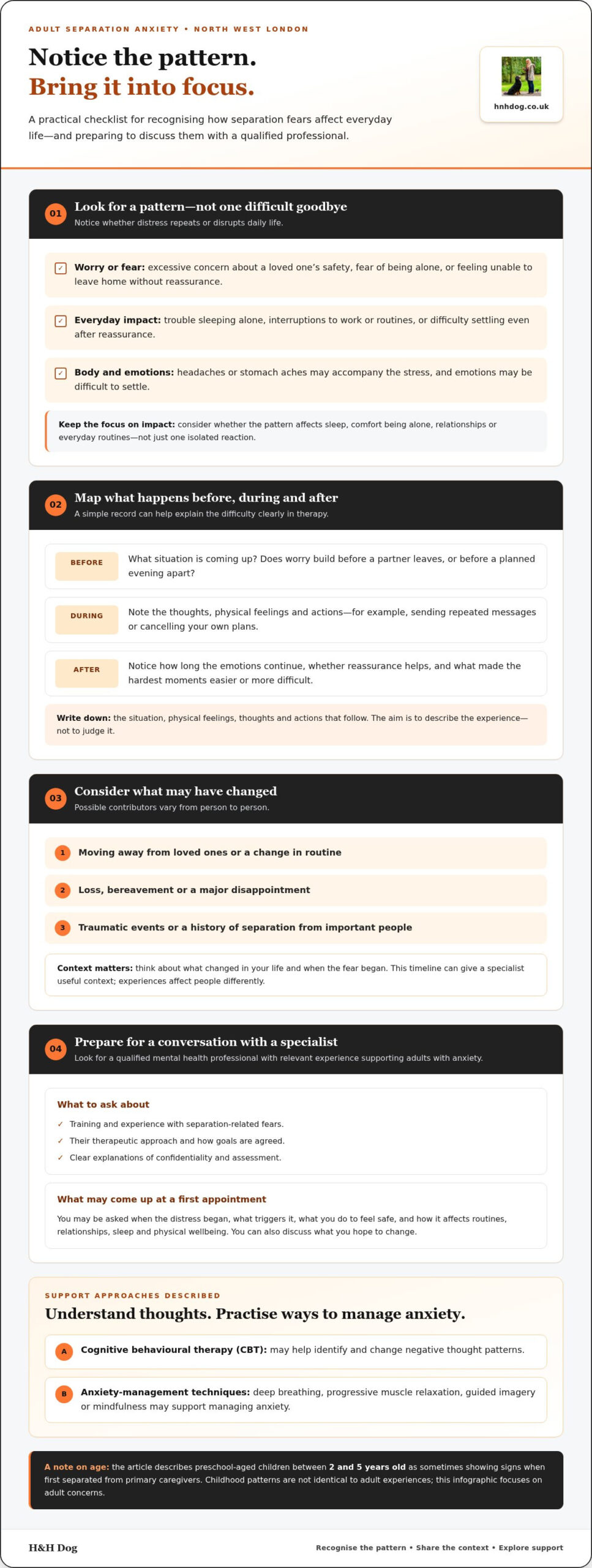
For adults, separation anxiety may involve excessive fear or distress when apart from a person or place associated with safety. The response can continue beyond the moment of parting. You might repeatedly worry that a partner is in danger, struggle to sleep alone, or feel unable to leave home without reassurance. Headaches or stomach aches can accompany this stress, and emotions may be difficult to settle.
The pattern matters more than one difficult goodbye. Notice what happens before, during and after separation: for example, whether worry builds before a partner leaves, interrupts work or continues despite reassurance. Record the situations, physical feelings and actions that follow. This can help you explain the difficulty clearly in therapy, rather than focusing only on the visible distress.
Triggers vary. Moving away from loved ones, traumatic events, losses, bereavements, major disappointments and changes in routine may contribute. A history of separation from important people can also be relevant. These experiences affect people differently, so consider what changed in your own life and when the fear began. That timeline gives a specialist useful context.
Separation anxiety can affect people of any age, although childhood patterns are not identical to adult experiences. Separation anxiety can be part of young children’s experiences when they are apart from their primary caregivers. Preschool-aged children between 2 and 5 years old may show signs when first separated from primary caregivers. These ages help distinguish common early distress from the adult concerns discussed here.
To find separation anxiety therapy near you, look for a mental health professional or therapy practice serving North West London. A local counselling centre may provide a convenient setting to discuss how separation fears affect everyday life. Search by location and adult anxiety support, then consider whether the practitioner’s experience matches your concerns.
In the UK, a specialist should be a qualified mental health professional with relevant experience supporting adults with anxiety. Ask about their training, experience with separation-related fears and therapeutic approach. Clear explanations of confidentiality, assessment and how goals are agreed can also help you understand what working together involves.
At a first appointment, expect to explain what brings you in and how separation affects your routines, relationships, sleep and physical wellbeing. The therapist may ask when the distress began, what triggers it and what you do to feel safe. You can discuss what you hope to change. Cognitive behavioural therapy may help identify and change negative thought patterns, while deep breathing, progressive muscle relaxation, guided imagery or mindfulness can support anxiety management.
Clinginess and tearfulness before separation
Clinginess and tears before a goodbye can show how strongly someone anticipates being apart. In adults, this might mean repeatedly asking when a partner will return, struggling to end a visit or feeling unable to make plans alone. The behaviour signals distress, but does not explain it fully. Notice what happens before separation and how long the emotions continue afterwards.
Look for patterns across real situations. For example, compare how you feel before a partner leaves for work with how you feel during a planned evening apart. Note the thoughts, physical feelings and actions involved, such as sending repeated messages or cancelling your own plans. This record can help you explain the experience to a mental health professional and identify the hardest moments.
Children may also become tearful or clingy when separated from primary caregivers. Children may show distress when separated from caregivers, and age and context can shape how they respond. Age and context matter: a child starting childcare may need time to adjust, while persistent or intense distress calls for closer attention.
For a young child, prepare for separation with familiar, manageable steps. Recall enjoyable past experiences at the place they’ll visit without a parent. Before a return to care, arrange positive interactions with the future carer so that person becomes more familiar. Keep the goodbye clear and calm. An unpredictable departure can make it harder for a child to understand what is happening.
Gradual practice can make separation feel less abrupt. A parent might first leave a child with another suitable caregiver for a brief period, then build on that experience at a pace the child can manage. Calming breathing techniques can also help children handle anxiety about parting. Practise together when calm, rather than introducing the exercise only during tears.
For adults, a gradual approach can mean agreeing on a manageable time apart, then noticing what helped you cope. Avoid treating clinginess as manipulation or forcing a sudden separation. Instead, consider the fear beneath the response and discuss it in therapy if it disrupts relationships or everyday routines. A qualified mental health professional can help explore the pattern and identify suitable support for your circumstances.
If separation-related anxiety remains difficult to manage, raise the option of additional support with a qualified mental health professional. Antidepressant medication for anxiety typically takes two to four weeks before a benefit is felt. This timing matters when discussing expectations: medication is not an immediate way to make an upcoming goodbye feel easier. A professional can help assess whether medication is appropriate and how it might fit alongside other support, based on your circumstances.
If medication is considered, ask what changes to look for and when to follow up, rather than judging its effect after a single difficult separation. Keep noting how anticipation, time apart and reunion affect you; these observations can make conversations with a professional more specific. Support should address distress and its impact, not simply aim to eliminate ordinary sadness at parting. If you are supporting a child, discuss persistent distress with an appropriate professional and consider the child’s age, setting and adjustment when deciding what help to seek.
Life events that may trigger separation anxiety
A change in who is nearby can unsettle a person’s sense of security. Moving away from loved ones, such as relocating for work or study, can make familiar support feel less accessible. The distance itself may matter less than what it means: someone may worry about losing closeness, being alone or not reaching a loved one when needed.
Loss and bereavement can also shape how separation feels. After a death, a relationship ending or another major disappointment, ordinary time apart may bring up fears connected with that experience. These reactions can be especially difficult when separation resembles an earlier loss. Notice which situations bring the fear forward, rather than assuming every goodbye has the same emotional cause.
Traumatic events may contribute too. A frightening experience involving danger, sudden change or separation from someone important can affect how safe later separations feel. For example, a person may become highly distressed when a partner travels after a past emergency. That response deserves attention as an emotional signal, not criticism or proof of weakness.
Changes in routine can be another trigger. A new work pattern, a move to a different home or a loved one beginning regular travel can remove familiar points of contact. Track what changed before the anxiety became noticeable. A simple timeline can include the event, the person involved, the first difficult separation and what helps or intensifies the distress.
For children, changes around school can make parting more demanding. Starting at a new school, changing carers or returning after time away may alter familiar routines and relationships. Parents can help prepare for the transition: talk through what the child can expect, recall enjoyable experiences at the place they’ll visit, and arrange positive contact with a future carer before care resumes.
Several events can overlap. A house move may coincide with a new job, less time with family and disrupted routines. Consider each change separately, then look at how they combine. This can help distinguish a temporary response to transition from distress that continues to interfere with relationships, sleep or daily responsibilities.
Separation anxiety disorder is often brought to counselling and therapy. If fears persist or disrupt daily life, describe the key events and their timing to a mental health professional. Mention any traumatic events, bereavements, relationship changes or routine disruptions that feel relevant. This context can help therapy focus on the experiences and fears connected with separation, rather than treating every trigger as identical.
At the time described on the page, some schools in England had partially reopened. For a child, returning to school can mean another adjustment to daily separations. Caregivers can acknowledge uncertainty without promising that every part of the day will feel easy. Calm explanations and space to talk about what feels difficult may help the child feel heard as routines shift.
Potential causes of separation anxiety
Separation anxiety can have several contributing factors. Potential contributors include genetic factors, early separation experiences and disruptions in attachment between a child and their primary caregiver. These factors don’t create one predictable pattern. For example, two people who experienced similar changes in childhood may respond differently when a partner leaves for work.
Genetic factors may be part of someone’s background, but they don’t explain every symptom on their own. A family history can be one detail to mention during an assessment, alongside when the distress began and what situations bring it on. If a person becomes anxious during a partner’s regular trips, the timing and context help build a fuller picture.
Early separation experiences may also matter. A child who experienced repeated or unexpected separations from a parent may develop strong fears about being apart. Later, a house move or a loved one leaving could bring those feelings back into focus. Looking at the person’s history can help identify connections without assuming one past event caused every difficulty.
Attachment disruptions describe changes or strain in the bond between a child and their primary caregiver. A long period apart, a change in caregiving or difficulty feeling secure with a caregiver may be relevant. This isn’t about blaming a parent. It’s about understanding how a child experienced closeness, care and separation at the time.
Several influences can overlap. A person may have a history of early separation, experience a major life change, and then notice anxiety when loved ones are away. Rather than searching for one definitive cause, consider the sequence: what was happening, when symptoms appeared and which separations now feel hardest. A short written timeline can make these patterns easier to discuss.
Focus on observable details and feelings. Note whether distress arises before a loved one leaves, during time apart or after they return. Record any effects on sleep, routines or relationships, along with the reassurance or actions that seem to ease the fear. These examples can help a mental health professional explore possible contributors and decide what support may fit.
Causes can’t always be separated neatly from triggers. A past experience may shape what feels threatening, while a present-day event brings the anxiety forward. Discussing both the background and current situations in therapy can help make sense of the pattern. The aim is to understand how symptoms developed and what keeps them going, not to assign fault to a person or family.
Which therapists specialise in separation anxiety in North West London?
Look for a qualified mental health professional with experience supporting adults with anxiety and separation-related fears. If you’re searching for a separation anxiety specialist in North West London, focus on a practitioner who can discuss how distress affects your relationships, sleep and daily routines. For example, explain if you avoid travelling alone or repeatedly contact a partner for reassurance.
Relevant experience matters more than a title alone. Ask how the therapist assesses separation anxiety, which approaches they use and how they shape goals around your needs. A practitioner should invite you to describe your emotions without blame, then explain how therapy could address the thoughts and actions linked to distress.
Cognitive behavioural therapy can help adults identify and change negative thought patterns that may cause or worsen separation anxiety. You might explore a thought such as “If my partner doesn’t reply, something terrible has happened,” then examine how it affects your behaviour. Some therapies for anxiety may take 5-20 weekly sessions to show results. That range is not a fixed timetable for every person or every treatment.
At an initial appointment, expect to discuss when symptoms began and which separations feel hardest. A therapist may ask about changes in routine, past experiences, physical symptoms and the effect on work or relationships. You can also share what you hope to manage, such as sleeping alone or tolerating a loved one’s work trip.
To find support in North West London, search for local counselling or psychology practices that describe their adult anxiety work. Read about their experience and therapeutic approach. Before committing, ask how sessions are structured, how progress is reviewed and what happens if your needs change. These practical details can help you decide whether the professional’s way of working feels clear and suitable.
Support can involve more than talking through fears. Deep breathing, progressive muscle relaxation and guided imagery can help adults manage anxiety. Mindfulness can build awareness of thoughts and feelings, while exercise may release energy associated with anxiety and offer a focus beyond fear. A therapist can discuss which strategies fit your circumstances and how to practise them between sessions.
Choose a professional who treats your concerns respectfully and makes space for questions. You could bring a short record of difficult separations, including the situation, your thoughts, physical reactions and what you did next. This concrete example gives the first discussion a useful starting point and helps you explain what you want support to change.
Look for qualified mental health professionals in North West London with experience supporting adults with anxiety and separation-related fears. Local counsellors or psychologists who describe adult anxiety work may be suitable. Ask about their experience and approach to separation anxiety.
Search for local counselling or psychology practices in North West London that describe working with adult anxiety. Review their experience and therapeutic approach, then ask how sessions are structured and how progress is reviewed.
H&H Dog: Full Groom
H&H Dog offers Full Groom for dog owners arranging their pet’s grooming as part of household routines. This service is separate from support for human separation anxiety, which should be discussed with a qualified mental health professional. A groom can suit your dog’s coat-care needs, while Bath & Brush offers another grooming option. If your dog is a puppy, Puppy’s First Groom provides a dedicated first-groom service.
Think about your dog’s individual needs when planning care around appointments or time apart. Grooming isn’t therapy for separation anxiety, but it can address a practical pet-care task within your wider routine. For details about grooming or to arrange the next step, visit H&H Dog.
Choose the support that fits your next step
If separation anxiety is affecting your wellbeing, a separation anxiety specialist in North West London should be a qualified mental health professional whose experience fits your needs. Keep that support distinct from pet care: dog grooming does not treat human anxiety, and appropriate therapy is the relevant next step for your distress.
For your dog’s grooming needs, H&H Dog offers Full Groom, Bath & Brush and Puppy’s First Groom. These services can help you plan practical care for your pet as part of your household routine. Choose the option that suits your dog, and contact H&H Dog to discuss grooming.
Contact H&H Dog to discuss support. Taking one suitable step at a time can help you move forward with greater clarity and care.
Frequently Asked Questions
What are the signs of adult separation anxiety?
Adult separation anxiety may involve persistent worry about a loved one’s safety, distress before time apart or fear of staying alone. You might repeatedly check messages before a partner’s journey or struggle to sleep when they’re away. Notice whether these reactions disrupt work, relationships or everyday plans. A brief record of when they occur can help you describe the pattern clearly to a mental health professional.
What causes separation anxiety?
Separation anxiety can involve several contributing factors, including genetic influences, early separation experiences and disruptions in attachment between a child and a primary caregiver. No single factor explains everyone’s experience. To explore what may be relevant for you, note when symptoms began, what was happening at the time and which situations now bring them on. This timeline can give a therapist useful context without placing blame on you or your family.