
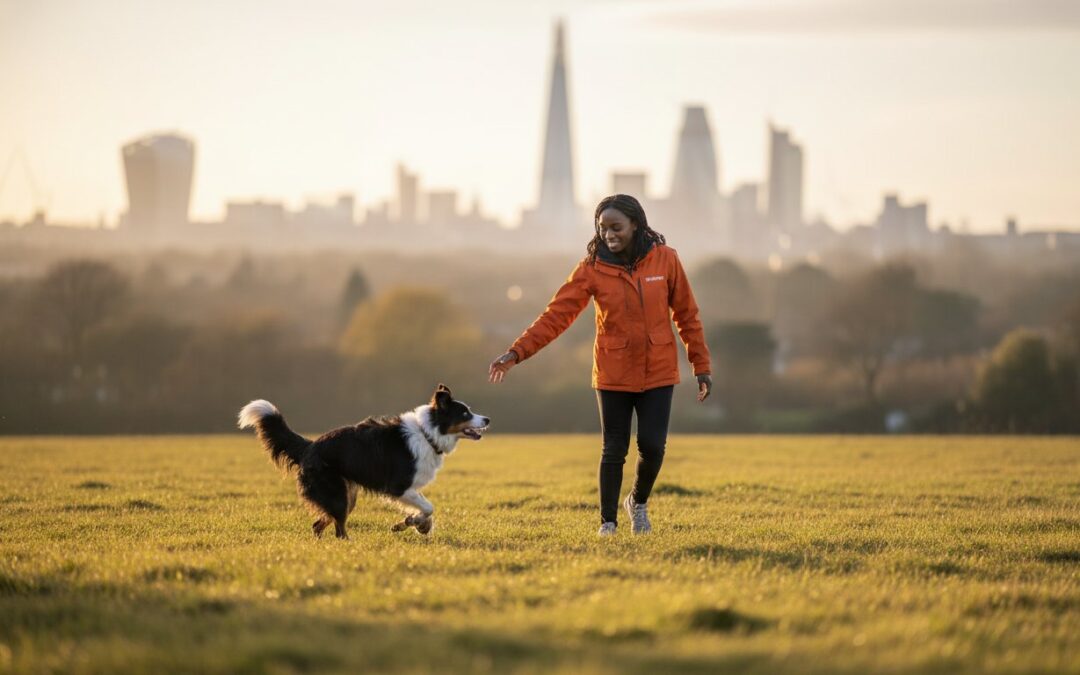
Imagine standing at the edge of a crowded Hampstead Heath on a Sunday afternoon, watching your dog pause at the sight of a distant squirrel. In that split second, the difference between a stressful chase and a calm return lies entirely in the quality of your dog obedience training. Living in a city as vibrant and fast paced as London presents unique challenges that suburban owners rarely face. It’s a reality where narrow pavements and bustling crowds require more than just a simple “sit” or “stay” command.
You likely feel the pressure of keeping your dog safe and settled while navigating the sensory overload of the capital. This guide will show you how to move beyond basic commands to build a partnership based on mutual trust and clear communication. You’ll learn how to transform your daily walks from a physical struggle into a shared experience of genuine connection. We will explore the specific techniques required for reliable recall in busy parks and the subtle body language cues that help your dog remain relaxed in the heart of the city.
Key Takeaways
- Shift from “commanding” to a two-way communication system to ensure safety and social harmony on London’s busy streets.
- Learn the science of positive reinforcement to understand the “why” behind your dog’s behaviours in high-stimulation urban environments.
- Determine if social group sessions or bespoke 1-to-1 dog obedience training best suits your dog’s specific needs, whether they are a puppy or a rescue.
- Master essential urban skills, including a 5-step guide to loose lead walking and the “Settle” cue for relaxing in London’s dog-friendly pubs.
- Discover how a holistic, bespoke approach-honed over 20 years-can strengthen your bond and support your dog’s emotional health.
Mastering Dog Obedience Training in the Heart of London
Effective dog obedience training is far more than a sequence of shouted commands. It functions as a sophisticated two-way communication system where you learn to listen to your dog as much as they learn to follow your lead. In the dense urban environments of North London and Watford, this partnership becomes a necessity rather than a luxury. While a rural dog might have the luxury of space, a city dog must navigate narrow pavements, crowded markets, and the constant hum of traffic. We have moved away from the outdated era of forced compliance. Modern, science-based training focuses on building a deep connection that respects the dog’s emotional state.
Training in areas like Islington or the busy high streets of Watford presents unique challenges. Your dog encounters a diverse range of park environments and intense sensory triggers every day. By focusing on mutual understanding, you transform potential stressors into opportunities for growth and cooperation. Safety is paramount. A well-trained dog is a confident dog, capable of navigating the capital with ease.
The Urban Advantage: Why Training Matters
- Safety on busy roads: A reliable “stop” or “wait” command is a life-saving tool when navigating junctions or busy cycle lanes. In a city where traffic accidents involving pets are a constant risk, these cues provide an essential safety net.
- Social freedom: A well-behaved dog enjoys significantly more social freedom. With over 3,000 dog-friendly establishments across London, a calm companion is more likely to be welcomed into local cafes and boutiques.
- Reducing stress: Training serves as a vital buffer against environmental anxiety. It provides your dog with the cognitive tools to process urban sensory overload, ensuring they remain relaxed despite sirens, crowds, and construction noise.
Breaking the Myths of Dominance
The concept of being an “alpha” or “dominating” your pet is a relic of the past that science has thoroughly debunked. These theories often damage the trust between you and your companion, leading to anxiety-based behaviours. Instead of being a boss, you should aim to be your dog’s Expert Advocate. This role involves understanding their needs and protecting them from overwhelming situations. Modern dog training has evolved to prioritise the animal’s welfare and internal motivation over physical correction. Positive reinforcement is the most effective tool for long-term behaviour change because it rewards the choices we want to see repeated. This ethical approach ensures that dog obedience training remains a rewarding experience that strengthens your bond for years to come.
The H&H Philosophy: Building Connection Through Positive Reinforcement
At H&H Dog, we believe effective dog obedience training is rooted in science, not suppression. Dogs learn through the immediate consequences of their actions. When a behaviour results in something they value, they’re likely to repeat it. This is the core of positive reinforcement. We move away from outdated “alpha” myths that rely on fear. Instead, we focus on motivation. Every bark, lunge, or sit is a form of communication. In a busy city like London, your dog is constantly processing a sensory overload of sirens, crowds, and traffic. Understanding what they’re trying to say in these high-pressure environments is the first step toward a calmer life together.
Reading canine body language is a non-negotiable skill for any owner. Before we start any session, we observe the subtle cues: the tension in a brow, the height of a tail, or a flick of the tongue. These signals tell us if a dog is ready to learn or if they’re feeling overwhelmed. While many “training mills” apply the same rigid drills to every animal, we know that a nervous rescue in Hackney requires a different approach than a confident puppy in Chelsea. Tailored care respects the individual temperament of your dog, ensuring they feel safe enough to engage with you.
The Power of Choice and Reward
Motivation is deeply personal. While many dogs will work for a piece of dried liver, others find a game of tug or a specific scent more rewarding. We help you identify these unique drivers. In London, we often use “Life Rewards” to reinforce good habits. This means using the environment to your advantage. If your dog sits calmly while a cyclist passes in Hyde Park, their reward might be the permission to go and sniff a nearby tree. This builds a reliable connection because the dog chooses to cooperate. Success depends on your timing. You have about one second to mark a behaviour for your dog to make the mental link between their action and the reward. Consistency is what turns a one-off success into a lifelong habit.
Understanding Emotional Thresholds
A threshold is the invisible line where your dog can no longer process information because they’re too stressed or excited. A quiet mews might be the perfect place for a lesson, but a crowded station at rush hour could be far beyond your dog’s current threshold. If they’re over-threshold, their brain is in “survival mode” and learning stops. We teach you how to manage the environment to set your dog up for success. We also consider the link between physical health and focus. A dog struggling with matted fur, skin allergies, or joint discomfort will have a much lower tolerance for the demands of dog obedience training. Our bespoke training plans always take these holistic factors into account, ensuring your dog is physically and emotionally ready to progress.
Finding Your Fit: Comparing London Group Classes and Private Training
Every London dog faces a unique set of urban pressures, from the narrow pavements of Islington to the bustling crowds of South Bank. Choosing the right environment for dog obedience training is the first step toward a harmonious life together. You need to decide whether your dog will thrive in the communal energy of a group class or requires the quiet, bespoke focus of private sessions. This choice isn’t just about convenience; it’s about understanding your dog’s internal emotional state and what they need to feel safe while learning.
Logistics often dictate this choice in the capital. London pet owners must account for travel time on the Overground or the stress of a busy bus journey with a young or anxious pet. While some owners prefer the structure of a local community hall, others find that park permits and local council regulations make home-based sessions more practical. For a deeper look at navigating these local nuances, The Ultimate Guide to Dog Training in North London provides a comprehensive breakdown of what to expect in your specific borough.
When to Choose One-to-One Training
Private training is often the most ethical choice for dogs that feel overwhelmed by their surroundings. If your dog struggles with lead reactivity, intense fearful behaviours, or separation anxiety, a group setting can cause unnecessary distress. A professional trainer visiting your home allows them to see the dog’s behaviour in its natural context. This 1-to-1 approach ensures the pace is tailored entirely to your dog’s unique temperament. It allows for faster progress because the trainer can focus on your specific schedule and the nuances of your home environment.
The Role of Group Socialisation
Group classes serve a vital purpose, particularly for puppy training and early-life development. These sessions teach your dog how to maintain focus while other dogs are nearby. This is a critical skill for navigating London’s 3,000 parks safely. Beyond the physical skills, these classes build a supportive community. You’ll meet other owners facing similar challenges, turning dog obedience training into a shared journey of mutual support. It’s an excellent way to build social skills in a controlled, positive environment where the dog’s welfare is always the priority.
Consider these factors when making your decision:
- The Dog’s Age: Puppies benefit from the controlled socialisation of groups, while older rescues may need the safety of a private home session.
- Specific Goals: General manners work well in groups; complex behavioural issues require a bespoke private plan.
- Your Schedule: Private sessions offer flexibility for busy professionals who cannot commit to a fixed weekly class time.
Step-by-Step: Essential Obedience Skills for Busy London Streets
Navigating the capital with your dog requires more than just basic commands; it demands a functional partnership that can withstand the sensory overload of city life. Effective dog obedience training isn’t about control. It’s about clear communication that helps your dog feel safe amidst the roar of the Underground and the bustle of narrow pavements.
Loose Lead Walking: Navigating the Pavement
Walking on a loose lead is a vital safety skill when you’re inches away from traffic. Follow these five steps to build a reliable connection:
- Start in the hallway: Practise in a familiar, low-distraction environment where your dog can focus entirely on you.
- The “Be a Tree” method: When the lead goes taut, stop moving immediately. Wait for your dog to create slack or look back at you before moving forward again.
- Reward the “Check-In”: Every time your dog looks at you voluntarily, provide a high-value treat at your side.
- Introduce the threshold: Practise these steps at your front door, only stepping outside when the lead remains loose.
- Gradual exposure: Move to a quiet side street before attempting busier routes like the Kings Road or Upper Street.
Restricting a dog to a very short lead in the city often increases their frustration because they feel unable to move naturally or investigate their surroundings. This tension frequently leads to more pulling rather than less.
Recall in the Park: Beating the Distractions
London’s green spaces, from Victoria Park to Hampstead Heath, are full of squirrels and other dogs. To ensure a reliable recall, you must use high-value rewards like dried liver or cheese that outweigh the excitement of the environment. Play the “Check-In” game by rewarding your dog every time they choose to look at you without being prompted. If your dog is slow to return, never punish them. Doing so teaches them that returning to you results in a negative experience, which will make them hesitate next time. Instead, praise them warmly when they arrive, no matter how long it took.
For urban safety, you should also master the “Emergency Stop.” This cue tells your dog to drop or sit instantly at a distance, which is crucial if they are heading toward a cyclist or a busy road junction.
The Art of the “Settle”
Training your dog to relax in a dog-friendly pub or cafe makes urban living much more enjoyable. Use a specific “place” mat that your dog associates with calm. Start at home by rewarding them for lying on the mat, then gradually increase the “3 D’s”: Duration, Distraction, and Distance. Once they can settle for ten minutes at home, move to a quiet cafe during off-peak hours.
Consistency is the foundation of progress. Engaging with dog walking in London can reinforce these skills, as professional walkers provide the regular, structured practice your dog needs to maintain their dog obedience training while you are at work.
Ready to transform your city walks into a stress-free experience? Contact H&H Dog today to learn about our tailored training support.
Bespoke Training with H&H Dog: Your London Expert Advocates
With over 20 years of experience serving the London and Watford areas, H&H Dog provides more than just basic instruction. We act as your expert advocate, guiding you through the nuances of canine psychology with a steady, experienced hand. Our philosophy centres on a bespoke approach because we recognise that your dog is a unique individual with their own personality and history. We don’t just focus on a single command; we look at the whole picture. This includes their daily exercise, their social interactions, and even their physical comfort. When we address these foundational elements, dog obedience training becomes a much more fluid and rewarding process for both of you.
Our mobile services are designed specifically for the pace of North London life. We come to your home, which is where most behavioural patterns are actually formed. This allows us to observe your dog in their natural environment, providing a more accurate assessment than a sterile training hall ever could. By working in the spaces where you live and walk, we can provide practical solutions that fit your specific lifestyle.
A Holistic Approach to Canine Welfare
We believe that training cannot exist in a vacuum. It must be paired with mental enrichment and high-quality care to be truly effective. There is a direct link between a calm, stress-free grooming experience and a dog’s ability to focus during a lesson. If a dog is anxious about being handled or groomed, they won’t have the mental capacity to learn new cues effectively. Stress in one area of life almost always spills over into others.
Our commitment to force-free, science-based methods ensures that your dog’s emotional health is always the priority. We use positive reinforcement to build confidence, helping your dog choose the right behaviours because they feel safe and motivated. We avoid outdated, confrontational techniques, opting instead for a partnership based on clear communication and trust. This ethical foundation ensures that the progress you make during dog obedience training is sustainable and strengthens your bond.
Getting Started with H&H Dog
Your first 1-to-1 session or behavioural consultation serves as the foundation for everything that follows. We don’t offer quick fixes that merely mask symptoms. Instead, we provide a detailed roadmap that addresses the root causes of your dog’s actions. Whether you’re in North West London or Watford, we stay by your side through every stage of the journey, from puppyhood through to the senior years.
During our sessions, you’ll learn how to interpret subtle body language and how to use a lead with kindness and precision. We empower you with the tools to handle even the most complex behavioural challenges with calm confidence. This isn’t just about achieving compliance; it’s about building a life of partnership and mutual respect. Reach out to H&H Dog today to start a new, more connected chapter with your companion.
Building a Harmonious Life with Your London Dog
Navigating the bustling streets of North London or the busy parks of Watford requires more than just basic commands; it demands a deep, mutual understanding built on trust. You’ve seen how positive reinforcement bridges the communication gap and why tailored, private sessions often provide better results than generic group classes in high-distraction environments. Success in dog obedience training isn’t about force or dominance. It’s about understanding your dog’s emotional state and providing the support they need to feel safe and confident in the city.
H&H Dog brings over 20 years of professional experience to help you achieve this balance. Our science-based philosophy ensures that every interaction is kind, ethical, and effective. We don’t believe in one-size-fits-all solutions because every dog and owner partnership is unique. By focusing on your dog’s perspective, you can replace stress with connection and turn every walk into a positive experience.
Take the next step toward a calmer, happier life together. Book your bespoke 1-to-1 dog training session with H&H Dog today. You’re not just teaching skills; you’re investing in a lifetime of mutual respect and joy.
Frequently Asked Questions
What is the best age to start dog obedience training in London?
You should begin dog obedience training the moment your puppy arrives home, which is typically at 8 weeks of age. The PDSA identifies the critical socialisation window as occurring before 16 weeks, making early intervention vital. Starting early helps your dog navigate London’s busy environments with confidence and ease. It’s about building a foundation of trust before unwanted habits have the chance to develop.
How long does it take to train a dog to walk on a loose lead?
Teaching a dog to walk on a loose lead typically takes 4 to 12 weeks of daily, consistent practice. This timeframe depends on your dog’s previous experiences and the specific distractions found on your local walking route. London streets present hundreds of unique stimuli, so progress requires steady patience. Short, successful repetitions ensure your dog views the lead as a vital connection rather than a restriction.
Can an older rescue dog still learn obedience skills?
Older rescue dogs can absolutely learn new skills, as canine brains remain plastic and capable of learning throughout their lives. While a 7 year old dog might take longer to unlearn deep-seated habits, they often possess a focus that younger puppies lack. We focus on their emotional state first to ensure they feel safe. This creates the right mental environment for successful learning and relationship building.
What is the difference between a dog trainer and a dog behaviourist?
A dog trainer focuses on teaching specific cues and life skills, whereas a dog behaviourist addresses complex emotional issues like separation anxiety or reactivity. Trainers often hold certifications from organisations like the APDT, while behaviourists usually have degree-level qualifications in animal behaviour. Understanding this distinction helps you choose the right support for your dog’s unique needs and long term welfare.
How much does professional dog obedience training cost in London?
Professional dog obedience training in London typically costs between £15 and £30 per session for group classes. For bespoke 1 to 1 sessions, prices usually range from £70 to £160 per hour based on 2024 industry averages for the capital. These rates reflect the high level of expertise required to manage complex urban training challenges. Investing in quality guidance prevents the long term costs associated with managed behavioural issues.
Is positive reinforcement effective for ‘stubborn’ dog breeds?
Positive reinforcement is highly effective for breeds often labelled as stubborn, as it focuses on motivation rather than conflict. Science shows that 100 percent of dogs respond better to reward based systems than forceful corrections. By using high value rewards, you encourage your dog to become a willing partner in the training process. This approach respects their autonomy while achieving reliable results in any environment.
How often should I practice training sessions at home?
You should aim for 3 to 5 short training sessions every day, lasting no more than 10 minutes each. Dogs learn most effectively in brief bursts that prevent mental fatigue and keep engagement high. Consistency is far more important than duration. Integrating these moments into your daily routine, such as practicing a “wait” before meals, makes the training feel natural for both of you.
Do I need special equipment for obedience training on London streets?
You need a standard 1.5 metre fixed lead and a well fitted Y-shaped harness for safe training on London’s pavements. Retractable leads often lack the control required for narrow 2 metre wide city footpaths and can cause safety risks near traffic. A treat pouch is also essential for the quick delivery of rewards. This equipment ensures you can communicate clearly with your dog in high pressure urban environments.