
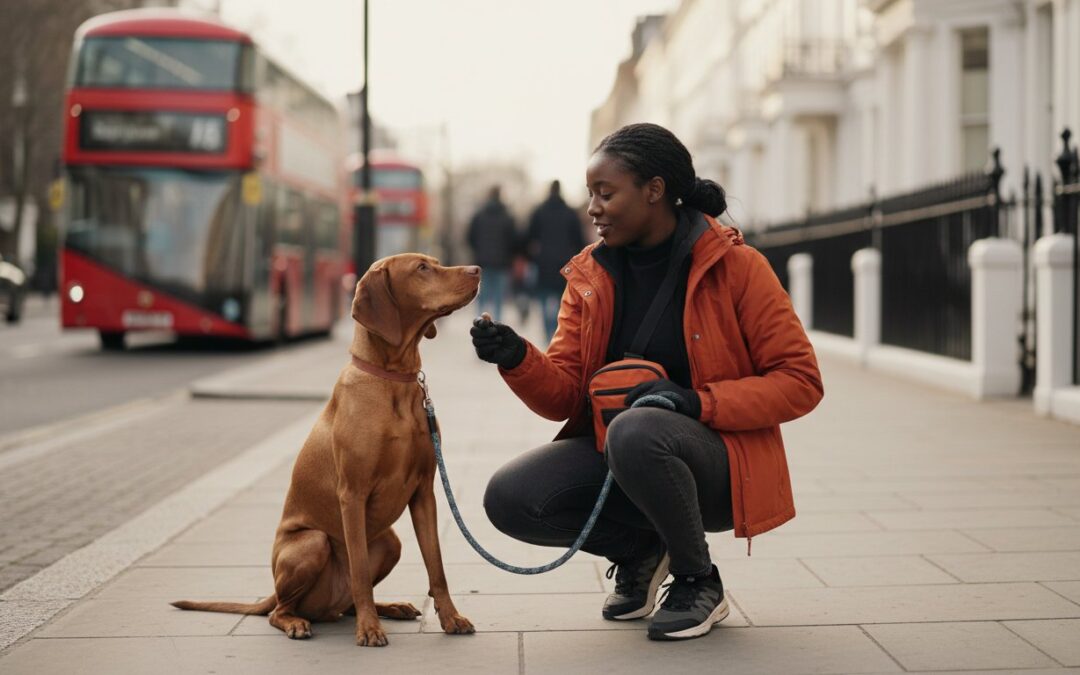
Last Saturday, a client shared that she had spent three hours scrolling through conflicting YouTube tutorials, only to feel more defeated when her puppy lunged at a passing cyclist on a busy Chelsea pavement. It’s a common frustration for Londoners who find that standard advice often fails to account for the intense sensory overload of the capital. Enrolling in a modern dog school isn’t just about teaching a “sit” or “stay” command. It’s about helping your canine companion feel safe and supported amidst the sirens, crowds, and high-speed movement of city life.
You likely already know that your dog’s reactive behaviour isn’t a sign of “dominance,” but rather a natural response to the 1,500 different stimuli they might encounter on a single walk through a London park. We’re here to bridge that gap. This guide will show you how expert, force-free guidance can transform your stressed walks into moments of calm connection and mutual respect. We’ll explore the essential criteria for urban training and the steps you can take to build a partnership that thrives in the heart of the city.
Key Takeaways
- Understand how modern canine education prioritises communication over outdated obedience to foster a more profound, empathetic bond with your dog.
- Master the skills needed to navigate urban challenges, ensuring your dog remains settled and secure in busy London environments and crowded parks.
- Evaluate the most effective dog school models, from tailored one-to-one sessions to group classes, to find the perfect fit for your pup’s personality.
- Discover how to identify reputable, force-free professionals who use science-based methods to support your dog’s emotional health and development.
- Understand the benefits of a bespoke, holistic approach that aligns expert training with your dog’s daily walking and grooming requirements.
What is a Modern Dog School and Why Does it Matter?
Choosing a dog school is no longer just about teaching a puppy to sit on command; it’s about establishing a sophisticated, two-way communication system. In the past, training was often viewed as a series of rigid commands designed to ensure compliance through correction. Today, modern canine education focuses on the “why” behind the action. It recognises that your dog is a sentient being with a complex emotional life. When you enrol in a reputable school, you’re investing in a partnership. You learn to read your dog’s subtle cues, while they learn how to navigate our human world with confidence. This shift from “obedience” to “education” ensures that training feels like a collaboration rather than a confrontation.
The Evolution of Canine Education
The days of “dominance” theory and “alpha” posturing are firmly in the past. Scientific research has debunked these confrontational models, showing they often increase anxiety rather than solving problems. Instead, modern dog training methods prioritise positive reinforcement and force-free techniques. This means we reward the behaviours we want to see, making them more likely to occur again. By focusing on your dog’s internal emotional state, we address the root cause of their actions. This approach builds a deep connection based on trust. You aren’t just demanding compliance; you’re fostering a willing participant who feels safe and understood.
The Benefits of Professional Support
While generic online tutorials offer basic tips, they cannot observe the specific nuances of your pup’s personality. A professional dog school provides an expert set of eyes. A qualified trainer can spot the tiny flick of an ear or a subtle stiffening of the tail that indicates your dog is feeling overwhelmed. This level of detail is vital for safe socialisation. In a structured environment, your dog learns to interact with others under careful supervision, preventing the “leash reactivity” that affects approximately 25% of the UK dog population. A tailored programme addresses your dog’s unique needs, which a one-size-fits-all video simply cannot do.
Professional guidance also serves as a vital preventative measure. It’s much easier to shape good habits in a young dog than it is to unlearn deeply ingrained behavioural issues later. By understanding the principles of enrichment and clear communication early on, you create a stable foundation for urban living. This proactive approach saves time and stress. It turns the challenge of raising a dog in a busy city into a rewarding journey. You gain the confidence to handle any situation, and your dog gains the skills to thrive by your side.
The Urban Challenge: Why London Dogs Need Specialist Schooling
London is more than just a city; it’s a high-intensity sensory landscape. For a canine, the capital presents a complex array of auditory and visual stimuli that can easily lead to anxiety. A specialised dog school focuses on these specific pressures, ensuring your companion feels secure rather than overwhelmed by the rush of the metropolis. Every siren reaching 120 decibels or crowded pavement shared with some of London’s 9 million residents is a potential stressor that requires careful navigation.
Adhering to UK animal welfare regulations means providing an environment where your dog can thrive. In London, this involves mastering focus amidst constant distractions. Walking in Richmond Park, for instance, requires a different skill set than a quiet rural stroll. With 630 red and fallow deer roaming across the 2,500-acre site, a reliable recall is essential for safety. Similarly, the 790 acres of Hampstead Heath demand high-level engagement to keep your dog focused on you despite the dense weekend crowds.
Socialisation in the City
Modern socialisation is often misunderstood as a requirement for dogs to be “friendly” with every passerby. In a dense urban environment, we prioritise neutrality. A successful London dog can settle quietly under a table in a dog-friendly cafe or remain calm on a busy Jubilee Line train. This involves controlled exposure to diverse sights and sounds. We suggest introducing your pup to at least 15 unique urban textures and noises each week to build a robust mental map of their world without triggering a fear response.
Managing Urban Stressors
City dogs frequently experience “trigger stacking.” This happens when multiple small stressors, such as a motorbike revving followed by a cyclist passing closely, occur in quick succession. If a dog’s emotional threshold is crossed, they may react with fear or frustration. Enrolling in a structured puppy training programme is a vital step in preventing these issues before they take root. Our dog school approach uses gradual desensitisation to build confidence, ensuring your dog views the city as a predictable environment rather than a threat.
If you’re finding the city’s pace challenging for your dog, our trainers can help you develop a bespoke support plan to help you both navigate London with ease.
Comparing Dog School Models: Which Path is Right for You?
Choosing the right dog school involves more than just picking the nearest venue. London offers a diverse range of training environments, each suited to different developmental stages and temperaments. You must decide which structure provides the most ethical and effective support for your pup’s specific needs. Your choice will dictate how quickly your dog settles into urban life.
Group Classes vs. One-to-One Training
Group classes serve as an excellent platform for basic socialisation. They allow your dog to practice focus while other dogs and people move nearby. This environment mimics the distractions of a busy London park but within a controlled setting. If your dog is confident and social, these sessions build essential life skills. However, one-to-one training is the superior choice for dogs that feel overwhelmed by crowds or exhibit specific reactivity. Private sessions allow for a bespoke plan that moves at your dog’s individual pace. You get the trainer’s undivided attention, ensuring every subtle shift in your dog’s body language is addressed immediately.
Specialist Behavioural Consultations
There is a distinct line between teaching a “sit” and modifying an emotional response. General training focuses on cues and actions. Behavioural consultations delve into the “why” behind the action. If your dog shows red flags like resource guarding, separation anxiety, or fear-based aggression, a specialist is required. Recent advances in the scientific understanding of dog behavior show that emotional health is the foundation of all learning. Addressing these issues early is the kindest path. It prevents minor anxieties from becoming lifelong phobias. You’ll learn to see the world through your dog’s eyes, identifying triggers before they escalate into a crisis.
Residential “board and train” programmes often promise quick fixes by taking the dog away for several weeks. While this seems convenient, it overlooks a vital fact: dogs don’t generalise well. A dog might behave perfectly for a trainer in a quiet facility but struggle to replicate that behaviour in your home. True success requires you to be at the heart of the process. According to the 2023 PDSA PAW Report, 22% of UK owners find their dog’s behaviour stressful. This stress is best managed by building a direct partnership with your pet. You’re the one holding the lead every day. You must understand the communication loops and positive reinforcement techniques that keep your dog safe and happy.
- Group Classes: Best for building neutral focus around distractions.
- One-to-One: Ideal for tailored problem-solving and nervous dogs.
- Behaviourists: Necessary for complex emotional issues and trauma.
- Owner-Involved Coaching: The only way to ensure long-term, sustainable results.
A modern dog school should empower you, not just your dog. It’s about giving you the tools to handle a busy commute or a crowded cafe with confidence. When you are involved in every step, the bond between you and your dog strengthens. You become their steady hand in a chaotic city.
What to Look for in a Reputable London Dog School
Choosing a dog school in a city as busy as London is a significant decision for your pup’s long-term welfare. Since the UK dog training industry remains unregulated, anyone can call themselves a trainer. This makes your due diligence vital for your dog’s emotional safety and your own peace of mind. You aren’t just looking for someone to stop a barking habit; you’re looking for a mentor who understands the nuances of the canine mind.
Accreditations and Ethics
Look for credentials from respected bodies like the Institute of Modern Dog Trainers (IMDT) or the Association of Pet Dog Trainers (APDT). These organisations require members to adhere to a strict code of ethics rooted in science-based, force-free methods. A qualified professional understands that dog training North London involves more than just basic cues; it requires specific knowledge of local environments like Highgate Wood or Hampstead Heath. This expertise ensures your dog learns to manage real-world urban distractions safely while building a life together based on mutual trust.
Red Flags to Avoid
Avoid any trainer who suggests using “corrections” or tools designed to cause discomfort. Choke chains, prong collars, and slip leads used for “pops” have no place in modern education. Be wary of the term “balanced” training. It’s often a euphemism for using both rewards and physical punishment. Research from the University of Lincoln in 2020 showed that reward-based methods are more effective and better for dog welfare than aversive techniques. If a dog school promises a “guaranteed” quick fix for complex behaviours like reactivity, walk away. True behaviour modification takes patience, consistency, and a deep understanding of the dog’s internal emotional state.
A professional training environment should feel calm and organised. It isn’t just about the physical space; it’s about the emotional atmosphere. You should see trainers observing body language closely, looking for subtle signs like lip licking or ear pinning. In a high-quality dog school, the focus remains on setting the dog up for success so that “wrong” choices are minimised through clever environmental management. Before your first session, ask these three questions:
- What happens when my dog gets it right?
- What happens when my dog gets it wrong?
- Can you explain the science behind your chosen method?
A reputable trainer will answer these with transparency and kindness. They should act as an expert advocate for your dog, helping you see the world through their eyes rather than demanding blind obedience. If you’re ready to build a deeper connection with your pup through ethical, expert guidance, explore our bespoke training programmes today.
The H&H Dog Philosophy: Bespoke Training for London Lives
With 20 years of hands-on experience in the North London community, H&H Dog has evolved beyond traditional training methods to offer a truly bespoke service. We understand that a modern dog school should be more than just a place to learn commands; it’s a foundation for a lifelong partnership. Our approach is rooted in the belief that every dog is an individual with their own unique perspective on the world. By focusing on the emotional bond between you and your pup, we create a secure environment where learning happens naturally through trust and mutual respect.
Our philosophy thrives on the synergy between different aspects of care. Training doesn’t exist in a vacuum. It works alongside professional dog walking and grooming to ensure your dog is balanced and content. When a dog’s physical and social needs are met, they’re far more receptive to learning new skills. We remain committed to force-free, ethical support, ensuring that every interaction prioritises your dog’s welfare above all else. This isn’t just about obedience. It’s about building a life together that feels easy and joyful.
A Holistic Approach to Care
A dog’s ability to learn is deeply connected to their physical comfort and mental state. If a dog is distracted by a matted coat or lacks proper enrichment, they cannot focus on training. We view “bad” behaviour as a form of communication, often signalling an unmet need or underlying stress. Our holistic model includes:
- Tailored mental stimulation to prevent boredom-based destruction and anxiety.
- Grooming integration that ensures your dog isn’t in physical discomfort while learning.
- Enrichment activities that mirror natural canine instincts, making our dog school sessions engaging and fun.
We see the world through your dog’s eyes. This perspective allows us to address the root causes of behaviour rather than just masking the symptoms. It’s a patient, science-based method that values long-term emotional health over quick, forceful fixes.
Starting Your Journey with H&H Dog
Your journey begins with a comprehensive initial assessment where we observe your dog’s body language and your current home routine. This isn’t a test; it’s a way for us to understand your dog’s unique personality and your specific goals. We provide an ongoing support model rather than a one-off session, ensuring you have the tools for long-term success as your pup matures.
To join our community of happy London dogs, you can book your first consultation through our online portal. We’re here to guide you every step of the way, providing a steady hand and expert advocacy for your four-legged friend. You’ll find that with the right guidance, a well-behaved urban pup is well within your reach.
Building a Confident Future for Your Urban Dog
Navigating the busy streets of North and North West London requires more than just basic obedience. It’s about understanding your dog’s perspective in a high-pressure urban environment. Choosing the right dog school isn’t just a practical decision; it’s an investment in your dog’s long-term emotional health and your shared bond. By prioritising force-free, science-based methods, you ensure that every interaction is built on mutual respect rather than fear. This approach transforms the way you communicate, replacing stress with calm confidence.
H&H Dog brings over 20 years of professional experience to help you demystify complex canine behaviours. We provide tailored support designed specifically for the unique challenges of London life, ensuring your pup feels safe and supported at every turn. Our bespoke training plans focus on the internal emotional state of your dog, fostering a partnership that lasts a lifetime. You deserve the peace of mind that comes from expert guidance and a truly ethical approach to training.
Begin your journey with expert dog training in London today
Your dog is ready to learn. With the right support, you’ll see the world through their eyes and build a life of harmony together.
Frequently Asked Questions
How much does a dog school in London typically cost?
Attending a dog school in London typically costs between £150 and £250 for a standard six-week group course. If you opt for bespoke one-to-one sessions, prices generally start from £80 per hour depending on the trainer’s expertise and your specific London borough. These rates reflect the high demand for professional guidance in urban environments and the overheads of securing safe, indoor training spaces.
Is my dog too old to start attending a dog school?
Your dog is never too old to benefit from a dog school environment. While puppies are often seen as sponges for new information, senior dogs possess a level of focus that younger pups often lack. We focus on cognitive enrichment and adapting communication to suit your older dog’s physical capabilities. Learning new skills helps maintain mental sharpness and strengthens your bond during their golden years.
How long does it take to see results from professional training?
You’ll likely notice small, positive shifts in your dog’s focus within the first 14 days of consistent practice. Achieving long-term reliability for complex behaviours usually takes three to six months of dedicated work. Training isn’t a quick fix but a process of building new neurological pathways. Success depends on your commitment to the daily routines we establish together, ensuring your dog feels supported as they learn.
What is the difference between a dog trainer and a dog behaviourist?
A dog trainer typically focuses on teaching specific cues and life skills like walking on a lead or coming when called. A behaviourist handles deep-seated emotional issues such as aggression or phobias, often holding postgraduate qualifications in animal behaviour. Think of a trainer as a teacher and a behaviourist as a psychologist. Both roles are vital, but they address different aspects of your dog’s internal emotional state.
Can a dog school help with my dog’s separation anxiety?
Professional guidance helps manage separation anxiety by implementing a systematic desensitisation plan tailored to your home environment. We look at the world through your dog’s eyes to identify exactly what triggers their distress. Instead of just stopping the barking, we work on changing their underlying emotional response to being alone. This involves gradual exercises that build confidence, ensuring your pup feels safe when you step out.
Do I need to bring anything specific to my first training session?
Please bring a flat collar or harness, a standard 1.5-metre lead, and a large supply of small, high-value treats like cooked chicken. It’s best to avoid using extendable leads or choke chains, as these don’t align with our positive reinforcement philosophy. Bringing your dog’s favourite toy can also provide a familiar comfort in a new setting. This preparation ensures we can start building a connection from the moment you arrive.
Can I still attend a dog school if my dog is reactive toward others?
Reactivity shouldn’t bar you from professional support, though a standard group class might not be the most ethical starting point for a stressed dog. We often recommend initial one-to-one sessions to assess your dog’s body language and triggers in a controlled setting. This allows us to create a bespoke plan that reduces their stress levels safely. Our goal is to provide a space where both you and your dog feel empowered.