
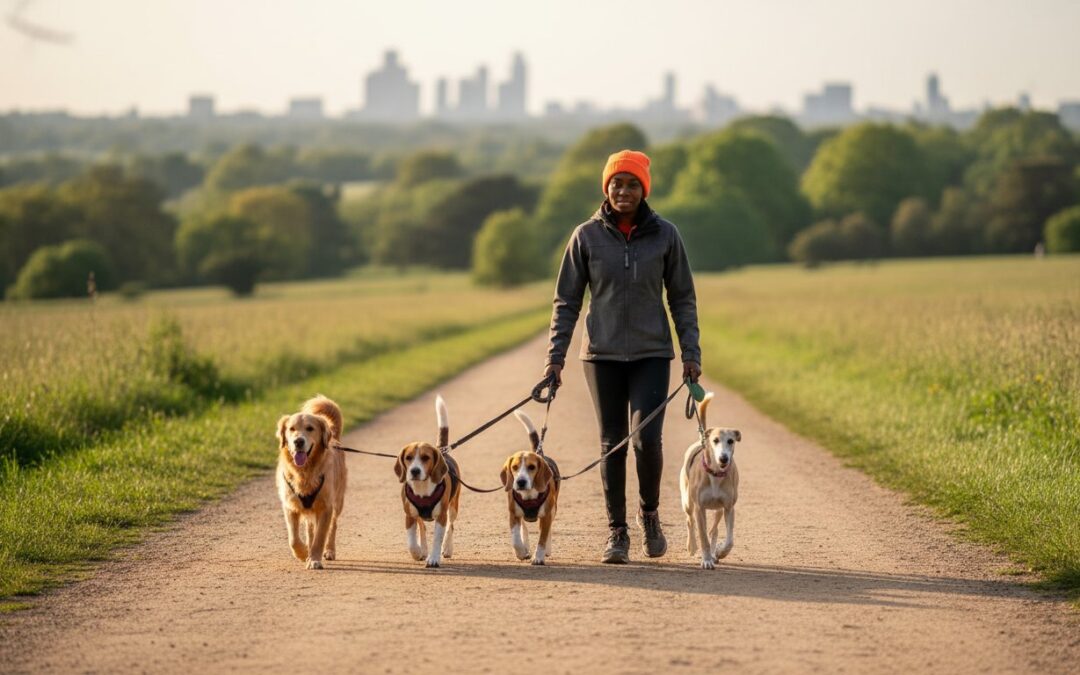
A group walk should never be a chaotic free-for-all where the most assertive dog dictates the pace. If you’ve felt a flicker of anxiety while watching a walker manage a pack in a busy London park, your instincts are serving you well. You want your companion to enjoy the enrichment of socialisation, yet the fear of a sudden fight or your dog slipping their lead is a heavy burden. Keeping my dog safe on group walks is about more than just physical control; it’s about ensuring your dog feels supported and understood in a social environment. With the cost of a London walk now averaging £20 in 2026, you should expect a service that prioritises both safety and emotional well-being.
I recognise the challenge of finding a professional who views the world through your dog’s eyes. You need to know that your dog is flourishing, not just surviving the hour. This guide offers a practical framework to evaluate any walking service against the latest safety standards and legal requirements, such as the 2026 livestock protection laws. You’ll gain a clear path to preparing your dog for group outings and the peace of mind that comes from a tailored, expert approach to canine care.
Key Takeaways
- Learn to distinguish between healthy socialisation and overwhelming “flooding” by assessing your dog’s emotional resilience before their first outing.
- Master the essential gear checklist for keeping my dog safe on group walks, including the safety benefits of well-fitted harnesses over collars.
- Identify the “Expert Advocate” standard in a walker, ensuring they manage group sizes of 4-6 dogs to maintain individual focus and safety.
- Discover how to navigate the unique challenges of London’s busy parks by selecting “Safe Zones” that minimise urban stress and distractions.
- Understand why curated groups based on temperament and energy levels are the only way to turn a standard walk into a session of meaningful social enrichment.
Is Your Dog Ready for Group Walks? Assessing Social Safety
Before you hand over the lead to a professional, you must determine if your companion is truly ready for a pack environment. Group walk readiness isn’t merely a matter of basic obedience; it’s a delicate balance between a dog’s ability to follow cues and their internal emotional resilience. Keeping my dog safe on group walks starts with understanding that socialisation should always be a choice, not a requirement. If a dog is forced into a group they aren’t ready for, they may experience “flooding.” This occurs when an animal is overwhelmed by a stressful environment until they essentially shut down, which is often mistaken for “good” behaviour by the untrained eye.
A professional trial walk is the most ethical way to assess suitability. It allows an expert to observe your dog’s natural reactions in a controlled, low-pressure setting. This isn’t a test they pass or fail; it’s an information-gathering session to see if they flourish in a group or if they are an “introvert” who would find more joy in solo attention. With the Dogs (Protection of Livestock) (Amendment) Act 2025 coming into force on March 18, 2026, the stakes for maintaining perfect control in public spaces have never been higher. A trial ensures your dog’s temperament aligns with the group’s dynamic before they ever reach a park.
Signs of Emotional Safety and Comfort
Success in a group depends on your ability to read subtle communication. You want to see “loose and wiggly” body language, where the dog’s spine is curved and their movements are fluid. This is a clear indicator of comfort. Stiff, defensive posturing or a tucked tail suggests the dog is merely “coping” rather than enjoying themselves. A vital part of understanding dog behavior is monitoring “recovery time.” If your dog meets a new group member, they should be able to shake off the tension and return to a relaxed state within seconds. Trigger stacking is the cumulative effect of multiple stressors occurring in a short period, which can push a dog past their emotional threshold and lead to reactive behaviour. If a dog encounters a loud siren, a cyclist, and a boisterous puppy in quick succession, their safety depends on the walker identifying this build-up before a flashpoint occurs.
When to Opt for 1-to-1 Walking Instead
Sometimes, the safest choice for your dog’s mental health is to avoid the group entirely. High-reactivity levels or extreme fearfulness make group settings a source of distress rather than enrichment. In these cases, individual dog training can provide the bespoke support needed to build confidence before considering a pack. Physical factors also play a significant role. Puppies under six months old have developing growth plates that shouldn’t be overtaxed by the pace of a group, while seniors with arthritis may find the energy of younger dogs overwhelming. A tailored 1-to-1 walk ensures the pace is dictated entirely by your dog’s unique needs, protecting their physical health and emotional peace.
The Pre-Walk Safety Checklist: Essential Gear and Health
Preparation is the foundation of a successful outing. While we previously explored emotional readiness, physical preparation is equally vital for a secure experience. Ensuring your dog is equipped with the right tools is a primary step in keeping my dog safe on group walks. In 2026, the legal requirements for dog ownership are stricter than ever. Every dog in a public space must wear an ID tag featuring the owner’s name and address. Additionally, current regulations require all dogs over eight weeks old to be microchipped with up-to-date contact details. These aren’t just legal formalities; they’re the safety net that ensures a swift reunion if your dog becomes separated in a sprawling park.
Leads, Harnesses, and Control Gear
The choice between a collar and a harness is more than a matter of style. For group environments, I strongly recommend a well-fitted “Y-front” harness. These designs allow for a full range of shoulder motion and prevent pressure on the sensitive neck area, which is crucial if a dog suddenly lunges or becomes entangled. Professional walkers typically avoid extendable leads in a pack. In a group of four to six dogs, these leads create a high risk of burns or complex entanglements that can lead to panic. Following established dog walking safety tips, we prioritise fixed-length leads that provide clear communication and immediate control. It’s essential to ensure your walker’s equipment is regularly maintained and fit for purpose.
Health and Emergency Preparedness
Health protocols are the silent guardians of group safety. Before joining a pack, your dog must be up to date on vaccinations and parasite prevention. In a social setting, the risk of transmitting kennel cough or fleas is significantly higher. A professional service should always request proof of these records to protect every dog in their care. Beyond preventative health, emergency readiness is a hallmark of the Expert Advocate. Your walker should carry a canine first aid kit and have immediate access to your vet’s details and emergency contact info. This level of preparation ensures your dog is supported even in a crisis.
For an extra layer of security, many owners now utilise GPS trackers. In large urban spaces like Hampstead Heath or Richmond Park, these devices offer real-time peace of mind. While technology is a wonderful tool, it doesn’t replace the need for a walker who carries comprehensive insurance for third-party liability and pet accidents. If you’re looking for a partner who takes these protocols as seriously as you do, exploring professional dog walking services that value bespoke care is a wise next step. Keeping my dog safe on group walks requires this holistic blend of high-quality gear, legal compliance, and proactive health management.
Identifying a Safe Professional Dog Walking Service
Choosing a walker shouldn’t feel like a gamble. While many people love dogs, “keeping my dog safe on group walks” requires more than just affection; it demands a professional who operates as an Expert Advocate. You’re looking for someone who prioritises professional dog walking standards over sheer volume. In 2026, many London councils have implemented Public Spaces Protection Orders (PSPOs) that limit walkers to four dogs at once. Even in areas without these strict caps, walking more than six dogs simultaneously is a significant safety risk. It’s physically impossible for one person to monitor the subtle body language and emotional states of a large pack while navigating busy urban environments.
Transport safety is another non-negotiable factor. Ask to see the walker’s vehicle. A professional setup includes individual, secure crating and climate-controlled ventilation. Dogs should never be loose in the back of a van or tethered together in a way that could cause injury during a sudden stop. Finally, insist on a “meet and greet.” This initial session allows you to observe the natural connection between the walker and your dog. If the walker doesn’t ask detailed questions about your dog’s triggers or personality, they aren’t providing the bespoke care your companion deserves.
Vetting the Walker’s Expertise
Don’t be afraid to ask direct questions about their knowledge of dog behaviour and communication. A qualified walker should be able to explain how they identify early signs of tension before a conflict occurs. Ask about their emergency protocols. You need to know exactly what they’ll do if a dog gets off-lead or if an unfamiliar dog approaches the group. Ensure they exclusively use force-free, positive reinforcement-based handling. Any mention of “corrections” or “dominance” is a major red flag that indicates outdated and potentially harmful methods.
The Logistics of a Safe Walk
The transition from your home to the park is often the most high-risk part of the day. A safe service has strict protocols for pick-ups and drop-offs to prevent “door dashing” or escapes from the van. They should also have a clear, written policy on off-lead play. No dog should be off-lead until a reliable recall has been established and the owner has provided explicit consent. Transparent communication is the final piece of the puzzle. Whether it’s through GPS walk logs or detailed post-walk reports, your walker should provide regular updates. This accountability ensures you’re never left wondering how your dog spent their hour away from home.
Navigating Busy London Parks: Managing Urban Distractions
London presents a unique set of variables that rural walking simply doesn’t encounter. From the high-pitched wail of a passing ambulance to the sudden appearance of a delivery cyclist, the city is a sensory gauntlet for any canine. Keeping my dog safe on group walks in this environment involves more than just a sturdy lead; it requires a deep understanding of urban geography and canine focus. Professional walkers don’t just pick the nearest green space. They select “Safe Zones” based on specific criteria like clear sightlines and secure boundaries. Parks with high visibility allow a walker to spot an off-lead, “unfriendly” dog from 50 yards away, providing the necessary time to calmly redirect the group and avoid a stressful confrontation.
The core of urban safety is the “check-in.” This is a trained behaviour where the dog voluntarily looks back at the walker despite the presence of distractions. In a city where 33% of households now own a dog, parks can become incredibly crowded. A walker who prioritises connection over simply “covering distance” ensures that your dog remains mentally tethered to them, even when a squirrel darts across the path or a group of children runs past. This mental engagement is the most effective tool for preventing a dog from becoming overwhelmed by the city’s pace.
Traffic and Transport Safety
The transition from the transport van to the park gate is a high-risk moment that demands absolute structure. Dogs should remain in their secure crates until they are calm, and they must be leashed before the van door even opens. An Expert Advocate manages urban crossings by positioning themselves as a calm barrier between the pack and the flow of traffic, ensuring each dog remains in a settled “wait” until the transition is entirely safe. Within the park, the “on-lead” rule is strictly applied near exits and roads. Even the most reliable dog can be spooked by a sudden backfire or a siren, and a lead is the final physical safety net that prevents a tragedy.
Social Dynamics in Public Spaces
When dogs are in a group, there is a natural risk of “pack mentality” developing. This occurs when the collective energy of the group rises, potentially leading them to overwhelm a lone dog they encounter. A professional walker prevents this by constantly breaking up the group’s focus and encouraging individual play. They must also manage urban hazards unique to London, such as discarded food or litter. Maintaining a sharp “leave it” command is essential for protecting your dog from toxins or sharp objects like chicken bones. If you want to ensure your companion is handled with this level of urban expertise, consider reading our guide on dog walking in London to see how we tailor our routes for maximum safety.
Why Tailored Group Walks Are the Safest Choice for Your Pet
Safety is not a static checklist; it is a dynamic process of observation and adjustment. At H&H Dog, our philosophy is rooted in the belief that keeping my dog safe on group walks is only possible when the group itself is designed with intention. We move away from the “one-size-fits-all” model seen in many high-volume agencies, opting instead for a curated approach. By matching dogs based on their temperament, physical size, and energy levels, we create a social environment where every animal feels secure. This tailored method ensures that socialisation remains a source of joy rather than a cause of cortisol-spiking stress.
When your walker operates as a trained dog behaviourist, the walk transforms into a session of social enrichment. We don’t just watch the dogs; we advocate for them. This means identifying the split-second changes in body language that signal a dog needs a break or a change in pace. Transitioning from a state of anxiety about your dog’s safety to a state of total confidence requires this level of professional oversight. You deserve the peace of mind that comes from knowing your dog’s emotional internal state is being prioritised as much as their physical exercise.
The Benefits of a Curated Pack
Matching play styles is the most effective way to prevent “bullying” or lopsided social dynamics. A boisterous puppy and a sensitive senior dog have very different needs; placing them in the same group can lead to frustration for one and fear for the other. Consistent groups allow for the development of long-term friendships, which significantly reduces the social stress associated with meeting new, unpredictable dogs. This consistency builds a sense of community and safety that a random pack simply cannot provide. We focus on quality over quantity, ensuring that every interaction within the group is positive and supportive.
Your Next Steps for a Safer Walk
If you’re ready to elevate your dog’s walking experience, the process begins with a thorough initial assessment. This allows us to see the world through your dog’s eyes and determine which of our bespoke groups would suit them best. Once a match is made, you can prepare your dog’s “walking bag” with their preferred harness, a high-value reward for recall, and any specific health essentials. Taking these proactive steps ensures your dog is ready for their first adventure. We invite you to join our expert-led group walks in North London and Watford, where safety and emotional well-being are the foundation of every step we take together.
Empowering Your Dog’s Social Future
A group walk should be the highlight of your dog’s day, providing vital enrichment and joy. By prioritising emotional resilience and verifying professional standards, you ensure their time in the park is both secure and fulfilling. You now understand that keeping my dog safe on group walks relies on a blend of the right gear, legal compliance, and an expert who truly speaks your dog’s language. It’s about moving from a place of worry to a place of total confidence in your companion’s social life.
With over 20 years of professional experience, the H&H Dog team is dedicated to providing a bespoke service where every walk is led by trained behaviourists and trainers. We don’t believe in random packs; instead, we offer tailored groups carefully matched by temperament and size to ensure every dog feels supported. If you’re ready to see your companion flourish in a safe, expertly managed environment, book a consultation for our expert-led group walks. Your dog’s well-being is our greatest priority, and we look forward to building a safer, happier social future together.
Frequently Asked Questions
Is it safe for my small dog to walk with larger dogs in a group?
Safety is often compromised when there’s a significant size disparity because of the risk of accidental injury or predatory drift. We curate our groups specifically by size and energy level to ensure small dogs feel confident and secure. If a 30kg dog accidentally knocks a 5kg terrier, the physical impact can be severe. Tailored groups eliminate this risk by matching similar physical profiles.
What happens if my dog gets into a fight on a group walk?
A professional walker uses their knowledge of body language to intervene before a conflict even erupts. If a fight occurs, we use non-contact distraction methods and physical barriers rather than forceful corrections. We maintain detailed incident logs and contact owners immediately. This transparent communication is vital for keeping my dog safe on group walks and building long-term trust with our clients.
How do professional walkers keep track of multiple dogs off-lead?
We maintain control through a combination of GPS trackers and high-value whistle recall training. By limiting groups to 4-6 dogs, a walker can maintain a constant visual on every pack member at all times. We also select “Safe Zones” in London parks with clear sightlines. This proactive management prevents dogs from wandering too far or getting lost in high-traffic urban areas.
Can my puppy join a group walk before they are fully trained?
Puppies should have a foundation of basic obedience and socialisation before joining a full pack. We recommend 1-to-1 training or puppy-specific walks first to build their confidence in a controlled way. Since growth plates are still developing in dogs under 12 months, the pace of a standard group walk might be physically overtaxing. A tailored approach ensures their long-term health is protected.
What should I look for in a professional dog walker’s insurance policy?
You must look for a policy that includes at least £1 million in Public Liability insurance and specific “Care, Custody, and Control” cover. This protects against third-party accidents and injuries to your pet while in the walker’s care. In 2026, Royal Parks and many local councils require proof of this insurance before granting a professional walking license to operate in public spaces.
How do you handle a dog that has poor recall on a group walk?
Dogs with unreliable recall remain on a long-line lead to ensure they stay safe while still enjoying freedom of movement. We never allow a dog off-lead without explicit owner consent and a demonstrated 100% success rate during our initial assessments. This structured approach prevents dogs from approaching urban hazards or livestock, which is critical under the 2025 Livestock Act regulations.
What is the maximum number of dogs a walker should take out at once?
A professional walker should never take more than 4-6 dogs at once to maintain individual focus. In many London boroughs, Public Spaces Protection Orders (PSPOs) legally cap the limit at four dogs per person. Walking a larger pack makes it impossible to monitor individual emotional states. Keeping my dog safe on group walks requires this strict limit to ensure every dog receives the support they need.
How do you ensure dogs don’t get overheated during summer group walks?
We mitigate heat risk by scheduling walks before 10:00 am and selecting routes with heavy tree cover and natural water sources. Walkers carry portable hydration stations and monitor for early signs of heatstroke, such as excessive panting or dark gums. If the temperature exceeds 24°C, we often recommend shorter “comfort breaks” or indoor enrichment sessions to prioritise the dog’s physical safety over exercise.