
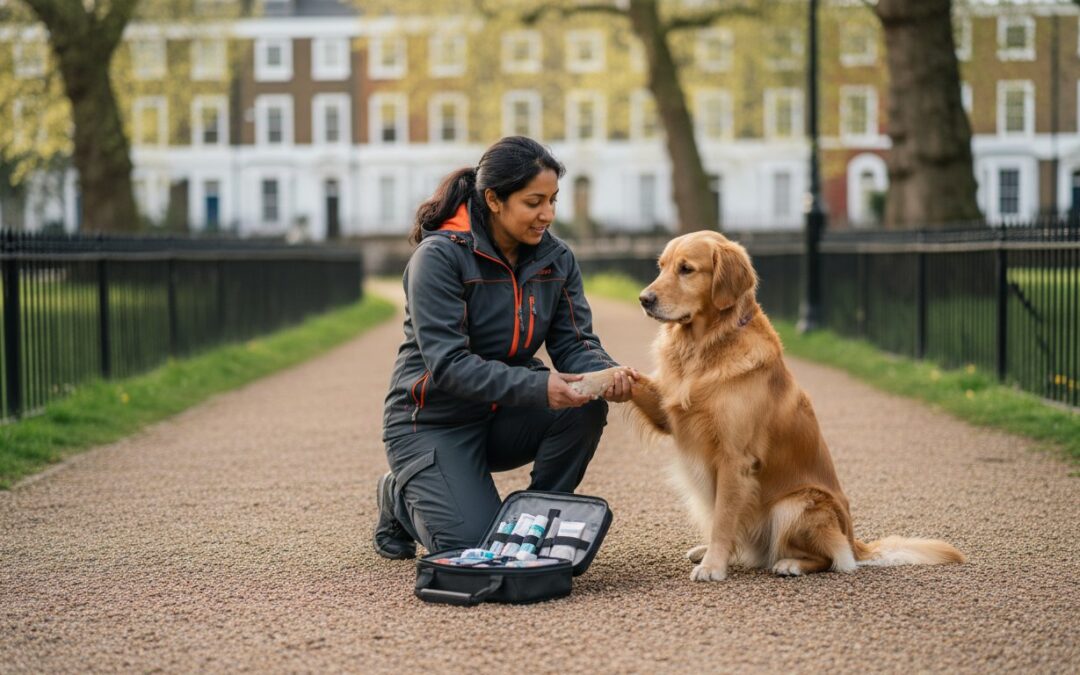
In the heart of a city as bustling as London, a standard walk is never just a walk; it is a series of split-second decisions managed by the person holding the lead. You likely worry about the hidden hazards of urban life, from broken glass on a pavement to the unpredictable flow of traffic near the park. It’s completely natural to feel anxious about how your walker might react if an emergency actually happened. Finding a dog walker with first aid training London ensures that your pet is in the hands of a professional who remains calm under pressure and possesses the technical skills to save a life.
We believe every dog deserves an advocate who understands their internal emotional state and physical needs. Since the Dogs Protection of Livestock Act 2025 came into force in March 2026, the legal and safety landscape for pet owners has become more complex. This article will help you discover why canine first aid is now the essential safety standard for city walking. You will learn how to verify professional-grade skills, what to look for in a qualified professional, and how a walker trained in canine body language can protect your pet from the unique challenges of our capital.
Key Takeaways
- Learn to identify the specific urban hazards, from pavement heat to discarded toxins, that make immediate first aid knowledge a necessity for any London walk.
- Understand the difference between reactive emergency care and preventative first aid, which uses canine body language to stop incidents before they happen.
- Discover why choosing a dog walker with first aid training London is a critical risk management step that offers total peace of mind during your working day.
- Get a practical checklist of non-confrontational questions to ask your walker regarding their certification, insurance, and emergency protocols.
- Explore how bespoke, individual care ensures your dog’s emotional and physical safety is prioritised through over 20 years of professional expertise.
The Critical Importance of First Aid Training for London Dog Walkers
Canine first aid is the immediate, life-preserving assistance provided to your pet during an emergency before you can reach professional veterinary care. It is not a replacement for a surgeon; it is the vital bridge that ensures your dog remains stable enough to reach one. Choosing a dog walker with first aid training London means selecting an advocate who understands that safety is the non-negotiable foundation of every outing. Without this specific training, a minor scrape or a momentary choking incident can quickly escalate into a life-threatening crisis. We view every walk through the lens of risk management, ensuring that your dog’s physical wellbeing is protected at every turn.
Urban Hazards: Why London Pups Need Extra Protection
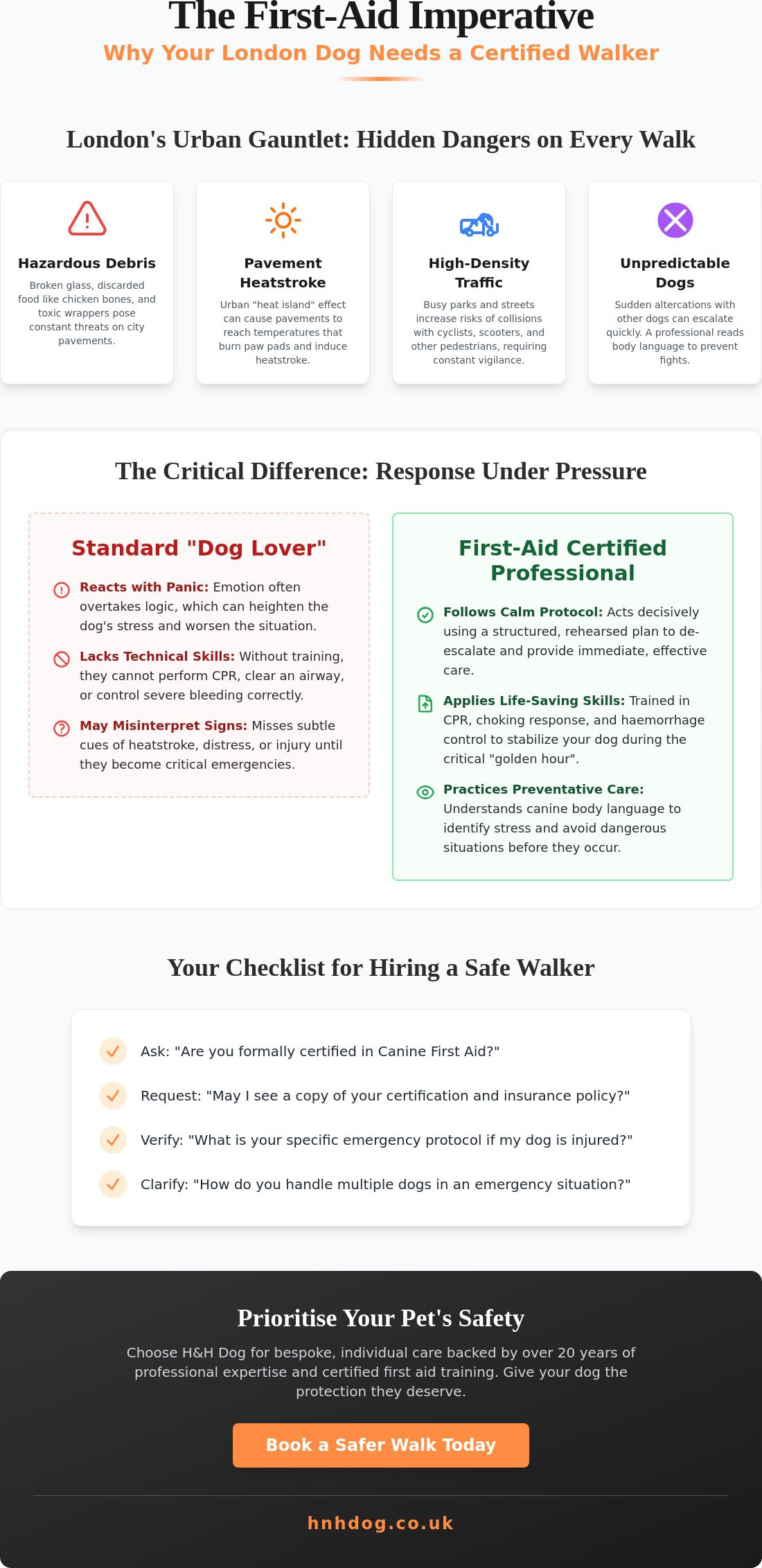
London presents a unique set of challenges that rural walkers rarely encounter. In busy North London parks, the sheer density of dogs, cyclists, and pedestrians increases the risk of high-speed collisions or sudden altercations. Beyond the green spaces, our streets are often littered with hazardous debris. Discarded chicken bones, toxic chocolate wrappers, and broken glass are constant threats on city pavements. Additionally, London experiences a “heat island” effect where concrete and brick trap heat. This means urban temperatures can be significantly higher than in the surrounding countryside. A trained professional recognises that when the sun is out, pavements can reach temperatures that cause thermal burns to paw pads in seconds. They also know how to spot the subtle, early signs of heatstroke that an untrained eye would easily miss.
The Difference Between a ‘Dog Lover’ and a Trained Professional
There is a profound difference between someone who simply loves dogs and someone who is trained to save them. While affection is essential for building a bond, it doesn’t provide the clinical calm required when a dog is in distress. An untrained walker often reacts with panic, which heightens the dog’s internal stress and can lead to defensive biting or further injury. In contrast, a certified professional follows a structured protocol designed to de-escalate the situation and provide care. To understand the foundational principles of these skills, many owners ask, What is Pet First Aid? It involves mastering the “golden hour.” This is the critical sixty-minute window following an injury where immediate intervention dictates the long-term outcome. By applying the correct pressure to a wound or clearing an airway, a professional walker changes the trajectory of an accident from a tragedy to a manageable recovery.
Beyond the Certificate: What Real Canine First Aid Proficiency Looks Like
A certificate on a wall is a starting point, but true proficiency is measured in the field. For a dog walker with first aid training London, the ability to translate classroom knowledge into high-pressure action is what defines their value. It isn’t enough to simply own a first aid kit; the walker must be the kit’s most effective tool. Proficiency involves a deep understanding of canine physiology and the confidence to apply it when seconds count. We believe that the best form of first aid is actually preventative. By mastering the nuances of canine body language, a professional identifies stress or discomfort long before it manifests as a physical injury. This proactive approach allows us to adjust the walk’s pace or environment to suit your dog’s internal emotional state.
Life-Saving Skills: CPR, Choking, and Haemorrhage Control
Imagine your dog suddenly stops breathing or begins to choke on a ball in the middle of a park. In these terrifying moments, a trained professional acts as an Expert Advocate for your pet. They follow a calm, structured protocol to clear the airway or begin resuscitation. Canine CPR is a rhythmic combination of chest compressions and breaths tailored to the dog’s size. This specific technique varies significantly between a Great Dane and a Toy Terrier, requiring precise knowledge of anatomy. For those looking for detailed medical protocols, the RSPCA First Aid Guidance offers a comprehensive look at these life-saving measures. When a walker can control a haemorrhage or stabilise a fracture on-site, they significantly improve the chances of a full recovery.
Recognising Silent Threats: Bloat, Poisoning, and Heatstroke
Not every emergency is loud or obvious. Some of the most dangerous conditions are silent and rapid. Bloat, or Gastric Dilatation-Volvulus (GDV), is a critical emergency where the stomach twists. A professional walker knows to watch for unproductive retching or a distended abdomen, especially after exercise. London parks also hold hidden toxins. Whether it’s blue-green algae in a pond or a toxic plant in a residential garden, a walker must be vigilant. During walks in Hampstead Heath or Highgate Wood, we constantly monitor respiration rates and hydration levels to prevent heatstroke before it starts. Choosing a dog walker with first aid training London ensures that these silent threats are caught early. This level of bespoke, attentive care ensures your dog stays safe in every urban environment.
Regular refresher training is vital for maintaining these skills. Since canine first aid certifications typically expire every three years, staying updated with 2026 standards ensures that life-saving techniques remain sharp and effective. We prioritise this ongoing education because your dog’s safety is our absolute priority. A first aid kit is only as good as the person trained to use it; we ensure our hands are as prepared as our bags.
Safety First: Comparing Standard Walkers with First-Aid-Certified Professionals
Choosing a dog walker with first aid training London is a decision that transforms your pet’s daily outing from a simple exercise session into a managed health experience. While a standard walker may offer affection and basic supervision, they often operate in a reactive state. They wait for an incident to occur before attempting to handle it. In contrast, a certified professional acts as a partner in your dog’s long-term welfare. This proactive approach relies on superior situational awareness to identify risks before they materialise. From an insurance perspective, having a certified walker often simplifies liability issues, as their training demonstrates a commitment to professional standards and rigorous risk assessment.
The ‘Standard’ Walker vs. The ‘H&H Dog’ Professional
A typical service might end with a quick text saying the walk was ‘fine’. We believe you deserve more. Our walkers provide a detailed health check report after every session, noting any changes in gait, energy levels, or bowel movements. This comes from over 20 years of expertise in canine behaviour and health. We don’t just walk; we observe. By hiring a dog walker with first aid training London, you are investing in a specialist who can differentiate between normal play and the early signs of physical distress. This high-level situational awareness allows us to adjust the environment if a dog seems overwhelmed, ensuring their emotional state remains balanced and their physical safety is never compromised.
Pack Sizes and Supervision: A Safety Perspective
The dynamics of group dog walking require an even higher level of first aid vigilance. When a walker’s attention is divided between multiple dogs, the ‘hidden’ risks of group play, such as over-arousal or minor nips, can escalate quickly. A trained professional manages these dynamics by monitoring individual stress signals in real-time. They ensure that the group remains harmonious and that no single dog is being bullied or over-exerted. In London, where park licenses like those for Hampstead Heath, costing between £202 and £340 annually in 2026, require strict risk management, having a first-aid-certified walker is the only way to ensure these standards are met. We limit our group sizes to maintain individual safety protocols, ensuring every dog receives the bespoke attention they need to stay safe and happy.
Your Checklist for Hiring a Safe and Qualified Walker in London
Entrusting your dog to a professional is an act of profound trust. While many claim expertise, a truly safe dog walker with first aid training London will welcome your due diligence. Verification isn’t about being confrontational; it’s about being an advocate for your pet’s welfare. Start by asking to see their public liability insurance and a recent DBS certificate. In London, professional standards are high. For instance, walkers operating in areas like Banstead Commons must pay an annual fee of £365 as of March 2026 and provide proof of rigorous risk assessments. Checking these documents ensures your walker operates within a legal and ethical framework.
Beyond paperwork, inspect their equipment. A professional urban first aid kit should contain more than just plasters. Look for sterile saline for eye or wound flushing, cohesive bandages that don’t stick to fur, a tick removal tool, and a thermal blanket to manage shock. This preparation is vital for navigating the specific hazards we’ve previously discussed, such as broken glass or toxic street litter. Finally, insist on a ‘meet and greet’. This session allows you to observe how the walker interprets your dog’s body language and whether they prioritise a calm, supportive connection over simple control.
Three Questions to Ask About Emergency Protocols
- ‘What is your specific plan if my dog is injured in a park that is 15 minutes from the nearest vet?’ A prepared walker will have a tiered response, including immediate stabilisation and a pre-planned transport route.
- ‘Can you show me your current first aid certification and tell me when it was last updated?’ Valid canine first aid qualifications typically expire every three years. If their certificate is older, their skills may not meet current 2026 safety standards.
- ‘How do you communicate health or safety incidents to owners during the walk?’ You need a walker who provides real-time updates rather than waiting until the end of the day to mention a minor limp or an unusual cough.
Red Flags: When to Walk Away
The language a walker uses reveals their entire philosophy. Be wary of anyone using outdated, confrontational terms like ‘dominance’ or ‘correction’. These concepts have been debunked by modern science and often lead to forceful methods that damage the human-canine bond. Instead, look for a walker who speaks about connection, support, and positive reinforcement. If they cannot name a local emergency vet, such as the 24-hour facilities in North London, they aren’t truly prepared for the reality of city walking. Trust your instincts during the initial meeting. The walker should project a calm confidence that immediately puts both you and your dog at ease. If you are ready to partner with a professional who prioritises safety, book a bespoke consultation to see how we put these protocols into practice.
Bespoke Care and Professional Safety: Why H&H Dog is London’s Trusted Choice
At H&H Dog, we believe that a walk should be more than just a break from the house. It’s a critical opportunity for enrichment and positive connection. With over 20 years of expertise, our philosophy focuses on your dog’s unique emotional and physical state rather than just their outward actions. Every interaction is rooted in force-free, positive reinforcement methods. This ensures your pet feels supported and respected throughout their time with us. By choosing a dog walker with first aid training London, you’re opting for a service where safety is the non-negotiable foundation of every outing. Our walking services integrate seamlessly with professional dog training. This creates a consistent, ethical environment where your dog’s learning is supported in real-world urban scenarios.
The H&H Dog Difference: Expert Advocates for Your Pet
Our team functions as Expert Advocates for the animals in our care. We don’t just hold a lead; we strive to see the city through your dog’s eyes. This perspective is deeply informed by our extensive background as a dog behaviourist. It allows us to set safety standards that far exceed the industry average. We understand the “why” behind a dog’s actions, which helps us prevent incidents before they even begin. If your pet shows subtle signs of stress or discomfort, we adapt the walk’s pace and environment to suit their individual needs. This bespoke care is backed by rigorous professional verification. Every member of our team is fully insured, DBS-checked, and holds current canine first aid certification. We provide the calm, steady hand you need in the often chaotic environment of the capital.
Getting Started: A Safer Path for Your London Dog
Beginning your journey with us is a straightforward process designed to build confidence and connection. We start with a comprehensive consultation followed by a meet-and-greet session. This allows us to assess your dog’s personality and discuss any specific health or behavioural requirements you may have. Our service areas cover North London and North West London, providing local expertise and attentive care to urban pups. Whether your dog enjoys the wide-open spaces of the heath or prefers a quiet stroll through residential streets, we tailor our approach to their specific temperament. For owners who travel between the UK and Spain, finding professional care like a peluquería canina móvil Sotogrande ensures your pet’s hygiene and comfort are managed with the same expert attention they receive at home.
We invite you to experience the total peace of mind that comes from a truly professional partnership. Your dog’s safety and happiness are our absolute priorities. Every dog deserves a walk that is as safe as it is stimulating. By partnering with a dog walker with first aid training London, you’re choosing a path that values long-term emotional health and mutual understanding. We look forward to supporting you and your pet as you build a wonderful life together in the city.
Prioritising Professional Care for Your Urban Companion
Navigating the capital’s busy streets and parks requires more than just a pair of walking boots; it demands a proactive commitment to safety. You now understand that a dog walker with first aid training London provides a vital safety net against urban hazards like heatstroke and street debris. By choosing a professional who masters the “golden hour” of emergency response, you’re ensuring your dog remains stable and supported until veterinary care is reached. This level of preparedness isn’t a luxury. It’s the ethical baseline for responsible pet ownership in 2026.
Our team at H&H Dog brings over 20 years of professional experience to every lead we hold. We are fully insured, DBS-checked, and act as expert advocates using force-free, science-based methods tailored to your dog’s internal emotional state. You deserve the peace of mind that comes from knowing your pet is in the hands of a knowledgeable mentor who values their welfare as much as you do. Secure a safer, more professional walk for your dog with H&H Dog today. Let’s work together to build a life of adventure and security for your pup.
Frequently Asked Questions
What does a dog walker’s first aid training actually cover?
Professional canine first aid courses cover essential life-saving techniques including CPR, wound management, and responding to choking or poisoning. They also teach walkers how to recognise silent threats like Gastric Dilatation-Volvulus (bloat) and heatstroke. A dog walker with first aid training London uses these skills to stabilise a pet during the critical first hour of an injury. This ensures the animal is safe for transport to a veterinary surgeon.
How often should a dog walker renew their first aid certification?
Canine first aid certifications are typically valid for three years in the United Kingdom. After this period, a professional must attend a refresher course to stay current with the latest veterinary protocols and life-saving techniques. We ensure our team never lets their skills expire, as 2026 standards for emergency care require sharp, up-to-date knowledge. Regular practice is the only way to maintain the calm confidence needed during a crisis.
Do all dog walkers in London have to be first aid trained by law?
There is currently no national law requiring dog walkers to be first aid trained, but it is a requirement for many local licensing schemes. For example, professional walkers on Hampstead Heath must adhere to strict risk assessment standards as part of their annual licensing. While not legally mandated everywhere, choosing a dog walker with first aid training London is the best way to ensure your pet is protected by professional-grade safety standards.
What should be in a professional dog walker’s first aid kit?
A professional kit must include sterile saline for flushing wounds, cohesive bandages that won’t stick to fur, and a tick removal tool. It should also contain a thermal blanket to manage shock and antiseptic wipes for minor abrasions. These essentials are specifically chosen to handle urban hazards like broken glass or toxic street litter. We ensure our kits are checked and restocked weekly to maintain their effectiveness during every session.
How do you handle a dog emergency if the owner isn’t reachable?
Our priority is the immediate stabilisation and safety of your dog. If an emergency occurs and you are unreachable, we follow a pre-agreed protocol to transport your pet to your registered vet or the nearest emergency facility. We maintain detailed records of your emergency contacts and medical preferences. This ensures your dog receives the necessary care without delay, acting as their advocate when you cannot be there.
Can first aid training help with dog fights or altercations?
Training provides the skills to assess and treat injuries that occur during an altercation, such as puncture wounds or shock. However, we focus primarily on prevention by reading canine body language to de-escalate situations before they turn physical. If a fight does occur, a trained walker remains calm and follows a structured protocol to separate the dogs safely. This prevents further injury to both the animals and the person handling them.
Is first aid training relevant for puppy walking and socialisation?
First aid is highly relevant for puppy socialisation because young dogs are naturally curious and more prone to choking or over-exertion. Puppies have different physiological needs, and a trained professional knows how to monitor their respiration and hydration levels closely. We use our knowledge of enrichment and positive reinforcement to ensure their early experiences are safe and supportive. This builds a foundation of trust while protecting their physical health.
How does H&H Dog ensure its walkers stay up-to-date with safety protocols?
We maintain our high standards through regular internal audits and mandatory refresher sessions. Our background in behaviourist work allows us to oversee every walker’s performance, ensuring they apply force-free methods and stay sharp on emergency protocols. By fostering a culture of continuous learning, we guarantee that our team remains the most knowledgeable advocates for your dog’s welfare. This commitment to excellence is what defines the H&H Dog partnership.