
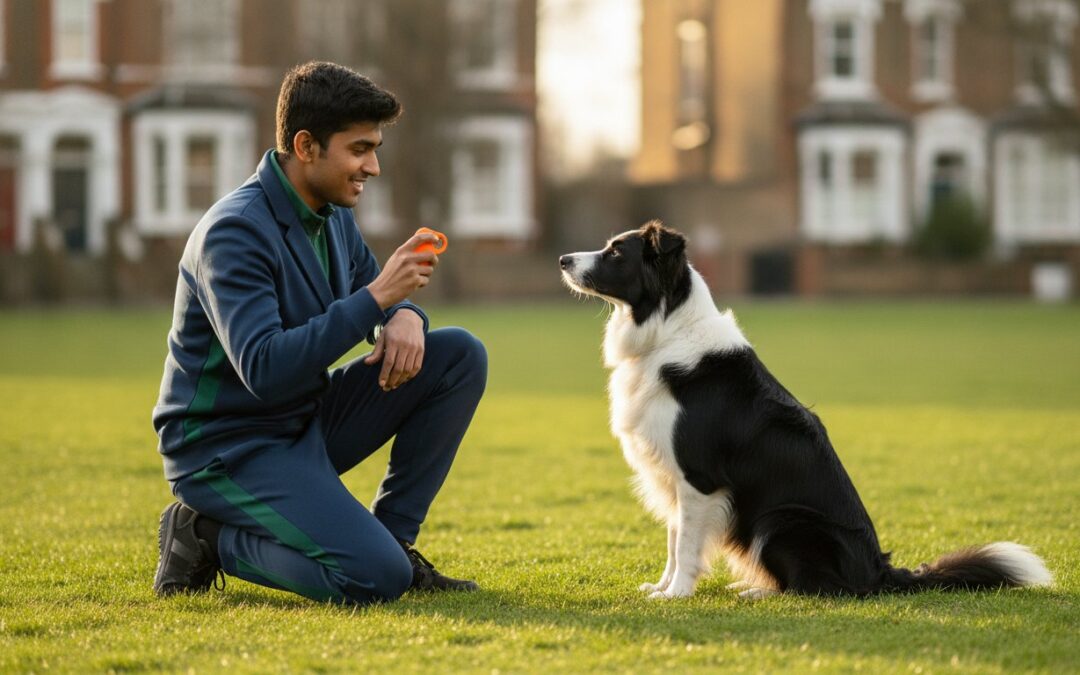
What if the secret to a perfectly behaved dog isn’t about being “the boss”, but about learning to speak a language you both finally understand? It’s incredibly frustrating when you’re trying to enjoy a walk in a busy London park, only to find your vocal cues are ignored the moment a distraction appears. You’ve likely felt overwhelmed by conflicting advice or tired of slow progress using only your voice. If you’re ready for a change, clicker training for beginners offers a sophisticated, evidence-based way to bridge the gap between human intent and canine understanding.
We understand that you want more than just obedience; you want a partnership built on mutual respect and trust. This guide will help you master the art of precise communication, ensuring your dog understands exactly what they’re being rewarded for. You’ll gain the confidence to train in any environment, from your quiet living room to a crowded high street. We will walk you through the essential equipment, the science of timing, and a step-by-step plan to help your dog respond instantly to your cues. This approach fosters a long-term bond that goes far beyond simple commands, creating a shared life of clarity and ease.
Key Takeaways
- Understand the science of “event markers” to capture the exact second your dog makes a correct choice, transforming complex training into a clear, manageable dialogue.
- Learn how to “charge” your clicker and choose the right high-value rewards to build an unbreakable positive association between the sound and the treat.
- Discover the “Get, Mark, Reward” cycle that makes clicker training for beginners an effective tool for teaching new skills with speed and precision.
- Identify and avoid common pitfalls such as “late clicking” or using the clicker as a summoning tool, which can lead to confusion and slower progress.
- Gain practical strategies for “urban proofing” your dog’s skills, ensuring they stay focused and calm even in the busiest public spaces across North London and Watford.
What is Clicker Training? The Science of Clear Communication
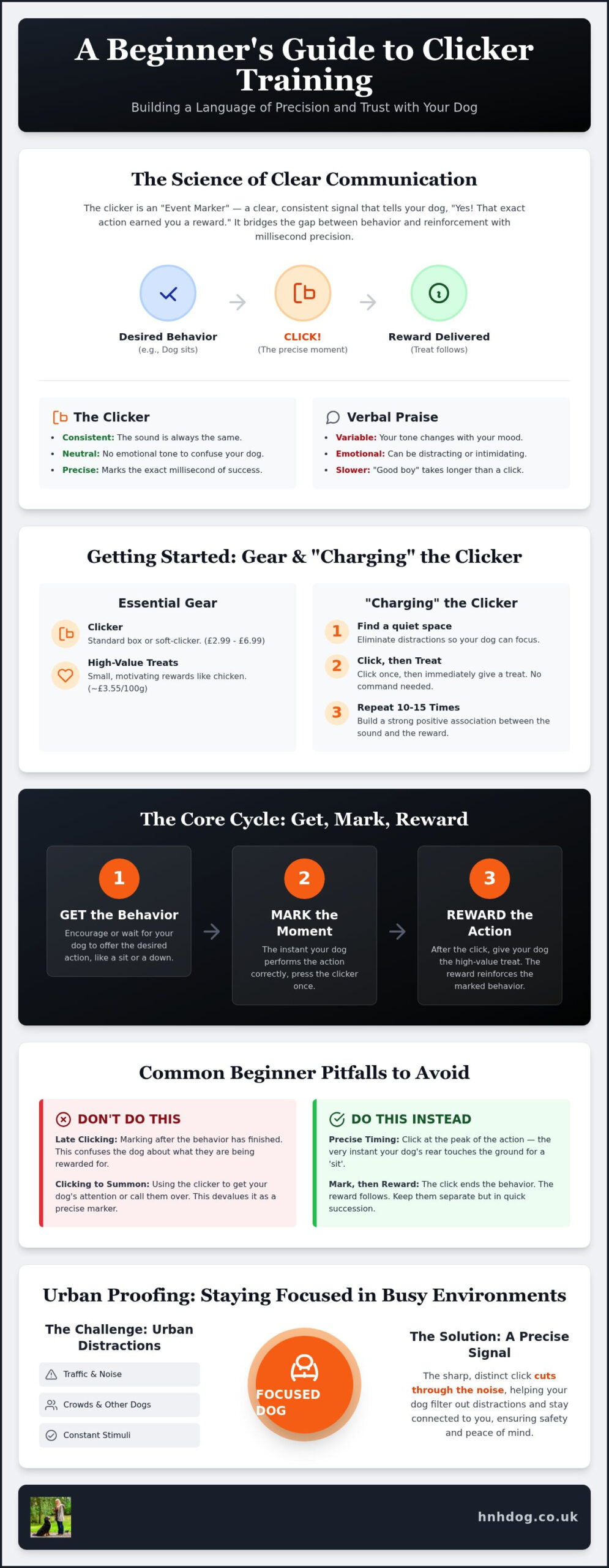
At its core, What is Clicker Training? is an evidence-based method rooted in operant conditioning. Instead of relying on vague verbal praise, we use a distinct sound to mark the precise moment your dog performs a desired behaviour. This approach to clicker training for beginners transforms a confusing series of commands into a clear, binary system: the click means “Yes, that is exactly what I wanted, and a reward is coming.” By using a consistent sound, you remove the guesswork for your dog, allowing them to feel more in control of their learning process.
We call the click an “Event Marker” because it captures a snapshot in time. Imagine trying to tell a dog they’ve done well for sitting, but by the time you’ve said “Good boy” and reached for a treat, they’ve already stood up or looked away. The clicker acts as “The Bridge”, filling the gap between the correct action and the delivery of the reward. It tells the dog’s brain that the reward they are about to receive is specifically for the action they were doing the millisecond they heard the sound.
The clicker is often superior to the human voice because it’s entirely neutral. Our voices carry emotional inflection; we might sound tired, frustrated, or even impatient, which can be distracting or even intimidating for a sensitive animal. A clicker sounds exactly the same every time, regardless of your mood. This consistency is vital when you’re first introducing clicker training for beginners, as it provides a stable foundation for communication that doesn’t rely on your dog’s ability to interpret your vocal tone.
The Benefits of Positive Reinforcement
Adopting reward-based methods does more than just teach tricks; it builds a more resilient and confident dog. When we shift from “making” a dog obey to “asking” them to participate, we’re fostering a genuine partnership. This non-coercive approach is particularly effective for rescue dogs or those with nervous dispositions. By focusing on what the dog is doing right rather than punishing what they do wrong, you reduce their anxiety and encourage them to offer new behaviours without fear of making a mistake.
Why Precision Matters in Urban Training
In the bustling environments of North London or Watford, clarity is your most valuable asset. A dog who can hear a sharp, distinct click amidst the rumble of traffic or the shouts of children in a park is a dog who can stay focused. This precision is essential for building a reliable recall in busy public spaces where distractions are constant. Marker training is the precise language of canine success. By using a marker, you help your dog filter out the urban noise and stay connected to you, ensuring their safety and your peace of mind.
Essential Gear and “Charging” the Clicker
Starting clicker training for beginners requires very little financial investment, but selecting the right tools is a vital step for success. Most owners opt for a standard box clicker, which produces a sharp, clear sound. However, if your dog is particularly sensitive or fearful of loud noises, a soft-clicker is a better choice. These devices are readily available in the UK, with basic models typically costing between £2.99 and £6.99. The goal is to find a tool that you can hold comfortably while still having a hand free for treats.
The quality of your rewards matters as much as the tool itself. While your dog might work for their usual kibble at dinner time, learning a new language requires higher motivation. High-value treats, such as small pieces of boiled chicken or specialized training treats, are essential. You can expect to pay around £2.99 to £3.55 for a quality 100g bag of training treats. Before you begin, find a quiet room in your home where you won’t be interrupted. Removing environmental distractions ensures your dog can focus entirely on the new sound you’re about to introduce.
The “Loading” Process: Making the Click Meaningful
Before the clicker can be used to teach a behaviour, it must be “charged” or “loaded”. This process creates a powerful neurological association between the sound and a positive outcome. While the process is straightforward, reviewing Common Beginner Pitfalls and How to Fix Them can help you avoid early mistakes that might stall your progress. Follow these three steps to begin:
- Step 1: Click the device once and immediately offer a treat. Do not ask for any behaviour; simply click and feed. Repeat this 10 to 15 times in a single session.
- Step 2: Test the “charge” by waiting until your dog is looking away or sniffing the floor. Click once. If they whip their head around looking for a treat, the association is forming.
- Step 3: Ensure the reward is inevitable. Every single click must be followed by a treat, even if you clicked by accident. This maintains the integrity of the “bridge” we discussed earlier.
Treat Delivery and Management
Speed is everything in marker training. If you’re fumbling in a pocket or struggling with a plastic bag, the “bridge” between the action and the reward collapses. A dedicated treat pouch worn on your belt allows for a “quick-draw” delivery. You should be able to deliver a reward within one to two seconds of the click. Practice holding the clicker in one hand and reaching for treats with the other until the motion feels fluid. If you feel your dog’s sensitivity requires a more tailored approach, our 1-to-1 dog training sessions in North London can help you select the perfect equipment and rewards for your specific situation.
How to Clicker Train Your Dog: The Three-Step Cycle
Mastering the rhythm of clicker training for beginners relies on a consistent three-step cycle: Get, Mark, and Reward. This structure provides a reliable framework that helps your dog feel secure and successful. In the “Get” phase, you use specific techniques to encourage a behaviour. Once the behaviour happens, the “Mark” phase uses the clicker to pinpoint the exact moment of success. Finally, the “Reward” phase delivers the promised treat. This cycle creates a clear, predictable dialogue that accelerates learning and builds trust.
Precision is non-negotiable during the marking phase. You must click during the action, not after it has concluded. If you click after your dog has already finished a sit and is beginning to stand, you’ve marked the wrong movement. This clarity is why many professionals recommend A Guide to Clicker Training Pets for understanding the nuances of timing. Every click is a promise. Even if your thumb slips and you click by mistake, you must follow through with a reward. This preserves the value of the sound as a guaranteed signal of success.
Capturing Natural Behaviours
Capturing is the art of catching your dog “being good” without being asked. It might be a spontaneous lie-down or a calm look toward you while on a walk. By marking these natural actions, you help your dog discover that they have the power to “earn” a click. You’ll often see a visible “aha moment” when they realize their own choices lead to rewards. This empowerment is a cornerstone of our bespoke approach, as it encourages the dog to actively engage with their environment in a positive way.
Luring and Shaping Basic Cues
Luring involves using a treat to gently guide your dog’s nose, leading their body into the desired position. It’s a helpful starting point, but we aim to phase out the lure quickly so the dog doesn’t become dependent on seeing the food. Shaping is a more advanced technique where you reward small, incremental steps toward a final goal. If you’re teaching a complex task, you mark every slight movement in the right direction. We wait until the physical behaviour is roughly 80% reliable before adding a verbal cue. This ensures the word is associated with a clear, established action.
Common Beginner Pitfalls and How to Fix Them
Even with the best intentions, it’s easy to fall into habits that muddy the clarity of your communication. One of the most frequent hurdles in clicker training for beginners is “Late Click” syndrome. If you click after your dog has already finished a behaviour and moved on to something else, you’re inadvertently marking the wrong action. This creates confusion and slows down the learning process. Precision is your goal. You want to capture the exact peak of the desired action to ensure your dog understands the specific choice that earned the reward.
Another common mistake is using the clicker as a “summoner” to get your dog’s attention. The click is a marker for a job well done, not a whistle to call them over. If you click to make them look at you, the sound loses its meaning as a precise feedback tool. Similarly, avoid the trap of over-training. Dogs, especially puppies, have limited mental stamina. Keep your sessions short, ideally between two to five minutes. Ending on a high note while your dog is still engaged is far better than pushing until they become frustrated or fatigued.
Many owners worry they’ll be “stuck” with a plastic device forever, but the clicker is primarily a teaching tool for new behaviours. Once a skill is reliable, you can begin fading the clicker. You transition to a verbal marker, like a crisp “Yes”, and eventually move to intermittent rewards. This ensures the behaviour remains strong without needing the device for every repetition. If you’re struggling with these transitions, our behavioural consultations provide the personalised guidance needed to refine your technique and move beyond the basics.
Improving Your Mechanical Skills
Your physical coordination is just as important as your dog’s response. To sharpen your timing, try the “Bouncing Ball” exercise: drop a tennis ball and try to click the exact millisecond it hits the floor. It’s also vital to separate the click from your hand movement toward your treat pouch. If you reach for the food at the same time you click, the dog focuses on the food rather than the sound. Timing is a human skill that requires as much practice as the dog’s response. Practice your “Click, then Reach” rhythm until it becomes second nature.
When the Clicker Isn’t Working
If your dog isn’t responding, it’s rarely a lack of intelligence; usually, the environment is simply too “loud” for them to process information. A dog who is brilliant in a quiet Watford kitchen might struggle on a busy high street. Assess the distraction levels and be prepared to move further away from the noise. You should also check your treat value. If the task is difficult, dry kibble might not be enough of an incentive. Finally, watch for signs of stress like lip licking or sniffing the ground. If your dog is overwhelmed, it’s time to take a break and simplify the task.
Urban Proofing: Clicker Training in Busy London Environments
A dog who performs a perfect “sit” in a quiet Watford kitchen often struggles to repeat that success in a busy space like Cassiobury Park. This happens because dogs don’t generalise well; they learn behaviours in specific contexts. To bridge this gap, clicker training for beginners must account for the “3 D’s”: Distance, Duration, and Distraction. By gradually increasing the distance from a stimulus or the duration of a stay while slowly introducing distractions, you help your dog build a more robust skill set that functions in the real world.
London’s narrow pavements and high density of people can be overwhelming for any animal. The clicker is an invaluable tool for managing reactivity in these tight spaces. Instead of waiting for a lunging response, you can mark the moment your dog notices a trigger but chooses to remain calm. This proactive approach changes their internal emotional state over time, replacing fear with focused cooperation. For complex urban challenges that feel too daunting to tackle alone, moving to 1-to-1 Dog Training provides the bespoke support needed to navigate high-stress environments with confidence.
Training for the Real World
Start your “urban proofing” in low-stakes environments before moving to the high street. Quiet suburban streets are perfect for early socialisation sessions where you can control the variables. Use the clicker to reinforce “Check-ins”, where your dog voluntarily looks back at you for guidance. This habit is vital during Group Dog Walking, as it ensures your pet remains attentive even when surrounded by peers. Consistently marking calm behaviour around cyclists or sirens helps your dog view these once-scary events as non-events, fostering a peaceful shared life in the city.
Seeking Professional Guidance
While clicker training for beginners is a fantastic starting point, some situations require a more experienced hand. If you notice persistent leash pulling or signs of deep-seated anxiety, it’s time to consult a professional Dog Behaviourist. Customised sessions can address specific “urban pup” issues that mass-market guides often ignore. Remember that training is not a destination but a lifelong conversation. Every click is an investment in your dog’s emotional health and your mutual bond. With patience and the right methodology, even the busiest London streets can become a place of calm and cooperation.
Building a Future of Mutual Understanding
Transitioning from confusion to clarity starts with a single click. By mastering clicker training for beginners, you’ve moved away from the frustration of missed signals and toward a structured, ethical dialogue with your dog. You now understand that the clicker isn’t just a gadget; it’s a precise bridge that captures success in the exact moment it happens. Whether you’re navigating the quiet streets of Watford or the bustling parks of North London, the principles of distance, duration, and distraction will now serve as your compass for every outing.
Every dog is an individual with a unique temperament, and sometimes the complexities of urban life require a more personalised touch. With over 20 years of industry experience across London and Hertfordshire, we specialise in bespoke care that prioritises your dog’s long-term emotional health. If you’re ready to refine your technique or tackle specific behavioural challenges, Book a 1-to-1 Training Session with H&H Dog. We offer expert support tailored to the realities of city living, helping you turn every walk into a stress-free experience. You’ve taken the first step toward a more confident partnership; keep practicing, stay patient, and enjoy the journey of discovery with your companion.
Frequently Asked Questions
Do I have to use a clicker forever or can I stop eventually?
No, you won’t be carrying a plastic device for the rest of your dog’s life. The clicker is primarily a precise teaching tool used to build new skills. Once your dog understands a cue and performs it reliably in various environments, you can transition to a verbal marker like “Yes” or “Good”. Eventually, you’ll move to a variable schedule of reinforcement where rewards are given intermittently to maintain the behaviour’s strength.
Can I use a “marker word” like “Yes” instead of a clicker?
You certainly can use a marker word, but the clicker offers a level of precision that the human voice often lacks. Our voices are filled with emotional nuances that can distract a dog during the initial stages of clicker training for beginners. A clicker provides a consistent, neutral sound that remains the same regardless of whether you’re tired, happy, or frustrated. This mechanical consistency helps your dog learn much faster by removing any ambiguity.
What should I do if my dog is scared of the clicking sound?
If your dog is sound-sensitive, you can muffle the sound by clicking it inside your pocket or wrapping it in a small towel. Alternatively, you might choose a “soft-clicker” designed specifically for nervous animals. If these options still cause distress, a unique tongue click or a ballpoint pen can serve as a gentler marker. The goal is always to keep the experience positive and stress-free, ensuring your dog feels safe throughout the process.
Is clicker training suitable for older dogs or just puppies?
Clicker training is highly effective for dogs of any age, not just puppies. While puppies are blank slates, older dogs often enjoy the mental enrichment that comes from learning new “games”. It’s particularly useful for senior rescue dogs in London who may need to unlearn old habits or build confidence in a new urban environment. The method relies on positive associations, making it a gentle and non-coercive way to keep an older dog’s mind sharp.
What are the best treats to use for clicker training for beginners?
For clicker training for beginners, the best rewards are small, soft, and highly aromatic. High-value options like tiny pieces of boiled chicken, plain cheese, or liver cake work best because they are easy to swallow quickly. This allows you to maintain the momentum of your session without your dog stopping to crunch on a hard biscuit. Always adjust your dog’s daily meal portions to account for these extra calories to maintain their long-term health.
How many clicks should I do in one training session?
Rather than counting clicks, you should focus on the duration and success rate of your session. Aim for short, high-energy bursts of two to five minutes where your dog can earn many rewards in a row. A high rate of reinforcement keeps your dog motivated and prevents frustration. If you find you aren’t clicking often, the task might be too difficult; try breaking the behaviour down into smaller, more manageable steps for your pet.
Why does my dog stop listening as soon as I put the clicker away?
This usually indicates that the dog has become “clicker wise”, associating the device itself with the availability of rewards. To fix this, start wearing your treat pouch and carrying the clicker even when you aren’t actively training. This helps the dog understand that the opportunity for reinforcement is always present. You should also practice transitioning to verbal markers and varying the rewards you offer to keep the conversation going even without the plastic tool.
Can I use clicker training to stop bad behaviours like barking?
Yes, clicker training is an excellent way to address unwanted behaviours by reinforcing a preferred alternative. For example, if your dog barks at the door, you can mark and reward the moment they choose to look at you or remain quiet instead. This non-coercive approach focuses on teaching the dog what to do, rather than just telling them what not to do. It builds a more harmonious relationship based on mutual understanding and clear expectations.