
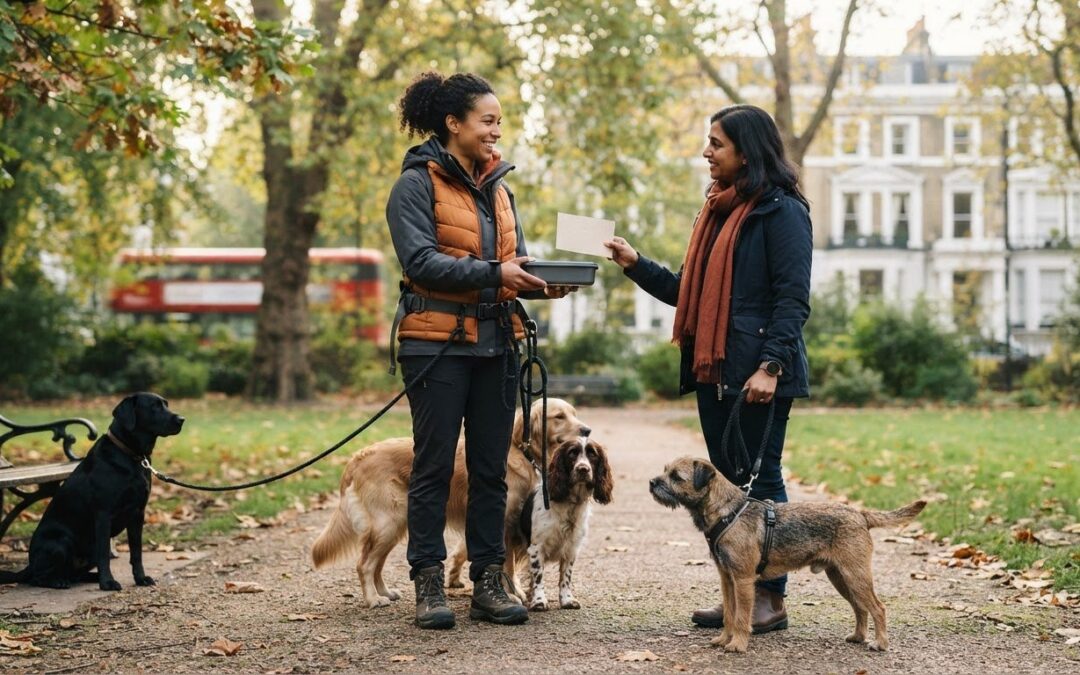
The best dog walker for dogs on special diets isn’t defined by a confident claim. It’s defined by clear, agreed routines. If a dropped treat or food from another dog could trigger a reaction, it’s understandable to question whether a group walk is right for your dog and what you need to explain before the first outing.
A conversation before booking can help you check what a walker can accommodate and where you’ll need another plan. This London buying guide covers what to ask about treats, food and group-walk routines, how to assess whether a service suits your dog, and what to include in a clear handover, including relevant emergency contacts. H&H Dog has over 20 years of industry experience and offers group dog walking in designated areas of North and North West London. Dietary arrangements aren’t listed as a specific part of the service, so confirm any practical requirements directly. The right questions can help you choose a routine that works for your dog.
Key Takeaways
- Choose a dog walker for dogs on special diets by checking how the walking routine fits your dog’s needs, not by relying on general reassurance.
- Use a short written handover to make essential food restrictions clear and separate them from preferences.
- Compare group and one-to-one walks based on your dog’s needs, supervision and possible exposure to other dogs’ food.
- Ask specific questions about treats, timing, communication and service boundaries before the first outing.
- H&H Dog offers group dog walking in designated areas of North and North West London. Discuss your dog’s dietary needs directly to check suitability.
What to check before choosing a dog walker for a dog on a special diet
Even a routine walk can raise questions when your dog has food sensitivities or specific feeding rules. Assess whether the outing can fit those needs rather than assuming a dog-walking service includes meals, medication or medical care. A suitable dog walker for dogs on special diets should be willing to discuss the practical details and explain clearly what they can and can’t do.
Start by separating preferences from restrictions advised by your veterinary practice. A preferred food or treat is useful to know, while a prescribed diet or strict avoidance requirement needs precise instructions. If your dog’s diet is linked to a health concern, ask your vet what precautions matter during walks and what information the walker should have. You can read more about nutrition as part of holistic dog health, but your veterinary team is the right source for guidance specific to your dog.
Which dietary needs might affect a dog walk?
Consider each requirement separately: prescribed food, known sensitivities, allergy precautions and scheduled meals. For some dogs, the main concern is avoiding food while out. For others, access to a particular item at a set time may be part of their routine. Be specific about what your dog must avoid and what is simply preferred.
On a group walk, treats given to other dogs or food dropped on the ground may be relevant. Don’t diagnose or guess at risks. Clarify restrictions with your veterinary practice, then tell the walker what to watch for and agree how they’ll manage possible food exposure.
Does a dog walker need to feed your dog?
Walking and feeding are separate care arrangements. Don’t assume a walker will provide food, sit with your dog or take on other care tasks as part of a walk. First, consider whether your dog is comfortable walking between their usual meals. If timing or a prescribed diet may affect the outing, ask your veterinary practice whether the routine needs to be adjusted.
If you want the walker to carry or offer food or treats you provide, ask before booking and confirm what’s practical. Agree any food-related task in advance, including when it would happen and which instructions to follow. If it can’t be accommodated, make another suitable arrangement rather than relying on an assumption.
This conversation is a suitability check, not a test of whether a walker can provide specialist diet management. Share the relevant details early, explain the reason for any essential restriction, and ask for a clear answer about what the service can support. That gives you a more realistic basis for deciding whether the walk fits your dog’s routine and welfare.
How to explain your dog’s special diet and prevent mix-ups
A clear handover turns dietary needs into practical instructions a walker can follow. Keep it brief, use everyday language and put essential restrictions first. If your dog’s diet is veterinary-directed, share only the relevant guidance you’re comfortable providing. Veterinary nutritional requirements can vary, so your own veterinary practice should advise on your dog’s specific needs.
What to include in written diet instructions
Write down the exact foods or treats your dog must avoid rather than relying on shorthand such as “sensitive stomach”. State whether treats are allowed, which ones are suitable and whether you’ll supply them. Separate non-negotiable restrictions from preferences, such as a treat your dog enjoys but doesn’t need. This makes the priorities clear and avoids leaving the walker to interpret your wording.
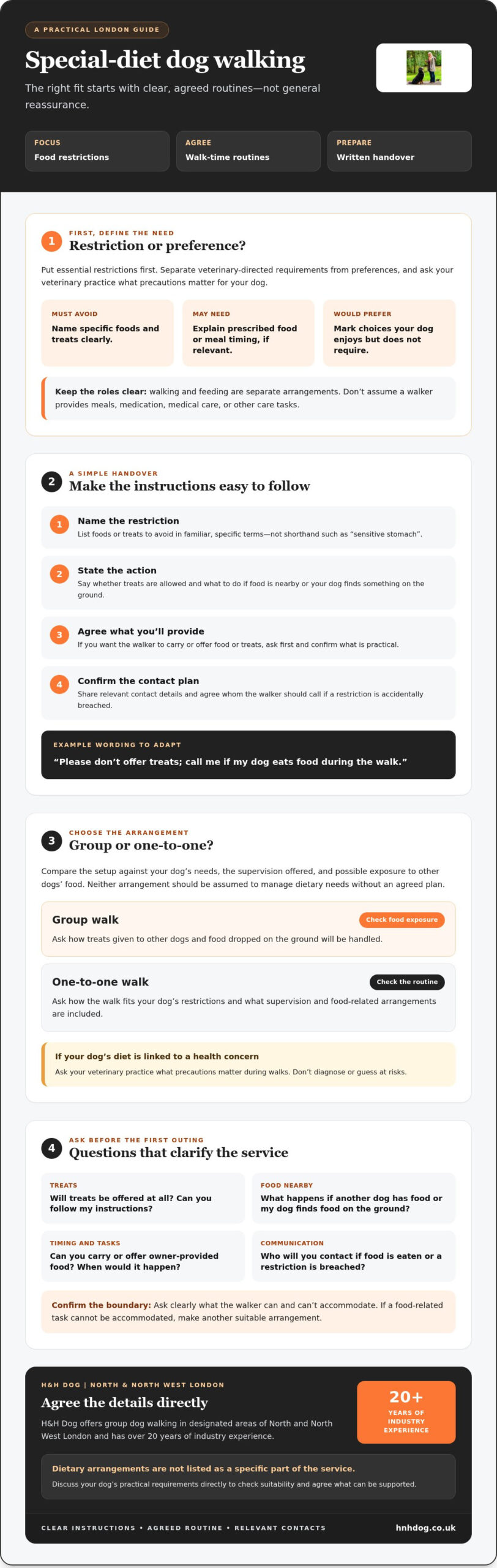
Before the first walk, use this simple handover process:
- 1. Name the restriction. List foods or treats to avoid in clear, familiar terms.
- 2. State the action. Explain whether your dog may accept treats and what to do if food is nearby.
- 3. Agree what you’ll provide. Ask whether the walker can carry owner-provided food or treats, if needed. Don’t assume this is possible.
- 4. Confirm the contact plan. Give the relevant contact details and agree whom the walker should call if a restriction is accidentally breached.
Agreeing on food, treats, and unexpected situations
Ask whether treats will be offered at all, and agree what should happen if another dog has food or your dog finds something on the ground. A simple instruction might be: “Please don’t offer treats; call me if my dog eats food during the walk.” Adapt the wording to your dog’s needs, then check that the walker understands each step.
If a restriction is accidentally breached, the walker should follow the contact plan you agreed. Don’t expect them to assess or treat a possible allergic reaction. For urgent health concerns, contact a veterinary practice or emergency veterinary service.
The clearest handover names the restriction, the action and whom to contact. Keep a copy of the written instructions and confirm the practical arrangements before the outing. If you’re considering H&H Dog’s group dog walking, you can discuss dog walking arrangements and check directly whether they suit your dog’s needs.
Group or solo dog walker: which arrangement fits a special diet?
A special diet doesn’t automatically rule out a group walk. The right fit depends on what your dog needs during the outing, how they respond around other dogs, and what the walker can reliably accommodate. A group may suit a dog who can leave other dogs’ food alone and doesn’t need a meal during the walk. If close supervision or precise timing is essential, ask whether another arrangement is available rather than assuming it is.
When a group walk may be worth discussing
Consider your dog’s behaviour as well as their diet. Can they comfortably ignore another dog’s treats or food dropped on the ground? Are they relaxed around other dogs while you manage food rules? Ask the walker how treats and food are handled around the group. A general assurance isn’t enough: agree what will happen in the situations that matter to your dog.
Discuss meal timing, known triggers, appetite and your dog’s comfort around other dogs together. These details help you judge whether the walk’s routine is workable for your dog, not just convenient on paper.
When to ask about one-to-one or alternative care
If your dog needs food at a specific time or close supervision to prevent access to food, ask whether the provider offers an arrangement that meets those needs. Confirm availability and practical details directly. A one-to-one walk may offer a different level of supervision, but it doesn’t automatically include feeding or specialist diet management. Agree to those tasks explicitly and separately.
Use this simple comparison to organise the conversation. Note what you know, then ask about anything that remains unconfirmed:
- Group walk: The format is confirmed if the provider offers group walking. Ask how treats are managed, how your dog’s restrictions fit the group and whether the routine allows your dog to walk between meals.
- One-to-one or alternative arrangement: Don’t assume it’s offered. Ask whether it’s available, what supervision it provides and whether any requested food-related task can be accommodated.
H&H Dog offers group dog walking in designated service areas, with care described as personalised to each dog. That’s a starting point for a suitability conversation, not confirmation that every dietary need can be accommodated. Check current coverage for your neighbourhood and explain your dog’s routine before deciding. For broader considerations when comparing local options, read this guide to professional dog walking in London.
The best dog walker for dogs on special diets is one whose actual service and agreed routines match your dog’s needs. Choose the format only after confirming the practical details.
Questions to ask a London dog walker before the first outing
A direct conversation helps you check whether the walking routine fits your dog, rather than relying on broad reassurance. Ask for specific answers, share information relevant to the outing and agree who will keep the written instructions. If you’re looking for a dog walker for dogs on special diets, use this checklist before confirming a booking.
Diet and food-safety questions to ask
- Are treats offered during the walk? If they are, ask whether you can provide approved treats and whether the walker can carry them. Confirm what your dog may have, or whether treats should be avoided altogether.
- How is other dogs’ food handled during a shared outing? Ask what the walker does if another dog has food nearby. Don’t assume there’s a particular group procedure.
- What happens if my dog finds or is offered unsuitable food? Agree the immediate response and how the walker will contact you. If your dog has veterinary-directed restrictions, share the relevant guidance you’re comfortable providing.
Service and communication questions to ask
- Does the outing include feeding? A walk doesn’t automatically include a meal. If food needs to be offered at a particular time, ask whether that can be accommodated and agree the details before booking.
- How do pick-up and drop-off work? Confirm the arrangements and whether your address is within the walker’s current service area.
- How will you update me? Agree how to get in touch during or after the outing, and which contact to use if a food restriction is accidentally breached.
- Who will hold the instructions? Check that the person responsible for the walk can access the written notes and that essential restrictions are clear before your dog goes out.
Clear answers should explain what the walker can do, not simply promise that everything will be fine. If food-related stress or guarding is part of the picture, treat it as a separate behaviour concern and consider appropriate dog behaviourist support in London.
H&H Dog provides group dog walking in designated service areas, with pick-up and drop-off. Dietary handling isn’t listed as a specific part of the service, so confirm the practical details directly and check current coverage for your neighbourhood. If you’re in a London area served by H&H Dog, discuss whether group dog walking suits your dog before booking.
Choosing H&H Dog for a dog with dietary needs: agree the details first
H&H Dog offers group dog walking in designated London service areas, with more than 20 years of industry experience and care described as personalised to each dog. If your dog has dietary restrictions, speak with the team before booking to check whether the walk can fit their routine. This is a suitability check, not a promise of specialist feeding or diet management.
How to discuss your dog’s needs with H&H Dog
Share the details that affect the outing: what food or treats your dog must avoid, any known trigger, whether treats are allowed and whether timing matters. Explain what you need the walker to do if food is nearby or your dog is offered something unsuitable. Clear, practical information helps the team consider the walk from your dog’s point of view.
Ask explicitly whether your requested arrangements are possible within a group walk. For example, if your dog must not accept treats, check how that instruction could be managed around other dogs. If your dog needs feeding during the walk or close supervision around food, confirm whether that can be accommodated. Don’t assume either is included. If the service isn’t a fit, plan another suitable arrangement rather than relying on an informal expectation.
A confident next step for London-area owners
Before you get in touch, prepare a concise summary: your dog’s essential restriction, treat rules, any time-sensitive routine and the main question you need answered. You don’t need to share unrelated medical details. If appropriate, and if you’re comfortable doing so, provide veterinary guidance relevant to the walk. Ask who should receive or keep the written instructions, and confirm what the service can practically support.
H&H Dog is based in Watford and serves communities across North London and North West London, with pick-up and drop-off in designated areas. Coverage can depend on the specific neighbourhood, so confirm your address directly rather than assuming it falls within the service area.
If you’re looking for a dog walker for dogs on special diets, a clear conversation can help you decide whether H&H Dog’s group walking suits your dog. Get in touch with a short description of their needs and routine, then discuss the practical details. The right choice is the one that feels safe and workable for your dog.
Make the next walk a clear fit for your dog
Choosing a dog walker for dogs on special diets starts with more than explaining what your dog eats. Share the restrictions that matter, agree clear rules for treats and food, and check whether the walking routine suits your dog’s meal timing and comfort around other dogs. A written handover and direct answers about service boundaries can help you make a confident decision.
H&H Dog brings over 20 years of industry experience to personalised care for each dog, with group dog walking that includes pick-up and drop-off in designated service areas. Dietary handling or feeding isn’t listed as a specific part of the walking service, so discuss your dog’s needs and confirm what can be accommodated before booking.
Talk to H&H Dog about a walk that fits your dog’s needs, and check whether your London neighbourhood is covered. A thoughtful conversation is a positive first step towards care that feels right for both you and your dog.
Frequently Asked Questions
Can a dog walker manage a dog’s special diet?
It depends on the walker’s service and your dog’s needs. Explain the restrictions before booking, then ask exactly what the walker can accommodate during an outing. Don’t assume a walking booking includes feeding, medication or specialist diet management. If your dog follows a veterinary-directed diet, follow your veterinary practice’s advice and agree any practical arrangements directly with the provider before relying on them.
Should I choose a solo dog walker for a dog with food allergies?
Not automatically. The best arrangement depends on your dog’s triggers, behaviour around food and the provider’s procedures. Ask how treats and other dogs’ food are managed, then compare group and one-to-one options. If your dog needs close supervision to avoid food, ask whether a different arrangement is available. Don’t assume a solo walk is offered or that it includes feeding or specialist care.
Can a dog walker give my dog treats on a special diet?
Only if you’ve agreed this with the walker and given clear instructions. State whether treats are allowed, which treats are suitable and whether the walker should avoid offering food altogether. Ask how they’ll reduce the chance of mix-ups around other dogs. If your dog has a medically prescribed diet, check treat guidance with your veterinary practice before supplying anything for the walk.
What should I tell a dog walker about my dog’s diet?
Explain the relevant restriction in plain language, name foods or treats to avoid, and clarify whether approved treats are permitted. Mention any meal timing or routine that could affect the outing, and agree how the walker can contact you. Share relevant veterinary instructions if appropriate. Be clear about what you’re asking the walker to do, and don’t assume they can provide veterinary care or tasks outside the agreed service.
Is a group dog walk suitable for a dog on a prescription diet?
It may be suitable, depending on your dog and the walk arrangements. Discuss whether your dog can avoid other dogs’ food, whether treats are offered and whether meal timing affects the outing. Ask the walker to explain their actual procedures before booking rather than relying on general reassurance. For advice about the diet itself or the importance of meal timing, consult your veterinary practice.
Do dog walking services usually include feeding?
Don’t assume feeding is included in a walking booking. Dog walking and pet sitting are different services, and providers set their own arrangements. Ask whether food can be given during the service, who would supply it and what instructions the walker can follow. If your dog needs a meal at a particular time, confirm that the provider can meet this need before relying on the arrangement.
How do I find a dog walker for a dog on a special diet in London?
Start by writing down your dog’s essential restrictions and whether the outing needs to include any food-related task. Contact local providers, explain the routine, and ask how they handle treats, other dogs’ food and communication if something unexpected happens. Confirm that your address is within the service area and discuss whether group walking suits your dog. Decide once the practical arrangements are clear. H&H Dog offers group walking in designated North London and North West London areas, with coverage to confirm directly.