
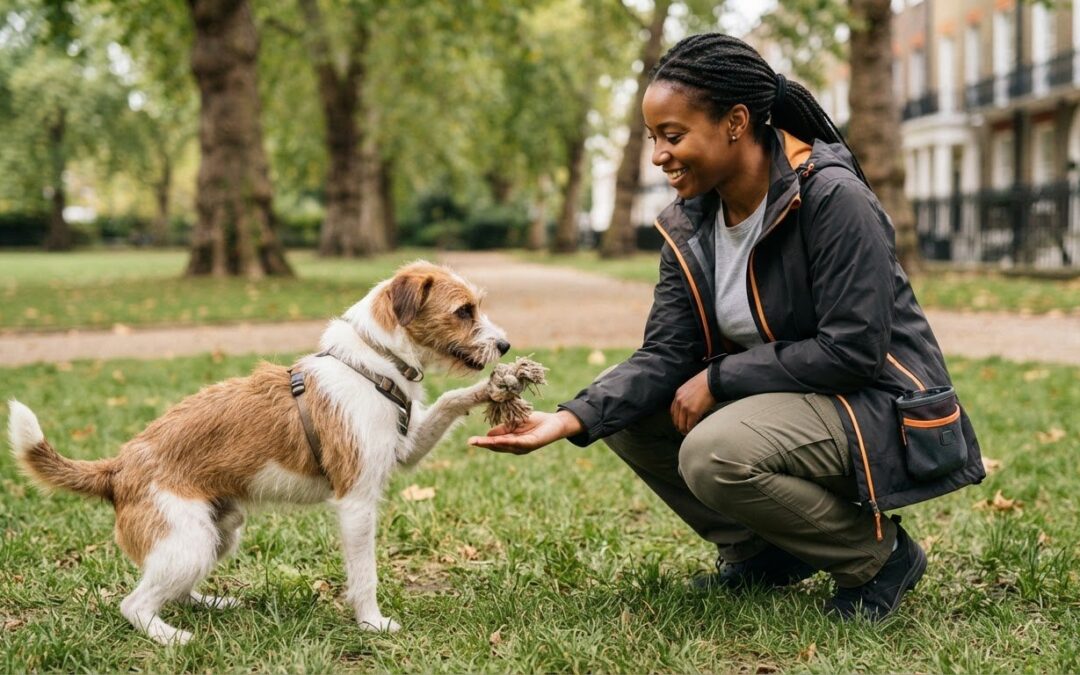
What if the quickest way to get your dog to let go is to stop trying to take the object? If your dog ignores the cue, darts away with a stolen sock or makes you uneasy when you approach a prized item, it’s understandable to feel unsure. Learning how to teach your dog to drop it doesn’t require force or a tug-of-war. A calm, rewarding trade can show your dog that releasing an object is safe and that good things can follow.
This guide breaks the skill into manageable steps, starting with a familiar, low-value toy and a reward your dog enjoys. You’ll also learn what to do if your dog doesn’t release, how to avoid turning the moment into a chase, and how to practise safely if you’re concerned about guarding.
Once the cue feels easy at home, gradually practise it in everyday situations without rushing your dog. The aim is a useful skill built on trust: your dog learns they can let go willingly, and you gain a calmer way to respond when they pick up something they shouldn’t.
Key Takeaways
- Learn how to teach your dog to drop it by pairing a familiar, low-value toy with a rewarding trade.
- Returning the toy when appropriate can help your dog learn that releasing an item doesn’t always mean losing it for good.
- If your dog won’t let go or seems uncomfortable, avoid chasing or grabbing and take their response as useful information.
- Build the cue gradually by changing one part of practice at a time, then move towards more distracting situations.
- If practice feels difficult, personalised one-to-one training can help tailor the next steps to your dog.
Why teaching your dog to drop it starts with trust
A dog picking up a valuable item can make you feel tense, especially if it’s unsafe or difficult to replace. But reaching in quickly can make the moment more stressful for both of you. To understand how to teach your dog to drop it, consider the cue from your dog’s perspective: it should predict a familiar, voluntary release, not punishment or a sudden grab.
Dogs may hold on because an object is fun to chew, valuable to them or comforting to keep close. A refusal isn’t automatically defiance. Your dog may be excited, unsure what you’re asking or worried that releasing the item means losing it. Your response becomes more predictable when you give them a clear reason to let go.
A trained release cue asks your dog to choose to let go; physically taking an item removes their choice. That distinction matters. Reward-based obedience training builds communication through clear cues and cooperation, rather than relying on force.
What does the drop-it cue mean to a dog?
“Drop it” is a learned signal to release an object your dog already has in their mouth. It’s different from a cue such as “leave it”, which asks your dog not to pick something up in the first place. One cue is for an item they’re holding; the other is for an item they haven’t taken.
For example, if your dog is carrying a toy, “drop it” means let the toy fall from your mouth. With practice, the cue becomes familiar and predictable, rather than a warning that someone is about to snatch the toy away.
Why might a dog refuse to release an object?
Sometimes the reason is playful: your dog may expect you to chase them, turning the object into part of an exciting game. They may also be unsure about the cue, highly aroused or concerned about losing something they value. These different motivations call for patience, not confrontation.
Chasing, shouting, prising open your dog’s mouth or repeatedly grabbing at the item can increase tension. Chasing may even reward holding on by starting a game your dog enjoys. Instead, pause and consider what your dog’s whole body is telling you. A loose posture can offer helpful context, but it can’t guarantee how your dog feels or what they’ll do next. Give them space and avoid forcing an interaction if they seem uncomfortable.
How to Teach Your Dog to Drop It Step by Step
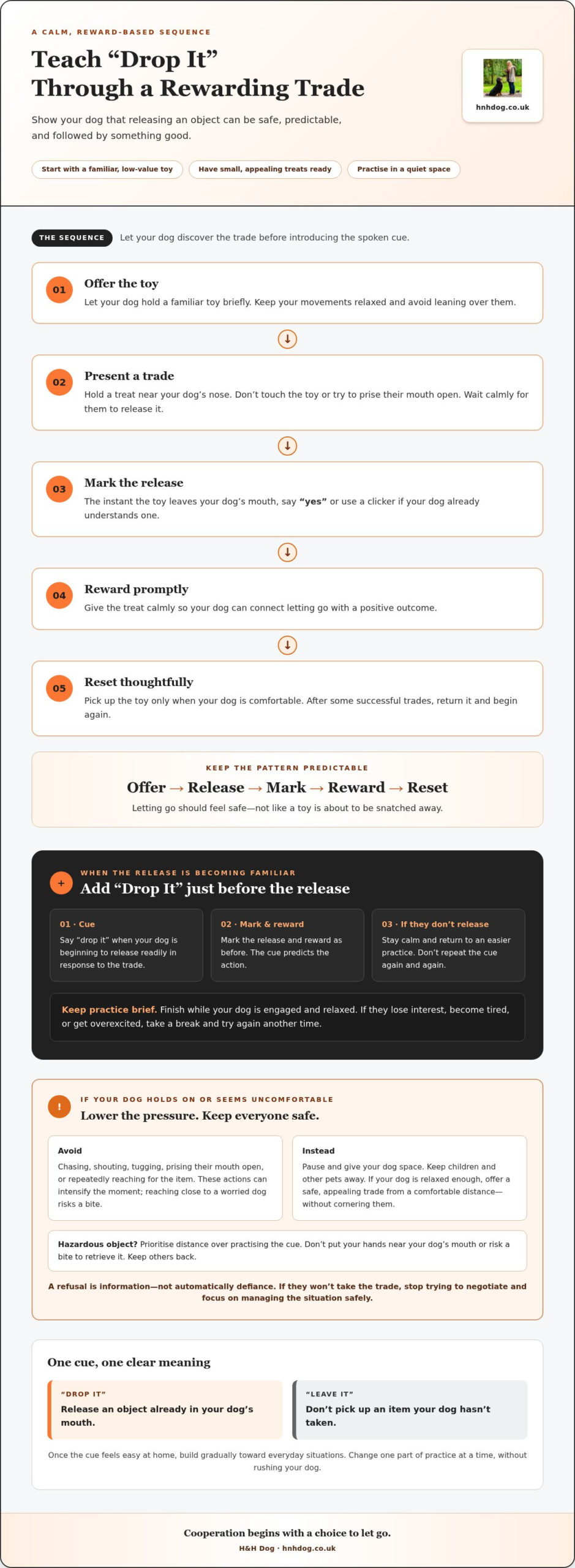
Start in a quiet space with a familiar toy your dog enjoys and can safely release. Choose a toy they like but aren’t intensely attached to, and have a few small, appealing treats ready. At first, let your dog discover that giving up the toy is worthwhile before adding a spoken cue. This makes the action clear instead of asking your dog to guess what a new word means.
- Offer the toy. Let your dog hold it briefly. Keep your movements relaxed and avoid leaning over them.
- Present a trade. Hold a treat near your dog’s nose, without touching the toy or trying to prise their mouth open. Wait calmly for them to release it.
- Mark the release. The instant the toy leaves their mouth, say “yes” or use a clicker if your dog already understands one.
- Reward promptly. Give the treat calmly so your dog can connect letting go with a positive outcome.
- Reset thoughtfully. Pick up the toy only when your dog is comfortable. After some repetitions, return it and begin again.
Offer, release, mark, reward, then reset: a predictable sequence helps your dog learn that letting go is safe. If your dog hesitates, don’t crowd them or keep moving the treat closer. Pause, give them space and make the next practice easier. A dog who appears worried around valued items may need a different approach; the ASPCA explains more about resource guarding.
Add the cue once the release is familiar
When your dog is beginning to release the toy readily in response to the trade, say “drop it” just before you expect them to let go. Mark the release and reward as before. The cue should predict the action, not become a repeated prompt while your dog is still deciding. If they don’t release, stay calm and return to an easier practice rather than saying the word again and again.
Keep practice brief and finish while your dog is still engaged and relaxed. Returning the toy after some successful trades helps show that release doesn’t always mean the fun is over. If your dog loses interest, becomes tired or gets overexcited, take a break and try again another time.
If you’re finding it difficult to adapt the steps to your dog, personalised one-to-one dog training can offer supportive guidance tailored to their responses.
What if your dog will not drop it or guards objects?
If your dog keeps hold of an item, treat that as information, not deliberate defiance. They may be excited, unsure what you’re asking or worried about losing something valuable. The next step isn’t to make the cue louder or stronger. Lower the pressure and consider what will keep everyone safe.
Respond calmly when your dog keeps hold
Pause. Avoid chasing, shouting, tugging, prising their mouth open or repeatedly reaching for the item. These actions can intensify the moment, and reaching close to a worried dog risks a bite. Give them space and keep children and other pets away.
If your dog is relaxed enough to engage, you can offer a safe, appealing trade from a comfortable distance. Don’t push the treat towards their mouth or corner them. If they won’t take it, stop trying to negotiate and focus on managing the situation safely.
For a hazardous object, such as something sharp or potentially poisonous, prioritise distance over practising the cue. Don’t put your hands near your dog’s mouth or risk a bite to retrieve it. Keep others back and seek urgent veterinary advice, particularly if you think your dog has swallowed something dangerous. Follow the vet’s instructions rather than attempting to make your dog vomit yourself.
Recognise when guarding needs tailored support
Notice changes in your dog’s posture around the item. Stiffening, hovering over it, growling or snapping are reasons to give them space and stop approaching. These signals don’t prove exactly what your dog intends, but they show that the interaction may feel uncomfortable. Don’t punish warning signals or test your dog’s tolerance by taking objects away. Suppressing a warning doesn’t resolve the discomfort behind it.
If guarding happens repeatedly, your dog snaps or their distress escalates, pause home practice and seek individual professional guidance. A tailored plan can take account of the specific objects, situations and responses involved, rather than asking your dog to cope with a generic exercise. The London dog behaviourist guide explains when behaviour support may help.
Safety comes before a successful repetition. Understanding what makes a release difficult is part of learning how to teach your dog to drop it in a way that respects their comfort and protects your relationship.
How to practise the drop cue until it works in daily life
A dog may understand “drop it” in one room and still need practice elsewhere. Cues are learned in context, so a change in location, object or level of excitement can make the task feel new. Build reliability gradually instead of expecting the cue to work around every tempting item straight away. That steady progression is central to how to teach your dog to drop it for everyday life.
Build reliability without rushing the progression
Once your dog is releasing a familiar toy comfortably, change just one feature at a time. For example, practise with the same toy in another quiet room. When that feels easy, try a different safe toy in the original room. Later, you might add a little distance or a mild distraction. Keeping the other parts of practice familiar helps you see what your dog is ready to learn.
If your dog hesitates or stops responding, take that as a cue to make the exercise easier. Return to the familiar toy, reduce the distraction or move closer. Reward successful releases with something your dog enjoys, such as a treat. Refresh the skill through occasional, relaxed practice rather than testing it unexpectedly when your dog is focused on something especially tempting.
Keep the skill useful, not just rehearsed
Practise during calm play and ordinary toy exchanges so the cue has meaning beyond a formal training session. You could ask for a release as play pauses, then restart the game when your dog lets go. Keep potentially dangerous household items out of reach; management is safer than relying on a cue before your dog is ready to respond in a difficult situation.
Try not to repeat “drop it” when your dog is unlikely to succeed. If they’re highly excited, too far away or holding something unusually valuable, repeating the cue may make it less clear. Instead, manage the situation calmly and return to easier practice later. A reliable response is built through successful experiences, not one surprise test.
For a wider foundation in gradual, tailored practice, read our dog training guide for North London. If you’d like individual help building the cue around your dog’s needs, explore one-to-one dog training.
When one-to-one dog training can help with drop-it practice
Teaching a release cue means more than getting an object out of your dog’s mouth. The aim is to help them feel safe enough to let go voluntarily, with rewards and practice matched to their comfort and learning. If progress stalls, individual support can help you understand what’s making the exercise difficult and adjust the approach without adding pressure.
Signs that personalised coaching may be useful
Consider tailored guidance if your dog repeatedly struggles even when you return to an easy setup, use calm rewards and practise with familiar objects. Support is also valuable if guarding, tension between household members or concerns about a possible bite make home practice feel unsafe. You don’t need to wait for the situation to escalate before asking for help.
There’s no single pace that suits every dog. A trainer can observe your dog’s responses and help set manageable next steps, rather than expecting a fixed timeline or promising a particular outcome.
What to expect from tailored training support
Useful training starts with understanding your dog’s world. A trainer may discuss daily routines, the objects or situations that trigger difficulty, your dog’s learning history and the needs of everyone in the household. Together, you can identify where practice feels comfortable and where your dog needs more space or a simpler starting point.
From there, the plan can be adapted to your dog and your daily life. For example, a dog who releases toys easily but becomes tense around found objects may need a different management and practice plan from a dog who simply gets overexcited during play. This individual focus helps you build the skill without treating every hesitation as the same problem.
H&H Dog offers personalised one-to-one dog training and behavioural consultations, drawing on more than 20 years of industry experience. Support is available for dog owners in Watford, North London and North West London. If you’d like help with how to teach your dog to drop it at a pace that feels right for them, you’re welcome to explore one-to-one dog training with H&H Dog.
Build a release cue your dog can trust
A reliable “drop it” cue grows through patient practice, not pressure. Start with easy trades, reward your dog for releasing voluntarily and return the object when appropriate. If your dog hesitates, treat that response as useful information and make the next step safer or simpler.
As you build the skill, change one part of practice at a time and avoid relying on the cue around unsafe or highly tempting items before your dog is ready. That’s the heart of how to teach your dog to drop it: create clear, positive experiences that help your dog feel secure letting go.
If home practice feels difficult, personalised support can help you find an approach that fits your dog and household. H&H Dog offers one-to-one dog training and behavioural consultations, drawing on more than 20 years of industry experience and serving Watford, North London and North West London. Explore personalised one-to-one dog training with H&H Dog.
Each calm, successful release is a step towards a safer everyday routine and a stronger partnership with your dog.
Frequently Asked Questions
How long does it take to teach a dog to drop it?
It depends on your dog, their learning history and how challenging the situation is. Some dogs begin releasing a familiar toy readily, while responding around exciting or valuable objects can take more gradual practice. If you’re learning how to teach your dog to drop it, focus on relaxed, successful repetitions rather than a deadline. If your dog hesitates, make the exercise easier and build up at their pace.
Should I give my dog a treat every time they drop something?
During early practice, reward each successful release so your dog can clearly connect letting go with a positive outcome. A tasty treat is one option, but returning a toy or restarting a game can also be rewarding when suitable. As your dog becomes more confident, vary the reward while keeping the exchange worthwhile. Avoid asking for a release and then always taking the object away without offering anything positive in return.
Can you teach an older dog to drop it?
Yes. Older dogs can learn new cues, though the pace and best rewards will depend on the individual dog. Start with a familiar, safe object and simple practice, then adjust if your dog seems uncomfortable or finds the movement difficult. H&H Dog offers personalised one-to-one dog training and behavioural consultations in Watford, North London and North West London, with guidance tailored to each dog’s needs.
What should I do if my dog growls when I take something?
Stop reaching for the item and give your dog space. A growl is a warning that they may be uncomfortable, so don’t punish it, challenge your dog or test whether they will tolerate another attempt. Keep other people and pets away, especially children. If growling happens repeatedly, escalates or is accompanied by snapping, seek individual professional guidance to plan safer handling and training.
Is drop it the same as leave it?
No. “Drop it” asks your dog to release something they already have in their mouth. “Leave it” asks them not to pick up or approach something in the first place. For example, if your dog is carrying a toy, “drop it” means let the toy go. If they spot food on the floor before picking it up, “leave it” is the relevant cue.
How do I get my dog to drop something dangerous?
Prioritise safety over practising a cue. Don’t chase, grab the object from your dog’s mouth or risk a bite. Keep people and other pets back, and offer a safe trade only if your dog can engage without pressure. If you think your dog has swallowed something harmful, contact a vet urgently and follow their advice. Don’t try to make your dog vomit unless a vet instructs you to.
Why does my dog run away when I try to take a toy?
Your dog may have learnt that running starts an exciting chase, or they may be trying to keep hold of a toy they value. Either way, chasing can make the game more rewarding and taking the toy feel less predictable. Avoid pursuing them. Practise a voluntary trade with a familiar toy in a calm space, and reward the release so coming close and letting go feel worthwhile.