
A summer cut should be planned around your dog’s coat, not simply the warm weather. To reserve mobile grooming for a summer cut, share your dog’s breed or coat type, the trim you have in mind and where you’d like the visit. Then agree the appointment details and read the deposit and cancellation terms before confirming. The right finish is tailored to your dog, not chosen from a one-style-fits-all menu.
It’s understandable to want a clear idea of what happens before the groomer arrives, especially if your dog is more comfortable in familiar surroundings. Regular grooming is often recommended every 4-6 weeks, depending on breed, coat, size and lifestyle.
This guide explains how to arrange an at-home appointment, what deposits and cancellations may involve, and what can affect grooming time. You’ll also learn how regular care supports coat maintenance, so you can plan a comfortable summer trim with your dog’s individual needs in mind.
Key Takeaways
- Familiar surroundings can help make an at-home appointment feel more comfortable, while your dog’s needs should shape the grooming experience.
- Understand how deposits and cancellation terms work before you confirm an appointment, so you can plan with confidence.
- Grooming time varies with coat condition, size and the work involved; allow room for a considered, welfare-focused appointment.
- A summer trim should suit your dog’s coat and comfort, rather than follow a one-style-fits-all approach.
In-home grooming and familiar surroundings
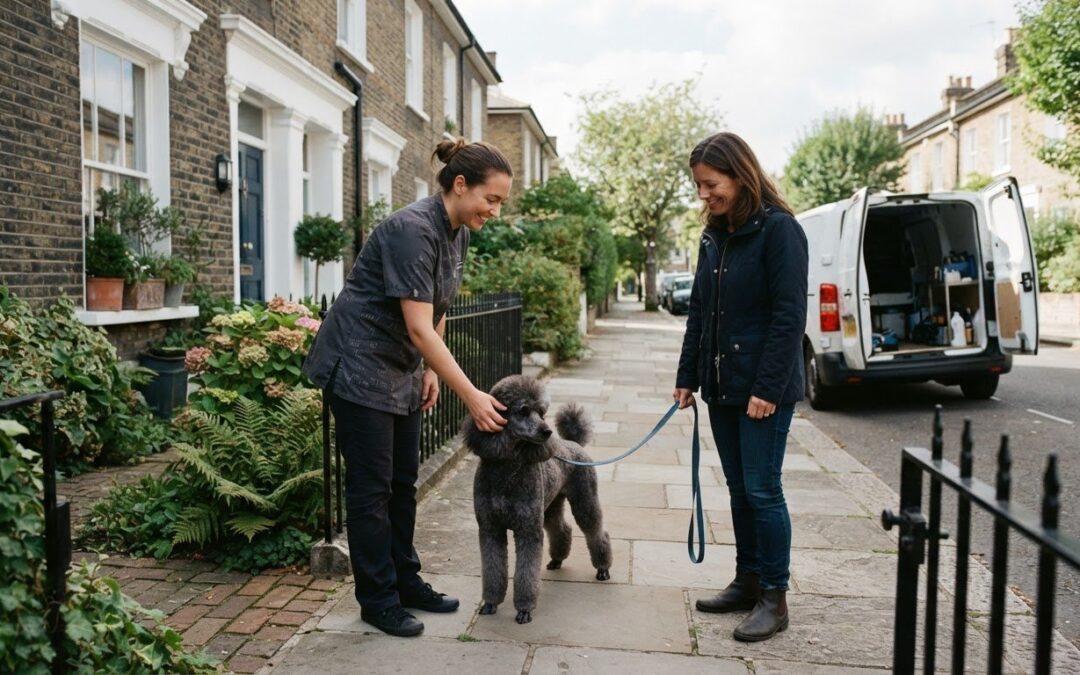
Mobile grooming brings the working area to your doorstep, without a busy salon floor. For mobile grooming for a summer cut, H&H Dog’s groomer can assess your dog and tailor handling to their coat, age and comfort. Explain whether your dog settles better with you nearby or with a little space. That helps make the handover more predictable and the appointment more comfortable.
Before the appointment, share your dog’s breed, coat type, previous grooming experience and any sensitivities. Mention matting, skin irritation or discomfort around the paws, for example. Describe the finish you want, such as a tidy outline rather than a close clip. The groomer can then discuss suitable options before work begins.
This service is for dogs. Cats can respond differently to handling and grooming equipment, and need a calm, cat-specific approach. Don’t assume a dog grooming appointment is suitable for a cat.
Licence and insurance are separate considerations in the UK. Licensing requirements can depend on the activity and locality; look for clear information about insurance covering animals while in the groomer’s care. A licence alone doesn’t explain what protection applies if an incident occurs.
There’s no single UK price for mobile grooming: cost depends on coat, dog size, condition, requested work and travel, with a quote given after a request. A summer cut may include coat assessment, brushing, bathing, drying and trimming, shaped around the dog’s needs.
Look for clear explanations, patient handling and a plan tailored to your dog. Give H&H Dog practical details when requesting an appointment, including coat condition, behaviour, health concerns and your preferred trim. This helps the groomer prepare and discuss a suitable finish.
Shaving isn’t automatically the best choice in hot weather. A very short cut can leave less coat between the skin and sunlight, so coat type and skin condition matter. Choose a trim that prioritises your dog’s comfort rather than the shortest possible finish.
In warm conditions, the appointment plan should account for shade, airflow and water. The groomer should monitor your dog’s comfort and pause if they show distress. Vehicle safety matters too: the van’s temperature and ventilation should remain appropriate throughout the appointment.
Booking, deposits and cancellations
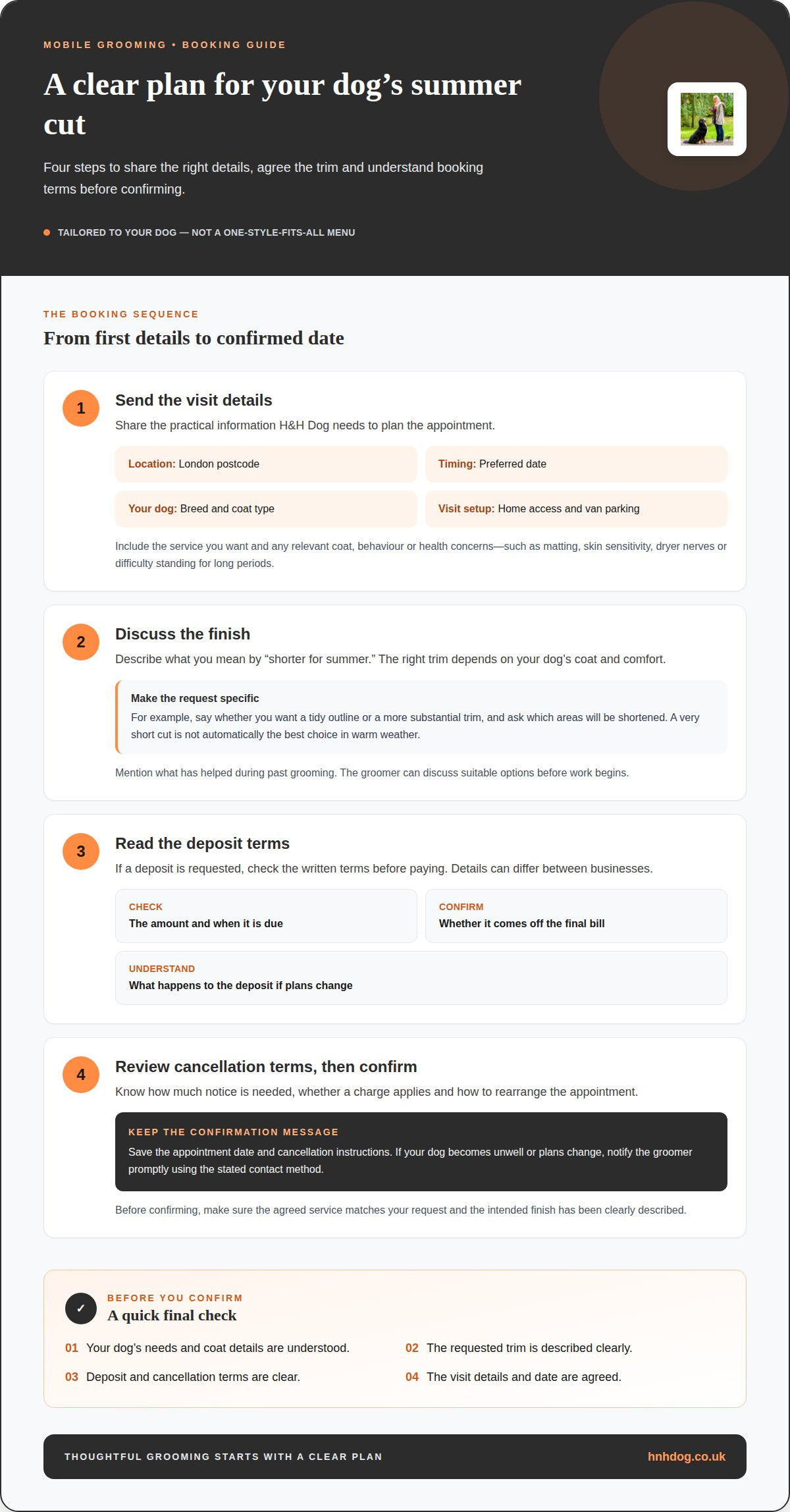
Start with your London postcode, preferred date, your dog’s breed and coat type, and the service you want. Include practical details such as access to your home and where the grooming van can park. This helps H&H Dog plan the visit and understand what the summer cut involves.
Describe your dog’s needs plainly. Mention a nervous response to dryers, previous matting, skin sensitivity or difficulty standing for long periods. Share what has helped during earlier grooming. Clear information helps the groomer plan a patient, suitable appointment.
If a deposit is requested, treat it as part of the booking, not an informal extra. Before paying, read the terms for its amount, when it is due, whether it comes off the final bill, and what happens if plans change. These details can differ between businesses, so rely on the written terms for your specific appointment.
Cancellation policies should explain the notice period, any charge, and how to rearrange. Keep the confirmation message with the appointment date and the cancellation instructions. If your dog becomes unwell or your plans change, tell the groomer promptly using the stated contact method. Early notice gives both sides more time to adjust the schedule.
Before confirming, make sure the agreed service matches your request. “Shorter for summer” could mean a light tidy for one coat and a more substantial trim for another. Ask for the intended finish to be described clearly, including which areas will be shortened. That helps avoid misunderstandings at handover.
A simple booking sequence keeps the arrangements clear: send your details, discuss the trim, review deposit and cancellation terms, then confirm the date. For a more tailored appointment plan, discuss your dog’s grooming needs before the visit.
Grooming appointment duration
There isn’t one set duration for every dog’s appointment. The time depends on coat type, size, condition, requested trim and how comfortably the dog handles each stage. A small dog with a short, well-maintained coat needs different work from a large dog with dense or tangled fur. A summer cut is planned around those differences, not a standard time slot.
The groomer generally allows for several stages: coat assessment, brushing, bathing, drying and trimming. Each stage affects the next. Knots may need careful attention before bathing, while a thick coat can take longer to dry. A tidy trim also differs from a substantial change in coat length.
Your dog’s response matters too. A dog who is new to grooming may need time to get comfortable with handling and equipment. If they become restless during drying or need a pause, the groomer can adjust the pace. Calm, considered handling supports your dog’s experience; rushing to meet a fixed finish time does not.
Before the appointment, describe the requested finish and mention any relevant coat or handling concerns. “Shorter for summer” can mean different things, so explain whether you want the outline tidied or a more noticeable trim. Mention matting, sensitivity around the paws or a previous difficult grooming experience. These details help the groomer plan the work realistically.
Keep your schedule flexible around the visit rather than planning an immediate commitment afterwards. The groomer can explain the appointment plan after assessing your dog and their coat. If the coat’s condition affects the work required, they can discuss the options with you before proceeding. This gives you a clear basis for agreeing the finish and helps your dog receive attentive care.
What is a summer cut for dogs and which breeds benefit?
A summer cut isn’t one standard style. It means a groom adapted for warmer weather, with the finish chosen for your dog’s coat and comfort. For one dog, that may mean tidying the outline and trimming around the face or paws. Another may need a different approach. Agree the length and shape before clipping starts.
Breed alone doesn’t determine whether a shorter cut suits a dog. Poodles, spaniels and terriers can have very different coat textures and grooming needs. Even dogs of the same breed can differ in coat condition, age and tolerance for handling. The key is what your individual dog’s coat can support, not whether every dog of that breed should have the same summer style.
Some coats have an undercoat as well as a topcoat. If your dog has this coat structure, discuss it before requesting a close clip. The groomer can explain suitable options, from brushing and a tidy to a more substantial trim. A very short finish can leave the skin less covered, so your dog’s coat and skin should guide the decision.
Bring a clear example of your preferred finish, such as “keep the outline fluffy, but neaten the feet”. Mention previous clipping, coat changes or areas your dog dislikes being handled. These details help the groomer plan a finish that considers both appearance and your dog’s responses. If you’re unsure, describe the practical result you want, such as easier coat maintenance, rather than insisting on a particular length.
Regular grooming helps keep the coat manageable between seasonal trims. The recommended interval is 4-6 weeks, depending on breed, coat, size and lifestyle. For a cut shaped around your dog’s coat, arrange a summer grooming appointment.
H&H Dog: Mobile dog grooming
H&H Dog brings mobile dog grooming to your doorstep in London, with care tailored to your dog’s coat, needs and temperament. If you’re planning a summer trim, share the finish you have in mind and any handling sensitivities. That helps shape an appointment around your dog, rather than a generic style.
A Full Groom suits dogs needing more comprehensive coat care, while a Bath & Brush focuses on cleaning and brushing. For a puppy’s early experience, Puppy’s First Groom offers a gentle introduction. The right service depends on your dog’s coat and the care you’re seeking.
Contact H&H Dog to discuss your dog’s grooming needs and preferred summer finish.
Make your dog’s next groom feel considered
The best summer trim fits your dog’s everyday life, not just the season. Think about how you want their coat to feel during walks, play and quiet time at home. A clear, practical goal gives the groomer a useful starting point and keeps your dog’s comfort central.
After mobile grooming for a summer cut, notice which parts of the experience suited your dog. Their response can help shape future appointments and make their care more personalised over time. You don’t need to settle on one style forever; your dog’s coat and needs can change.
When you’re ready to plan the next step, contact H&H Dog to book. A thoughtful conversation can help you decide what kind of grooming best suits your dog. With a clear plan and attentive care, you can approach their summer trim with confidence.
Frequently Asked Questions
How do I make a reservation for my pet?
Choose a grooming service and send your details through H&H Dog’s contact form to request an appointment. Include your London postcode, your dog’s breed and the service you want, such as a Full Groom or Bath & Brush. Add any medical or handling needs that could affect the visit. H&H Dog will confirm the booking arrangements.
Why should I have my pet groomed?
Regular grooming helps keep your dog’s coat clean and manageable, with routine care for areas such as the ears and nails. H&H Dog’s mobile grooming includes bathing, brushing, nail trimming and ear cleaning. Brushing can help reveal tangles that need attention before they become harder to manage. The right grooming plan depends on your dog’s coat and needs.
How long does a mobile dog grooming appointment take?
The grooming appointment is tailored to your dog’s size, coat condition and chosen service. It may include bathing, brushing, drying, nail trimming and ear cleaning, so the combination of care matters as much as the requested trim. A dog needing extra brushing through a dense coat has different needs from one requiring a straightforward bath and tidy. Share your dog’s details when requesting an appointment.