
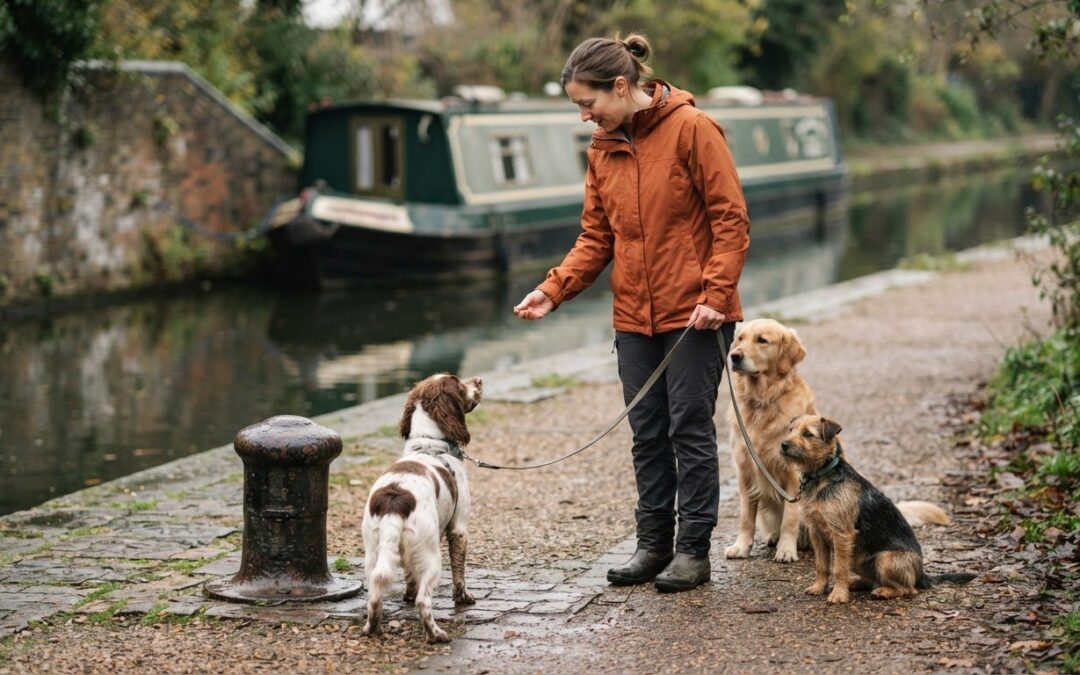
A harness may make a pulling dog easier to manage, but neither a harness nor a collar teaches calmer lead walking. A dog walker for dogs who pull on the lead needs to understand what is driving the behaviour, from tempting smells to the excitement of reaching people or places, and respond with patience rather than force.
If every walk feels like a tug-of-war, you’re not alone in finding it tiring. The right approach can help your dog feel more settled and make time outside more enjoyable for you both. This article explains how equipment can support safe, comfortable walks, why dogs pull and how positive reinforcement helps build loose-lead skills around distractions. You’ll also learn what to look for in walking support that respects your dog’s individual needs.
Key Takeaways
- A well-fitted harness can support comfortable handling, but equipment alone won’t teach loose-lead walking.
- Positive reinforcement helps make staying near the walker worthwhile, even when distractions compete for attention.
- Pulling can reflect a dog’s interest in smells, people or other dogs, not simply a lack of training.
- Personalised walking support can take your dog’s temperament and needs into account.
How does a professional dog walker choose a harness or collar for a dog who pulls?
A walker should consider your dog’s comfort, movement and response to their equipment. A well-fitted harness can help manage pulling without putting pressure on the neck, but it won’t teach loose-lead walking by itself. A collar may suit a dog who walks comfortably without pulling. If your dog coughs, gags or seems sore after walks, have them checked by a vet.
For everyday walking, a 1.2m-1.5m lead offers a balance of control and freedom. In busy urban areas, a 1m lead can give closer handling. A fixed-length 5m-10m training lead can support recall practice in open spaces. Unlike a fixed lead, a retractable lead changes length as the dog moves, making consistent distance harder to maintain. Equipment supports management; teaching and reward-based training build the skill.
A professional dog walker for dogs who pull on the lead observes how the dog responds to distractions, then adjusts the route, distance and pace. Loose-lead skills should develop in calmer settings before being practised on busier streets, rather than starting in a crowded park. Dogs Trust advises increasing distractions gradually and returning to an easier stage if a dog struggles.
No single qualification covers every handling need. Look for relevant dog-handling and behaviour training, as well as experience responding calmly to pulling and individual triggers.
One-to-one walk prices depend on the case and are provided after a quote request. Factors include the walk’s duration, location and the support your dog needs.
When searching in London, look for a walker who can explain their approach to lead handling, distractions and your dog’s temperament. Local routes and walking conditions also matter.
A professional should be able to show their insurance details, provide references and explain their DBS status. These checks can help you understand their experience and safeguards.
Group walks may suit a dog who can stay settled around other dogs and respond to the walker. If pulling is linked to reactivity or strong excitement, individual support may be a better starting point.
For a reactive or strong dog, prioritise a walker whose handling approach accounts for triggers, distance and safe route choices. A Behavioural Consultation or 1-to-1 Dog Training can help address behaviour that needs focused support.
How professional dog walkers use positive reinforcement for loose-lead walking
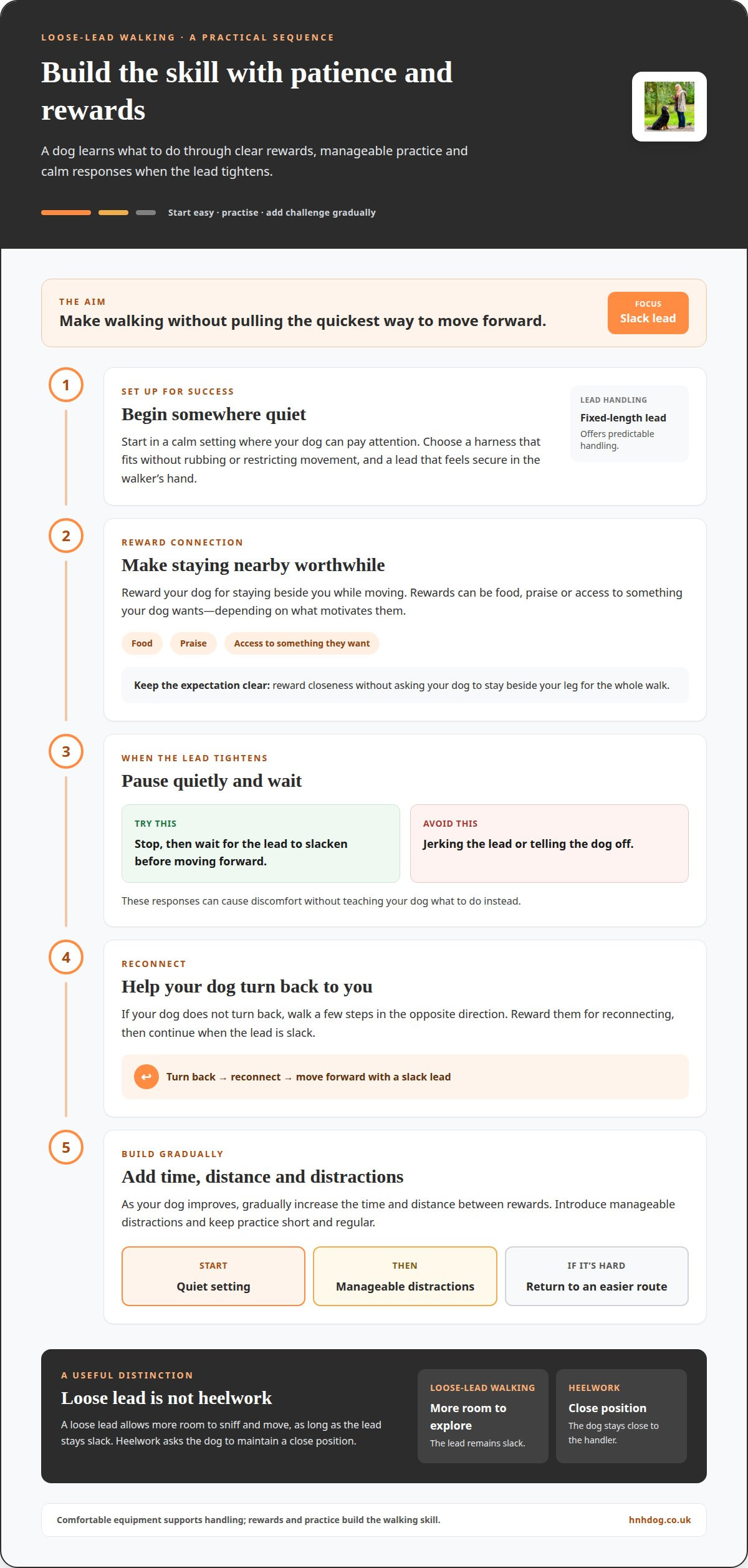
Positive reinforcement gives a dog a clear reason to stay near the walker. Dogs Trust advises rewarding a dog for staying beside their handler while moving, then gradually increasing the time and distance between rewards as the dog improves. Rewards might include food, praise or access to something the dog wants, depending on what motivates them.
If the lead tightens, Dogs Trust recommends stopping quietly and waiting for it to slacken before moving forward. Avoid jerking the lead or telling the dog off: this can cause discomfort without teaching them what to do instead. If the dog doesn’t turn back, walking a few steps in the opposite direction may prompt them to reconnect. The aim is to make walking without pulling the quickest way to reach an interesting destination.
Loose-lead walking isn’t the same as heelwork. Heelwork asks a dog to maintain a close position, while a loose lead allows more room to sniff and move as long as the lead stays slack. A professional can reward closeness without expecting the dog to stay beside their leg throughout the walk.
Comfortable equipment matters. A walker should look for a harness that fits without rubbing or restricting movement, and a lead that feels secure in their hand. A fixed-length lead offers predictable handling, while a long line can give a dog more space in open areas. A retractable lead changes length as the dog moves, which can make consistent reinforcement harder.
Training should match your dog’s current ability. A walker can begin in a quiet setting, then introduce manageable distractions and reward your dog for paying attention nearby. If your dog struggles, returning to an easier route helps build successful repetitions. Short, regular practice gives them repeated chances to learn that staying connected brings rewards.
For dogs comfortable around others, Group Dog Walking can provide structured walks where calm behaviour and individual needs remain part of the picture.
Pulling towards smells, dogs and people
A dog may pull towards a scent because sniffing offers information about its surroundings. Dogs running free spend about 33% of their time sniffing. For a dog, a verge, tree trunk or lamppost can carry compelling smells from other animals. A professional walker treats this interest as part of the dog’s experience, not simply unwanted behaviour, and plans space for calm exploration alongside loose-lead practice.
People and other dogs can draw a dog forward for different reasons. One dog may be eager to greet someone they know; another may feel uncertain when a dog approaches directly. A walker observes body language, such as a stiff posture, turning away or repeatedly checking the other dog. These clues can help distinguish social excitement from discomfort and guide choices about distance, direction and pace.
At a scent or sighting, a walker can create space before the lead becomes tight. For example, they might move in a gentle arc around another dog, pause on a quieter verge or reward the dog for turning back towards them. If the dog can’t respond, the distraction may be too close or intense. Increasing the distance makes it easier to regain attention without forcing an encounter.
Enjoyable walks give dogs opportunities to follow their noses, not just practise heelwork. Research cited in the article reports that shelter dogs allowed to use their noses are calmer, while pet dogs doing regular nosework show a more positive emotional state than dogs doing regular heelwork. A walker can balance these needs by allowing relaxed sniffing at suitable points, then returning to loose-lead walking. This supports exploration while building skills for passing people, dogs and tempting smells. The setting matters too: a quiet path may suit early practice, while a busy pavement can wait until the dog manages easier distractions.
Why dogs pull on the lead
Pulling often works from the dog’s point of view. If moving forwards takes them to a tree, another dog or a person, pulling has achieved its purpose. Dogs Trust explains that even one step forward while a dog pulls can teach them that pulling makes progress. This learning can build over repeated walks, even when owners don’t mean to reinforce it.
Dogs have different motivations. One may hurry towards a scent; another may pull from excitement, uncertainty or a desire to get further away from something worrying. A walker should watch the dog’s body language and surroundings, not just the lead. A dog leaning towards a greeting may need a different response from one who freezes or tries to move away.
The lead itself can shape the experience. A short lead that tightens whenever a dog pauses to sniff may restrict movement and create repeated tension. A slip lead or collar doesn’t explain which behaviour will work instead. Equipment can help manage a walk, but teaching loose-lead skills requires clear, consistent feedback and a reward for staying connected.
Standing still when the lead tightens can interrupt the pattern, provided the dog can settle and the situation is manageable. If the dog is already distressed, simply waiting may not address the cause. A walker can create more distance, choose a quieter route or reduce how long the dog is exposed to a trigger. The aim is to make progress possible without increasing pressure.
Lead pulling, frequent pulling by the handler and lead corrections can contribute to stress, increased heart rate and blood pressure, and elevated stress hormones. That makes a dog’s emotional state part of training, not an afterthought. Persistent pulling, coughing or apparent soreness also calls for attention to comfort and health.
If pulling reflects anxiety, strong excitement or a learned habit, tailored support can help identify its function and plan consistent responses. Book 1-to-1 dog training to work on the behaviour behind the pulling.
H&H Dog
H&H Dog offers Group Dog Walking for owners who need support with regular walks. A dog who pulls may still enjoy group walking if they can remain settled around other dogs and respond to the walker. Their comfort and behaviour around the group matter as much as the pulling itself.
If your dog becomes overwhelmed near other dogs, or pulling is linked to strong reactions, a group setting may not be the right starting point. Consider what affects your dog’s lead behaviour and what kind of walking situation may suit them. Choose support that takes their temperament and experience into account, rather than treating every pull in the same way.
For a conversation about walking support, contact H&H Dog.
Make the next walk a better fit
A calmer walk is built around the dog in front of you, not an idealised picture of perfect behaviour. When considering a dog walker for dogs who pull on the lead, look for an approach that accounts for your dog’s comfort, changing attention and confidence, as well as practical handling. This shifts the goal from simply getting from A to B towards a routine your dog can manage and enjoy. It also gives the walker useful context to adapt each outing instead of treating every pull as the same problem.
If you’re ready to explore walking support, a conversation with H&H Dog can help you discuss what your dog experiences outdoors and what you hope walks will become. Situations that prompt pulling, your dog’s response to other dogs and how they settle afterwards can help shape that discussion. Choose an approach that respects your dog’s pace and supports confidence over time. Discuss dog walking with H&H Dog, and take the next step towards walks that feel more manageable for both of you.
Frequently Asked Questions
Does the equipment matter?
Yes, suitable, correctly fitted equipment can affect comfort and how securely a walker can manage a dog. It doesn’t explain the behaviour by itself. A harness that shifts or rubs may make a walk harder, while a well-fitted option can support safer handling. Tell the walker what your dog already wears and how they respond, so they can plan a more comfortable outing.
What do better walks look like?
Better walks give your dog opportunities to explore while helping them stay comfortable and responsive. A walk might include a quiet stretch for sniffing, a pause while a cyclist passes, and a change of direction if the pavement becomes crowded. Progress might also mean your dog settles more easily afterwards, even if the pulling hasn’t disappeared completely.
Do UK dog walkers use no-pull harnesses or other equipment for dogs that pull?
UK dog walkers may use harnesses, collars or different types of lead, depending on the dog and the walk. No single piece of equipment suits every dog. A harness may support handling for a dog who pulls, while a fixed-length lead gives the walker a predictable length. The choice should account for fit, comfort, surroundings and the dog’s behaviour.
Can a dog walker provide loose-lead training during walks?
Yes, a walker can reinforce loose-lead skills during everyday outings by noticing and rewarding moments of attention or slack in the lead. A busy London pavement may be too challenging for a dog still learning, so begin on calmer routes. For focused teaching beyond routine walks, dedicated one-to-one dog training can address specific patterns and distractions.
What questions should I ask before hiring a dog walker for a dog that pulls?
Discuss what your dog does when they see another dog, person or cyclist, and what helps them settle. Ask how the walker plans routes, responds if the lead tightens and shares updates after a walk. It’s also useful to explain whether your dog is comfortable walking alongside other dogs, so the arrangement reflects their behaviour and needs.
What safety risks should I consider when choosing a walker for a strong dog?
A strong dog may surge suddenly towards a scent or distraction, creating risks near roads, crowded pavements or other dogs. Consider whether the walker’s handling plan accounts for these moments, including route choice, safe distance and secure equipment. If your dog seems uncomfortable or becomes highly distressed outdoors, these details matter when deciding whether group walking or individual support is more suitable.