
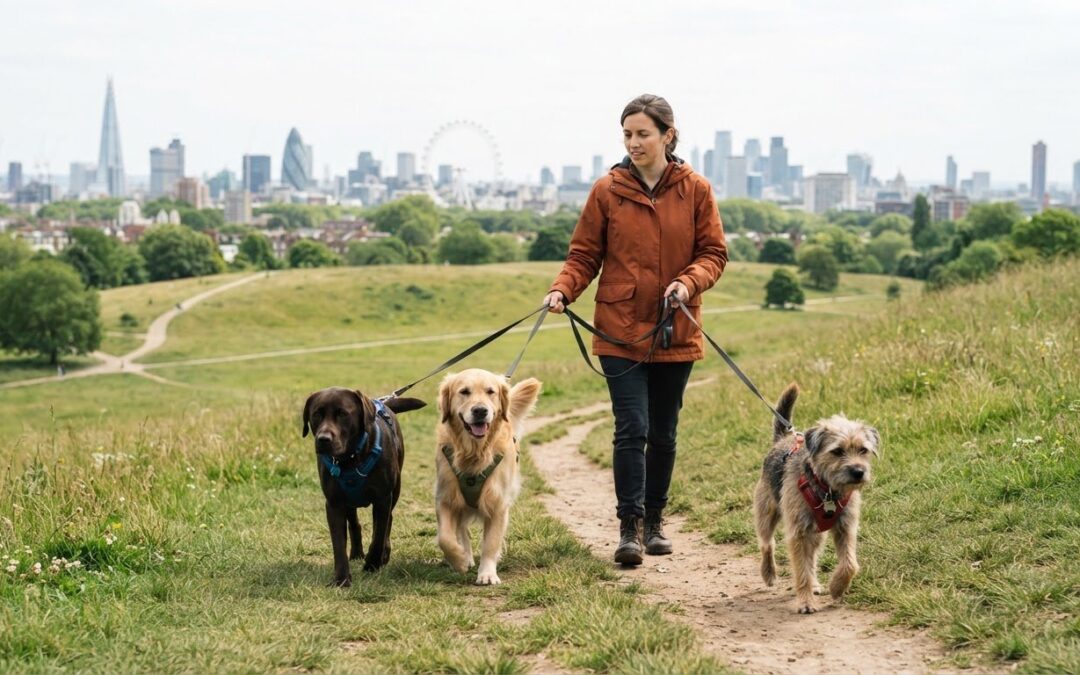
Adult dog socialisation has no one-size-fits-all session length. When planning how to socialise an adult dog safely in London, a professional should tailor each session to the dog’s comfort and finish before the dog is pushed into reacting. The right pace depends on what your dog can calmly manage.
It’s understandable to wonder whether adult dogs have missed their chance to get comfortable with new people, dogs and places. They can continue learning throughout life, but an adult may need smaller steps and more patience than a puppy. This article explains how a professional can plan gradual introductions, recognise signs of stress or ease, and adapt sessions to your dog’s responses. You’ll also learn why adult socialisation calls for a different approach from puppy socialisation, and when individual support can help make the process calmer and more manageable.
Key Takeaways
- There’s no fixed session length for every adult dog; a suitable plan follows your dog’s comfort and response.
- Gradual introductions to new places, sounds and people can help keep socialisation manageable.
- Learn which body-language changes suggest your dog needs more space or a pause.
- Adult dogs can keep learning, though their socialisation may call for smaller steps and more patience than a puppy’s.
1. Gradual, positive exposure to people, places, sounds and experiences
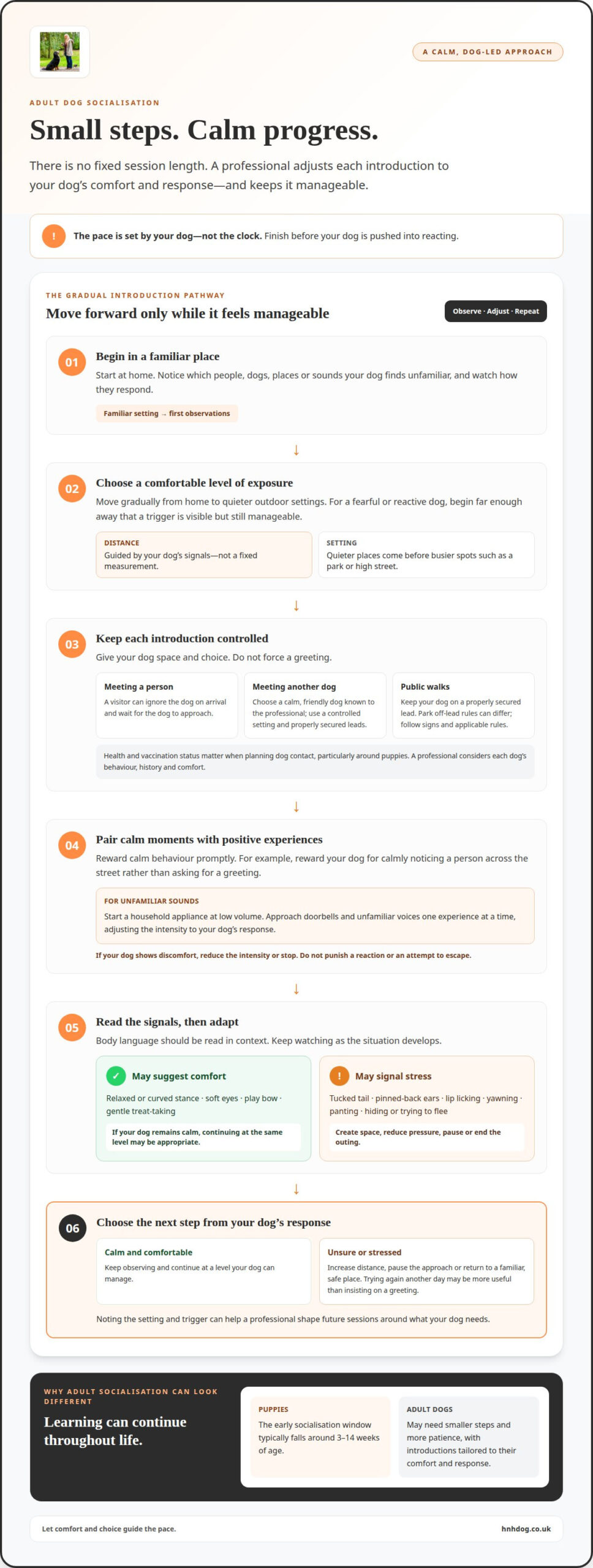
There’s no universal session length for an adult dog. A professional adjusts the pace to your dog’s comfort, response and ability to stay calm. Socialisation can start at home, then move gradually to quieter outdoor settings before busier places, such as a park or high street. Each step gives your dog time to process unfamiliar experiences without being pushed towards a reaction.
For a fearful or reactive dog, a professional can begin at a distance where the trigger is visible but manageable. They can observe your dog’s response, reward calm behaviour and adjust the distance or setting before pressure builds. Interactions with people or dogs aren’t forced. If your dog becomes uncomfortable, the professional can create space or end the outing and return to a familiar, safe place.
The cost of dog training and behaviourist sessions in London depends on your dog’s needs, the session format and the work involved; the price is provided after a quote request. For a fearful or reactive dog, 1-to-1 Dog Training or a Behavioural Consultation can provide a more individualised starting point than a busy group setting.
Positive-reinforcement training helps your dog form safer associations with new experiences. For example, reward your dog for calmly noticing a person across the street rather than asking for a greeting. Small, successful moments can help your dog feel more confident. Give the reward promptly after calm behaviour, so your dog can connect the experience with something positive.
Introduce new sounds carefully, too. You might play a household appliance at a low volume, then adjust based on your dog’s response. Doorbells and unfamiliar voices can be approached similarly, one experience at a time. If your dog shows discomfort, reduce the intensity or stop. Don’t punish a reaction or an attempt to escape: that may deepen a negative association. Prioritise safety, distance and choice.
2. Choosing calm, healthy, vaccinated dogs for introductions
A first meeting should involve a calm, friendly dog known to the professional, not a group of unfamiliar dogs. Health and vaccination status matter when planning contact, particularly around puppies. The professional can consider each dog’s behaviour, history and comfort before deciding whether an introduction is suitable.
When introducing two adult dogs, choose a controlled setting and use properly secured leads so you can manage the space if either dog becomes uneasy. Start at a distance that lets both dogs notice one another without being pushed into greeting. The right distance depends on their signals, not a fixed measurement. If tension rises, create more space or end the meeting.
For introductions to puppies or children, keep the environment calm and positive, and pay close attention to everyone involved. Be ready to intervene if a dog becomes uncomfortable. Don’t rely on a child or puppy to manage the interaction. A calm adult, clear space and the ability to pause help keep the experience safer.
With a new person, a gradual approach gives the dog choice. At home, the visitor can ignore the dog on arrival while the professional observes. Calm behaviour can be rewarded with praise or a treat. The visitor can wait for the dog to approach rather than reaching out or insisting on contact.
For public socialisation walks in London, keep your dog on a properly secured lead. Don’t assume every park permits off-lead dogs: local restrictions can differ, so follow signs and applicable rules. Use the lead to maintain control, then adjust the distance according to the dogs’ responses. No particular lead type or set distance suits every introduction.
If you need tailored help planning a safe meeting, individual behavioural support can help shape the approach around your dog’s needs.
3. Recognising stress and comfort through body language
A dog’s behaviour during a meeting can show whether the situation feels manageable. A tucked tail, pinned-back ears, lip licking, yawning or panting may signal stress. Hiding or trying to flee can indicate the dog needs more space. A professional reads these signals in context, rather than treating one movement as a complete picture of the dog’s feelings.
Signs of comfort can vary. A relaxed or curved stance, soft eyes, a play bow or gentle treat-taking may suggest a positive experience. For example, a dog that calmly watches another dog and accepts treats may be coping well at that distance. Keep observing, because body language can change as the situation develops.
Signs a dog may benefit from carefully planned socialisation include repeated worry around unfamiliar people, dogs, places or sounds. A dog that hides when visitors arrive or tries to move away from other dogs may be communicating discomfort, not being difficult. A professional can note which situations prompt these responses and shape the plan around the dog’s needs.
If stress signals appear during an introduction, increase the distance and reduce pressure. Move farther from another dog, pause a visitor’s approach or end the session. If your dog seems unsure, creating space and trying again another day can be more useful than insisting on a greeting. The aim is to keep the experience manageable.
These observations also help determine whether a session should continue. Calm posture and gentle treat-taking can support continuing at the same level, while hiding, fleeing or several stress signals together call for a pause or change. A professional can record what happened, including the setting and trigger, to make future sessions more individualised. This careful reading helps protect the dog’s choice and builds a clearer picture of what feels safe.
4. Differences between puppy and adult dog socialisation
Puppies have an early socialisation period, but adult dogs haven’t lost the ability to learn. The puppy socialisation window typically falls between around three and fourteen weeks of age. Abingdon Vets identifies early puppy months as the most effective period for socialisation. For an adult, the professional’s focus shifts from broad early exposure to carefully tailored experiences.
With puppies, Abingdon Vets recommends introducing new experiences one at a time. Initial sessions may be as short as five to ten minutes, and calm observation can count as useful socialisation without direct interaction. For example, a puppy can watch people from a comfortable distance before meeting anyone. This lets you consider the puppy’s response before adding another experience.
Adult dogs may bring established responses to people, other dogs, sounds or places. Socialisation can take longer and need more care, especially if a dog has experienced trauma or abandonment. A dog that feels unsure near traffic, for instance, may need a different starting point from a puppy encountering that sound for the first time. The professional adapts the plan to the dog’s history and comfort.
Progress also differs from dog to dog. Adult dogs can continue learning, but they may need smaller steps and more time. You might focus on one setting, such as a quiet street, then adjust the next session according to your dog’s response. Progress isn’t always linear, so a setback can mean the plan needs adapting, not that your dog has failed.
The key distinction is the starting point: puppy socialisation builds early familiarity, while adult socialisation responds to the individual dog’s existing experience. If you have a puppy, explore Puppy Training for support suited to this early learning stage.
H&H Dog
H&H Dog provides personalised care shaped around each dog’s needs and temperament. If you’re considering how group settings fit into your adult dog’s routine, Group Dog Walking may be appropriate once your dog is comfortable around other dogs. A group walk isn’t a substitute for gradual, individual support with fear or reactivity, so let your dog’s emotional comfort guide the next step.
Share what your dog finds difficult, such as meeting unfamiliar dogs or coping with busy places. This context helps clarify whether group walking suits your dog’s current needs or whether a quieter routine is more appropriate. Socialisation should support your dog’s welfare, not place them in interactions they’re not ready to manage.
To discuss your dog’s care, contact H&H Dog.
Take the next step at your dog’s pace
Choosing how to socialise an adult dog safely in London is less about reaching a set milestone and more about helping your dog feel secure in everyday life. Think about the situations you’d like to become easier, such as welcoming visitors or passing dogs on familiar routes. Those priorities can guide a conversation with a professional and keep the focus on changes that matter to you and your dog.
Every dog responds differently, so a suitable approach depends on their temperament, experiences and behaviour in specific settings. Sharing what you’ve noticed helps shape support around your dog, rather than expecting them to fit a standard plan. Progress can be meaningful even when it looks subtle.
If you’d like to talk through support for your dog, contact H&H Dog. A thoughtful next step can help you make daily life feel more comfortable for both of you.
Frequently Asked Questions
How long should professional dog socialisation sessions be?
There’s no single ideal duration for every adult dog. A professional considers the activity, surroundings and how well your dog can stay engaged. For example, a quiet meeting in a familiar setting may be easier to manage than a busy London street. The session can include pauses or finish early if your dog’s responses show that continuing would add pressure.
Need help with socialisation?
A professional can help if your dog avoids visitors, struggles around other dogs or finds everyday outings difficult. If you’re exploring how to socialize an adult dog safely in London, H&H Dog offers 1-to-1 Dog Training and Behavioural Consultations for individual training and behaviour needs. Share the situations that concern you, such as visitors entering your home or passing dogs on walks, to focus the discussion on suitable support.
What Is Socialisation Training, and Does Your Dog Need It?
Socialisation training helps a dog become more at ease with the people, animals and surroundings they encounter. It doesn’t mean your dog must greet everyone or enjoy every setting. Consider professional support if ordinary situations, such as a visitor arriving or seeing a dog across the road, regularly cause avoidance or distress. The approach should suit your dog’s individual responses.
What are the benefits of socialising your dog?
Thoughtful socialisation can help a dog cope more comfortably with everyday changes, such as visitors, unfamiliar surfaces or a different walking route. It also gives the people around your dog clearer ways to respect their comfort. For instance, a dog that can calmly watch a visitor from a distance may find homecomings easier to manage, even without approaching or greeting them.
How a professional safely socialises an adult dog, step by step
To understand how to socialise an adult dog safely in London, start by learning the dog’s history and identifying challenging situations. Then plan an appropriate setting and introduce one manageable experience, such as observing a person from a quiet area. Watch the dog’s response, reward calm behaviour and adjust the session, pausing or finishing if the dog becomes uncomfortable.
How can a professional tell if an adult dog is comfortable or stressed during socialisation?
Look at the whole dog and the situation, rather than relying on one signal. A tucked tail alongside repeated lip licking, for example, may suggest your dog needs more room. Relaxed posture and gentle treat-taking can indicate greater ease. Notice whether your dog can disengage, explore or settle, then use those observations to guide what to do next.