
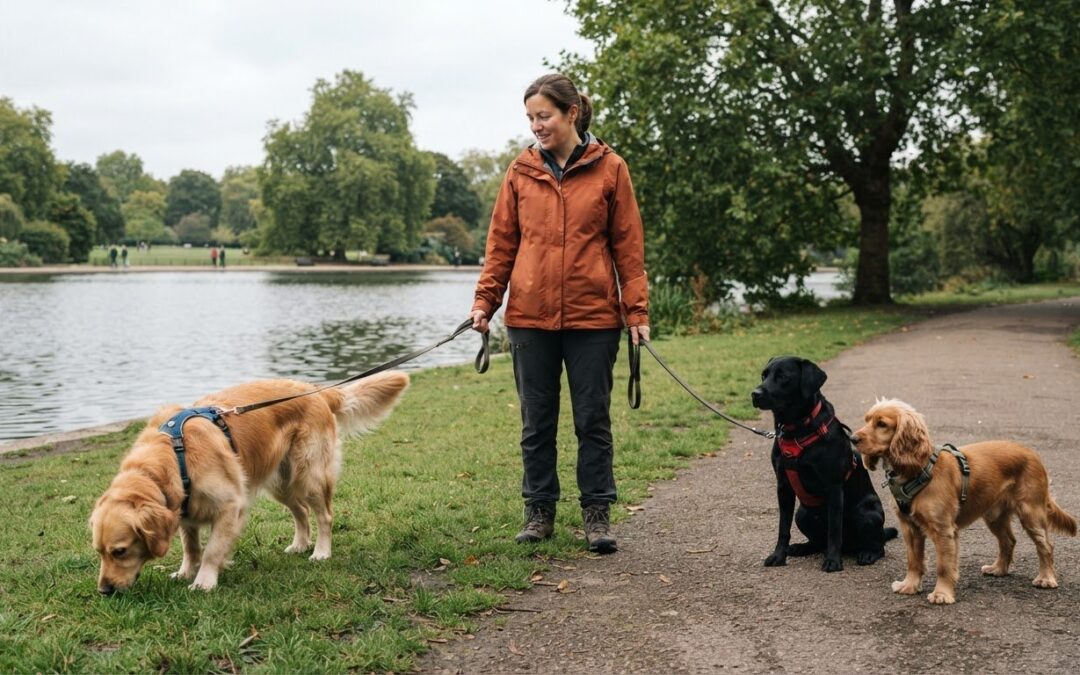
A dog walker for dogs with separation anxiety can help, particularly when long stretches alone, limited stimulation or an unpredictable routine add to a dog’s stress. The RSPCA advises that dogs should not be left alone for more than four hours, and puppies need much shorter periods. A visit can break up the day with exercise, a toilet break and company, but may not be enough if a dog panics as soon as you leave.
It’s understandable to hope that a walk will make being alone easier. The right support depends on your dog’s experience: a familiar, thoughtful routine may help, while severe distress calls for a broader plan. This article explains when walking can help, how to avoid leaving a dog alone longer than they can cope with, and why exercise, rest and toilet breaks matter. You’ll also learn when a walk alone is unlikely to meet your dog’s needs.
Key Takeaways
- Watch for changes such as pacing, excessive vocalising or attempts to escape, as distress may not be obvious when you’re at home.
- Use daytime support to break up time alone, while matching the visit to how your dog responds to being left.
- Plan walks around your dog’s need for movement, rest and a toilet break so activity doesn’t add to their stress.
- Consider whether a group walk suits your dog’s temperament; a familiar, structured routine may be more important than a busy outing.
1. Can Dog Walkers Help With Separation Anxiety?
Yes, dog walking can help when long periods alone, limited stimulation or an inconsistent routine add to a dog’s stress. A dog walker for dogs with separation anxiety can provide a planned break, but walking may not resolve distress if panic starts as soon as the owner leaves.
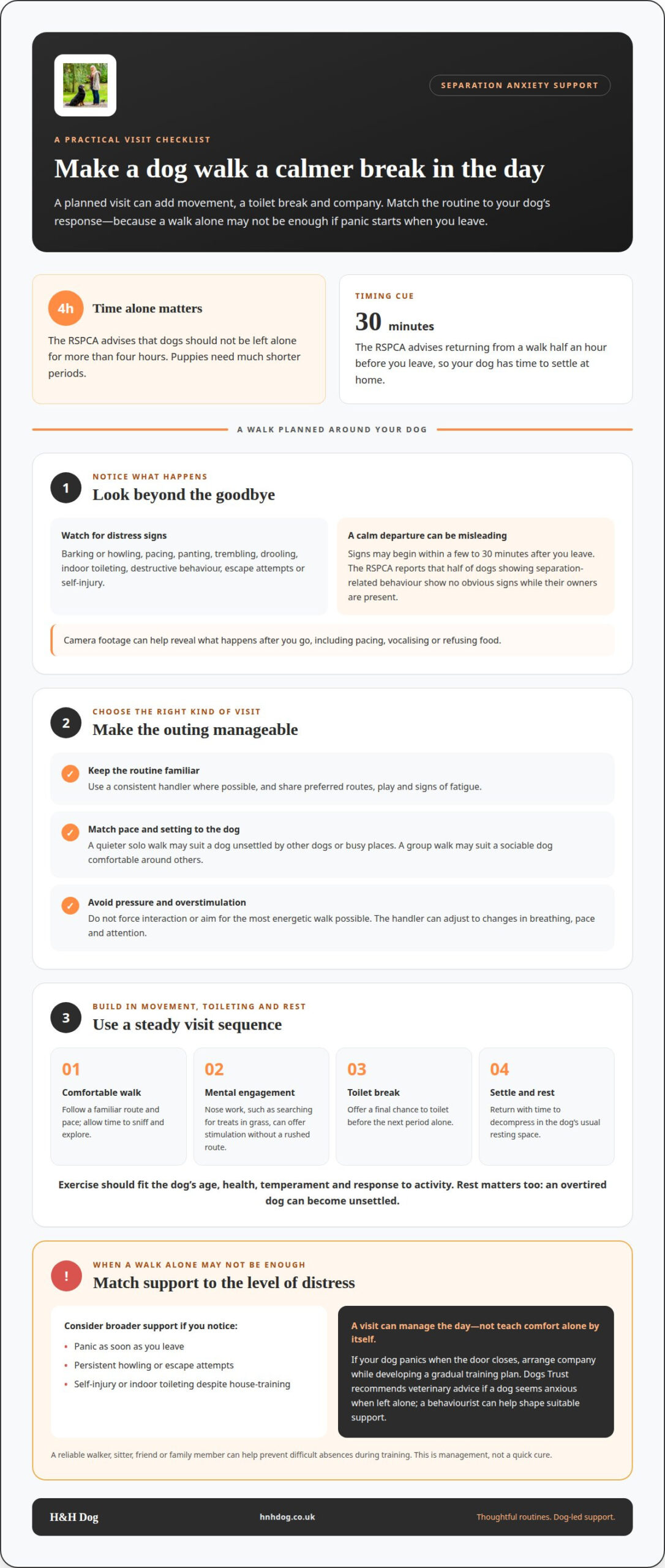
Watch what happens around departures and while your dog is home alone. Signs can include barking or howling, pacing, panting, trembling, drooling, indoor toileting, destructive behaviour, escape attempts or self-injury. Some dogs show no obvious signs while their owners are present. The RSPCA reports this is true for half of dogs showing separation-related behaviour. Signs may begin within a few to 30 minutes after departure, so a calm appearance before you leave doesn’t rule out distress.
A walker can break up time alone with exercise, a toilet break and human company. To avoid adding stress, a consistent handler should match the dog’s pace and needs, without forcing interaction or an overwhelming walk. Solo walks can suit dogs that find other dogs or busy settings difficult. Group Dog Walking may suit sociable dogs comfortable around others. The choice depends on the dog’s behaviour, not a general rule.
Persistent howling, escape attempts, self-injury, indoor toileting despite house-training, or panic at departure cues suggest walking alone may not be enough. Dogs Trust recommends veterinary advice if a dog seems anxious when left alone. A behaviourist can also help plan suitable support. H&H Dog’s Behavioural Consultations can address concerns that need more than a walking routine.
UK dog-walking prices vary with location, walk length and whether care is solo or shared; the price depends on the case and is given after a quote request. Choosing a dog walker for dogs with separation anxiety means considering whether the dog needs a walk, company at home or both. To find support locally, look for a professional who can tailor care, handle the lead safely and read canine body language.
2. Preventing a dog from being left alone beyond its coping ability
A dog walker can reduce the time a dog spends alone by providing a planned daytime visit. A walk, toilet break and calm company can divide a long day into manageable parts. The visit should fit your dog’s routine and comfort, rather than simply fill a gap in the diary. For puppies, newly adopted dogs or dogs adjusting to a move, predictable support can be especially helpful.
Use camera footage to understand what happens after you leave. Pacing, vocalising or refusing food may show that the current absence is already too difficult. A walker’s visit can help manage the day, but it doesn’t teach a dog to feel comfortable alone by itself. If your dog panics as soon as the door closes, arrange company while developing a gradual training plan.
Distress can follow a sudden routine change, a move, an unexpected absence or a frightening experience. Pain, illness, loud noises and side effects from prescribed medication can also affect behaviour. A professional should consider these possibilities rather than assume the dog is simply bored. Seek veterinary advice when behaviour changes; a behaviourist can help shape gradual alone-time training.
Effective training starts below the dog’s distress threshold. A professional builds duration in small steps, watching for signs of tension and adjusting before the dog becomes overwhelmed. Puppy Training or 1-to-1 Dog Training can support learning suited to the dog’s age and needs. Reliable care from a dog walker, dog sitter, friend or family member can prevent difficult absences during this process. It’s management, not a quick cure, but it can help your dog practise new skills without repeated panic. Professional behavioural support can help align daytime care with a gradual training plan.
3. Exercise and toilet breaks before leaving a dog
A well-planned visit gives an anxious dog movement, a chance to toilet and time to settle before you leave home. The walker can follow a familiar route and pace, allowing time to sniff and explore for mental stimulation. A social dog might enjoy a calm play session, while a dog unsettled by other dogs may need quieter surroundings. The aim is a positive, manageable outing, not the most energetic walk possible.
Timing matters. The RSPCA advises returning from a walk half an hour before leaving, giving your dog time to settle at home. A walker can build this pause into the visit instead of handing over a breathless, overstimulated dog just before you go. They can also offer a final toilet break, which may help prevent discomfort during the next period alone.
Exercise should match the dog’s age, health, temperament and response to activity. Nose work, such as searching for treats in grass, can provide mental engagement without a rushed route. Short play may suit a dog that enjoys toys, but repeated chasing or busy social encounters can raise arousal. A careful handler notices changes in breathing, pace and attention, then adjusts the session rather than pushing on.
Rest is part of the routine too. An overtired dog can become unsettled, just like one that has had too little activity. A walker can keep the sequence predictable: walk at a comfortable pace, allow a toilet break, return with time to decompress, then leave the dog in its usual resting space. Share preferred routes, play and signs of fatigue so the walker can tailor each visit. A consistent pattern can make leaving feel less abrupt, while exercise and toileting meet practical needs before alone time.
4. When dog walking helps mild or moderate separation anxiety
Dog walking is most useful when an anxious dog struggles with long gaps alone, limited exercise or an unpredictable routine. A regular visit adds structure and breaks up the day, so the dog doesn’t face one long stretch without activity or company. For example, a walk during the working day can provide movement and stimulation before your dog returns to its familiar resting space.
Notice how your dog responds throughout the day, not just at the front door. If distress is linked to boredom or a lengthy absence, a trusted walker’s visit can help address those pressures. Share your dog’s usual routine, preferred pace and signs of stress, such as refusing treats or struggling to settle after activity. This helps the walker tailor the visit and notice when your dog’s needs change.
Temperament matters. A social dog that enjoys canine company may find a group outing rewarding, while a dog overwhelmed by other dogs can become more unsettled. A quiet, familiar walk is often a better starting point for the latter. Exercise should provide interest without leaving the dog over-aroused or overtired. Destructive behaviour while alone is a reason to assess the whole pattern, not simply add a longer or busier walk.
Walking alone is less suitable when a dog panics immediately after departure, repeatedly tries to escape or injures itself. In those situations, a sitter staying with the dog can manage time alone while veterinary or behaviour support addresses the distress. Dog walking can complement gradual training, but it doesn’t replace that work. The clearest takeaway: choose walking when routine, exercise and manageable absences are part of the problem; seek broader support when panic dominates. Explore tailored support for your dog’s routine.
H&H Dog
H&H Dog offers Group Dog Walking, with care tailored to each dog’s needs and temperament. If your dog enjoys other dogs and can settle in a group, a walk may add structure, exercise and company to the day. If group settings increase their stress, this option may not be the right fit. Your dog’s comfort should guide the decision.
For separation-related distress, a walk can support a broader routine, but it isn’t a substitute for help when a dog panics or risks injury while alone. Consider the signs your dog shows and whether group walking suits their social needs before choosing this support.
Contact H&H Dog to discuss your dog’s walking needs.
Build a routine around what your dog can manage
Make your dog’s support part of a considered routine, rather than treating each walk as a stand-alone fix. A useful discussion with a professional can focus on what your dog finds manageable, which situations increase stress, and how walking fits alongside any behaviour support already in place. This gives everyone involved a clearer basis for consistent care.
When choosing a dog walker for dogs with separation anxiety, share the details that shape your dog’s experience: their usual day, how they respond to other dogs, and what you’ve noticed around departures. These observations can help establish whether group walking is suitable for their routine or whether another form of support should take priority.
Progress can begin with a more informed plan, built around your dog’s individual needs. Contact H&H Dog about walking to discuss the right next step for your dog.
Frequently Asked Questions
Can Dog Walkers Help With Separation Anxiety?
Yes. A walker can provide predictable human contact and a break in your dog’s day, which may help when distress is linked to long absences or an unsettled routine. Before starting, describe your dog’s departure cues and any behaviour you’ve noticed. Agree what the walker should observe, such as reluctance to approach the lead or difficulty settling after returning, and share any changes with your veterinary team.
How to find a dog walker experienced with separation anxiety in the UK?
Look for someone who can explain how they adapt handling to a dog’s body language, lead skills and comfort around other dogs. Ask about their experience with separation-related behaviour, rather than expecting a blanket promise to resolve it. In London, H&H Dog provides Group Dog Walking in NW1-NW8, NW11, N2, N3, N6 and W9. Group walks suit dogs comfortable in that setting.
What questions should I ask a dog walker before hiring them?
Ask how the walker handles collection if your dog hides, freezes or refuses the lead, and how they adapt walks around other dogs. Explain your dog’s triggers, lead routine and toileting needs, and share veterinary contact details. Ask how they recognise escalating stress and what they would do if your dog couldn’t safely continue. Their answers should address your dog’s needs, not promise an instant change.
How to introduce a dog with separation anxiety to a new dog walker gradually?
Use a consistent handler and build a familiar routine around your dog’s pace and needs. Start with manageable visits, without forcing interaction or an overwhelming walk.
What qualifications or insurance should a UK dog walker have?
Choose an insured, experienced, consistent walker who can tailor care to your dog, handle the lead safely and read canine body language.