
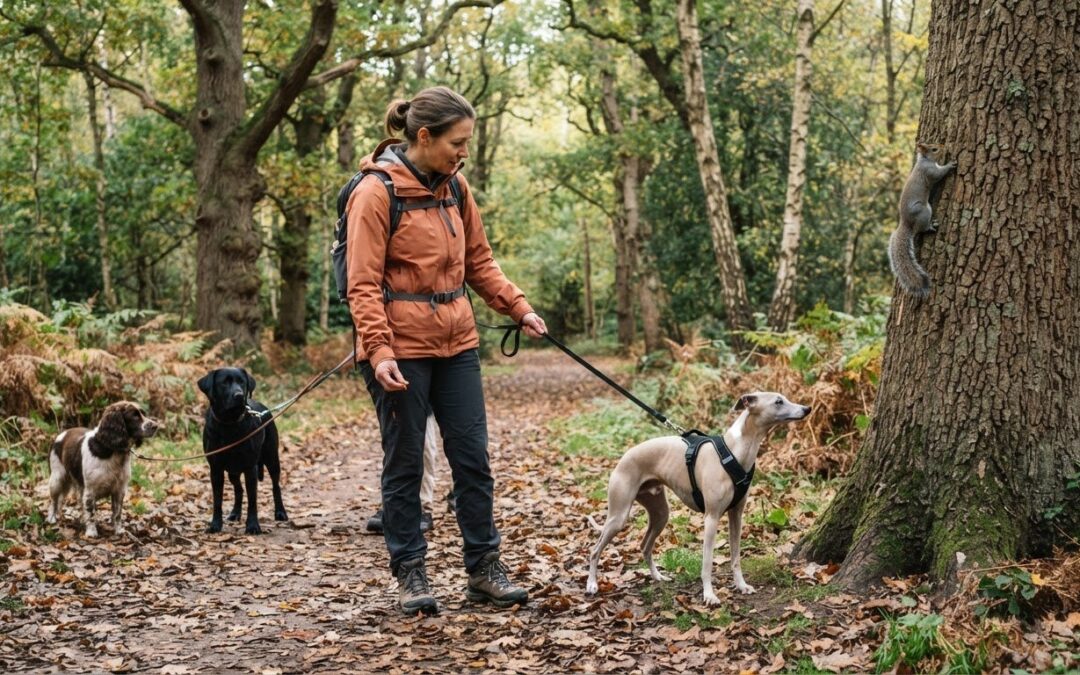
Can a strong prey drive lead to behaviour problems? Chasing can put a dog, wildlife and other animals at risk, particularly when a dog is too focused to respond to you. A dog walker for dogs with high prey drive should prioritise secure lead handling, thoughtful route choices and calm, reward-based management.
It’s understandable to worry when your dog spots a squirrel, bird or rabbit and seems to switch off from everything else. Prey drive is a natural instinct, not proof that your dog is aggressive. Trying to suppress it completely may overlook what your dog needs.
This guide explains how prey drive can show up, when it becomes a safety or behaviour concern, and how to offer controlled outlets such as scent games and play. You’ll also find practical steps for safer walks and what to do if a dog gets loose near farm animals, helping you protect your dog while respecting their instincts.
Key Takeaways
- Spot the early signs of fixation, such as stalking or intense sniffing, so you can redirect your dog before a chase begins.
- Use lead management and quieter routes to reduce risk, and reserve off-lead time for secure areas where your dog can respond reliably.
- Offer safe outlets matched to what your dog enjoys, from scent-based games to controlled chasing and tugging play.
- If your dog gets loose near farm animals, stay calm, move towards safety and encourage your dog to follow without punishment.
1. Providing controlled substitutes and outlets
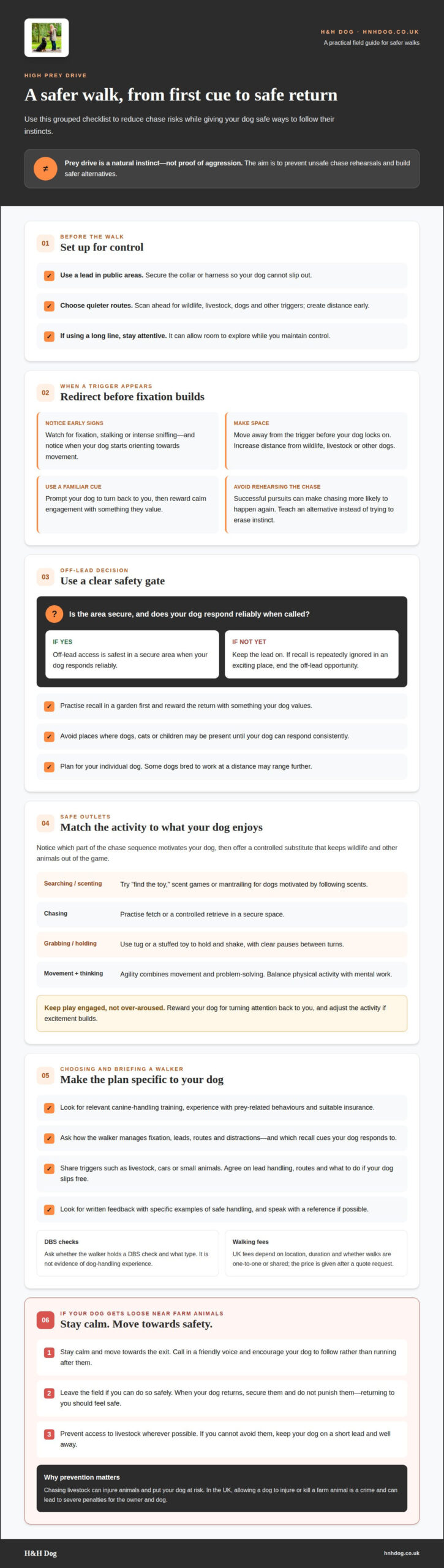
Start by noticing which part of the chase sequence your dog enjoys: searching, stalking, chasing or grabbing. A dog drawn to rabbit scents, for example, may enjoy “find the toy” nose work, while a dog that loves to chase can practise fetch in a secure space. Keep wildlife and other animals out of the game, and reward your dog for turning their attention back to you.
Choose play that channels your dog’s desire without inviting an uncontrolled chase. Try tug or a stuffed toy to hold and shake, with clear pauses between turns. Agility offers movement and problem-solving, while mantrailing suits dogs motivated by following scents. Adjust the activity if your dog becomes over-aroused. The aim is engaged play, not rehearsing a chase that spills into walks.
Working dogs benefit from suitable outlets for behaviours linked to their original jobs. A scent-focused dog might search for a hidden toy; a dog that enjoys chasing might practise a controlled retrieve. Balance physical activity with mental work, and use training that builds cooperation with you.
For a UK dog walker, look for relevant canine-handling training, experience with prey-related behaviours and suitable insurance. Ask what their policy covers and how they manage a dog who fixates on rabbits or wildlife.
UK walking fees depend on location, duration and whether walks are one-to-one or shared; the price is given after a quote request. To find a walker experienced with high-prey-drive dogs, describe your dog’s triggers and ask how they manage leads, routes and distractions.
Look for specific examples of safe handling in written feedback, and speak with a reference if possible. Ask whether the walker holds a DBS check and what type, but don’t treat that status as evidence of dog-handling experience.
If a walk is too stimulating, use a secure space for scent games, fetch or agility instead. One-to-one training can also help you practise recall and attention around controlled distractions, giving your dog a safe way to use their instincts.
2. Can a Strong Prey Drive Lead to Behavior Problems?
Yes. A dog focused on hunting may ignore a familiar cue, especially when searching for rabbits, squirrels or birds. Chasing can also become a practised behaviour: each successful pursuit may make the dog more likely to repeat it. The goal isn’t to remove instinct, but to prevent unsafe rehearsals and teach alternatives, such as turning back to you.
Keep a dog with strong prey drive on lead in public areas. Choose a quiet route and secure equipment, using a collar or harness the dog cannot slip out of. A long line can allow room to explore while maintaining control, but it still needs attentive handling. If your dog repeatedly ignores recall in an exciting place, end the off-lead opportunity and use the lead.
Off-lead access is safest when the area is secure and your dog responds reliably when called. Avoid places where dogs, cats or children may be present until your dog can respond consistently. Practise recall in a garden first, rewarding the return with something your dog values. Collies and other dogs bred to work at a distance may range further, so plan for the individual rather than relying on breed alone.
Ask a potential walker how they manage fixation, what recall cues your dog responds to, and what they do if the dog cannot disengage. Group walks suit some dogs, but not those who become overwhelmed or fixate on other dogs; consider the dog’s behaviour and safety before choosing Group Dog Walking.
To manage wildlife, livestock and other dogs, choose routes with fewer triggers, scan ahead and create distance before your dog locks on. Keep the lead secure, redirect attention with a familiar cue, and reward calm engagement. These steps help prevent a chase while preserving safe opportunities to sniff and explore.
3. Responding if a dog gets loose around farm animals
If your dog gets loose in a field with sheep or cattle, stay calm and move towards the exit. Call your dog in a friendly voice and encourage them to follow you rather than running after them. Leave the field if you can do so safely. When your dog returns, secure them and don’t punish them; punishment can make returning to you feel unsafe.
Chasing livestock can injure animals and put your dog at risk. A dog may run towards a road after wildlife or a moving vehicle, while livestock may react defensively. In the UK, allowing a dog to injure or kill a farm animal is a crime and can lead to severe penalties for the owner and dog. Prevent access to livestock wherever possible, and keep your dog on a short lead and well away if you cannot avoid them.
Spot potential targets before your dog does. If you see sheep, birds or another dog ahead, create distance and redirect your dog with a familiar cue or a treat before fixation builds. Reward them for turning towards you. These positive interactions let your dog use their instincts safely while helping them develop alternative behaviours around animals.
Introduce a new household animal carefully. Supervise every interaction between your dog and a new cat or rabbit, for example, and don’t leave them alone together until you’re confident the newcomer won’t become a target. A dog’s interest in chasing can persist even when they appear calm.
Before a walk, give the dog walker a clear handover: identify triggers such as livestock, cars or small animals, explain your dog’s recall cues, and agree on routes and lead handling. Include an emergency plan covering what to do if your dog slips free, how to call them back, and how to contact you. These steps help the walker respond consistently and protect your dog, themselves, wildlife and farm animals.
4. What prey drive is and how it appears
Prey drive is an instinctive pattern of hunting behaviours, not the same as aggression. A dog may notice movement, orient towards it, stalk, chase and try to catch it. A terrier might fix on a squirrel, for example, while another dog follows a scent through long grass. Aggression can instead be driven by strong emotions such as fear, so consider your dog’s body language and the situation.
All dogs have some prey drive, but its intensity varies. Inherited traits can influence a dog’s responses: terriers were selected for hunting, hounds for tracking, and herding breeds for chasing and moving animals. Greyhounds, Lurchers, Collies and sporting breeds are often associated with stronger chase tendencies. Breed is only one influence; a dog’s experiences, environment and history of being rewarded for chasing also shape their behaviour.
Watch for changes in your dog’s attention during walks. They may pause, stare, lower their body, sniff urgently or accelerate towards squirrels, rabbits or birds. Some dogs become more exploratory during adolescence and start ranging further from their person. A dog walker for dogs with high prey drive should learn which sights, sounds or scents prompt these responses, then create distance before fixation builds.
Understanding the sequence helps tailor dog training to the individual. A scent-focused dog may benefit from searching games, while a dog drawn to movement needs carefully controlled alternatives. The aim is to build useful responses without treating natural instincts as misbehaviour. For a dog walker for dogs with high prey drive, noticing what helps a dog re-engage supports safer, more individual care. If you need help interpreting your dog’s cues or shaping a plan, explore tailored one-to-one dog training.
H&H Dog
H&H Dog provides Group Dog Walking in London for dogs who are comfortable walking with others. Group walks may suit dogs who can stay engaged around other dogs and respond to their walker. If your dog becomes intensely focused on wildlife, one-to-one training or behavioural support may be a better first step before group walks.
Share your dog’s triggers, recall cues and usual responses when discussing walking arrangements. This helps you decide whether a group walk fits your dog’s current behaviour and wellbeing, rather than assuming every dog benefits from the same routine.
If you’d like to discuss walking support for your dog, contact H&H Dog.
Build a walking plan around your dog
Safer walks begin with a plan that reflects how your dog responds in real situations. Notice what helps them stay connected with you, what makes focus difficult, and how they settle afterwards. These observations can guide your next conversation with a dog walker for dogs with high prey drive and help shape a routine that respects your dog’s instincts while protecting their wellbeing.
Make the next step practical: share your dog’s usual triggers, the cues they understand and the situations you want help managing. A thoughtful discussion can help you decide whether walking support or another form of care best fits your dog right now. Keep adapting the plan as you learn more about your dog’s responses.
Discuss your dog’s walking needs with H&H Dog, and take the next step towards calmer, more considered care.
Frequently Asked Questions
Are some breeds more predisposed than others?
Yes. Breeds developed for hunting, herding or chasing may inherit stronger tendencies towards parts of the prey sequence. Terriers, hounds, sporting dogs and herding breeds can show these traits, but breed alone doesn’t predict an individual dog’s behaviour. A mixed-breed dog can also have a strong chase response, so observe their interests and reactions rather than relying only on appearance.
Is it possible to train through it?
You can teach safer choices, but training doesn’t erase an instinctive prey drive. Practise a cue such as “leave” in easier settings first, then gradually work around controlled distractions while rewarding your dog for turning back to you. Keep management in place around real prey, since training and safe handling work together. A tailored plan can match exercises to your dog’s triggers.
What happens if they don’t have an outlet?
A dog whose needs are repeatedly frustrated may redirect energy into behaviours such as jumping, mouthing or stealing household objects. Responses vary, so note what happens after walks and during quiet periods at home. Offer an activity that matches your dog’s motivation, such as a hidden-toy search for a dog who enjoys using their nose, and make it part of their routine.
What safety equipment should a dog walker use for a high prey drive dog?
A secure, well-fitted collar or harness and a lead the walker can hold safely are sensible essentials. A spare lead can help if the main one breaks or is lost. Some dogs may also benefit from gradual, reward-based muzzle training, which can help reduce the risk of injury if contact occurs. Equipment should suit your dog and support calm, controlled handling.