
What if a qualification looks reassuring, but the walker’s approach doesn’t suit your dog? A thoughtful dog walker vetting process considers experience, practical skills, communication and safety, then checks the fit through a meet-and-greet and trial walk.
It’s sensible to seek clear assurances before someone else takes responsibility for your dog. The UK dog-walking industry is unregulated, so consider a walker’s training and experience alongside how they respond to your dog’s needs and signals.
This guide will help you assess a prospective walker calmly and fairly, without relying on a certificate or confident first impression alone. Learn what to ask about their background, handling skills, insurance and emergency plans, and what to notice in their communication.
Then you can put those answers into context: arrange a home meet-and-greet lasting 15-20 minutes, join a walk, and build up to a short solo trial. Your dog’s comfort, behaviour and recovery after each interaction all help you judge whether the arrangement feels right.
Key Takeaways
- Look beyond a confident introduction: relevant training and hands-on experience should match your dog’s needs.
- Use a shared walk to notice how the walker handles the lead, responds to your dog’s signals and manages the surroundings.
- Discuss updates, emergency arrangements and written care details so expectations are clear before walks begin.
- Judge the fit by your dog’s comfort and the walker’s thoughtful, consistent communication, not credentials alone.
Meet-and-greets and trial walks
Assess your dog’s behaviour and needs by observing their responses to people, handling, surroundings and other dogs. Share relevant routines and triggers, then use a meet-and-greet and gradual trial walks to see whether the walker’s approach suits your dog.
-
Arrange a Meet-and-Greet
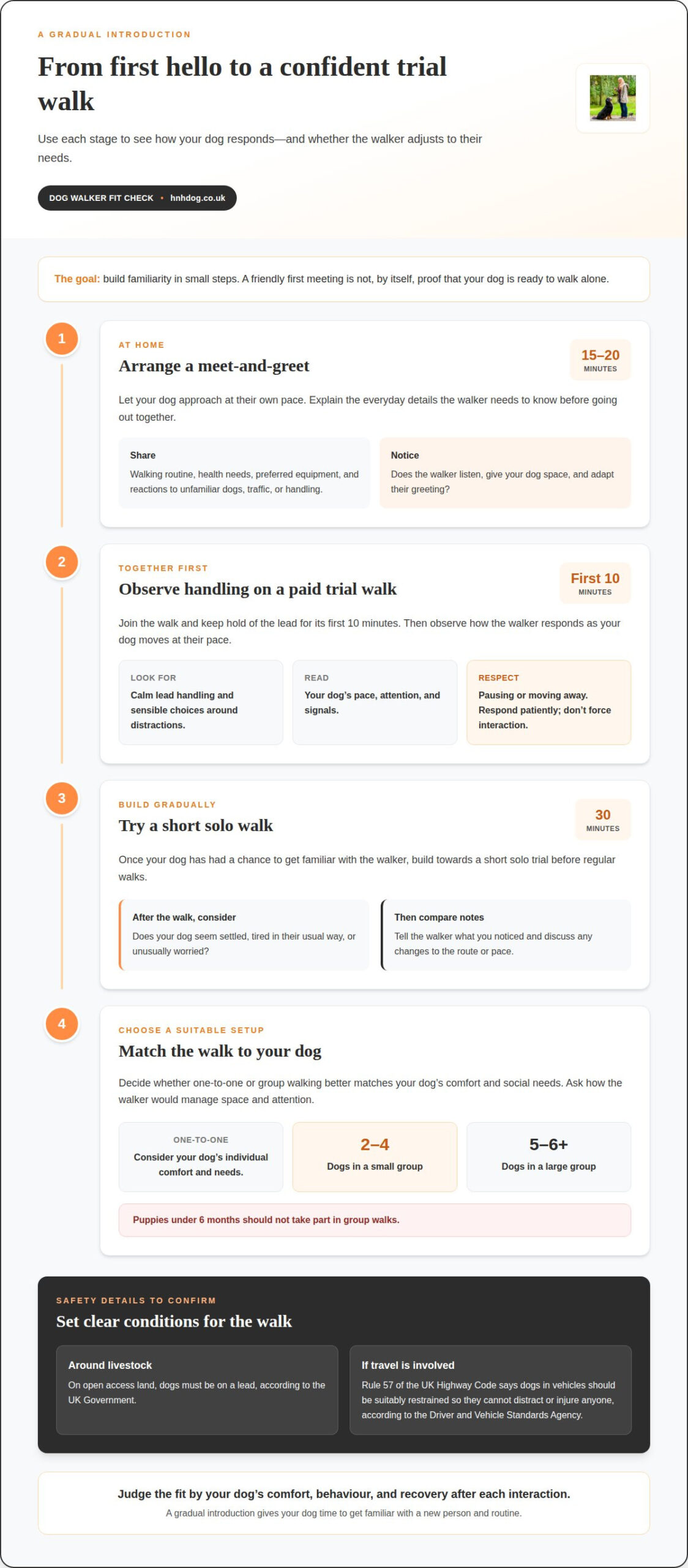
Arrange a home meet-and-greet lasting 15-20 minutes, with your dog free to approach at their own pace. Explain their usual walking routine, health needs, preferred equipment and any reactions to unfamiliar dogs, traffic or handling. Notice whether the walker listens, allows space and adapts their greeting. Avoid treating a friendly first meeting as proof that your dog is ready to walk alone.
-
Observe Handling on a Trial Walk
Plan a paid trial walk and join the walker for its first 10 minutes. During a joint walk, keep hold of the lead for the first 10 minutes, then observe how the walker responds to your dog’s pace, attention and signals. Look for calm lead handling and sensible choices around distractions. A dog that pauses or moves away is communicating; the walker should respond patiently rather than force interaction.
- Build towards a short 30-minute solo trial before regular walks. Afterwards, consider whether your dog seems settled, tired in their usual way, or unusually worried. Share what you notice with the walker and discuss any changes to the route or pace. A gradual introduction gives your dog time to become familiar with a new person and routine.
- Decide whether one-to-one or group walking better matches your dog’s comfort and social needs. A small group is described as 2-4 dogs; a large group is 5-6 or more. Puppies under 6 months should not take part in group walks. Ask how the walker would manage space and attention for your dog. Around livestock on open access land, dogs must be on a lead, according to the UK Government.
If travel is involved, Rule 57 of the UK Highway Code says dogs in vehicles should be suitably restrained so they cannot distract or injure anyone, according to the Driver and Vehicle Standards Agency.
Checking a dog walker’s experience and skills
Ask about hands-on dog-walking experience, relevant training and emergency handling. You can speak directly with references, review evidence of insurance and first-aid training, and consider a recent DBS check as one part of your assessment.
- Match experience to your dog. Ask which dogs the walker has cared for and what they learned from challenging situations. A dog who pulls, worries around traffic or needs medication may require specific skills. Look for examples of calm, safe handling, not just general claims of experience. Continuing professional development can also show how a walker keeps their knowledge current.
- Review qualifications and emergency preparation. Examples to look for include the IMDT Professional Dog Walking Certification and the iPET Network Level 3 Award in Dog Walking and Pet Sitting for Professionals. Canine first-aid training matters because it prepares a walker to respond to a dog’s medical emergency. Ask when they last refreshed their training and how they would contact you if an incident occurred.
- Discuss insurance and a DBS check. UK law doesn’t require dog walkers to have insurance, but ask whether their policy specifically covers dog walking and care, custody and control. Public liability cover of at least £1 million is recommended, with £5 million ideal. Request sight of a recent DBS check. Treat it as one assurance, not proof of dog-handling ability or a substitute for references.
- Speak to references and assess reviews. Ask for references from people whose dogs had similar needs. Ask about reliability, communication, safe handling and how the walker responded when plans changed. Look for specific examples in reviews rather than relying on praise alone. Compare these accounts with the walker’s answers; clear, consistent details help you assess their experience.
If group care may suit your dog, explore Group Dog Walking as one option to consider alongside your checks.
Communication, security and compassionate care
An unvetted walker may misunderstand your dog’s needs, mishandle an emergency or leave you without clear updates. Reduce these risks by agreeing on communication, security and care arrangements before walks begin.
-
Consider Communication and Security
Agree how the walker will update you after each walk and reach you if plans change. Set clear arrangements for keys, access and collection, including who may receive your dog. A written booking form should record your dog’s details, vet details, medication, vaccination records and emergency contact. Confirm how the walker will use this information if your dog becomes unwell or goes missing.
-
Identify Risks and Ways to Reduce Them
Before the first walk, note likely risks for your dog, such as slipping equipment, door-dashing or distress around traffic. Agree on practical safeguards, including secure handovers and what to do if your dog becomes frightened. A written dog-walking contract can clarify responsibilities, permissions and emergency steps, reducing confusion when a stressful situation calls for quick decisions.
- Ask what insurance cover applies to dog walking, including care, custody and control. This clarifies how the walker’s policy relates to your dog while they’re responsible for them. Discuss who will contact your vet and emergency contact, and how you’ll be informed. Clear answers matter: a vague plan can leave everyone uncertain during an incident.
- Notice whether the walker treats your dog as an individual, not simply as part of a routine. They should respect your dog’s need for space, recognise signs of stress and respond calmly rather than forcing interaction. Share changes in appetite, health or behaviour before a walk, then agree how the walker will report concerns and unusual events afterwards.
Dog-walker experience and interview
Use the interview to assess how a walker thinks, not just how confidently they speak. Ask for examples of how their experience translates into practical care for your dog.
-
Review the Dog Walker’s Experience
Ask the walker to describe a recent situation involving a dog with needs like yours. How did they respond when a dog became unsettled near traffic or refused to continue? Listen for specific actions and thoughtful reflection rather than broad claims. Ask which types of dogs they’ve cared for and what they would do differently if an approach didn’t suit your dog.
-
Prepare Questions for the Interview
Write down questions before the conversation so important details aren’t missed. Ask how the walker plans routes, manages a change in weather and responds if your dog becomes unwell. Find out how they’ll adapt the walk to your dog’s pace and comfort, and what information they need from you. Their answers should help you picture both an ordinary booking and a difficult one.
- Ask how group size and location shape the walker’s plans. In London, a Tower Hamlets example involves a licensed walker taking a pack of six dogs, while a four-dog maximum applies near Royal Parks such as St James’s Park. Ask how the walker checks relevant local requirements and chooses routes that suit the dogs in their care. Their explanation should show practical awareness, not a one-size-fits-all routine.
- Shortlist three candidates, then compare the substance of their answers. Note who asks useful questions about your dog’s routine, sensitivities and preferred pace. Consider whether their proposed arrangements work for your household, including booking changes and handovers. Choose based on the fit between your dog’s needs and the walker’s approach, not polished interview language alone.
Discuss your dog’s walking needs to explore a considered next step.
H&H Dog
H&H Dog offers Group Dog Walking for owners considering regular walks with other dogs. If your trial observations suggest your dog may enjoy a group, discuss their individual needs and temperament to find suitable care. If your dog needs a different kind of support, Puppy Training is another option to explore.
Use what you learned during the meet-and-greet and trial walk to explain your dog’s routines, comfort around other dogs and any concerns. This context makes the next step more thoughtful and specific to your dog, rather than based on a generic idea of what a walk should look like.
To discuss your dog’s walking needs, contact H&H Dog.
Choose a walking routine that can grow with your dog
A good match isn’t decided by one polished conversation. Let your dog’s comfort guide the next step, and keep an open dialogue as their routine develops. If their responses change, revisit what feels manageable and discuss adjustments with the walker. Ongoing attention makes the dog walker vetting process the start of a considerate working relationship, rather than a one-off decision.
For some dogs, walking with others can become a positive part of their routine; others may need a different pace or setting. Focus on an arrangement that supports your dog’s wellbeing and gives you confidence in their care. Discuss your dog’s walking needs with H&H Dog to take the next step.
Contact H&H Dog about dog walking and start a conversation about a routine that suits your dog. Each thoughtful step helps build a more comfortable shared experience.
Frequently Asked Questions
What qualifications and other assurances should you expect to see?
Look for relevant dog-walking training, canine first-aid preparation, suitable insurance and experience with dogs like yours. Qualifications may include the IMDT Professional Dog Walking Certification or the iPET Network Level 3 Award in Dog Walking and Pet Sitting for Professionals. These credentials offer useful context, but practical examples, clear communication and a calm approach to your dog’s individual needs matter too.
What checks should a dog walker pass in the UK?
There is no single national pass-or-fail checklist for dog walkers because the UK industry is unregulated. A practical assessment can combine reference conversations, a recent DBS check, evidence of insurance, relevant qualifications and a discussion of emergency arrangements. In London, also discuss how the walker plans routes and adapts care to your dog’s temperament, health needs and everyday routine.
Does a UK dog walker need a DBS check or licence?
Dog walking is an unregulated industry, so there is no general dog-walking licence framework. A recent DBS check is a sensible assurance to request, but it does not demonstrate animal-handling skills by itself. Different rules apply to other services: in England and Wales, home dog boarding and dog daycare require a council licence.
What insurance should a professional dog walker have in the UK?
Ask for public liability insurance that specifically covers dog walking, and check that care, custody and control cover is included. A commonly recommended level is at least £1 million, with £5 million ideal. Ask to see policy evidence and confirm the insured activity matches the service being provided. Insurance is a financial safeguard, not a substitute for safe handling or thoughtful care.
What should a dog-walking contract and meet-and-greet cover?
A contract should clarify agreed duties, collection and handover arrangements, permissions, communication and what happens if an emergency disrupts a booking. The intake form should record your dog’s details, vet details, medication, vaccination records and emergency contact. Use the meet-and-greet to explain routines and preferences, such as whether your dog needs a quiet route or space from unfamiliar dogs.