
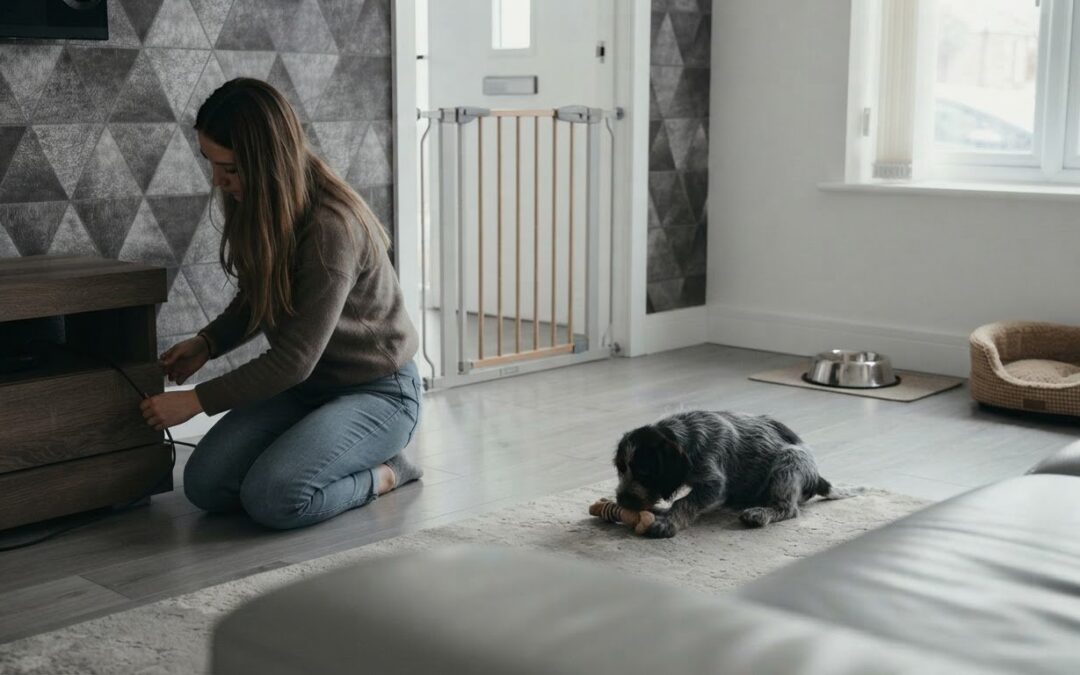
The best way to prepare your home for a puppy isn’t to buy everything at once; it’s to make the space safe, calm and manageable. Gather toilet-training supplies, secure hazards indoors and in the garden, and set up separate places for eating, sleeping and quiet rest. In the UK, all dogs must be microchipped by the age of eight weeks, according to the UK Government.
It’s natural to focus on beds, bowls and toys, but a puppy also needs time to settle and a routine that works for your household. Thinking through daily care helps you prepare for your puppy’s needs as well as the practical setup.
This guide covers what to have ready for toilet training and cleaning accidents, how to puppy-proof your home and garden, and how to create comfortable, separate spaces. It also helps you assess whether your time, home and plans can support a puppy, so you can prepare thoughtfully for life together.
Key Takeaways
- Prepare a simple toilet-training kit and use a consistent outdoor spot to help your puppy learn where to go.
- View your home and garden from puppy height, secure hazards, and let your puppy explore new areas gradually.
- Create distinct places for eating and resting, with a quiet safe space where your puppy can sleep undisturbed.
- Consider your daily routine, time away and care plans before bringing a puppy home, so their needs fit comfortably into family life.
1. Toilet-training supplies and cleaning accidents
Prepare a lead, waste bags, paper towels, enzymatic cleaner and puppy-friendly disinfectant. Use the lead to guide your puppy to the same outdoor toilet spot each time. Take them there regularly, including after waking, eating and playing. Repeating the routine helps them recognise the spot and lets you reward them straight away when they toilet outside.
Keep your puppy’s world calm and predictable during the first days. Offer regular toilet breaks, meals with their familiar food, gentle play and plenty of uninterrupted rest. Watch for signs they need to go, such as sniffing or circling, and guide them outside promptly. If there’s an accident, blot it up and clean the area with an enzymatic product, then use a puppy-friendly disinfectant as directed.
Reward-based puppy training teaches the behaviour you want: praise or offer a small reward after your puppy toilets in the right place. Avoid scolding accidents. Your puppy may not understand the response, and fear can make learning harder. Start crate training when they arrive, introducing the crate as a comfortable resting space rather than using it as punishment.
Keep training short and consistent, and introduce new experiences gradually. Puppy training classes can support positive learning around people and other dogs. Before group sessions or outdoor introductions, ask your vet for vaccination advice. Puppies should not meet unvaccinated dogs until fully covered by vaccination. Ask your vet about suitable ways to provide age-appropriate socialisation in the meantime.
Toilet training is part of ongoing care, alongside a complete, balanced diet and routine veterinary support. Keep your puppy on their current food at first, and discuss any gradual diet change with your vet. In the UK, all dogs must be microchipped by eight weeks, according to the UK Government. Contact the microchip database company with your details as soon as you have your puppy, and keep the information up to date.
2. Puppy-proofing the home and garden
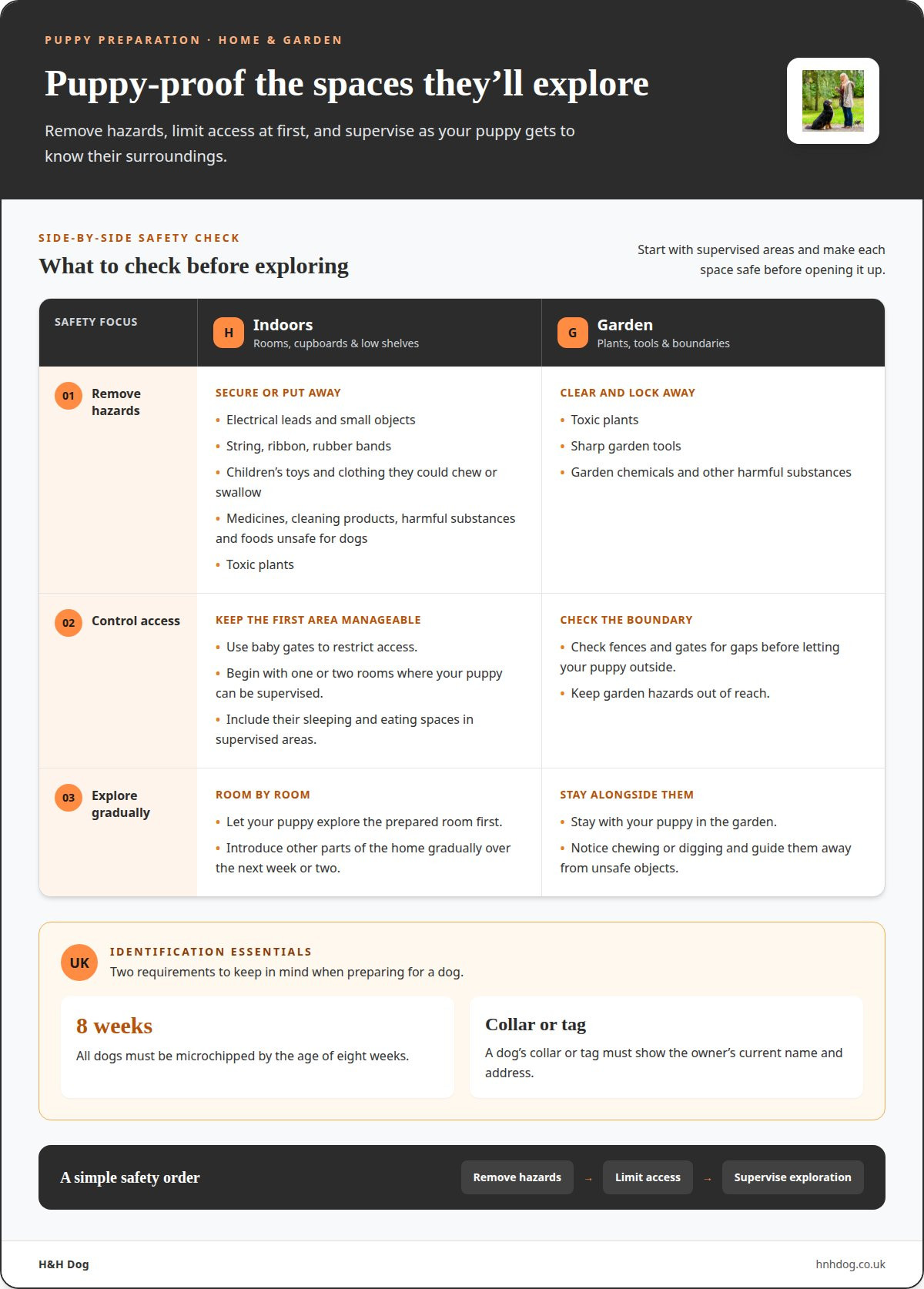
Before bringing your puppy home, inspect each room at their eye level. Secure electrical leads, small objects, string, ribbon, rubber bands, children’s toys and clothing they could chew or swallow. Put medicines, cleaning products, harmful substances and foods unsafe for dogs out of reach. Keep toxic plants away, too. Ask a friend or breeder to help spot hazards, then check cupboards and low shelves yourself.
Use baby gates to restrict access and start with one or two rooms. Choose areas where your puppy can be supervised, including their sleeping and eating spaces. Let them explore the prepared room first, then introduce other parts of the home gradually over the next week or two. This reduces access to hazards while they learn your household routine.
In the garden, remove toxic plants and lock away sharp tools, garden chemicals and other harmful substances. Check fences and gates for gaps before letting your puppy outside. Stay with them so you can notice chewing or digging and guide them away from unsafe objects. Dog training can help build everyday skills, but consistent supervision remains essential.
In the UK, dogs must be microchipped by eight weeks, according to the UK Government. A dog’s collar or tag must show the owner’s current name and address. Follow your vet’s recommendations for vaccinations, routine health checks and suitable flea, tick and worm prevention.
There’s no single total for preparing a puppy; costs depend on what you already own and the supplies and ongoing care you need. For a safer setup, focus first on gates, secure storage and removing hazards. If you’d like support with early household manners, puppy training can help you build calm, consistent routines.
3. Setting up separate sleeping and eating areas
Before your puppy arrives, choose a quiet room away from busy household traffic. Set up a base camp with a washable bed, familiar blanket and a few suitable toys. Keep this area available as a retreat, rather than letting visitors crowd around it. A calm starting space gives your puppy room to explore and adjust to unfamiliar sounds, people and routines.
Place food and water bowls in a separate eating area, away from the bed and resting space. Choose a spot that’s easy to clean and away from busy doorways. Keeping meals in the same place makes the daily routine more predictable. Give your puppy space while eating, especially if children or another pet share the home.
If you plan to use a crate, assemble it before your puppy arrives. Add comfortable bedding and introduce it as a safe den, never as punishment. Leave the door open at first and let your puppy investigate at their own pace. A crate can offer a secure place to sleep or play when you can’t supervise, as long as it’s used as a comfortable resting space.
Use the quiet room as your puppy’s initial safe space, with their bed and toys close by. Keep it away from loud appliances and household activity where possible. Let your puppy rest without interruption; sleep helps them settle into an exciting new home. If they wake, need a break or seem unsettled, respond calmly and guide them through the familiar routine.
Make the setup suit your puppy: a small, easy-to-reach water bowl and a comfortable bed are practical starting points. Establishing the base camp as a calm place takes consistency. Keep eating, resting and play in their own areas, then adjust the arrangement as your puppy becomes more settled and confident at home.
Assessing whether a puppy suits your lifestyle and home
Deciding how to prepare your home for a puppy starts with an honest look at your weekday. Spend 20 minutes drafting a tentative routine for meals, supervision, rest, training and toilet breaks. A planned 7am start may not match your puppy’s actual rhythm; one example is waking at 5:50am. Consider whether someone can respond calmly when plans or sleep are disrupted.
Plan for time alone, too. Puppies need gradual practice to feel comfortable without people, so decide who will care for yours during work, errands or trips away. Build alone-time training at your puppy’s pace rather than expecting them to settle alone immediately. Arrange pet insurance before arrival, alongside a plan for routine veterinary care.
Your home and energy levels matter as much as your schedule. A general exercise guide for puppies is five minutes per month of age, twice a day, but exercise should suit each puppy’s age and needs. Allow time for short, positive training sessions, toilet breaks and uninterrupted sleep. If children live with you, include calm, supervised interactions with the puppy in your routine.
Allow a settling-in period instead of expecting instant confidence. The 3-3-3 rule for an adopted dog describes three days to decompress, three weeks to become comfortable at home and three months to adjust to household routines. It’s a guide, not a deadline for every dog. Keep early experiences gentle, use treats to reward calm behaviour, and let your puppy approach people at their own pace.
As you consider how to prepare your home for a puppy, ask whether your schedule can flex around their needs. If your home can’t provide safe supervision or nobody can cover time away, reconsider the timing. If you’re ready to build consistent routines, explore positive puppy training for tailored support.
H&H Dog
Once your home is ready, H&H Dog can support your puppy with care tailored to their needs and temperament. Puppy Training can help you build positive everyday skills, while Puppy’s First Groom offers an early, gentle introduction to grooming. As your dog grows, Full Groom, Bath & Brush and Group Dog Walking can support other parts of their care.
Choose support that suits your puppy’s stage and comfort. You might start with training to build calm routines, or introduce grooming gradually when you’re ready. Your puppy’s experience matters, so keep their individual needs at the centre of each decision.
If you’d like to discuss support for your puppy, contact H&H Dog.
Make your puppy’s first weeks a shared learning process
Preparing for a puppy isn’t a one-off checklist. Your home and routine may need small adjustments as you learn what helps your new companion feel secure. Think of how to prepare your home for a puppy as the start of an ongoing partnership: notice what your puppy finds comfortable, then adapt with patience.
In the first weeks, focus on kind, consistent interactions rather than expecting everything to go perfectly. Give your puppy time to understand the household, and make changes gradually if something feels unsettled. Responding calmly can help you work out what support or adjustment would make daily life easier for both of you.
If you’d like guidance as you find your rhythm, contact H&H Dog for puppy advice. Each small, thoughtful step can help you build a more secure life together.
Frequently Asked Questions
How can I prepare for a new puppy?
Prepare for your puppy by planning their first journey home, daily care and veterinary support. Use a puppy-specific car restraint or car crate, and arrange pet insurance before arrival. Keep their existing food available, since any change should be gradual and discussed with your vet. Decide who can care for them during work or outings, so supervision and routine don’t depend on one person.
How do you puppy-proof your home and garden?
Get down to puppy height and inspect places that an ordinary tidy-up might miss, such as beneath furniture, beside appliances and along garden boundaries. Look for objects they could chew or swallow, accessible leads, toxic plants and chemicals. Close off areas that aren’t safe, and supervise garden time. Repeat the check after moving furniture or bringing children’s belongings into the puppy’s rooms.
How do you set up a safe puppy sleeping area and crate?
Choose a quiet, low-traffic place where your puppy can rest without household activity disturbing them. Set up the crate before arrival, add comfortable bedding and leave the door open at first so your puppy can investigate. Ask children and visitors not to reach into it. Treat the crate as a retreat, not a place for punishment, and let your puppy settle at their own pace.
How do you introduce a puppy to children and other pets safely?
Keep early introductions calm, brief and supervised. Ask children to sit quietly and let the puppy approach, rather than reaching over or chasing them. Keep play gentle. Introduce resident pets gradually, using a barrier when needed and giving each animal a separate place to retreat. Don’t let your puppy meet unvaccinated dogs before they’re fully covered; ask your vet about safe socialisation in the meantime.
How do you toilet-train a puppy and how long does it take?
Take your puppy to the same toilet spot regularly, including after waking, meals and play. Stay with them, then praise them or offer a small reward straight away when they go in the right place. Clean accidents thoroughly without scolding, and note patterns to anticipate breaks. There’s no single timetable: progress depends on your puppy and how consistently their routine gives them opportunities to toilet outside.
What vaccinations, microchipping and vet checks does a puppy need in the UK?
In the UK, dogs must be microchipped by eight weeks. Contact the microchip database company with your details and keep them up to date. Follow your vet’s vaccination advice, arrange routine health checks and suitable flea, tick and worm prevention, and ask your vet before introducing your puppy to other dogs.