
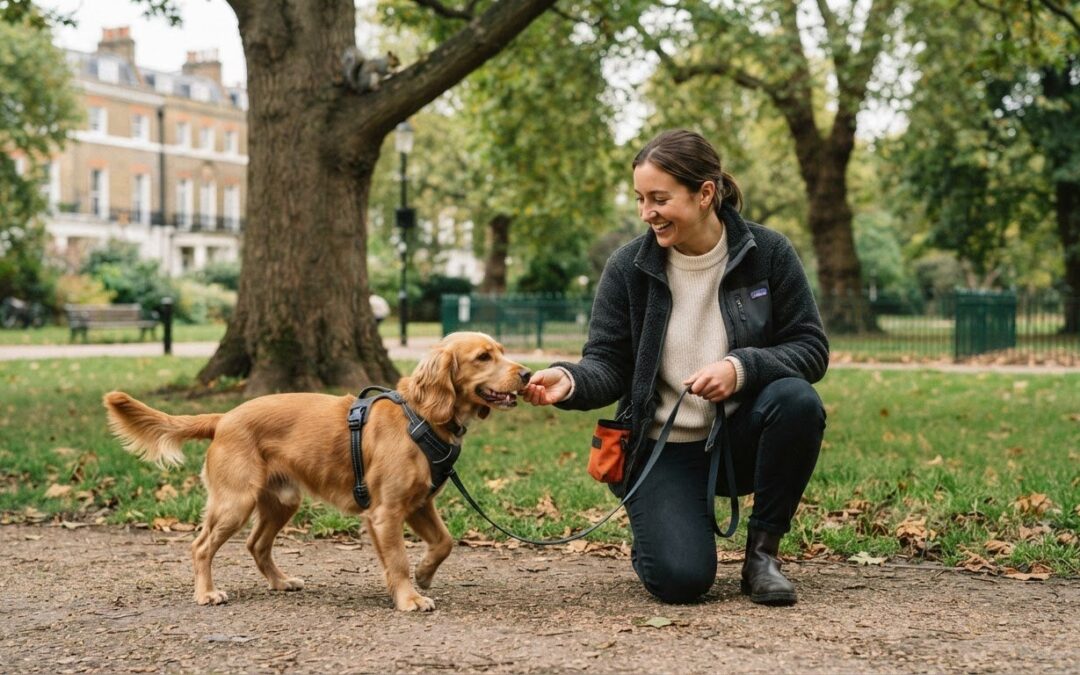
What if the first step in teaching your dog not to chase squirrels is making sure they don’t get the chance to practise chasing? If a sudden lunge turns a walk into a struggle, it’s understandable to feel stressed, especially when familiar cues seem to disappear the moment a squirrel appears. You’re not alone, and your dog isn’t being deliberately difficult.
Chasing is a powerful instinct, so the aim isn’t to punish it or expect it to disappear overnight. With thoughtful management and reward-based training, you can help your dog notice a squirrel while staying at a distance where they can still respond to you.
This guide explains what drives the chase and shows you how to stop a dog chasing squirrels with practical, kind steps. You’ll learn how to keep walks safer while training progresses, build your dog’s ability to disengage and return their attention to you, and recognise when personalised one-to-one training or a behavioural consultation could help.
Key Takeaways
- Notice what happens just before your dog lunges so you can spot triggers and choose a safer route or distance.
- Use a secure, well-fitted harness and a lead suited to your dog while they’re learning, rather than relying on recall near a squirrel.
- Learn how to stop a dog chasing squirrels by practising attention and rewarding your dog for calmly turning away while they can still respond.
- Keep training sessions short and build up gradually. If your dog becomes too focused to engage, increase the distance.
- If walks remain difficult to manage, personalised one-to-one training can help you shape a plan around your dog and walking environment.
Why do dogs chase squirrels, and what makes walks feel difficult?
A squirrel darts across a path, your dog’s attention locks on, and suddenly the lead is tight. This can feel stressful, especially when your dog responds reliably at other times. Chasing is common and doesn’t make your dog bad or mean you’ve failed as an owner. It’s a response to movement and excitement, shaped by your individual dog and what they’ve learnt from past encounters.
Some dogs have a stronger instinct to pursue moving animals, but it’s not helpful to assume every chase has the same cause. Prey Drive in Dogs describes instinctive patterns that can contribute to chasing. In practice, a dog might be drawn to a squirrel’s sudden movement, excited by the prospect of following it, or frustrated when the lead prevents pursuit. These responses can overlap, and chasing alone doesn’t mean a dog is aggressive.
What may trigger a dog to chase a squirrel?
Fast, unpredictable movement can catch your dog’s eye before you have time to act. A squirrel appearing close by, perhaps beside a tree-lined path or emerging from under a bench, may make it harder for your dog to pause. Past chases also matter: if pursuing has been rewarding, your dog may be more likely to try again. Consider each encounter in context rather than treating every lunge as identical.
London parks bring changing distractions, from wildlife near paths to people moving quickly past. Notice whether your dog reacts more strongly when a squirrel is close, the path is narrow, or they’re already excited. These details show which situations are hardest and where you may need more space.
How can you tell when your dog is getting too focused?
Watch for a fixed stare, a still or tense body, leaning forward, pulling, or a slower response to your voice. Your dog may stop sniffing or refuse food they’d normally enjoy. These are useful early signals, not misbehaviour to scold. If you spot them, calmly create distance before your dog lunges. The aim is to make the situation easier, not force them to cope at close range.
“Noticing a squirrel is normal; being able to respond around one is a skill you can build.”
Observe encounters across different walks to understand your dog’s pattern. Note where the squirrel appeared, roughly how close it was, what your dog was doing beforehand, and whether they could turn their attention away. Keep the notes simple. Over time, you may see that certain routes, sudden appearances, or busy conditions make it harder for your dog to focus. That gives you a practical starting point for learning how to stop a dog chasing squirrels. The goal isn’t to promise your dog will never notice wildlife. It’s to support safer choices and a more responsive partnership, one manageable encounter at a time.
How to interrupt squirrel chasing safely before it becomes a habit
Management isn’t a failure or a permanent restriction. It’s a safety measure that prevents your dog rehearsing the chase while you build new skills. Each time they rush after a squirrel, the excitement of pursuit can make the behaviour more rewarding and harder to interrupt next time. Keeping your dog at a manageable distance gives them a better chance to notice you and learn what to do instead.
Use equipment that helps you stay in control without causing discomfort: a secure, well-fitted harness and an ordinary lead suited to your dog’s size and your handling. Check the fit before setting off and hold the lead securely. If your dog tends to lunge, avoid relying on a collar, as sudden pressure around the neck can be uncomfortable.
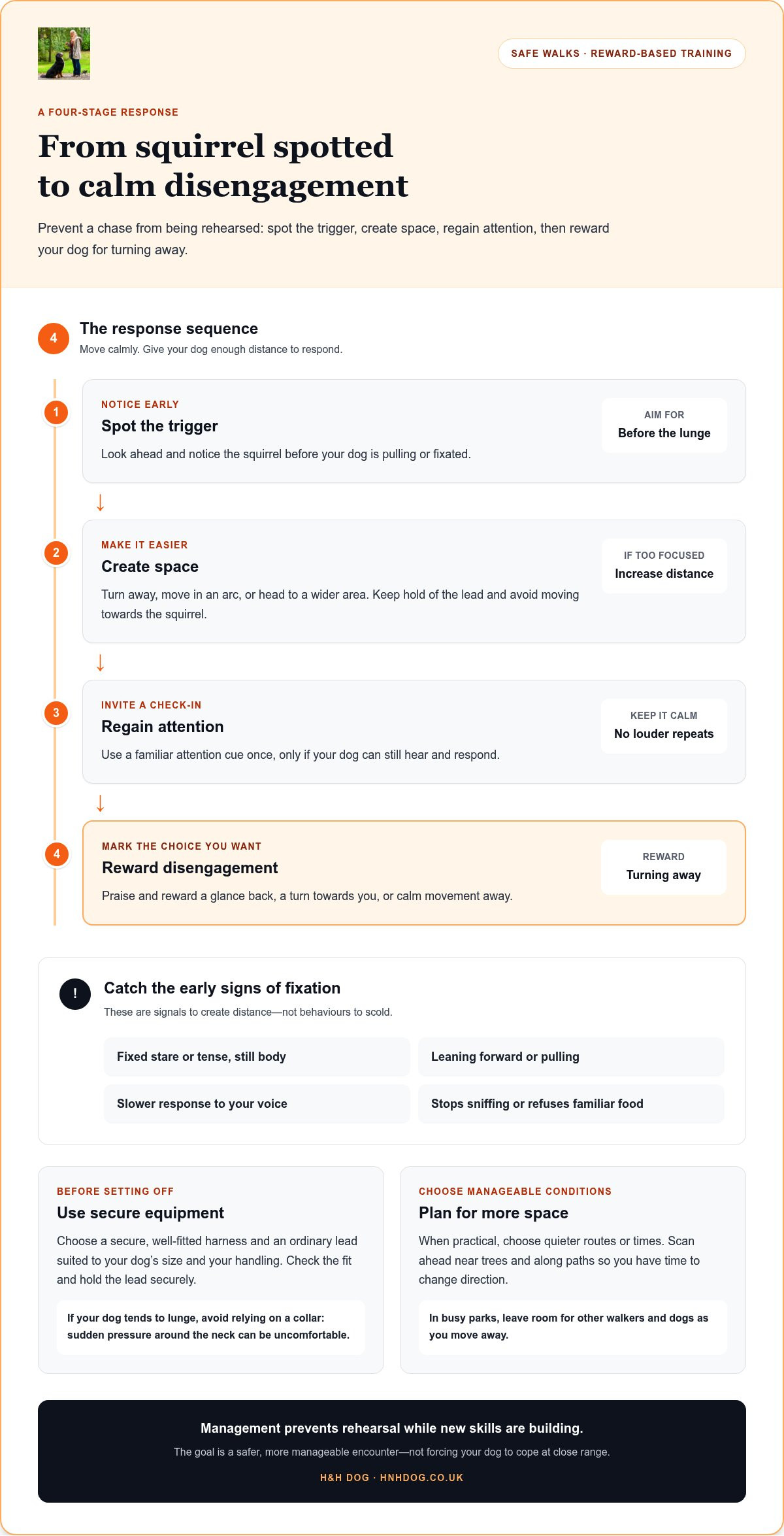
When you spot a squirrel, follow this sequence: spot the trigger, create space, regain attention, reward disengagement. Move calmly rather than pulling your dog towards the squirrel or trying to overpower a lunge. If they’re too focused to respond, don’t repeat a cue louder. Increase distance first, then try again when they can engage.
- Spot the trigger: Notice the squirrel early, before your dog is pulling or fixated.
- Create space: Turn away or move to a wider area, keeping hold of the lead.
- Regain attention: Use a familiar attention cue if your dog can still respond.
- Reward disengagement: Praise and reward a glance back, a turn towards you, or calm movement away.
What should you do when a squirrel appears?
Stay calm and keep the lead secure. Guide your dog away in an arc or change direction. Avoid moving towards the squirrel, which could bring your dog closer to the trigger. If your dog can hear and respond, use a familiar cue once. Reward them for checking in or turning away, then continue where there’s enough space for both of you to feel comfortable.
How can London and Watford walks be easier to manage?
When practical, choose quieter routes or times so you can practise without as many close encounters. Scan ahead near trees, along paths and around places where a squirrel might appear, giving yourself time to change direction. In busy parks, leave room for other walkers and dogs as you move away. An early, calm detour is easier than managing a lunge in a crowded spot.
Shouting, jerking the lead or deliberately moving closer to “test” your dog can add pressure without teaching them what you’d like them to do. If you’re finding the situation difficult to manage safely, personalised one-to-one dog training can help you build an approach suited to your dog and walking environment. These management steps support the longer-term work of how to stop a dog chasing squirrels without expecting them to cope before they’re ready.
Which training approach helps a dog disengage from squirrels?
Useful training gives your dog a clear, rewarding alternative to chasing. Rather than expecting them to ignore a squirrel completely, help them notice it from a distance where they can still think, take a reward and respond to you. That distance varies between dogs and situations. If your dog is staring rigidly, pulling hard or no longer responding, the setup is too difficult for learning at that moment.
Look for a choice, not simply an absence of movement. A dog who turns towards you, briefly checks in or moves away is practising an alternative behaviour. A dog who appears still but is tense or unable to engage may be struggling. Reward-based practice should support your dog’s ability to cope, not suppress signs of discomfort.
| Approach | What the owner does | The dog’s learning opportunity |
|---|---|---|
| Reward-based disengagement | Works at a manageable distance and rewards looking back, turning away or checking in. | Discovers that moving attention back to the owner is worthwhile. |
| Punishment | Uses shouting, lead corrections or other unpleasant consequences when the dog reacts. | May experience added stress without being shown what to do instead. |
| Forced close exposure | Moves closer to the squirrel before the dog can comfortably respond. | May become more focused or overwhelmed, making it harder to practise a calm alternative. |
How does reward-based disengagement practice work?
Begin far enough away that your dog can notice the squirrel without losing the ability to respond. The moment they glance back, turn away or calmly check in, mark that choice with a brief word such as “yes” and offer a reward. Keep the practice easy at first. If your dog struggles to look away, create more distance rather than repeating the cue or waiting for a bigger reaction.
As your dog becomes more comfortable, make small changes to the challenge. You might practise with the squirrel further away, then gradually work at a closer distance if your dog remains able to engage. A successful repetition can be brief. There’s no need to keep your dog near the trigger after they’ve made a good choice.
Why can punishment or forced close exposure backfire?
A correction may interrupt movement in the moment, but it doesn’t necessarily teach your dog how to respond the next time a squirrel appears. It may also add pressure to an already exciting or difficult encounter. Similarly, moving closer to test your dog can put them beyond a distance where they can learn comfortably. If their body becomes tense or they stop responding, make the exercise easier.
These principles offer a practical foundation for how to stop a dog chasing squirrels: set up conditions where your dog can succeed, then reward the alternative you want to see. Progress might mean a brief glance back today and a calmer turn away on a later walk. Adjust to your individual dog rather than measuring success by how close they can get to a squirrel.
How to practise squirrel training step by step on everyday walks
Make practice a series of small, achievable choices, not a test your dog must pass. Start with attention in calm settings, then use that skill when a squirrel is visible but far enough away for your dog to stay responsive. Keep each practice brief and finish while your dog is still comfortable. Short, positive repetitions help build a routine without turning every walk into a training session.
How do you build useful attention before a squirrel appears?
At home or in a quiet outdoor space, say your dog’s name or use a familiar attention cue once. Reward them as soon as they look towards you. On ordinary walks, reward voluntary check-ins and following you when you change direction. Choose something your dog finds motivating, such as a small food treat or a moment of play. Stop after a few successful repetitions so the exercise stays easy and worthwhile.
How do you make practice gradually more realistic?
Start where your dog can see a squirrel and still take a reward. Mark and reward a brief look back, calm movement or a turn towards you. Repeat successful responses before making practice harder. Change one factor at a time: work a little closer or ask for attention to last slightly longer, not both together. If your dog fixates or pulls, calmly increase the space and make the next attempt easier.
Use this progression on walks, moving forward only when your dog can stay engaged at the current level:
- Practise without squirrels: Reward attention and gentle changes of direction in a quiet place. Your dog can learn the cue while distractions are low.
- Notice a squirrel at a distance: Give your dog time to see it. Reward a voluntary glance back, a check-in or a calm turn away. If they can’t respond, don’t repeat the cue; move further away.
- Build gradually: Once your dog can respond comfortably across repeated encounters, adjust one challenge slightly, such as distance or how long they stay settled. Keep the lead secure and end the practice if your dog becomes overwhelmed.
Success isn’t measured by getting as close as possible. It’s your dog making a choice you can reward while staying relaxed enough to learn. When working on how to stop a dog chasing squirrels, steady practice at a manageable distance is more useful than rushing through harder stages.
After relevant walks, make a brief note of where the squirrel appeared, roughly how far away it was, what your dog did and whether they could take a reward or respond to a cue. Patterns can show which environments or distances are manageable and when to give your dog more room. A simple record also helps you notice gradual changes that might otherwise be easy to miss.
If you’d like a plan tailored to your dog and your usual walks, book personalised one-to-one dog training for professional guidance on the next steps.
When one-to-one dog training can help with squirrel chasing
Some dogs can practise around squirrels at a comfortable distance with their owner’s support. Others may lunge so suddenly that walks feel unsafe, stay too focused to respond, or make little progress despite consistent practice. If you’re avoiding familiar routes or feel anxious about what might appear around the next tree, tailored guidance can help you understand what’s making walks difficult and choose a manageable next step.
Individual support can be especially useful when the same situations keep catching you off guard. A trainer can observe your dog’s responses, your handling and the walking environment, then help identify practical changes and training choices that suit the whole picture. There isn’t one exercise or timescale that fits every dog. A plan should account for your dog’s comfort and learning pace, as well as the routes and triggers you encounter in everyday life.
What can personalised dog training address?
In one-to-one dog training, practice can be adjusted to what your dog is showing you. That might mean working on attention away from wildlife first, choosing more space when a squirrel appears, or finding a manageable way to reward your dog for turning back to you. If excitement, frustration or other behaviour concerns affect walks, a behavioural consultation can explore those observations in more depth and help shape individual recommendations.
H&H Dog offers personalised one-to-one dog training and behavioural consultations, drawing on more than 20 years of team experience. Support can focus on a realistic approach for you and your dog, rather than expecting either of you to follow generic steps regardless of what happens on your walks.
How can owners prepare for a training consultation?
You don’t need perfect notes or a polished account of the problem. A few observations can make a conversation more useful. Think about where chasing tends to happen, what your dog does before and during a lunge, and what helps you create space. Include your usual walking routines and whether your dog can respond to familiar cues in quiet places, at a distance from squirrels, or not at all once they’ve noticed one.
These details can help distinguish an unexpected close encounter from a pattern linked to particular routes or situations. For urban training context, one-to-one dog training in North London discusses the demands of city walks, while London dog behaviourist guidance explores tailored behavioural support.
Learning how to stop a dog chasing squirrels can take patience, and needing help doesn’t mean you’ve done anything wrong. If lunges remain difficult to manage or you’d like a plan shaped around your dog and everyday walks, H&H Dog offers personalised one-to-one training support.
Make your next walk a fresh start
Your dog doesn’t need to ignore every squirrel for you to make progress. Focus on creating chances to practise at a level they can manage, and treat small moments of attention as meaningful steps. If a walk becomes difficult, choosing more space or changing direction is a thoughtful response, not a setback.
Learning how to stop a dog chasing squirrels means understanding what your dog can cope with and building from there. If you’d value tailored guidance, H&H Dog provides personalised one-to-one training and behavioural consultations. The Watford-based team serves communities across North London and North West London, bringing more than 20 years of team experience to supporting dogs and their owners.
Explore personalised dog training and behavioural support and take a considered next step for you and your dog. With patience, a plan that fits your everyday walks, and support when you need it, calmer shared outings can become a realistic goal.
Frequently Asked Questions
Is it normal for dogs to chase squirrels?
Yes, chasing moving animals is common in dogs, although some show little interest in squirrels. A quick dash across a path can capture a dog’s attention, but that doesn’t mean they’re aggressive or badly behaved. Dogs differ in what excites them and how they respond. Focus on keeping your dog safe and understanding their individual reactions, rather than comparing them with other dogs in the park.
Can you train an adult dog to stop chasing squirrels?
Yes, adult dogs can learn new ways to respond, though past experiences may affect what feels manageable. A dog who has chased squirrels on the same route, for example, may need practice in a quieter setting before trying that path again. Keep expectations individual and reward useful choices. If your dog’s reactions are hard to manage, personalised one-to-one training can help you plan practice around their needs.
How long does it take to stop a dog chasing squirrels?
There’s no fixed timeframe. Progress depends on factors such as how strongly your dog reacts, how often you can practise safely, and whether squirrels appear suddenly at close range. Look for small changes, such as your dog recovering their attention sooner or moving away calmly in a familiar location. These signs are more useful than expecting progress after a particular number of walks or weeks.
What should I do if my dog catches a squirrel?
Keep yourself safe and avoid reaching between your dog and the squirrel, as a frightened or excited dog may move unpredictably. If you can, use your lead to prevent further movement and calmly create space once it’s safe to do so. Don’t handle an injured wild animal directly. Contact a vet for advice about your dog, particularly if they may have been bitten or injured, and seek appropriate local wildlife help for the squirrel.
Should I let my dog chase squirrels on a long lead?
No, a long lead shouldn’t be used to give your dog permission to chase. A sudden sprint can pull you off balance or cause the lead to catch around people, dogs or obstacles. If you use a long line for training, choose an open area with room to move, keep hold of it and prevent your dog reaching wildlife. In a busy London park, a shorter lead may be easier to manage around shared paths.
Why does my dog ignore me when they see a squirrel?
Your dog may be so focused on the moving squirrel that your cue is harder to notice or respond to. That doesn’t necessarily mean they’re choosing to disobey. Consider what happens before they stop responding: the squirrel’s distance, sudden movement, or nearby activity may all matter. If your cue repeatedly goes unheard in that moment, avoid calling over and over. Practise it in easier situations first.
Can squirrel chasing make walks unsafe?
It can, particularly if a sudden lunge pulls you towards a road, knocks you off balance or brings your dog close to other park users. Take extra care on narrow paths and near entrances where people may approach unexpectedly. If you can’t safely manage your dog in a particular area, choose a quieter route while you work on training. For tailored support, H&H Dog offers one-to-one dog training and behavioural consultations.