
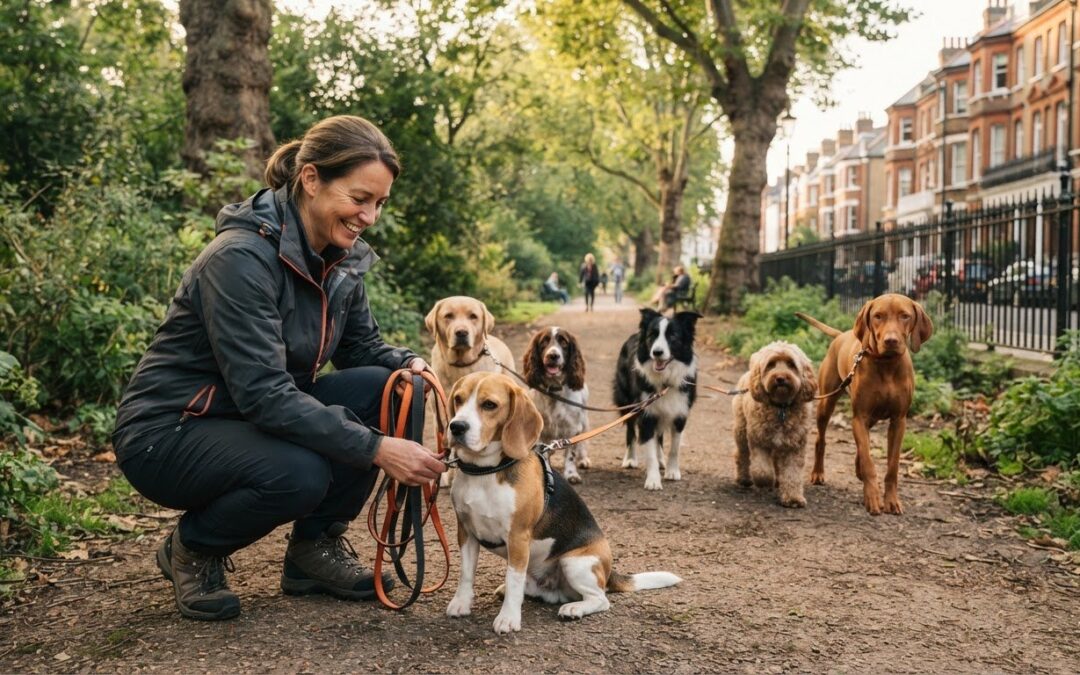
The cheapest walk isn’t automatically the right fit for your dog or your working day. A dog walker for a flexible schedule in Kilburn should offer a routine that suits your dog’s needs, with clear collection times: morning collections are around 9:30, while afternoon collections are around 12:00. The right choice also depends on how your dog responds to group walks, individual attention and time away from home.
If you need a dog walker for a flexible schedule in Kilburn, compare more than the fee. A low price alone will not tell you whether a walker can keep your dog secure, read their signals and manage their energy around other dogs. This guide covers walking options, local cost considerations, what to look for in a walker’s experience and responsibilities, and how to build a weekly schedule around your dog’s routine. Use these points to balance flexibility with consistency and support your dog’s wellbeing.
Key Takeaways
- Compare walk arrangements by your dog’s comfort with other dogs, need for individual attention and the routine that fits your day.
- Look beyond the headline cost: understand what the walk includes and which details of the service affect the overall quote.
- Use a meet-and-greet to discuss your dog’s temperament, handling needs and how the walker will keep dogs secure on walks.
- Build a weekly plan around collection times, time away from home and your dog’s response to the routine.
- Choose a walker whose experience and responsibilities match your dog, rather than relying on price alone.
Choosing Cheap Dog Walking Services in North London – What Really Matters?
In Kilburn parks and public spaces, follow the rules on each park’s signs, including lead requirements and restricted areas. Keep your dog under control and clear up after them to help make shared spaces safer for other visitors and dogs.
Compare walking services by what the fee covers, not just the headline price. Ask whether walks are individual or group, how collection and return work, and whether travel is included. A dog walker for a flexible schedule in Kilburn should suit your dog’s routine as well as your calendar.
When looking at rates in Kilburn, the cost of a walk depends on duration, group size, collection distance, and how regularly you book. A walking price depends on the case and is given after a quote request; the main factors are walk format, duration, transport, and schedule.
Extra charges can affect the total. Before booking, clarify whether the fee includes key collection, travel beyond the usual route, additional dogs from one household, or a longer outing. These details matter when comparing weekly commitments. Also ask whether there is time for your dog to settle in, rather than treating collection and the walk as one rushed task.
Boarding costs depend on the care arrangement, dates, feeding routine, and any individual support a dog needs. Boarding is different from a walk because the care period and responsibilities are broader, so compare what the fee includes rather than treating it as an add-on to walking. A written breakdown helps you understand the total before making plans.
Daycare costs also depend on the hours and care provided. In Kilburn, collection is scheduled between 8:30 and 9:30am, with drop-off between 3:00 and 4:00pm. Those hours can help you judge whether a full daycare day suits your working routine, but they don’t establish a price. Confirm what the daily arrangement covers and whether collection and drop-off are included.
- Compare the same service type and duration before weighing fees.
- Separate walking, daycare, and boarding in your budget; they cover different care periods.
- List possible extras, including transport, additional dogs, and extended time.
- Match the schedule to your dog’s needs, not only your workday.
Walk options for individual dogs and groups
Dog walking in Kilburn can involve individual or group walks, with morning or afternoon arrangements. The right format depends on your dog’s social comfort, energy and response to shared environments. A dog who enjoys calm sniffing may need a different pace from one who seeks regular play. Match the walking style to your dog first, then fit collection times around your day.
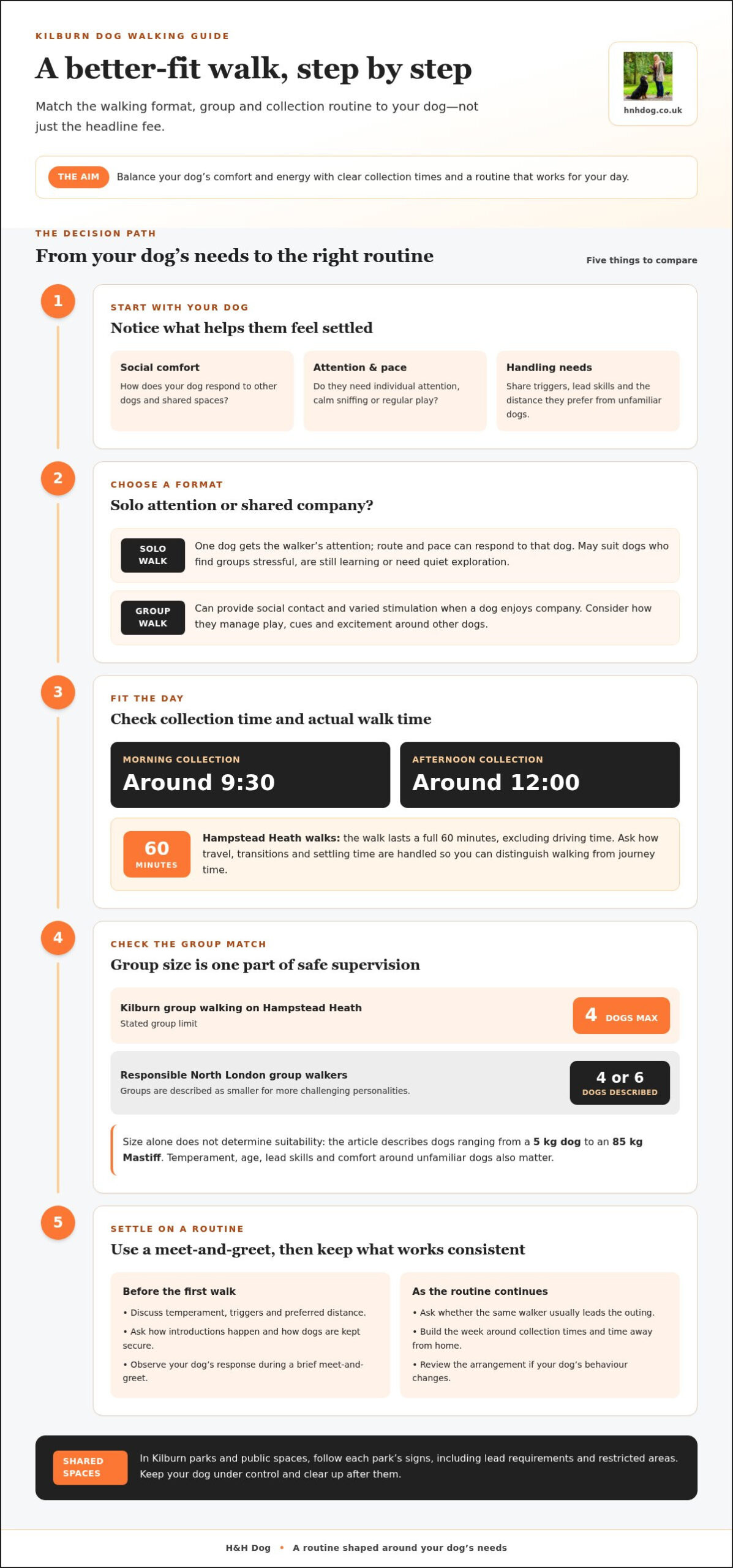
Morning group walks in Kilburn are collected around 9:30, while afternoon collections are around 12:00. On Hampstead Heath, walks last a full 60 minutes, excluding driving time. That distinction helps you understand the actual walking time, rather than counting the journey as exercise. Ask how the outing is structured, including travel, transitions and opportunities for dogs to settle before walking together.
Group size affects the walker’s ability to supervise interactions and respond to each dog. A Kilburn group walking on Hampstead Heath has no more than four dogs. Responsible North London group walkers are described as keeping groups to four or six dogs, with fewer for more challenging personalities. The smaller figure matters when dogs need more space, slower introductions or closer support around other dogs.
Size alone doesn’t determine suitability. A walker may need to manage dogs as different in size as a 5 kg dog and an 85 kg Mastiff. Temperament, lead skills, age and comfort around unfamiliar dogs also shape a safe match. Before a group trial, share your dog’s triggers and preferred distance. Notice whether they can disengage from play, respond to cues and recover after excitement.
Solo walking gives one dog the walker’s attention and allows the route and pace to respond to that dog. It can suit dogs who find groups stressful, are still learning, or need quiet exploration. Group walking can offer social contact and varied stimulation when the dog enjoys company. More Than a Walk in the Park describes group walks as supporting mental and physical fitness through stimulation.
Consistency helps dogs learn what to expect. Ask whether the same walker usually leads the outing, how introductions happen, and how the group changes when a dog needs space. A flexible schedule should still preserve familiar routines where possible. Use a brief meet-and-greet to observe your dog’s response before settling on a format, and review the arrangement if their behaviour changes.
- Choose solo walks for individual pacing and focused attention.
- Consider groups when your dog is comfortable around other dogs.
- Compare the stated walking duration with collection and travel time.
- Discuss group size, introductions and consistency before the first walk.
If group walking suits your dog, explore the group walking approach as a next step.
Walker vetting and customer reviews
Reviews can help you assess communication and reliability, but they are most useful alongside a practical conversation. Compare comments about punctuality, handling and updates with your dog’s individual needs.
Walker Reviews
Look for reviews describing specific experiences, such as a walker managing introductions calmly or keeping owners informed after a walk. A friend’s recommendation can add context, especially if their dog has similar needs. Read several comments rather than relying on one glowing account. Notice whether feedback explains how the walker responded when a dog felt unsettled or needed more space.
Reliability and Reviews
Reliability means clear arrangements for collection, return and communication when plans change. Reviews mentioning punctuality or regular updates can help you identify those habits. At a meet-and-greet, explain your dog’s routine and ask how the walker handles secure handovers. When choosing a London dog walker, ask about experience with individual dogs and groups.
Which Kilburn walkers offer flexible or last-minute bookings? The local options described include group walks, with morning collection around 9:30 and afternoon collection around 12:00. For short-notice needs, compare booking arrangements directly and prioritise a clear process for confirming changes, rather than assuming a regular slot can be moved.
Do Kilburn dog walkers offer weekday, evening and weekend walks? The described Kilburn collection times are morning and afternoon, around 9:30 and 12:00. These times don’t establish evening or weekend schedules. When comparing options, match the walk times you need against your dog’s feeding, rest and household routines.
Can you book one-off or ad hoc walks in Kilburn? A one-off walk can help with an isolated change in routine, while recurring bookings suit predictable weekly needs. Clarify the collection time, handover instructions and whether the walk is individual or in a group. Clear expectations help both you and your dog.
Use a short vetting sequence before choosing:
- Read reviews for concrete examples of care and communication.
- Discuss your dog’s temperament and handling needs at a meet-and-greet.
- Ask how the walker keeps dogs secure during walks.
- Agree the collection plan and how schedule changes are handled.
These steps help you assess more than availability. They show whether the walker’s communication, experience and routine suit your dog’s comfort.
Dog-walking duties and weekly frequency
A morning dog walk from Kilburn can take about one and a half hours from leaving home to returning. The full window includes more than outdoor walking, so plan for collection, travel and handover too. If your diary allows only a short gap, compare the door-to-door commitment with your work or school run. Your dog’s routine matters as much as the time you spend away.
Maple’s example gives a practical weekly pattern: a walker is expected to take her out 1-2 times a week, from Monday to Thursday, and coordinate with her Friday daycare schedule. This separates regular walks from the existing Friday plan. For your own dog, write down the days needing cover, then mark any daycare or family arrangements that affect collection.
Before the first walk, agree on the handover routine. Share which lead and harness your dog uses, where they are kept and which cues help your dog feel settled. Note feeding or medication instructions only if they affect walk timing. A clear routine reduces confusion when a household member is out and the walker arrives.
Walking duties can include collecting your dog, providing the agreed outing, returning them safely and sharing an update. Set expectations for each step. For example, decide whether the update should mention the route, toileting, appetite after exercise or interactions with other dogs. Specific details help you understand how the outing went, beyond a vague “all fine”.
Walking frequency should reflect your dog’s needs and your household rhythm, not a fixed template. A Monday and Wednesday plan may suit a dog whose owner works away on those days, while another dog may need a different pattern. If your shifts change, tell the walker which days are fixed and which may move. Agree how you will communicate schedule changes.
Use this planning checklist before confirming a weekly arrangement:
- Write down the required days and preferred collection window.
- Allow for the full door-to-door period, not walking time alone.
- Share access, equipment and handover instructions in one place.
- Coordinate walks with daycare, as Maple’s Friday schedule illustrates.
- Agree what post-walk update helps you follow your dog’s experience.
Review the plan after the first week. Compare the agreed times with the actual routine and notice whether your dog settles comfortably afterwards. If a morning walk makes the rest of the day feel rushed, consider changing the walking day or adjusting the household handover. A flexible plan works best when both your dog’s welfare and your calendar are in view.
Walker experience and responsibilities
Experience matters because each walk involves reading behaviour, managing equipment and making decisions in changing surroundings. Experience with dog walking and managing multiple dogs is listed as a plus for the London role. Ask for examples of how the walker introduces dogs, responds to tension and adapts the outing when one dog needs more space.
Handling needs can vary widely. A 5 kg dog and an 85 kg Mastiff illustrate how different dogs may be in size and strength. Ask how the walker assesses lead skills, arousal and comfort around other dogs before grouping dogs together. Their answer should reflect your dog’s temperament, not rely on a single routine for every animal.
Keeping dogs secure on walks is an important topic to discuss. Explain which lead or harness your dog uses and whether they tend to pull, startle or approach unfamiliar dogs. Ask how the walker manages gates, road crossings and handovers. Clear answers show whether they have considered the practical moments when attention and control matter.
Responsibilities begin before leaving home. The walker needs to understand collection instructions, where equipment is stored and which cues help your dog respond calmly. Explain relevant sensitivities, such as discomfort with close greetings or worry around traffic. A thoughtful plan accounts for these details and gives your dog time to settle into the walk.
Experience also means recognising when a planned group is not a suitable match. Ask how the walker monitors interactions and what they do if a dog becomes overwhelmed. Look for a clear explanation involving distance, a pause or a change of route. The goal is not to force sociability, but to help your dog feel comfortable enough to engage at their own pace.
Use a meet-and-greet to assess the match. The application advice for Maple recommends meeting her and her owner. Bring your dog’s usual lead, describe their routine and observe how the walker approaches them. Notice whether they give your dog room to investigate, listen to your information and respond patiently to signals of uncertainty.
- Ask for practical examples of managing several dogs.
- Discuss secure handling, equipment and handovers before walking begins.
- Explain your dog’s triggers, cues and preferred distance from others.
- Use the meet-and-greet to observe your dog’s comfort and the walker’s approach.
Choose experience that fits your dog’s needs, rather than relying on years alone. To discuss a suitable walking routine, share your dog’s walking needs.
H&H Dog: Full Groom
H&H Dog offers Group Dog Walking as well as Full Groom, so you can consider walking and grooming as separate parts of your dog’s care. Choose Group Dog Walking if your dog enjoys shared outings and benefits from a regular walking routine. Full Groom is for grooming rather than exercise; Bath & Brush and Puppy’s First Groom are other grooming options.
Keeping these needs separate helps you choose support that suits your dog’s comfort and routine. When comparing walking arrangements, focus on how your dog responds to other dogs and the structure of the outing. For grooming, consider which appointment type matches your dog’s needs and experience.
Contact H&H Dog to discuss the right service for your dog, or visit hnhdog.co.uk.
Make your dog’s routine work for both of you
A good care arrangement should suit your dog’s comfort and your week. If you’re looking for a dog walker for a flexible schedule in Kilburn, use what you’ve learned to identify a routine and walking style that work for your dog. Start by noting the days you need help and what a walker should know about your dog’s behaviour, preferences and handover.
Walking may be your immediate need, while grooming can be a separate part of your dog’s care. H&H Dog offers Full Groom, Bath & Brush and Puppy’s First Groom, giving you options when grooming is relevant.
To discuss flexible walks for your dog, contact H&H Dog about flexible walks. A thoughtful plan can make everyday care feel more manageable for you and more comfortable for your dog.
Frequently Asked Questions
Communication – Do They Keep You Posted During Walks?
Agree on the update method and details before the first walk. For example, you might ask for a message confirming your dog has returned home, with notes about toileting, appetite or anything unusual. Keep updates focused on information that helps you care for your dog later. If your dog is settling into a new routine, agree how the walker will tell you about changes in their behaviour.
What happens if the weather’s dreadful, do walks get cancelled?
For severe weather, agree on a clear plan that considers your dog’s comfort and safe handling. Decide how the walker will communicate a change and whether a shorter outing or rearranged walk is appropriate. A dog unsettled by heavy rain may need a different approach from one who is comfortable outdoors. Discuss cancellations and alternatives before booking, so you know how decisions will be handled on the day.
What are the prices for dog walking in Kilburn?
Dog-walking prices depend on the arrangement, including whether the session is individual or group, its duration, collection and drop-off, and any agreed extras. H&H Dog lists its dog-walking charges on its website. Compare what each fee covers, especially if your dog needs a particular routine. The clearest comparison is between services with similar walking arrangements and included care.
How do dog walkers in Kilburn handle cancellations and schedule changes?
Agree on cancellation terms and how schedule changes will be handled before the first booking. Clarify how much notice is needed, how to report a change and whether a missed walk can be rescheduled. If your work rota changes, share likely walking days in advance and identify which bookings are fixed. Keep the agreed process in writing so both sides can refer to it.
Are Kilburn dog walkers insured, DBS-checked, and trained in pet first aid?
Insurance, DBS checks and pet first-aid training are separate credentials, so assess each independently. Ask what documentation the walker holds and what it covers, including whether a policy applies to your walking arrangement. A DBS check relates to criminal-record screening, while first-aid training concerns emergency response. H&H Dog’s team includes experienced dog lovers and IMDT-certified professionals; that credential is distinct from insurance or first aid.
Do Kilburn dog walkers offer group walks, solo walks, or puppy visits?
Individual and group walks are walking formats, while puppy visits are a separate type of care. H&H Dog offers Group Dog Walking, and its dog-walking information describes individual or group sessions. Puppy Training is also available, but training is not the same as a home visit for supervision or toileting. Match the service to the need: exercise, social walking or support with learning.
How can I compare reviews and availability for Kilburn dog walkers?
Read reviews for specific examples of communication, punctuality and how a walker responds to a dog’s needs. Then compare availability with the days and collection windows your household requires. A review describing a calm handover may be more useful than general praise if your dog is hesitant around new people. Keep a short list of practical questions and assess whether the answers address your dog’s routine clearly.