
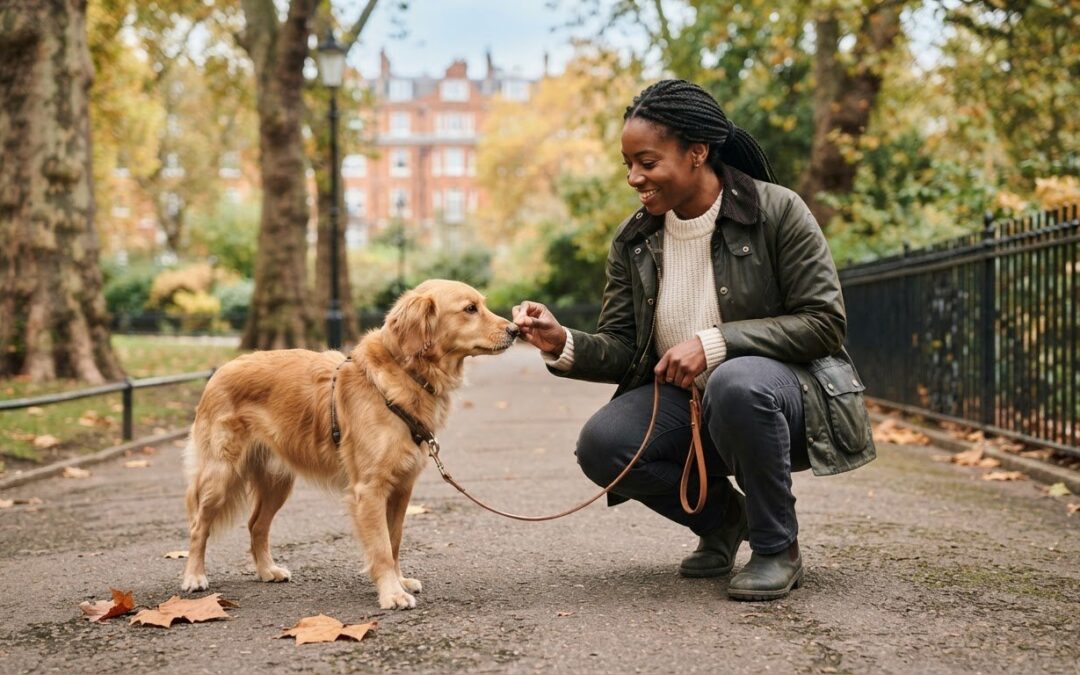
Pineapple isn’t a proven fix for poop eating. The PDSA says there’s no evidence that pineapple or courgette stops dogs eating their own poo. If you’re learning how to stop a dog from eating poop, focus on practical management and what may be driving the behaviour. Both foods are safe for dogs, but introduce them gradually because sudden dietary changes can upset the stomach.
It’s understandable to feel concerned or embarrassed when your dog eats faeces, especially on a walk or in the garden. But the behaviour is common and doesn’t automatically mean your dog is ill or poorly cared for. Puppies may explore poo out of curiosity; boredom, stress, habit or hunger can also play a part.
This guide explains when poop eating may be a normal stage and when a vet assessment may be appropriate. You’ll also learn what to know about supplements and digestive health, and how calm supervision, reward-based training and simple changes to your dog’s routine can help reduce opportunities to eat poo.
Key Takeaways
- Introduce pineapple or courgette gradually if you try them, and rely on supervision and training rather than expecting a food-based fix.
- If an adult dog suddenly starts eating poo and seems unwell, contact your vet to explore possible medical causes.
- Review feeding and digestion with your vet if your dog seems excessively hungry or has loose or frequent stools.
- Prebiotic and probiotic supplements haven’t been shown to directly prevent poop eating, so consider the behaviour’s underlying cause.
- On walks, practise a friendly recall and reward your dog for turning away from poo; avoid shouting or punishment.
1. Does pineapple stop dogs eating their own poo?
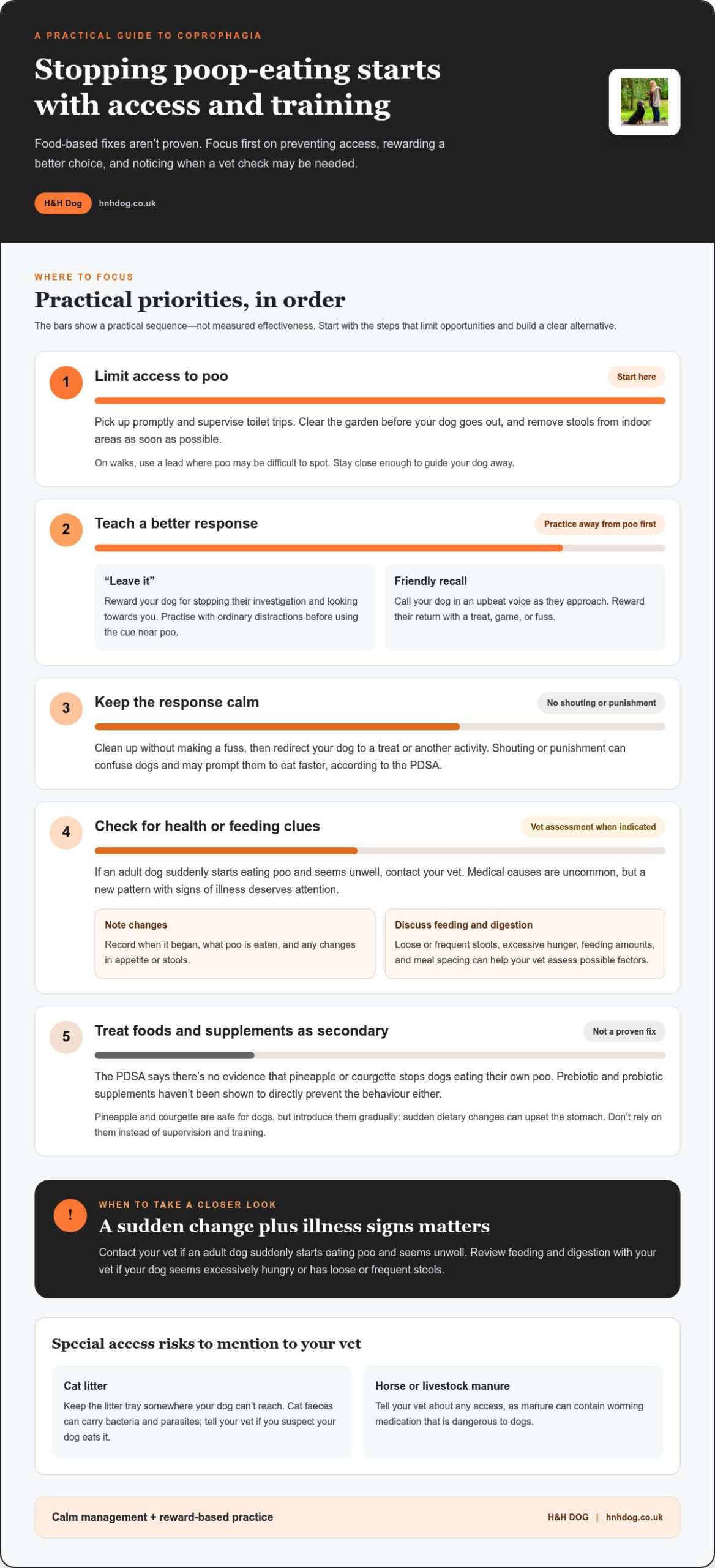
Pineapple isn’t a proven way to stop a dog eating its own poo. The PDSA says there’s no evidence that pineapple or courgette prevents the behaviour, although a small amount may make stools less appealing to some dogs. Both foods are safe for dogs, but introduce them gradually because sudden dietary changes can upset the stomach. Treat them as optional foods, not replacements for training or supervision. If you’re considering how to stop a dog from eating poop, first focus on limiting access and rewarding a better choice.
To prevent your dog eating faeces at home, clear the garden before letting them outside, supervise toilet trips and pick up promptly. Indoors, remove stools as soon as you can and keep your dog’s living area clean.
Clean up calmly without drawing your dog’s attention to the poo. Pick it up with a bag and dispose of it, then redirect your dog to a treat or another activity. Owners who rush over or make a fuss can accidentally make the moment more exciting for a dog seeking attention.
Teach “leave it” away from faeces first. Hold a treat in a closed hand. When your dog stops investigating and looks towards you, praise that choice and reward them with your other hand. Practise with ordinary distractions before using the cue when your dog notices poo. If they eat it, avoid shouting or punishment. The PDSA warns that this can confuse dogs and may prompt them to eat faster.
Build a friendly “come” cue in easy settings before using it near a tempting stool. Call your dog in an upbeat voice as soon as they approach, then reward them with a treat, game or fuss when they return. You can also call them over immediately after they toilet, before they turn back towards the stool. This gives your dog a clear alternative and helps you interrupt the sequence calmly.
Use a lead in open spaces where poo may be difficult to spot, and reward your dog for staying with you or moving away. In the garden, stay close enough to guide them away and clean up promptly. Knowing how to stop a dog from eating poop is less about a single deterrent and more about preventing access while teaching a useful response.
A muzzle may offer an extra safety measure in places where your dog could reach faeces before you can intervene. Introduce it gradually with treats, allowing your dog to investigate and wear it positively. Never use a muzzle as punishment. It should support supervision and training, not replace the “leave it” and recall cues.
2. Veterinary assessment for adult dogs that start eating poop
If an adult dog suddenly starts eating poo and seems unwell, contact your vet, advises the PDSA. A change in behaviour can have different causes, so don’t assume it’s simply a training issue. Coprophagia, the term for eating faeces, is common in dogs, but a new pattern alongside signs of illness deserves attention.
Medical causes are uncommon, and other symptoms are usually present when illness is involved. Before the appointment, note when the behaviour began, what kind of poo your dog eats, and any changes in appetite or stools. Loose or frequent stools can point to digestive problems, while excessive hunger may also contribute. These details help your vet assess the behaviour in context.
Tell your vet about feeding amounts and meal spacing, too. A dog may seek out faeces if they need more food or too much time passes between meals. Ask how much and how often your dog should eat, based on their needs. If your dog has digestive difficulties, a diet that helps produce normal stools may also address one possible factor.
Cat litter needs a separate access plan. The PDSA recommends putting the litter tray somewhere your dog can’t reach. Cat faeces can carry bacteria and parasites that may pass to dogs, so regular worming is important if you suspect your dog eats it. Also tell your vet about any access to horse or livestock manure, which can contain worming medication dangerous to dogs.
While you arrange an assessment, use rewards to practise an alternative behaviour. Carry a high-value treat or toy, and reward your dog for turning towards you instead of approaching poo. If they notice a stool on a walk, call them back in a friendly voice, then offer the reward when they return. The PDSA advises distracting dogs, removing the temptation and giving them something better to do.
Keep the response calm. Shouting or punishment can confuse dogs and may make them eat poo faster, according to the PDSA. If your dog is medically cleared but still struggles with distractions outdoors, a consistent walking routine can support practice. Group Dog Walking may suit owners seeking regular walks while they continue reward-based training.
A vet can help distinguish medical causes from behaviour linked to stress or other needs. That distinction matters: a dog eating poo because of illness may need a different approach from one responding to stress. Start with the sudden change and your dog’s wellbeing, then use the assessment to guide the next steps.
3. Supplements and digestive health
Supplements are often presented as a simple way to stop a dog eating faeces, but prebiotic and probiotic supplements haven’t been shown to directly prevent coprophagia. That doesn’t mean digestive health is irrelevant. Loose or frequent stools may be part of the picture, so note your dog’s stool consistency and feeding routine before discussing changes with your vet.
A nutritional deficiency is rarely the reason dogs eat their own poo if they eat complete dog food approved by a nutritionist. Dogs have also been known to eat faeces on dry, wet, home-prepared and raw diets. The diet label alone therefore doesn’t explain the behaviour. If you’re concerned about nutritional balance, share your dog’s food type and daily portions with your vet rather than adding a supplement based on guesswork.
Digestibility can affect how much stool a dog produces. Dogs on a highly digestible diet should produce small amounts of stool, while a diet that helps a dog produce normal stools may help when digestive problems are involved. Track changes in stool frequency and consistency alongside the food being fed. That record gives your vet a clearer picture than a supplement trial alone.
Feeding routine matters, too. A dog may seek out poo if they need more food or too much time passes between meals. Ask your vet to review how much and how often your dog eats. Food type, portion size and meal frequency can be considered together to support sustained energy release throughout the day and help your dog feel satisfied.
Choose food for balanced nutrients and easily digestible ingredients, rather than assuming one diet suits every dog. Smaller, more frequent meals may help a dog that seems especially hungry or has digestive issues, but the right routine depends on the individual. Keep a simple log of meals, stool changes and when the behaviour occurs. Patterns can guide an informed feeding review.
Stool-eating deterrents require careful household planning. For a deterrent to make stools unpalatable, every dog and cat in the household needs to consume it. If one pet is left out, stools may remain appealing. This matters especially in multi-pet homes, where pets may share spaces or one animal’s stool may be easier to reach.
Use supplements as one specific part of a wider plan, not as a substitute for finding the cause. For example, a dog with normal stools and a complete diet may need management and training, while a dog with loose or frequent stools needs attention to digestive health. Matching the response to the pattern keeps feeding decisions practical and focused on your dog’s individual needs.
4. Whether poop eating is normal in dogs and puppies
Poop eating, or coprophagia, is a behaviour seen in dogs, and it doesn’t automatically mean illness. Studies cited in the research report that 49% of dogs had eaten faeces at some point, while nearly a third currently do. Dogs may eat their own stools, another dog’s, or faeces from other species. The reason and the type of poo both matter when deciding what to do next.
For puppies, curiosity is a common explanation. The PDSA says puppies may explore their own poo or a littermate’s, and this usually stops as they mature. Puppies may also copy their mother, who eats their faeces while keeping the nest clean. The PDSA says this maternal behaviour is normal and shouldn’t be discouraged.
A mother dog may eat her puppies’ poo while cleaning them for about the first three weeks after giving birth. In puppies, the exploratory habit usually fades before they’re about nine months old. During this stage, supervise toilet breaks and calmly clear stools so curiosity doesn’t become a repeated routine. You can manage a puppy’s interest without scolding or frightening them.
Age gives useful context, but it isn’t the only factor. The PDSA says dogs most commonly eat poo because of habit, hunger, stress or boredom; only a very small number do so because of illness or dietary deficiency. Notice whether the behaviour happens around particular stools, in a certain setting or after changes to your dog’s routine. These patterns can help distinguish exploration from a persistent habit or possible welfare concern.
Eating their own poo doesn’t often cause health problems for dogs, according to the PDSA. Poo from other animals is a different concern: contaminated faeces may expose puppies to parasites, viruses or toxins. Keep puppies away from unfamiliar stools and supervise them outdoors. If an adult dog suddenly begins eating poo and seems unwell, contact a vet, as the PDSA advises.
Normal doesn’t mean you need to allow repeated access. For a curious puppy, guide them away after toileting and reward them for coming to you. For a mother dog caring for newborn puppies, leave this natural cleaning behaviour undisturbed. If the habit continues as your puppy matures, or appears alongside other changes, record when it happens and discuss the pattern with your vet.
5. What training steps can stop a dog eating faeces on walks?
If you’re working out how to stop a dog from eating poop during walks, start by planning around your dog’s triggers. Scan the path ahead, keep your dog close enough to guide, and shorten the lead when you spot faeces. The PDSA advises picking up dog poo and walking away from livestock poo. In a large open space, keeping your dog on a lead can prevent them reaching stools before you respond.
Practise a friendly recall before testing it near a tempting distraction. At home, say “come” once, move away invitingly, then reward your dog as soon as they reach you. Repeat in a quiet outdoor space. On a walk, call your dog back as soon as they notice poo, using the cheerful voice the PDSA recommends.
Make the alternative worthwhile. Carry a high-value treat or favourite toy, or offer a brief game or fuss when your dog turns away. The PDSA recommends rewarding dogs with a high-value alternative when distracting them from poo. This teaches your dog that disengaging from the stool leads to something better, rather than turning the walk into a contest over who reaches it first.
Practise “leave it” with low-value objects before using it near faeces. Say the cue as your dog notices an item, then guide them away and reward them for looking back at you. If your dog already knows “off”, use it calmly and reinforce their choice to move away. Build the cue gradually so it remains familiar when outdoor distractions appear.
Keep your reaction measured if your dog gets close to poo. Shouting or punishment can confuse a dog and may make them eat faster, according to the PDSA. Avoid rushing in with dramatic gestures. Instead, call them away, reward their response and continue walking. If your dog has learned that approaching poo brings intense attention, a quieter response can help remove that extra payoff.
Every successful walk gives you a chance to reinforce the behaviour you want. Reward your dog for checking in, walking past a stool or returning when called. If they repeatedly reach faeces despite careful management, practise at a greater distance and make the task easier before trying again. A certified dog behaviourist can help with training advice after a vet has ruled out medical causes, as the PDSA recommends.
If you’re still considering how to stop a dog from eating poop on walks, tailored practice can help you build reliable alternatives around your dog’s triggers. Get support with reward-based dog training to work on recall and “leave it” in everyday situations.
H&H Dog: Full Groom
H&H Dog offers Full Groom for routine coat care, not as a treatment for poop eating. If your dog has faeces on their coat after an incident, grooming may help you maintain cleanliness while you continue supervision and reward-based training. For a lighter grooming option, Bath & Brush may suit your dog’s needs; puppies having their first grooming experience can have Puppy’s First Groom.
Keep the two needs distinct: a groom supports coat care, while a vet assessment or tailored training addresses health or behaviour concerns. If you’d like help choosing a grooming service for your dog, visit H&H Dog’s website.
Build a calmer routine, one walk at a time
Progress starts with noticing what your dog is communicating. Keep your response consistent, make the preferred behaviour easy to practise, and treat setbacks as information about the situation rather than a reason to punish. If you’re still working out how to stop a dog from eating poop, tailored training or a behavioural consultation can help you build a plan around your dog’s triggers and daily routine.
H&H Dog’s services support different parts of your dog’s care. Puppy Training and 1-to-1 Dog Training can help build everyday skills, while a Behavioural Consultation offers a focused setting to explore behaviour. For coat care, H&H Dog also offers Full Groom, Bath & Brush, and Puppy’s First Groom. Grooming isn’t a treatment for poop eating, but it can support your dog’s general care.
Contact H&H Dog to discuss support for your dog. With patient, consistent steps, you can keep learning what helps your dog feel secure and make better choices.
Frequently Asked Questions
Does pineapple stop dogs eating their own poo?
No. The PDSA says there’s no evidence that pineapple stops dogs eating their own poo, though a small amount may make stools less appealing to some dogs. Pineapple is safe for dogs, but introduce it gradually because sudden food changes can upset the stomach. If you try it, keep the portion modest and watch for digestive changes. Use it as an optional addition, not your main plan.
Why do dogs eat poo?
Common reasons include habit, hunger, stress, boredom and exploratory behaviour. A dog might investigate faeces during an unstimulating walk or return to a familiar spot out of habit. Dogs can also be drawn to other animals’ stools, not just their own. Consider when and where it happens: a pattern linked to a particular setting can help you identify what to change in your dog’s routine.
Why does my dog eat poop?
Your dog’s reasons may differ, so look for a pattern rather than assuming one cause. Note whether it happens after long gaps between meals, during quiet periods at home or mainly on walks. Also record whether your dog targets their own stools or those of other animals. If the behaviour starts suddenly and your dog seems unwell, the PDSA advises contacting your vet.
Can eating poo make my dog sick?
Eating faeces can upset your dog’s stomach, and the risk depends partly on what they’ve eaten. Cat faeces can contain bacteria and parasites that may pass to dogs. Some horse or livestock manure may contain worming medication that’s dangerous to dogs. If you know your dog has eaten manure, tell your vet what animal it came from and whether your dog seems unwell.
How can I stop my puppy eating their poo overnight?
According to the PDSA, take your puppy out to toilet as late as possible before bed, then let them out as early as possible in the morning. If indoor toileting overnight is a real problem, the PDSA says you may need to let your puppy out halfway through the night. Keep the routine calm and predictable, and clear any indoor stool promptly after waking.
Is it normal for dogs or puppies to eat poop?
It’s a recognised behaviour, especially in puppies exploring their surroundings. The PDSA says puppies may eat their own or a littermate’s poo out of curiosity, and this often fades as they mature, usually before they’re about nine months old. A mother dog eating her puppies’ faeces while cleaning them is also normal, so don’t try to prevent this maternal behaviour.
Is it normal for dogs to eat poo from other animals?
Dogs may eat faeces from other species, but that doesn’t make every source safe. Rabbit and horse poo can contain undigested plant material that dogs may view as food. Faeces can also pose risks if contaminated, so prevent access where possible, particularly for puppies. If your dog eats livestock or horse manure, remember that some may contain worming medication dangerous to dogs.
Why does my dog eat cat poo?
Cat poo can appeal to dogs because it’s high in protein and fat. A litter tray can provide easy access indoors, so place it somewhere your dog can’t reach, as the PDSA advises. If you suspect your dog has eaten cat faeces, remember that bacteria and parasites may pass to dogs. Keep your dog’s worming routine in mind and discuss any concerns with your vet.