
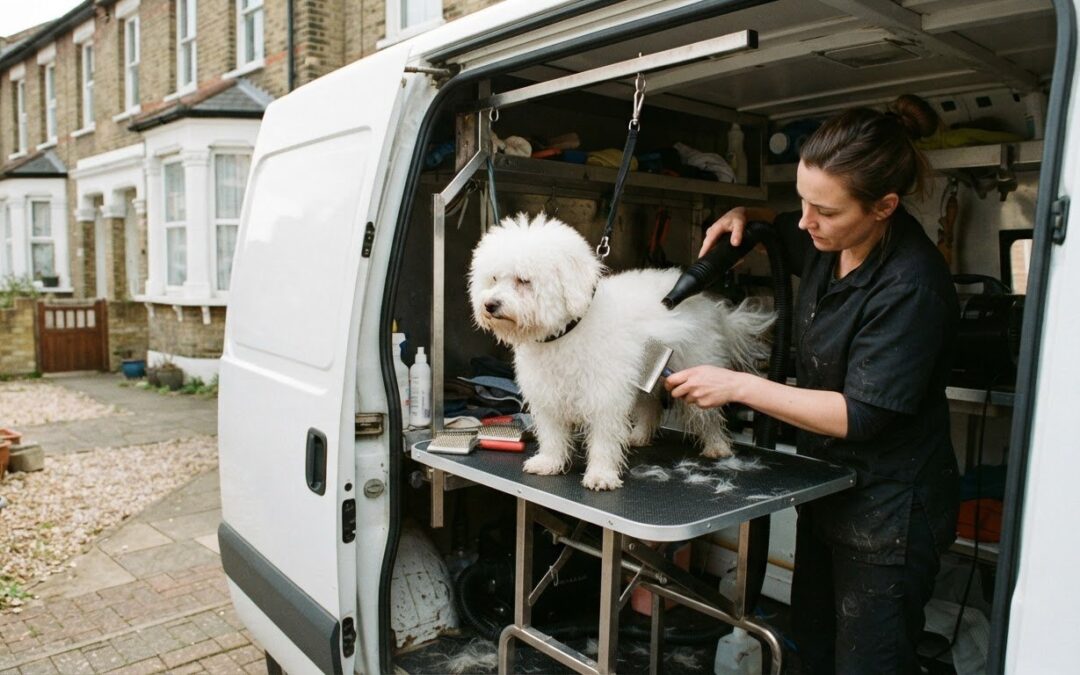
A Bichon Frise generally needs a professional groom every 4 to 6 weeks, with brushing 3 to 4 times a week between appointments. Mobile grooming for a Bichon Frise brings that regular coat care to your home, while keeping the experience centred on your dog’s comfort. Leaving the coat too long between grooms can allow tangles to tighten into mats.
It’s understandable to wonder whether home brushing is enough, especially when your Bichon Frise’s fluffy coat tangles in places you can’t easily see. This guide to mobile grooming for Bichon Frise explains where mats commonly form, how often to arrange a haircut and why groomers fluff-dry the coat before shaping it. You’ll also learn what regular brushing can manage at home and when a professional groom can help keep the coat comfortable and cared for.
Key Takeaways
- Build a grooming routine around your Bichon’s coat length and tendency to tangle, with particular attention to hidden mat-prone areas.
- Learn how regular brushing and combing help reveal tangles, and how fluff drying prepares the coat for shaping.
- Understand what home care can maintain between appointments and when a professional haircut is the more practical choice.
- See how mobile grooming can bring tailored coat care to your dog at home, including a Full Groom, Bath & Brush, or puppy’s first grooming experience.
Bichon coat characteristics and mat-prone areas
A Bichon Frise’s double coat needs regular attention because loose hairs can become trapped among its curls. Coat length, tangles and comfort all help determine the care and haircut that suit your dog.
Wool Coat Texture and Matting
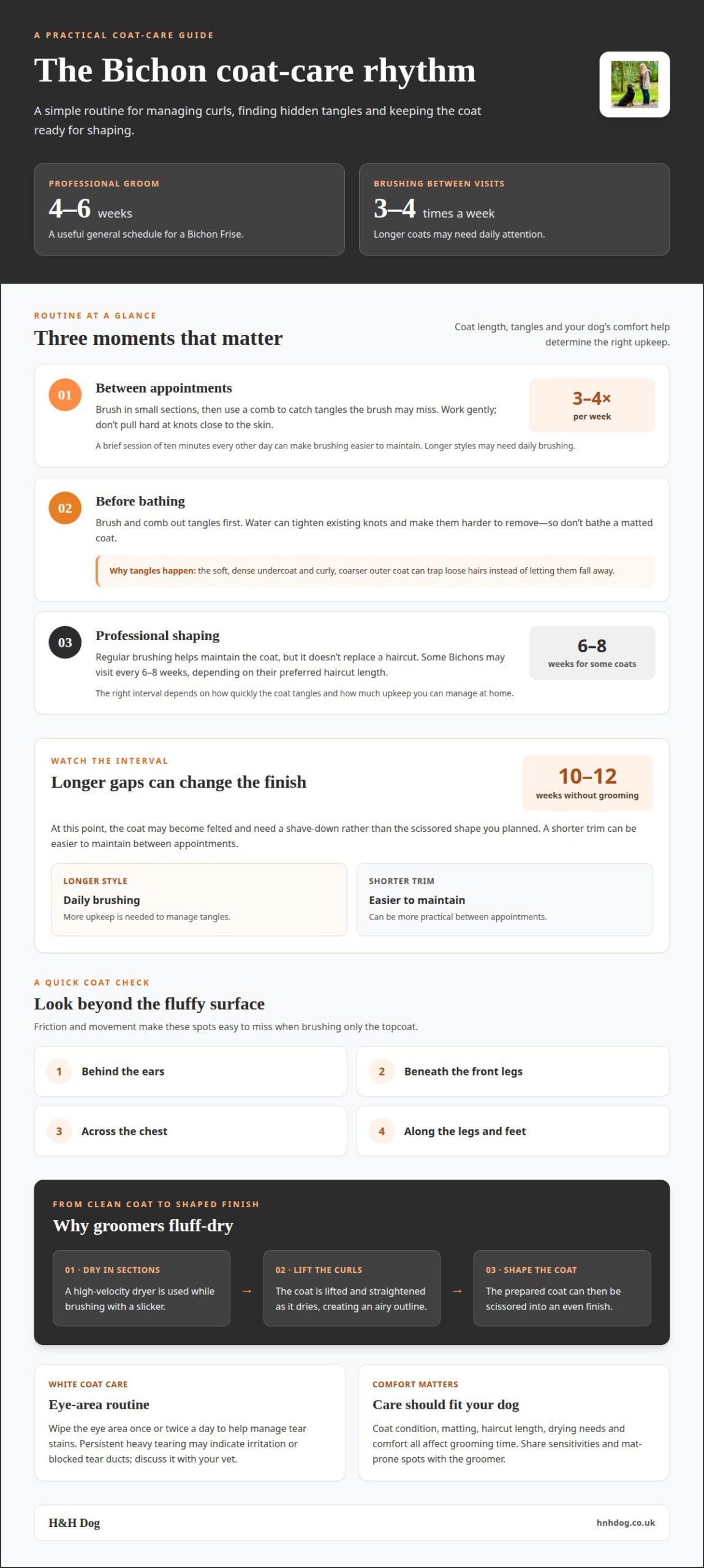
The Bichon coat combines a soft, dense undercoat with a curly, coarser outer coat. Loose hairs can get caught rather than falling away, allowing small tangles to develop into mats. Brush and comb the coat before bathing: water can tighten existing tangles and make them harder to remove.
Pay attention to coat length as well as texture. A longer style needs daily brushing, while a shorter trim can be easier to maintain between appointments. If grooming is left for 10 to 12 weeks, the coat may become felted and require a shave-down rather than a scissored shape.
Areas Prone to Mats
Check behind the ears, beneath the front legs, across the chest, and along the legs and feet. Friction and movement make these areas easy to miss when brushing only the surface. After brushing, use a comb to find hidden tangles. Work gently instead of pulling at knots close to the skin.
For a white Bichon, keep coat care practical: brush out tangles before bathing, then dry the coat thoroughly. Wipe the eye area once or twice a day to help manage tear stains. Persistent heavy tearing may indicate irritation or blocked tear ducts, so discuss it with your vet.
Choose a groomer who can explain how they assess the coat, find mats and adapt the finish to your preferred length. Ask about their approach to brushing, drying and scissoring, and mention any areas your Bichon finds uncomfortable. A puppy’s first groom may call for a gradual, gentle introduction to handling.
There’s no set session length for every Bichon. Coat condition, matting, haircut length, drying needs and your dog’s comfort all affect how long grooming takes. A groomer can allow for those needs rather than rush through a coat that requires careful attention.
Fluff drying with a slicker brush and high-velocity dryer
Fluff drying prepares a Bichon Frise’s coat for an even, shaped finish. The groomer uses a high-velocity dryer while brushing with a slicker, working in sections to lift and straighten the curls as they dry. This creates the airy outline needed for scissoring, instead of leaving the coat flat against the body.
For home care, aim to brush 3 to 4 times a week. A longer coat may need daily attention, while a brief session of ten minutes every other day can make brushing easier to maintain. Work in small sections, then follow with a comb; it can catch tangles that a brush has passed over. If a knot resists, avoid pulling hard at the skin.
Professional grooming is commonly scheduled every 4 to 6 weeks. Some Bichons may visit every 6 to 8 weeks, depending on their preferred haircut length. The interval that suits your dog depends on how quickly the coat tangles and how much upkeep you can manage between appointments. Regular brushing supports the shape, but it doesn’t replace a haircut.
Before a mobile grooming appointment, decide your preferred coat length and share any handling sensitivities or areas that tend to tangle. Keep your dog’s usual brush nearby if you’d like to explain your home routine. A clear handover helps the groomer understand your priorities and your Bichon’s experience of coat care.
Fluff drying takes patience: the groomer works through the coat in sections, checking that the hair is lifted and dry before shaping it. If brushing feels difficult or your dog’s coat repeatedly tangles, a mobile grooming appointment can help maintain a manageable style. Keep up gentle brushing between visits, especially if you choose a longer finish.
At-home grooming versus professional haircuts
Home care and professional grooming serve different purposes for a Bichon Frise. Brushing helps maintain the coat between appointments, while a professional haircut shapes the finish and addresses areas that are difficult to manage at home. A professional groom every 4 to 6 weeks is a useful general schedule; salon visits may be spaced 6 to 8 weeks apart, depending on the desired haircut length.
Regular brushing between appointments helps keep the coat manageable, but it won’t create the classic rounded Bichon shape. That look is usually scissored after fluff-drying. A groomer can assess the coat, identify tangles and shape it evenly. If mats have tightened, a shorter cut may be needed instead of the finish you planned.
Trimming at home can seem like a quick way to neaten the face, feet or body. But uneven cutting can affect the overall outline, and using scissors near a moving dog calls for care. If your Bichon is unsettled or the coat is tangled, stick to brushing and gentle maintenance. Don’t bathe a matted coat, as water can tighten the mats.
A mobile groomer comes to your home, avoiding a trip to a salon and allowing your dog to stay in familiar surroundings. A salon may suit your routine better if travelling with your Bichon is straightforward. Consider your dog’s comfort in each setting, as well as the coat condition and haircut you want. Either way, brushing between grooms remains important.
When choosing a groom, describe your preferred coat length and how your dog responds to brushing, drying and handling. A clear conversation helps set a practical finish, whether you want a rounded, scissored shape or a shorter, easier-to-maintain trim. For a Bichon puppy, gentle early experiences can help make professional grooming familiar over time.
Mobile grooming service area
For mobile grooming in London, the service area and access to your address matter. Your postcode, parking arrangements and safe access for the grooming vehicle can all affect whether a visit is practical. H&H Dog provides mobile grooming across North, North West and South West London, Harrow and neighbouring areas. Share your full address and any access details when arranging an appointment, especially if your street is narrow or restricted.
Location also shapes the experience for your Bichon. Grooming at home avoids a journey to a salon, which may suit a dog that finds travel unsettling. The grooming still takes place in a separate vehicle, so consider how your dog responds to new surroundings, sounds and handling. A familiar person nearby can help with a calm handover.
For a UK mobile groomer, look for relevant dog-grooming training, practical experience with curly coats, and public liability insurance. Ask about their approach to Bichon coat assessment, scissored finishes and dogs that feel unsure during drying. These details help you judge whether their handling and experience match your dog’s needs.
Consider safety as well as convenience. A high-velocity dryer can be noisy, and heat or prolonged handling may unsettle a sensitive dog. The groomer should monitor your Bichon’s comfort, use equipment carefully and adapt the pace if your dog shows signs of stress. Mention health concerns, skin sensitivity or difficulty standing before grooming begins.
A useful first step is to give the postcode, describe your Bichon’s coat condition, and explain the haircut you prefer. This helps establish whether the location and grooming needs fit the visit. For coat care brought to your home, arrange a mobile grooming visit and share the details that will help the groomer plan a considerate appointment.
H&H Dog: Mobile dog grooming
H&H Dog provides mobile grooming for Bichon Frises in its London service areas. Choose a Full Groom for a haircut and overall grooming, or a Bath & Brush to maintain a clean, brushed coat between haircuts. Puppy’s First Groom gives young dogs a gentle introduction, with care tailored to each dog’s needs and temperament.
Mobile grooming may be a practical next step if brushing alone isn’t keeping your Bichon’s coat comfortable or you’d like professional help with a scissored finish. Share your preferred coat length and any sensitivities, such as discomfort around the ears or feet, so the groom can be tailored to your dog.
Contact H&H Dog to discuss grooming for your Bichon Frise.
Make coat care a routine that suits your Bichon
The best grooming plan is one you can maintain while keeping your Bichon comfortable and respecting their daily routine. Notice how your dog responds to brushing, drying and handling, then share those observations when planning the next appointment. Your preferred coat length, sensitive areas and any recent changes can help shape a more individual grooming experience.
Mobile grooming for a Bichon Frise can also make appointments easier to fit around home life. Think about what would help your dog feel settled during the visit and how you’d like their coat to look and feel afterwards. A clear conversation is a useful starting point, whether you’re planning regular care or arranging a first professional groom.
Talk with H&H Dog about your Bichon’s grooming needs, and take the next step towards a coat-care routine that works for both of you.
H&H Dog offers personalised care for your Bichon Frise
If you’re considering mobile grooming for your Bichon Frise, H&H Dog offers mobile dog grooming alongside Full Groom, Bath & Brush and Puppy’s First Groom services.
With over 20 years of experience, the team tailors care to each dog’s needs and temperament. Turn to H&H Dog when you’re ready to discuss which grooming option may suit your dog.
Frequently Asked Questions
How often should a Bichon be groomed?
Plan regular coat maintenance between professional appointments. A Bichon generally needs brushing several times weekly, with more frequent care for a longer style. The interval between haircuts depends on coat length and how quickly it tangles. Remember routine care beyond the coat, such as nail trims and cleaning around the eyes, so small needs aren’t overlooked between grooming sessions.
Are Bichons clipped or scissored?
The classic Bichon Frise outline is shaped with scissors after the coat has been fluff-dried. Clippers may be used for a shorter, more practical finish, depending on the style and coat condition. If the coat is heavily matted, a rounded scissored shape may not be suitable. The priority is a comfortable, manageable finish.
What is included in a mobile Bichon Frise grooming appointment?
A mobile grooming appointment with H&H Dog includes bathing, brushing, nail trimming and ear cleaning. Choose a Full Groom for a haircut, or a Bath & Brush when your dog needs washing and coat maintenance without a haircut-focused finish. Puppy’s First Groom offers young dogs an introduction to professional grooming.
How often should a Bichon Frise be professionally groomed?
A professional groom every 4 to 6 weeks is a useful general guide for a Bichon Frise. The right timing depends on the coat length you prefer and how easily it tangles between visits. A longer style calls for more upkeep at home; a shorter cut can be easier to maintain. Keep appointments regular enough to preserve the finish you want.