
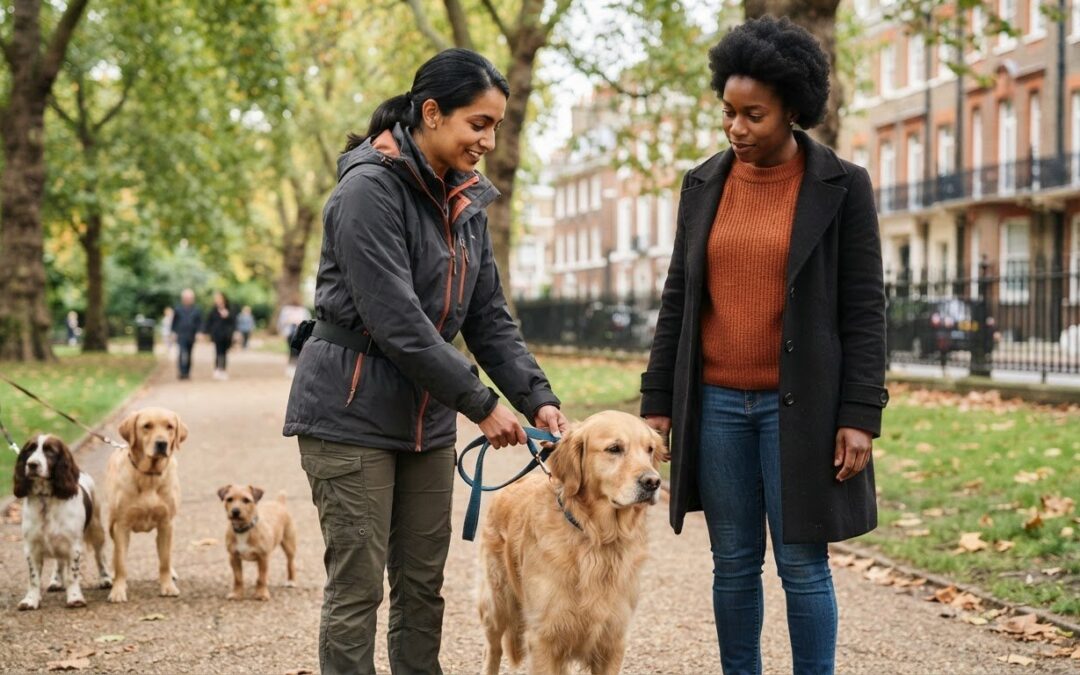
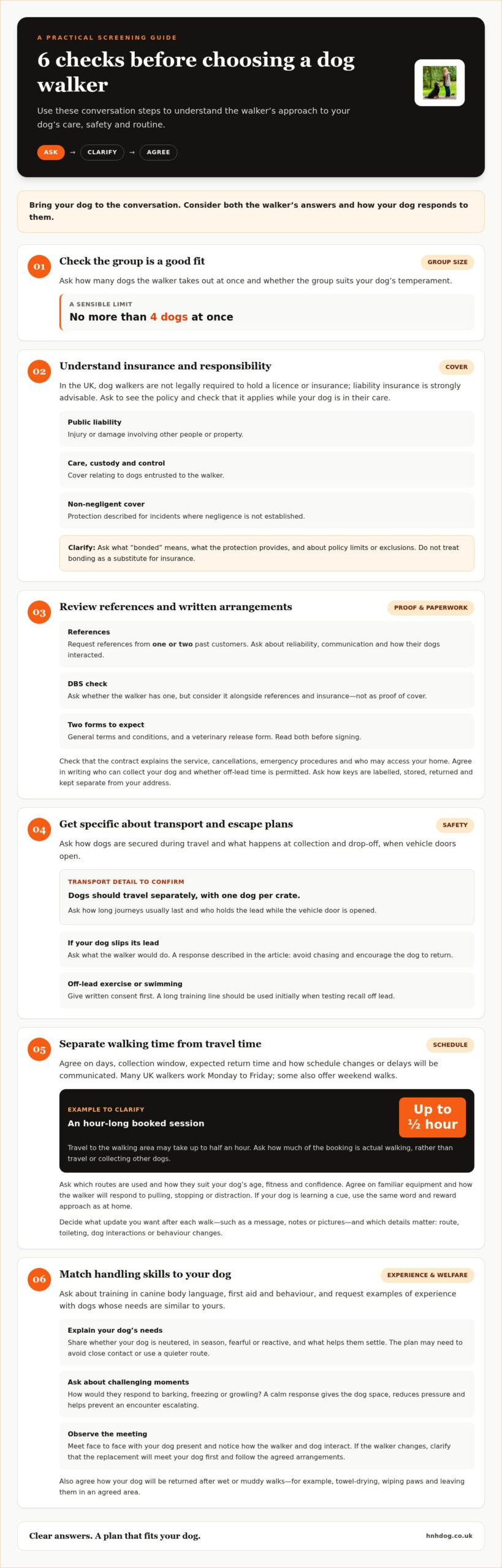
For a group walk, ask how many dogs the walker takes out at once; a sensible limit is no more than four. The right dog walker screening questions should also establish whether the group suits your dog’s temperament and how the walker manages safety, transport and unexpected situations.
It’s reasonable to want more than a reassuring answer: your dog needs to feel comfortable, and you need to know what happens while they’re in someone else’s care. Clear, specific answers help you understand the walker’s approach and decide whether it suits your dog’s needs.
This checklist covers group size, insurance and references, walk schedules, transport, credentials and handling skills. Use it to guide a face-to-face conversation with your dog present, so you can consider not only what the walker says but how your dog responds.
Key Takeaways
- Ask what the walker’s insurance covers and whether they can provide references, so you can understand how they approach responsibility and care.
- Find out how dogs are secured in the vehicle and what the walker would do if a dog slipped its lead.
- Clarify how much booked time is spent walking rather than travelling or collecting other dogs.
- Ask how the walker reads canine body language and responds to challenging behaviour; practical, welfare-focused answers matter.
Bonding, insurance and references
Use dog walker screening questions to understand who is responsible if something goes wrong. In the UK, dog walkers aren’t legally required to hold a licence or insurance, but liability insurance is strongly advisable. Ask what they mean by “bonded” and what protection it provides, rather than treating it as a substitute for insurance.
Ask to see the policy details and check that the cover applies while your dog is in the walker’s care. Look for clear information about:
- Public liability: cover for injury or damage involving other people or property.
- Care, custody and control: cover relating to dogs entrusted to the walker.
- Non-negligent cover: protection described for incidents where negligence isn’t established.
Ask the walker to explain any limits or exclusions in plain language. For example, ask whether the policy covers your dog during a group walk and what happens if your dog slips its lead before responding to recall. A reliable answer should match the written policy, not rely on a general claim that the walker is insured.
Request references from one or two past customers, then ask about reliability, communication and how the walker helped their dogs interact. A DBS check is a separate consideration: ask whether the walker has one, but weigh it alongside references and insurance, not as proof of cover.
A professional dog walker should provide two forms: general terms and conditions, and a veterinary release form. The contract should explain the service, cancellation arrangements, emergency procedures and who may access your home. Ask how keys are labelled, stored, returned and kept separate from your address. Agree in writing who can collect your dog and whether off-lead time is permitted.
Read each document before signing. If the walker changes, clarify whether the replacement follows the same arrangements and will meet your dog first. These details help you judge both practical safeguards and whether the care feels consistent with your dog’s needs.
Safe transport and returning dogs home clean
Ask how the walker secures each dog in the vehicle and how long the journey usually lasts. Dogs should travel separately, with one dog per crate, to reduce movement and tension between animals. Ask what happens during collection and drop-off, when doors open and a dog could slip away. A clear routine should explain who holds the lead and when the vehicle door is opened.
Discuss escape prevention before the first walk. A walker might double-clip a lead or attach it to an extra carabiner as a backup. Ask what they would do if your dog got loose. They should avoid chasing and encourage the dog to return. Agree how they’ll respond if your dog is frightened by traffic, unfamiliar dogs or sudden noise.
For off-lead exercise or swimming, give written consent first. A walker should initially use a long training line when testing recall off lead. Ask how they’ll judge whether your dog can respond reliably in that environment, rather than assuming recall at home will transfer to a busy park. This keeps your dog’s confidence and safety central.
Tell the walker if your dog is neutered, in season, fearful or reactive, then ask how the plan would change. For example, they may need to avoid close contact with other dogs or choose a quieter route. Ask how they handle barking, freezing or growling. A calm response should give your dog space, reduce pressure and prevent a difficult meeting from escalating.
Experience matters most when it matches your dog’s needs. Ask for examples of similar dogs they’ve handled and what they learned from those walks. Explain what helps your dog settle, such as keeping a distance from unfamiliar dogs or making introductions slowly. Before agreeing, observe how the walker and your dog interact during a meeting.
Agree how your dog will be returned home after wet or muddy walks. Ask whether they can towel-dry your dog, wipe muddy paws and leave them in an agreed area. If you’re seeking a consistent walking routine, explore dog-walking support suited to your dog’s needs.
Walk schedules, duration and travel time
Ask what days and times the walker can attend, and how they handle delays or changes. Many UK dog walkers work Monday to Friday, when owners are often away from home. Some also offer weekend walks. Agree on the usual collection window, expected return time and how you’ll be told if the schedule changes.
Clarify what the booked duration includes. An hour-long walking session may involve more time away from home if the walker collects other dogs. Travel to the walking area may take up to half an hour, so ask how much of the booking is actual walking. For example, distinguish travel time from time your dog spends moving, sniffing and exploring.
Ask which routes the walker uses and how they choose them for your dog’s age, fitness and confidence. A busy park may suit a dog who enjoys activity, while a quieter route can help a worried dog feel safer. Discuss the equipment they use, including whether they’ll follow your instructions for a harness, lead or other familiar walking gear.
Use the meeting to explain your dog’s lead skills and exercise preferences. Ask how the walker responds to pulling, stopping or becoming distracted, and whether they’ll keep your dog on lead. If your dog is learning a new cue, agree on the same word and reward approach you use at home. Consistency helps the walker support training without confusing your dog.
Finally, ask what update you’ll receive after each walk. It could be an app message, written notes or texted pictures. Agree which details help you most, such as the route, toileting, interactions with other dogs and any change in behaviour. A short record can show whether the schedule and exercise suit your dog over time, and make it easier to adjust the routine as their needs change.
Training in dog body language, first aid and behaviour
Ask what training the walker has completed in canine body language, first aid and behaviour. In the UK, useful preparation includes a basic dog behaviour course and canine first-aid training. Ask for examples of how they apply that knowledge on walks, such as noticing when a dog needs more space. Simply owning dogs or spending time around them isn’t, by itself, professional training.
For group walks, ask about practical experience managing dogs at play. A walker should have at least six months to a year’s worth of experience managing play sessions before managing a group alone. Ask how they introduce dogs, supervise interactions and respond if play becomes uncomfortable. Their answers should show they can adapt the walk to each dog, rather than expecting every dog to behave alike.
Ask how they respond to changes in body language, such as a dog turning away, becoming still or trying to move behind them. A considerate handler gives the dog room and adjusts the situation instead of forcing interaction. Check that they use positive reinforcement and force-free methods, and ask for a practical example of helping a dog who pulls or becomes distracted.
For emergencies, ask whether the walker carries a first-aid kit and has canine first-aid training. Agree how they’ll contact you if an injury happens, which veterinary practice they’ll use, and how they’ll follow your veterinary release instructions. If a dog goes missing, the walker should follow the agreed emergency plan and tell you promptly; they should encourage the dog to return rather than chase.
Ask who will handle your dog on each walk and what training that person has completed. If a team member changes, your dog needs a calm introduction and consistent cues. These dog walker screening questions help you assess practical skills, not just confidence. If training would help with lead skills or behaviour, consider personalised dog training for support tailored to your dog.
H&H Dog: Full Groom
H&H Dog offers Group Dog Walking for owners seeking regular walking support tailored to their dog’s individual needs. The screening steps above can help you decide whether group walks suit your dog’s comfort and temperament. For a separate coat-care need, choose a Full Groom or Bath & Brush; puppies having their first grooming experience can have Puppy’s First Groom.
These services support different parts of your dog’s routine. Walking provides exercise and daily care, while grooming helps maintain their coat. Choose the support that matches your current need, whether you’re discussing group walks or arranging a grooming service.
To discuss your dog’s care, contact H&H Dog.
Choose the next step that fits your dog
Your dog’s comfort is the clearest guide to whether a walking arrangement is working. Once walks begin, notice how they settle at home, respond to their lead and behave around other dogs. Share your observations with the walker, then adjust the routine together if your dog’s needs change. The best dog walker screening questions start the conversation, but ongoing communication keeps care responsive to your individual dog.
H&H Dog also offers Full Groom, Bath & Brush and Puppy’s First Groom for coat care at different life stages. These services are separate from walking support, so choose the one that matches your dog’s current needs.
If you’d like to explore suitable support, get in touch with H&H Dog. A thoughtful next step can help you build a routine that feels right for both you and your dog.
Frequently Asked Questions
How many dogs do you take out at one time?
For a group walk, a sensible maximum is four dogs per walker, but the right group also depends on compatibility and each dog’s needs. Ask how the walker matches dogs and what happens if one becomes uncomfortable. In London, busy pavements and shared green spaces can make close supervision especially important. A smaller group may suit a dog who finds unfamiliar dogs overwhelming.
What questions should I ask when interviewing a dog walker in the UK?
Ask who will walk your dog, how they’ll introduce themselves and what information they need about your dog’s routine. Share practical details, such as preferred cues, food sensitivities and situations your dog finds unsettling. Ask how they’ll keep your instructions consistent if a substitute walker takes over. The best dog walker screening questions help you compare the walker’s plan with your dog’s individual comfort and habits.
Does a UK dog walker need insurance, and what cover should I check?
UK dog walkers aren’t legally required to hold insurance, but liability cover is strongly advisable. Ask to see the policy schedule and confirm the current period of cover. Check whether it includes public liability, care, custody and control, and non-negligent cover. Ask whether the policy applies to your dog and the type of walk being arranged, rather than relying on verbal assurance alone.
Should a dog walker have a DBS check or references?
A DBS check and client references offer different forms of reassurance; one doesn’t replace the other. Ask whether the walker has a DBS check and request references from one or two past customers. With permission, ask a referee about communication and whether the walker followed agreed care instructions. These details can help you assess trust and consistency, particularly when the walker will enter your home.
What should I ask about walks, off-lead rules, and handling my dog?
Explain how your dog behaves when worried or excited, then ask how the walker would adapt the plan. For example, if your dog barks at scooters, ask how they’ll create space on a narrow London pavement. Set your off-lead permission clearly in writing, including where it applies. Ask which cues the walker will use, so familiar words and rewards stay consistent with your dog’s routine.
How can I check a dog walker’s references, reviews, and local reputation?
Read testimonials and online reviews for specific examples, not just general praise. Look for comments about reliability, clear communication and how the walker responds to a dog’s needs. Ask one or two past customers about their experience, then compare their answers with the written terms and your meeting with the walker. Local feedback can add useful context, but focus on details relevant to your dog.