
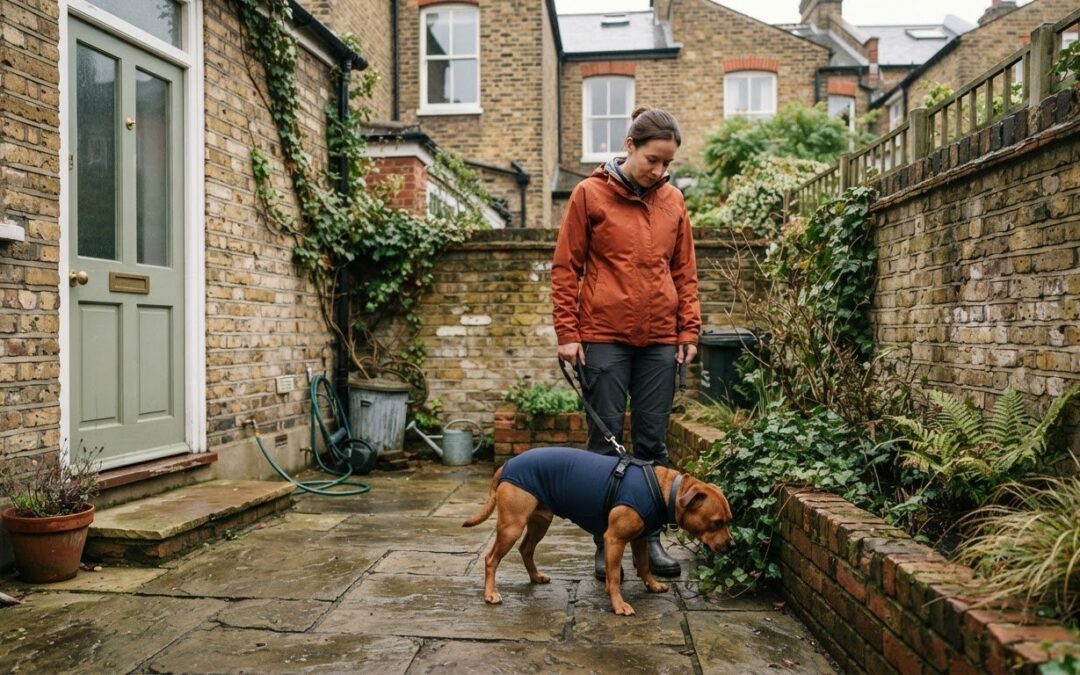
The first outing after surgery is usually a toilet break, not a proper walk. Many dogs need only a short, lead-only trip to relieve themselves, but longer walks and exercise should wait until the vet says they are appropriate. A dog walker for dogs recovering from surgery should follow the written recovery plan, not judge readiness by a dog’s apparent energy.
It’s natural to want to help your dog return to familiar routines, especially when they seem eager to get moving. Restricting activity protects the healing wound and gives you a clear way to support recovery without guessing.
This guide explains how walking needs can differ after soft-tissue and orthopaedic surgery, how to keep early outings controlled, and why your vet’s instructions take priority over general timelines. You’ll also find practical ways to limit activity at home and manage interactions with other dogs while your companion heals.
Key Takeaways
- Keep early outings brief and on lead, treating them as toilet breaks rather than exercise.
- Prevent running, jumping and stair use while your dog is healing, and create a calm, safe space at home.
- Use your vet’s recovery plan as the guide, since suitable activity depends on the procedure and your dog’s healing.
- Manage time with other dogs to reduce the chance of jostling, overexertion or contact with the healing wound.
1. How long should I wait to walk my dog after surgery?
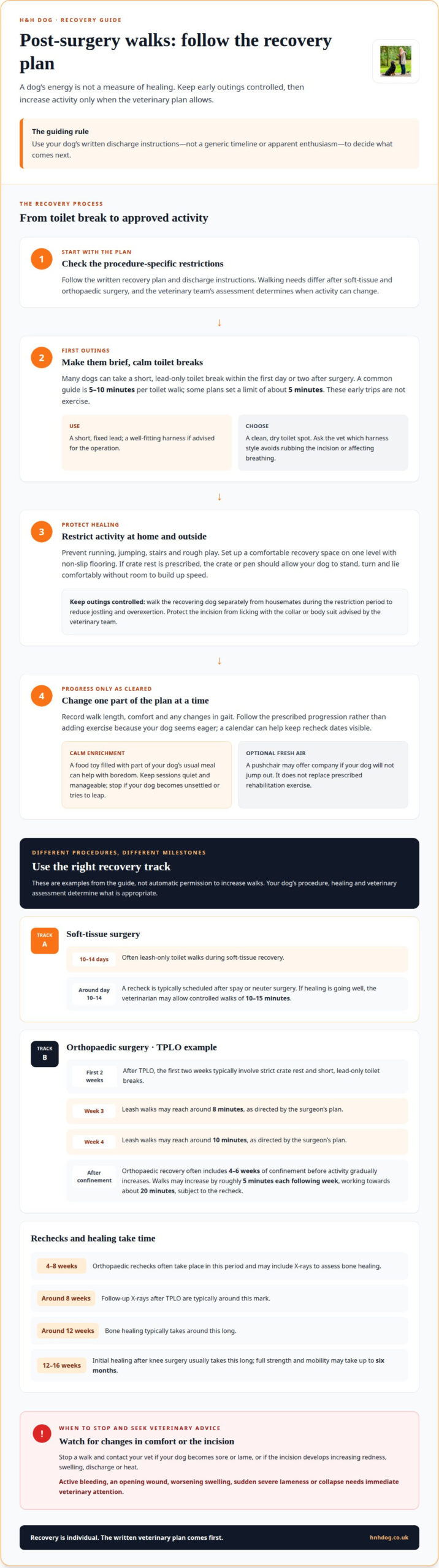
Most dogs can take a short, lead-only toilet break within the first day or two after surgery. After routine spay or neuter surgery, expect bathroom walks only during the initial recovery period, not normal exercise. A common guide is 5-10 minutes per toilet walk, but some plans set a limit of about 5 minutes. Soft-tissue recovery often means leash-only toilet walks for 10 to 14 days, with activity increased gradually after veterinary approval.
There’s no single timetable for every operation. A dog recovering from ligament or other orthopaedic surgery may need stricter restrictions than a dog after routine soft-tissue surgery. Follow the discharge instructions, and don’t extend a walk because your dog seems energetic. If your dog becomes sore, lame or uncomfortable afterwards, contact the veterinary team and reduce walk duration or frequency as advised.
Keep each outing controlled. Use a short, fixed lead rather than a retractable one, and consider a well-fitting harness instead of attaching the lead to a neck collar. Ask the vet which harness style suits the operation, since straps mustn’t rub the incision or affect breathing. Choose a clean, dry toilet spot; wet grass, puddles and dirty surfaces can make it harder to keep the wound clean.
In a multi-dog home, walk the recovering dog separately during the restriction period. This reduces jostling and prevents a healthy housemate’s pace from encouraging extra activity. If a usual outing would be too much, a pushchair can offer fresh air and company, provided your dog won’t jump out. It doesn’t replace prescribed rehabilitation exercise.
For recovery walks, look for a dog walker with public liability insurance and canine first-aid training. These are useful safeguards, but the walker must follow your dog’s written restrictions and keep outings within the permitted limits.
Charges for short or specialist recovery walks in the UK vary with location, duration and the care involved. Ask for a quote that reflects your dog’s needs.
2. Restricting activity in the early recovery period
Set up a comfortable recovery space on one level, with non-slip flooring and no access to stairs. If crate rest is prescribed, the crate or pen should let your dog stand, turn and lie comfortably, without room to build up speed. Keep the incision protected from licking with the collar or body suit advised by the veterinary team.
After TPLO surgery for a cruciate ligament injury, the first two weeks typically involve strict crate rest and short, lead-only toilet breaks. Activity then increases in stages: leash walks may reach around 8 minutes by week three and 10 minutes by week four. Orthopaedic recovery often includes 4 to 6 weeks of confinement before activity gradually increases. Follow the surgeon’s plan, including any recheck or imaging before progression.
Running, jumping, stairs and rough play can strain healing tissue and may lead to soreness or swelling. Keep car journeys to necessary appointments during early recovery, and prevent sudden bursts of activity at doors or in the garden. Change only one part of the walking plan at a time, such as duration, so you can notice how your dog responds.
To reduce boredom, offer calm enrichment such as a food toy filled with part of your dog’s usual meal. Keep sessions quiet and manageable; stop if your dog becomes unsettled or tries to leap. Gradual rehabilitation is different from simply adding more exercise, so follow the prescribed progression rather than judging readiness by enthusiasm.
Stop a walk and contact your vet if your dog becomes sore or lame, or the incision develops increasing redness, swelling, discharge or heat. Active bleeding, an opening wound, worsening swelling, sudden severe lameness or collapse needs immediate veterinary attention.
Once your dog is cleared to return to social walks, a gradual reintroduction to group dog walking can help restore routine. Until then, individual rest protects healing and keeps activity controlled.
3. Following veterinary guidance over generic timelines
Your dog’s discharge instructions should guide each change in activity because recovery depends on the procedure and healing. Keep a written record of walk length, comfort and any changes in gait, then compare it with the veterinary plan. A calendar can help you follow recheck dates without treating a general timeline as automatic permission to increase exercise.
After soft-tissue surgery, such as spaying or neutering, a recheck is typically scheduled around 10 to 14 days after surgery to assess incision healing. If healing is going well, a veterinarian may allow controlled walks of 10 to 15 minutes around day 10 to 14. That is not a universal target: the wound, procedure and veterinary assessment determine whether the step is appropriate. Increasing redness, swelling, discharge or heat around the incision warrants a call to the veterinary team.
Knee operations need a different approach. After orthopaedic surgery, rechecks often take place 4 to 8 weeks after surgery and may include X-rays to assess bone healing. For TPLO surgery, follow-up X-rays are typically around the eight-week mark; bone healing typically takes around twelve weeks. Walks may increase by roughly 5 minutes each following week after initial confinement, working towards about 20 minutes subject to the recheck.
Recovery after knee surgery can continue well beyond the first walking milestones. Initial healing usually takes 12 to 16 weeks, while full strength and mobility may take up to six months. Most dogs return to normal activity 3 to 4 months after knee surgery, although full recovery may take longer. If your dog seems keen to resume jumping before veterinary clearance, keep activity within the written plan. Enthusiasm alone doesn’t show that the injury has healed or that more exercise is appropriate.
4. Managing other dogs around a healing wound
Keep a recovering dog separate from housemates during the restriction period. Even a friendly greeting can involve pawing, chasing or bumping the incision, so use a closed door, stair gate or separate room. Give each dog individual toilet breaks and attention; don’t let play resume until the veterinary plan allows it. Separation also prevents a healthy dog’s pace from drawing its companion into extra activity.
Control access to stairs, sofas and beds, where a sudden jump can strain healing tissue. Set up a one-level recovery area with non-slip flooring, and use a supervised ramp with a shallow incline and high-grip surface if your dog must enter a car. A large dog may need two people or a ramp for safe transfers. Don’t lift by the abdomen or pull on a collar; ask the veterinary team for suitable handling advice after the procedure.
Check the incision a few times each day, especially after toilet breaks. Increasing redness, swelling, heat, discharge or bleeding needs veterinary attention. Keep the protective collar or body suit on as directed, since licking can disturb the wound. Don’t alter prescribed pain medication or give human medicines. If your dog seems more sore after movement, becomes lame, pants at rest or suddenly refuses to move, contact the vet rather than testing another walk.
To find a UK dog walker experienced with post-operative care, look for someone willing to follow your written veterinary instructions and provide separate, controlled outings. Explain the procedure, restrictions, handling needs and signs that require a call to you or the vet; ask how they’ll prevent stairs, jumping and contact with other dogs.
Group walks aren’t suitable during strict restrictions. Once your vet clears social walks, you can explore group dog walking as a gradual return to shared outings.
H&H Dog: Full Groom
Once your dog has recovered and your vet says grooming is appropriate, H&H Dog’s Full Groom is an option. During healing, avoid bathing because the surgical wound needs to stay dry, and handling or slipping could disrupt recovery.
When your dog is ready, choose a Full Groom or Bath & Brush according to their coat and care needs. Follow the veterinary team’s advice before arranging grooming if you’re unsure whether your dog has recovered enough. The same applies to group walks: wait until activity restrictions have been lifted.
For a calm next step after recovery, contact H&H Dog or visit hnhdog.co.uk.
Build a calm return to routine
The move from home recovery back to everyday outings can feel like a fresh transition for both of you. Keep your dog’s comfort at the centre of that change, and make sure any new activity fits the veterinary plan. A dog walker for dogs recovering from surgery should support the routine you and your vet have agreed, not rush your dog towards normal activity.
As recovery progresses, you can also think ahead to the care your dog may enjoy once they are ready. H&H Dog offers Full Groom, Bath & Brush and Puppy’s First Groom, with grooming arranged when it’s appropriate for your dog’s recovery.
For a friendly next step, contact H&H Dog to explore its services. You’re helping your dog move forward at a pace that respects their wellbeing, and that thoughtful approach is a strong foundation for the days ahead.
Frequently Asked Questions
How long should I wait to walk my dog after surgery?
Keep walks to toilet outings at first; most dogs can manage these within the first day or two. After soft-tissue surgery, lead-only toilet trips commonly continue for 10 to 14 days, while knee procedures may require longer restrictions. If you have arranged a dog walker for dogs recovering from surgery, share the discharge plan so outings stay within the permitted route, pace and duration.
Can I take my dog for a walk 2 days after neutering?
Yes, a short lead-only toilet outing may be suitable two days after neutering if it follows your discharge instructions. Keep it purposeful, on a fixed lead, and avoid play or greetings that could prompt sudden movement. Neutering recovery commonly involves toilet walks only for 10 to 14 days. If your dog’s instructions set a stricter limit, follow that plan instead.
Can dogs recovering from surgery go for walks, and when can they start?
Dogs can usually go outside for controlled toilet breaks before they’re ready for ordinary walks. For soft-tissue operations, veterinary teams commonly restrict activity to lead-only toilet trips for 10 to 14 days. Orthopaedic procedures can require a longer staged return. Treat the first outing as a practical bathroom break, not a chance to test whether your dog feels ready for exercise.
How much exercise is safe for a dog after surgery?
Safe exercise means only the amount allowed in your dog’s recovery plan. After initial confinement for orthopaedic surgery, a common starting point is 5-minute lead walks, 2 to 3 times daily. Increase duration gradually, rather than adding distance and pace together. Note how your dog moves afterwards; increased soreness or lameness means the current activity needs veterinary review.
What should a dog walker know before walking a dog recovering from surgery?
A dog walker for dogs recovering from surgery needs your dog’s written restrictions, toilet-break allowance, lead and harness instructions, and veterinary contact details. Explain how to reach the toilet area without stairs or slippery ground, and whether your dog must be kept apart from other animals. Agree what to do if your dog becomes lame, seems unusually uncomfortable or tries to lick the wound.
Should I ask my vet for written walking instructions after my dog’s surgery?
Yes. Ask for written instructions before your dog comes home, including when toilet outings can begin, their permitted duration and how activity should progress. Request procedure-specific limits on stairs, jumping, lead use or contact with other dogs. A clear plan helps everyone caring for your dog follow the same routine and makes changes easier to discuss at the recheck.