
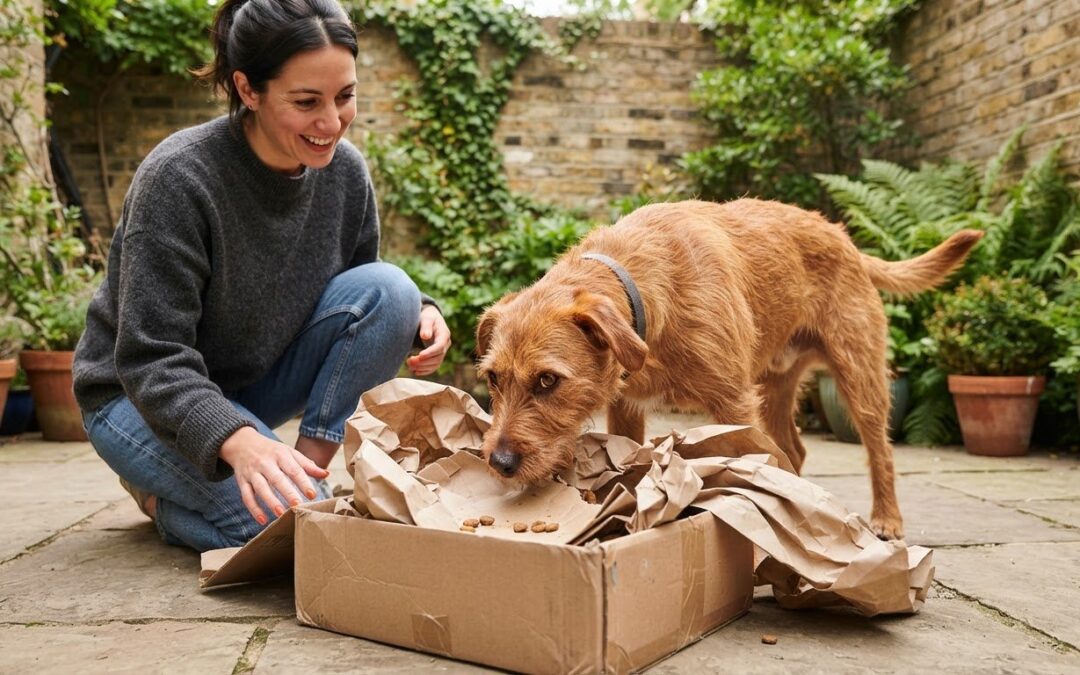
What if the best way to engage your dog’s mind doesn’t involve buying another toy? If you’re looking for enrichment ideas for bored dogs, everyday options such as part of your dog’s usual meal, a cardboard box or a simple scent game can be a good place to start. The key is to notice what your dog enjoys and how they respond.
Restlessness or destructive behaviour can make you wonder whether your dog is bored, but these signs don’t tell the whole story. Dogs have different interests, confidence levels and abilities, so an activity that delights one dog may confuse or frustrate another. Enrichment should invite curiosity, not add pressure.
This guide shares practical ways to engage your dog at home using familiar items, food and play. You’ll find ideas for sniffing, problem-solving, movement and learning, plus ways to adapt activities, supervise safely and build variety into your routine. Enrichment can support your dog’s wellbeing, but it isn’t a substitute for understanding their individual needs when behaviour concerns persist.
Key Takeaways
- Enrichment gives dogs opportunities to sniff, explore, think, move and connect, but it isn’t a guaranteed fix for behaviour concerns.
- Try enrichment ideas for bored dogs across different activity types, using simple household items or some of your dog’s usual food.
- Choose activities by noticing your dog’s interests, confidence and physical comfort, rather than following a one-size-fits-all list.
- Introduce activities gradually, supervise your dog and adjust the setup to suit their size and chewing habits.
- If behaviour or wellbeing changes are sudden, persistent or concerning, seek veterinary advice and consider tailored training support.
What enrichment ideas for bored dogs can, and cannot, do
A restless dog can leave you wondering what they need: more activity, a new toy or a quieter place to settle? Enrichment can add interest to your dog’s day, but it helps to consider what an activity offers rather than assuming every change in behaviour means boredom.
Enrichment means giving a dog opportunities to explore, sniff, think, move or engage socially in ways that suit them. It isn’t simply a matter of buying more toys. A familiar walk with time to sniff, a short training game or the chance to investigate a safe new texture can all add variety.
These experiences give dogs opportunities to use their senses and make choices. They can also offer a constructive outlet for natural behaviours. However, enrichment can’t diagnose why a dog is behaving differently, and it isn’t a guaranteed solution for distress or persistent behaviour concerns. Treat it as one part of your dog’s care, not a test they need to pass or a quick fix.
How to notice when your dog may need more engagement
Your dog may seem less interested in usual activities, seek your attention repeatedly or struggle to settle at certain times of day. These observations can be useful clues, but they don’t prove boredom. Discomfort, stress, changes in routine or other needs may also affect behaviour.
Look at the wider picture. Has your dog’s daily routine changed? Are they still interested in familiar games, sniffing or social contact? Note when the behaviour happens and what is going on around it. This context can help you choose an activity. Sudden or persistent changes in behaviour or wellbeing call for veterinary advice.
Why different dogs enjoy different forms of enrichment
Sniffing and exploring let dogs gather information through their senses, but no single activity appeals to every dog. Age, confidence, health and past experience can all affect what feels comfortable or rewarding. One dog may enjoy searching for food across a room; another may prefer calmly investigating a familiar object beside you.
Let your dog’s response guide you. Relaxed investigation, willing participation or choosing to return to an activity can suggest it’s a good fit. Turning away, becoming frustrated or seeming overwhelmed are reasons to make it easier, offer support or stop. There’s no need to finish a game. The goal is an experience your dog can enjoy comfortably, not a perfect performance.
Keep this individual perspective in mind as you explore enrichment ideas for bored dogs. A simple activity that suits your dog may be more valuable than a complicated game they don’t enjoy. The ideas below are grouped by activity type, so you can choose a manageable starting point for both of you.
Enrichment ideas for bored dogs: a varied activity roundup
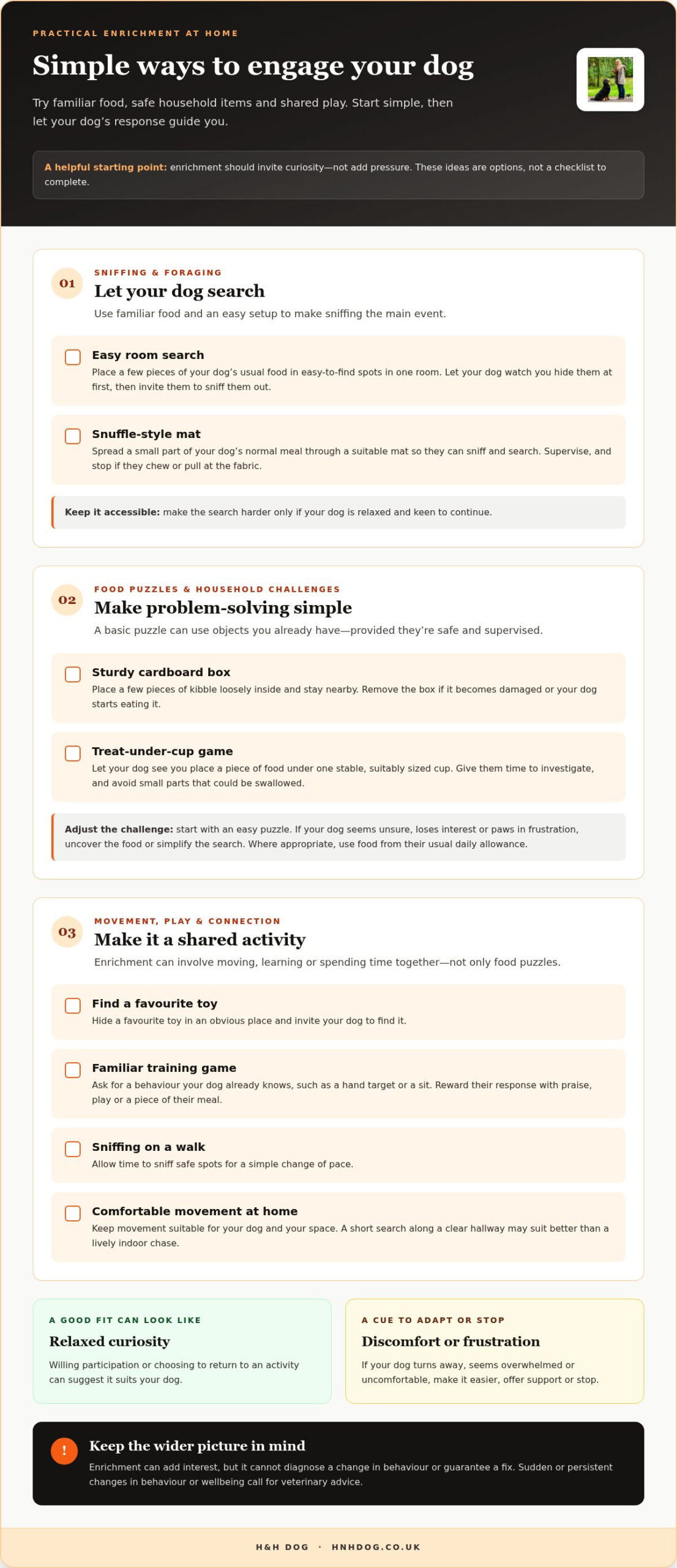
Choose an activity based on the kind of engagement your dog enjoys, then keep the first attempt simple. You don’t need specialist equipment: familiar food, a safe household object and a little time together can be enough. These ideas are starting points, not a checklist to complete.
Sniffing and foraging games
For a gentle scent search, place a few pieces of your dog’s usual food in easy-to-find spots around one room. Let your dog watch you hide them at first, then invite them to sniff them out. Keep the search accessible, especially for a dog new to the game. Make it harder only if they’re relaxed and keen to continue.
A suitable snuffle-style mat offers another way to forage. Spread a small part of your dog’s normal meal through the fabric so they can sniff and search. Supervise, and stop if they start chewing or pulling at the material instead of calmly investigating.
Food puzzles and household challenges
Offer a sturdy cardboard box with a few pieces of kibble placed loosely inside. Stay nearby and remove the box if it becomes damaged or your dog starts eating it. You can also try a treat-under-cup game: let your dog see you place a piece of food under one stable, suitably sized cup, then give them time to investigate. Avoid small parts that could be swallowed.
Make early puzzles easy to solve. If your dog paws at the setup in frustration, loses interest or seems unsure, uncover the food or simplify the search. Where appropriate, use food from their usual daily allowance rather than adding lots of extra treats on top of their regular meals.
Movement, play and shared activities
Enrichment isn’t limited to food puzzles or independent toys. Invite your dog to find a favourite toy hidden in an obvious place, or let them investigate a safe object at their own pace. A familiar training game can add mental engagement too: ask for a behaviour they already know, such as a hand target or a sit, and reward their response with praise, play or a piece of their meal.
Keep movement comfortable for your dog and suitable for your space. In a London home, a short search along a clear hallway may work better than a lively indoor chase. On a walk, allowing time to sniff safe spots offers another simple change of pace. Follow your dog’s lead and pause if they seem overexcited or uncomfortable.
H&H Dog offers personalised dog training using positive-reinforcement methods. If you’d like help tailoring activities to your dog, H&H Dog’s personalised dog training can provide guidance. A well-chosen activity should feel engaging, not demanding.
How to choose enrichment that suits your individual dog
With so many enrichment ideas for bored dogs, it can be tempting to try several at once. A more useful approach is to choose one activity at a time, guided by what your dog naturally enjoys, how confident they seem and what feels physically comfortable. The aim isn’t to find the most complicated activity. It’s to find a good fit for your dog today.
Think about what your dog chooses during everyday play. Do they sniff and investigate, enjoy moving around, search for hidden things or prefer interacting with you? Familiar preferences are useful clues. Health, age and mobility matter too. For example, an activity that involves bending or stepping over objects may not suit a dog who seems stiff or uncomfortable.
Match the activity to your dog’s interests and confidence
Introduce something new in a familiar, calm space, and make the first attempt easy to understand. A dog who likes sniffing might enjoy a simple scent search, while a dog who seeks interaction may prefer a familiar training game with you. Give them room to investigate or walk away. Participation should be voluntary, not something you coax or take over.
Use this comparison as a starting point, not a ranking. A low-effort search can be as worthwhile as a more involved puzzle when it matches your dog’s preferences.
| Activity type | Simple setup | Starting difficulty |
|---|---|---|
| Scent search | Place a few pieces of familiar food in visible spots nearby. | Easy to find, with no obstacles. |
| Problem-solving | Offer a simple, safe puzzle with an obvious way to reach the reward. | One clear step; keep the reward accessible. |
| Shared movement or play | Invite your dog to find a familiar toy in the same room. | Partly visible, with you nearby. |
Adjust the challenge without creating frustration
Watch what your dog does rather than measuring success by whether they finish. If they engage willingly, stay relaxed and return to the activity, you can continue at that level. If they pause, look unsure or stop engaging, make the task easier, show them how to reach the reward or end the game. A pause is information, not failure.
Add only one small challenge once your dog understands the basic activity. For example, move a scent-search reward slightly farther away instead of hiding several pieces in difficult places. If your dog enjoys calm exploration without completing the task, let that be enough. Their response helps you decide whether to continue, simplify or try something different next time.
Over time, these observations create a personal guide to what your dog finds engaging and comfortable. Preferences can vary from day to day, so stay flexible. The best choice is one your dog can approach with interest and ease.
How to make dog enrichment safe and easy to sustain
A safe activity should fit your dog and your home. Before starting, consider your dog’s size, chewing habits and comfort moving around the space. Choose materials that are clean, intact and too large to swallow, and stay present while your dog explores a new DIY activity.
Use this simple routine to set up each session:
- Prepare. Clear the area and inspect all materials. Remove loose pieces, sharp edges and anything your dog could chew off or swallow. Leave enough room to explore without bumping into furniture.
- Introduce. Show your dog the activity in a calm, familiar spot. Keep the setup straightforward so they can approach it at their own pace.
- Supervise. Stay nearby, especially with homemade puzzles or unfamiliar materials. Step in if your dog starts chewing the setup or becoming too excited.
- Observe. Notice whether your dog seems relaxed and interested, loses focus or becomes distressed. Their response matters more than how long they stay with the activity.
- Adjust. Make the activity simpler, change the material or end the session if it isn’t comfortable. Don’t assume every attempt needs to be longer or harder.
Set up an activity and supervise your dog
Supervision helps you spot problems early, before a household item becomes damaged or unsafe. If something cracks, frays or comes apart, remove it rather than trying to continue the game. End the session if your dog appears distressed, overly excited or disengaged. A calm finish is better than asking them to persist when the activity no longer suits them.
In a smaller home, keep enrichment to a clear patch of floor or one room. A brief search beside the sofa or a familiar activity near the kitchen can work without moving furniture or filling the space with equipment. Adapt the setup to your dog’s movement and your household routine.
Build a varied routine without overcomplicating it
Variety doesn’t mean inventing a new game every day. Rotate a few familiar activities your dog enjoys, and occasionally offer a new option when they seem comfortable. You can use part of an ordinary meal for a suitable food activity or add a short shared game during a quiet part of the day.
A simple note can make choosing easier: record what your dog chose, how they responded and whether a change helped. If an activity was too challenging, try an easier version next time. If your dog showed little interest, choose a different type of engagement. This turns enrichment ideas for bored dogs into a flexible routine shaped by your dog, rather than another task to keep up with.
If you’d like help interpreting your dog’s responses and tailoring activities to their needs, explore personalised dog training support.
When enrichment ideas are not enough: a supportive next step
Enrichment can add interest and choice to your dog’s day, but it’s only one part of their care. A game may suit your dog and still not address the reason for a behaviour change. If an activity doesn’t help, that isn’t a sign you’ve failed or that your dog needs a more difficult puzzle. They may need a different kind of support.
Recognise when a wider conversation may help
Look for patterns rather than drawing a conclusion from one session. Note when restlessness happens, what was going on beforehand, whether your dog can settle at other times and how they respond to familiar activities. This context can help you distinguish occasional restlessness from a concern that keeps returning or affects your dog’s everyday wellbeing.
If behaviour changes suddenly, persists or worries you, speak with your vet. Behaviour changes can have different causes, including health-related ones, and enrichment can’t identify or rule them out. Veterinary advice is especially important if you’re concerned your dog may be uncomfortable or unwell. Once health needs have been considered, a suitable activity or training plan can form part of wider support.
There’s no need to wait for a behaviour to become severe before seeking guidance. If you’re unsure what your dog’s responses are telling you, an individual conversation can help you look at the pattern, your dog’s routine and the situations in which the behaviour occurs. That gives you a clearer basis for deciding what to try next.
Explore personalised, humane training support
A trainer can help tailor positive-reinforcement activities to your dog’s interests, confidence and needs. Instead of relying on a standard list, consider what motivates your dog, what feels comfortable and how to build skills at a manageable pace. The aim is to understand the dog in front of you and support their learning without pressure.
H&H Dog provides personalised training and has Over 20 years of experience using positive-reinforcement, humane methods. This guidance can complement enrichment at home, particularly if you’d like help interpreting your dog’s behaviour or finding activities that are a better fit. Enrichment ideas for bored dogs are a useful starting point, not a promise to resolve every concern.
If you’d like tailored guidance for your dog, explore H&H Dog training support.
Make the next step one that fits your dog
Let your dog’s responses shape what you try next. An activity doesn’t need to be elaborate to be worthwhile; it needs to feel comfortable and engaging for the individual dog. If you’re still unsure what your dog’s behaviour is communicating, personalised guidance can help you decide how to support them with care.
H&H Dog’s team members hold IMDT credentials and use positive-reinforcement methods. The team has a 5-star rating from 77+ Google reviews. If you’d like expert support tailored to your dog and home, explore personalised dog training with H&H Dog.
There’s no single recipe for enrichment ideas for bored dogs. Stay curious about what your dog enjoys, make room for their choices and adjust gently as you learn more. Small, thoughtful steps can help you build a more engaging life together.
Frequently Asked Questions
Can enrichment help a dog who is left at home during the day?
Enrichment can add interest to a dog’s day, but it can’t guarantee they’ll feel comfortable being alone. You might offer a familiar activity before you leave, then note how your dog behaves while you’re away. If you see signs of distress or your dog struggles consistently, speak with your vet or a qualified behaviour professional. A puzzle isn’t a substitute for addressing difficulty coping alone.
How often should I rotate enrichment activities for my dog?
There’s no fixed timetable for rotation. Keep a few activities your dog already enjoys in the mix, and introduce something new when it seems suitable rather than changing everything daily. For example, offer a familiar sniffing game one day and a shared training activity another. If your dog stops choosing an activity, pause it and try a different option later.
Can I use my dog’s usual food for enrichment games?
Yes, some of your dog’s usual food can make an activity part of their normal feeding routine. Set aside a portion of their meal for a search or simple puzzle, and account for it when serving the rest. This helps avoid adding extra food by accident. If your dog has a prescribed diet or feeding plan, follow your vet’s advice before changing how meals are offered.
Is it normal for a dog to lose interest in a puzzle toy?
Yes, a dog may lose interest, and that doesn’t mean they’re being difficult. The puzzle might feel too challenging, be unfamiliar or simply not appeal to them that day. Make it easier or offer a different activity, and don’t insist they finish. If their loss of interest extends to food or other usual activities, or comes with other changes, speak with your vet.
Should I leave my dog alone with a homemade enrichment activity?
Don’t leave your dog alone with a homemade activity they haven’t used safely under supervision. Household materials can tear, break or become small enough to swallow, particularly if your dog likes to chew. Watch how they interact with it and remove it if it becomes damaged or they start eating the material. Only leave an item available if you’ve already seen that it’s suitable for your dog.
Can puppies and older dogs enjoy the same enrichment ideas?
They can enjoy similar types of activities, but the setup may need to differ. A puppy may need a simpler activity and closer supervision, while an older dog may prefer a gentler pace or a version that’s easier to reach. Consider your dog’s experience, movement and health rather than age alone. If you’re unsure what’s comfortable, ask your vet for advice tailored to your dog.
Does sniffing count as enrichment for dogs?
Yes, sniffing gives dogs an opportunity to explore their surroundings through scent, so it can be a valuable form of enrichment. On a London walk, allow time for your dog to investigate safe spots at their own pace rather than making every outing a brisk march. Keep them away from anything unsafe, and follow local rules about leads and shared spaces.