
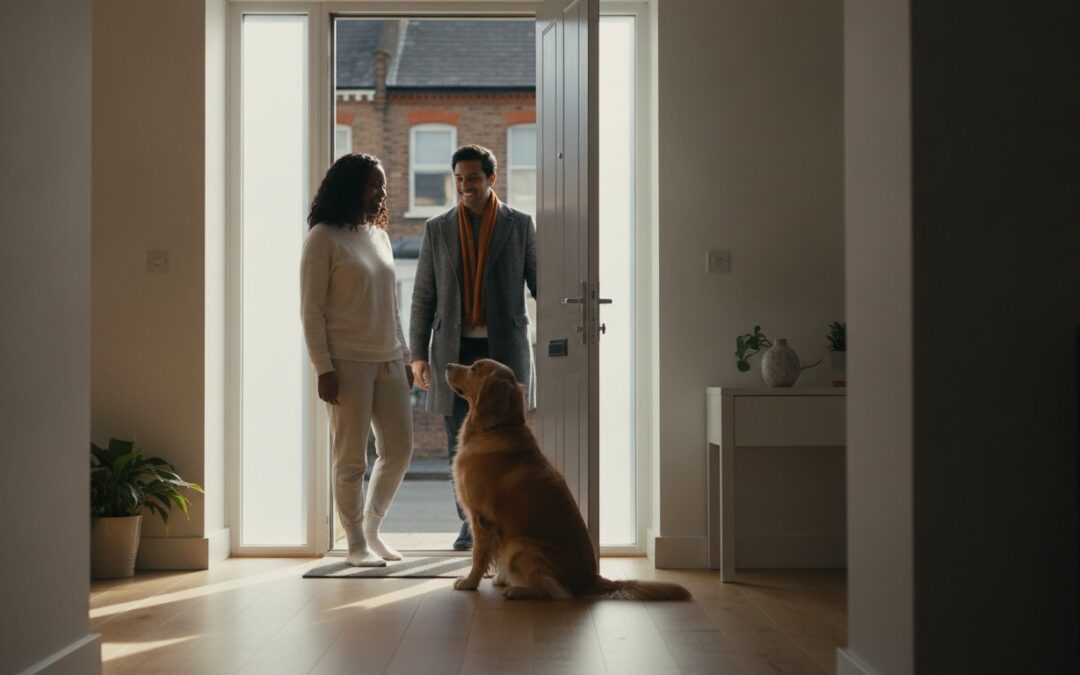
In 2026, an overexcited dog leaping at the front door is no longer just a social nuisance; it can be a significant legal liability. Under current UK law, a dog is classified as dangerously out of control if its behavior causes someone to worry about their safety, meaning those frantic greetings could have consequences beyond a simple apology. You aren’t alone if you find yourself searching for how to stop my dog jumping on guests while feeling a mix of embarrassment and frustration as your hallway becomes a zone of chaos.
We understand the stress of watching a visitor’s clothes get ruined or seeing a friend flinch when your pet approaches. You deserve to feel a sense of calm confidence when inviting people into your home, knowing your pet views a greeting as a moment for connection rather than a physical hurdle. This guide provides a modern, evidence-based approach to transforming those frantic welcomes into polite, settled interactions. We will explore how to satisfy your dog’s emotional needs through non-coercive techniques that foster a stronger bond and a much quieter front door.
Key Takeaways
- Understand the biological motivation behind the “Greeting Grin” to reframe jumping as a natural desire for face-to-face connection.
- Learn how to stop my dog jumping on guests by using environmental management to prevent the habit from being rehearsed in your home.
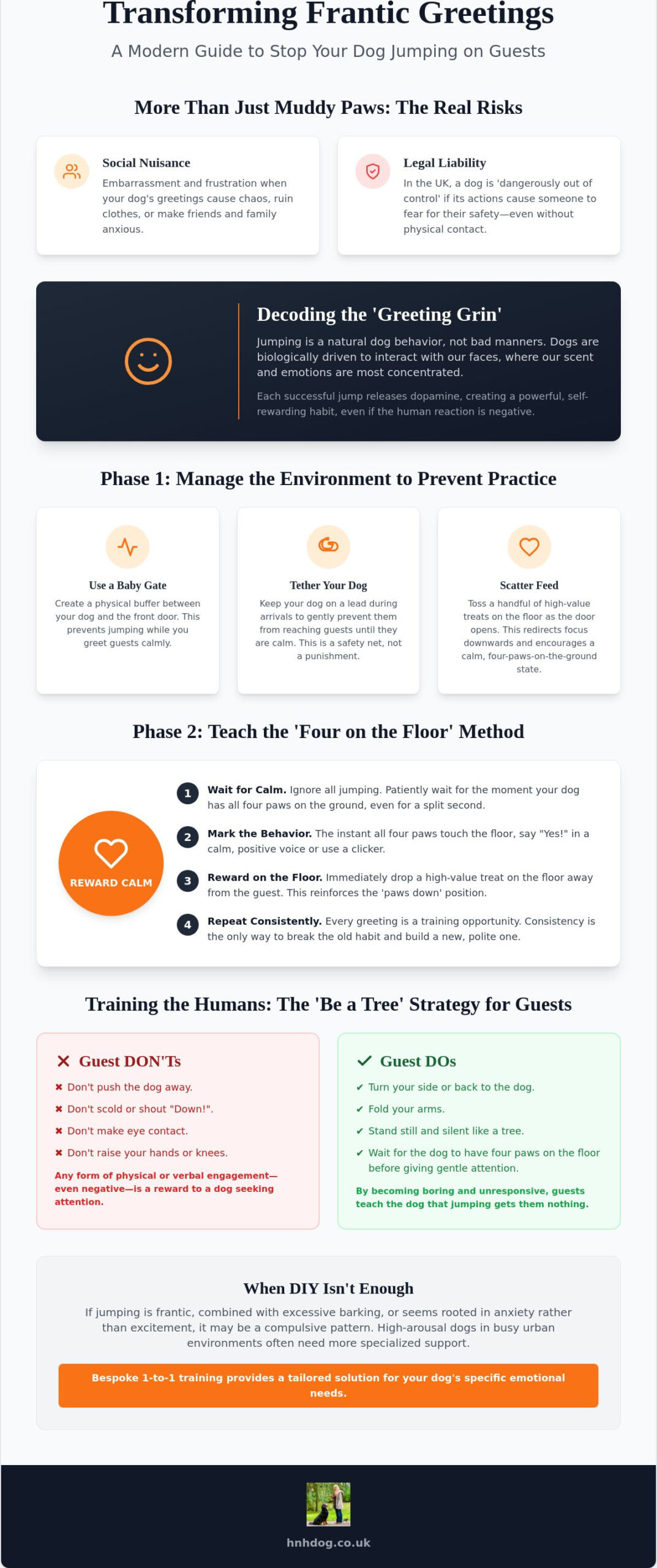
- Master the “Four on the Floor” technique to capture calm behavior and reward your dog for keeping all paws grounded during greetings.
- Discover how to manage your visitors with the “Be a Tree” strategy so their reactions don’t accidentally reinforce the jumping habit.
- Identify when jumping has become a compulsive pattern and how bespoke 1-to-1 dog training provides a tailored solution for your pet’s needs.
Why Do Dogs Jump? Decoding the ‘Greeting Grin’
Understanding your dog’s internal world is the first step toward a more peaceful hallway. While it feels like a lack of manners, jumping is actually a deeply ingrained, natural part of dog behavior. It’s often referred to as the ‘Greeting Grin’ because dogs are biologically driven to interact with our faces. This is where we communicate our emotions and where our unique scent is most concentrated. When your dog leaps up, they aren’t trying to dominate you; they’re simply trying to reach your level to say hello in the most efficient way they know how.
Every time a dog successfully reaches a human’s face, their brain releases dopamine. This creates a powerful feedback loop. Even if the guest isn’t happy, the sheer high-arousal state of the greeting becomes its own reward. Over time, this misplaced enthusiasm evolves into a habitual response. While most jumping stems from joy, it’s vital to recognize that a small percentage of cases are defensive. If a dog feels trapped or overwhelmed by a visitor’s presence, they might leap as a way to create space or express discomfort. Discerning the difference is essential for safety and welfare.
The Science of Positive Reinforcement
Many owners inadvertently struggle with how to stop my dog jumping on guests because they react in ways that reinforce the behavior. When you push a dog away or make eye contact to scold them, you’re providing the very attention they’re seeking. To a social animal, ‘bad’ attention is often better than being ignored. You might notice that when you start withdrawing attention, the behavior briefly intensifies. This is an ‘extinction burst,’ a psychological phenomenon where a dog tries harder to get a response before eventually giving up. Maintaining consistency during this phase is the only way to reach the ‘four on the floor’ golden rule, where your dog learns that only grounded paws earn a greeting.
Identifying Your Dog’s Specific Motivation
To change a behavior, we must first understand the emotion driving it. Is your dog truly excited, or are they showing signs of ‘fiddling’ due to social anxiety? Look closely at their body language. A loose, wagging tail and relaxed ears usually signal over-excitement. Conversely, a stiff tail or frantic vocalization might suggest they’re struggling with the pressure of a new person in their space. In busy urban environments like North London, the constant hum of traffic and high-density living can keep dogs in a perpetual state of high arousal. This makes the doorbell a ‘tipping point’ for their self-control. For dogs who struggle with these complex emotional layers, 1-to-1 dog training can provide the bespoke support needed to lower their baseline stress and build lasting calm.
Managing the Environment: Preventing the Habit
Before you can effectively teach new skills, you must stop the old ones from being practiced. Every successful jump is a rehearsal that reinforces the habit in your dog’s mind. In the often narrow confines of a typical London hallway, managing the physical environment is your most powerful first step. Utilizing a baby gate creates a vital buffer zone between your dog and the front door. This simple barrier allows you to greet guests without the immediate pressure of a leaping pet, keeping everyone’s clothes and skin safe while you prepare for the next phase of training. This is a foundational element of how to stop my dog jumping on guests without using force or causing frustration.
Tethering is another highly effective management strategy. By keeping your dog on a lead during arrivals, you can gently prevent them from reaching the guest before they are calm. This isn’t about restriction; it’s about providing a safety net that ensures the dog cannot fail. Similarly, scatter feeding involves dropping a handful of small, tasty treats on the floor the moment the door opens. This immediately redirects your dog’s focus toward the ground, satisfying their natural foraging instinct while keeping all four paws firmly planted. It changes the greeting from a vertical interaction to a horizontal one.
Essential Tools for Calm Greetings
Success often depends on having the right resources ready before the doorbell rings. High-value treats, such as small pieces of cooked chicken or cheese, should be reserved exclusively for guest arrivals to ensure they maintain their motivational power. You might also consider using a Lickimat or a long-lasting chew to lower arousal levels during longer visits. The American Kennel Club notes that consistency is vital when rewarding alternative behaviors. A well-fitted harness provides much better control and comfort than a collar during these sessions, especially for high-energy breeds that might lung forward in excitement.
The ‘Doorbell Routine’ Preparation
Desensitizing your dog to the triggers of a visit is essential for long-term success. Start by ringing the doorbell or knocking on the door at random times when no one is actually there. If your dog remains calm, reward them immediately. Stationing is the process of teaching your dog to remain on a specific boundary, such as a bed or mat, until they are released. This gives your pet a clear, positive “job” to do when someone arrives. If you find that environmental management isn’t enough to settle your pet’s nerves, seeking professional 1-to-1 dog training can help you create a bespoke plan tailored to your home’s unique layout.
The ‘Four on the Floor’ Method: A Step-by-Step Guide
Once you have secured your hallway with the management tools discussed previously, you can begin the active work of teaching a new greeting ritual. The ‘Four on the Floor’ method is a cornerstone of positive reinforcement training. It focuses on rewarding the absence of jumping rather than punishing the act itself. This shift in perspective is often the most effective way to address how to stop my dog jumping on guests because it provides your pet with a clear, achievable alternative to their usual frantic welcome. You are essentially giving them a new job to do when the doorbell rings.
Phase 1 involves capturing calm behaviour in a neutral environment when no guests are present. When your dog is simply standing or sitting near you with all four paws grounded, offer a small treat. You are building a history of reinforcement for the exact physical state you want to see during a greeting. In Phase 2, introduce low-level distractions by using family members as practice guests. Ask them to walk into the room calmly. If your dog stays grounded, reward them immediately. If they leap, the family member should quietly walk back out. Consistency here is your greatest ally.
Phase 3 introduces the ‘Step Back’ technique. If your dog’s paws lift off the floor during a practice greeting, you and your guest should immediately turn your backs and take a step away. This removes the reward of attention the split second the unwanted behaviour occurs. According to the Best Friends Animal Society, this clear communication helps the dog understand that jumping actually drives people away rather than bringing them closer. Finally, in Phase 4, reward the settled ‘sit’ or ‘stand’ with calm, low-level praise and a treat delivered at floor level to keep their focus downward.
Mastering Your Timing
Precision is everything when communicating with your pet. Use a marker word like ‘Yes’ or a clicker to pinpoint the exact moment your dog’s feet touch the floor after a jump. This helps them connect their physical action with the reward. Be careful with your own energy levels. If your praise is too high-pitched or enthusiastic, you might re-trigger the very over-excitement you are trying to soothe. If your dog becomes frantic, simply pause the session, walk away, and let them reset before trying again. This prevents the training from becoming a source of stress.
Progressing to Real-World Scenarios
When your dog is consistent in the living room, move the training to the high-stakes environment of the front door. This is where the ‘how to stop my dog jumping on guests’ challenge is most intense. Invite friends who are willing to follow your training plan to act as ‘controlled’ guests. Increase the difficulty gradually. Have them wear heavy coats or carry rustling shopping bags to mimic the sights and sounds of a real visitor. This incremental approach ensures your dog feels supported and successful at every stage of their learning journey.
Training the Humans: Managing Your Guests
While you focus on your pet’s behaviour, it’s often the humans who present the greatest challenge to a calm hallway. Many well-meaning visitors unintentionally reward the very actions you’re trying to extinguish. When a guest squeals in delight or reaches out to pet a leaping dog, they provide a high-value social reward that overrides hours of training. Learning how to stop my dog jumping on guests requires you to become a coach for your visitors as much as a teacher for your pet. You must manage the human half of the greeting to ensure consistency.
The ‘Be a Tree’ instruction is a vital tool for any owner. Ask your guests to stand perfectly still, fold their arms, and look away if the dog jumps. By becoming ‘boring,’ the guest removes the incentive for the leap. You must also prepare for the ‘I love dogs!’ visitor. These individuals often insist they don’t mind being jumped on, but their indulgence ruins your progress. Be firm and explain that while they might not mind, your elderly neighbours or small children might. The rules for how to stop my dog jumping on guests must remain the same for everyone who enters your home.
The Visual Cue System
Clear communication starts before the guest even enters your home. A simple sign on your front door can alert visitors that training is in progress and remind them of the greeting rules. In the busy streets of North London, a yellow lead or a harness sleeve can signal to others that your dog needs space during walks. This type of proactive management is a key part of puppy training, helping young dogs navigate urban environments without becoming overwhelmed. Setting these boundaries early prevents high-arousal habits from forming in the first place.
Empowering Your Visitors
Most people want to be helpful but aren’t sure how to behave around an excited dog. Give your guests ‘permission’ to ignore your pet. Tell them specifically: “Please don’t look, touch, or talk to him until he has all four paws on the floor.” This removes the social pressure for the guest to interact immediately. Teach them to deliver treats directly to the floor rather than the mouth, which keeps the dog’s head down and focus grounded. Establishing a ‘guest protocol’ for regular visitors ensures that everyone who enters your home is an active partner in your dog’s success. If you need professional help to manage these complex social dynamics, our behavioural consultations offer a tailored path forward.
Beyond DIY: Bespoke Training for London Dogs
Sometimes, despite your best efforts with environmental management and consistent practice, a dog’s jumping habit remains stubbornly fixed. If you’ve reached a point where you’re still searching for how to stop my dog jumping on guests because the behaviour feels compulsive or frantically high-arousal, it’s time to consider professional intervention. At H&H Dog, we’ve spent over 20 years supporting owners across North London and Watford, helping them navigate these exact challenges with a blend of scientific logic and empathetic kindness. We understand that every dog is an individual, and a one-size-fits-all approach rarely addresses the underlying emotional cause of the leap.
A professional eye can identify whether the jumping is driven by a simple lack of instruction or a more complex emotional state like social anxiety. For high-energy breeds or dogs with a long history of rehearsing this behaviour, 1-to-1 dog training offers a level of focused, personalised attention that group classes simply cannot match. If the behaviour is rooted in deeper reactivity or fear, our behavioural consultations provide a holistic roadmap to recovery. We don’t just look at the jump; we look at the whole dog and their shared life with you.
Why Local Expertise Matters
Living in London presents unique environmental stressors that can keep a dog’s baseline stress level higher than average. High-density housing and busy communal hallways mean your dog’s self-control is tested more frequently than in rural settings. A bespoke training plan takes your specific home layout into account, ensuring the strategies we develop are practical for your daily routine. Professionals are trained to catch micro-signals in body language, such as a slight tensing of the shoulder or a specific ear set, that often precede the jump. Identifying these subtle cues allows us to intervene before the dog’s arousal level spikes beyond their control.
Taking the Next Step
Effective training doesn’t exist in a vacuum. It works best when every aspect of your dog’s day supports their emotional health and stability. For instance, our training sessions can be seamlessly integrated with our professional dog walking services. This ensures that the same calm, grounded boundaries are maintained even when you aren’t there to supervise. This level of consistency is the key to transforming a chaotic greeting into a peaceful one. You deserve a home where the sound of the doorbell brings a sense of pride rather than a wave of embarrassment. Contact H&H Dog today to transform your dog’s greetings into the polite, respectful welcomes you both deserve.
Transforming Your Hallway into a Place of Calm
Achieving a peaceful home environment begins with understanding your dog’s natural motivations and providing them with a clear, positive alternative to jumping. By mastering the ‘Four on the Floor’ method and managing your visitors’ reactions, you can replace chaotic greetings with settled, polite interactions. Mastering how to stop my dog jumping on guests is a rewarding journey that strengthens your bond and ensures your pet feels secure and successful in every social situation. It’s about fostering a shared life built on trust rather than force.
If you find that your pet’s enthusiasm requires a more tailored approach, our expert trainers are here to help. With over 20 years of professional experience serving North London and Watford, we specialise in evidence-based, non-coercive methods that respect your dog’s emotional welfare. You don’t have to navigate these challenges alone. Book a Personalised 1-to-1 Training Session with H&H Dog today to start your journey toward a calmer, happier household. We look forward to helping you and your pet thrive together.
Frequently Asked Questions
How long does it take to stop a dog from jumping on guests?
It typically takes several weeks of consistent practice to see a significant shift in greeting habits. While some dogs grasp the ‘four on the floor’ concept within a few sessions, others need more time to overwrite years of reinforcement. The speed of progress depends on how strictly you manage the environment and how often you practice with controlled guests. Consistency across all family members is the most critical factor in shortening this timeline.
My dog only jumps when he’s excited; is that still a problem?
Yes, because high arousal often leads to a loss of impulse control. While the intent is friendly, an overexcited dog can accidentally cause injury or distress to visitors. Under UK law, a dog is considered out of control if their behaviour causes fear, regardless of their emotional state. Training your dog to remain calm helps them process their excitement in a more manageable and socially acceptable way.
Should I use a spray bottle or a ‘knee up’ to stop my dog jumping?
You should avoid these methods as they rely on fear and physical discomfort rather than education. Using a ‘knee up’ or a spray bottle can damage the trust between you and your pet; it might even trigger a defensive reaction. Modern, evidence-based training focuses on rewarding the behaviours we want to see. This approach ensures your dog feels safe and understands what is expected of them without the need for punishment.
Can an older rescue dog learn to stop jumping on people?
Absolutely, as dogs of all ages are capable of learning new associations. An older rescue dog may have a longer history of jumping, but they often respond very well to clear, calm instructions and high-value rewards. The process involves identifying their specific triggers and patiently showing them that grounded paws lead to better outcomes. It’s never too late to foster a more respectful and settled relationship with your pet.
What should I do if my dog jumps on people during walks in the park?
When you are out in public, use a lead and maintain enough distance from others to keep your dog below their threshold of excitement. If you see someone approaching, redirect your dog’s focus to you or scatter treats on the ground before they have a chance to leap. This proactive approach is a central part of how to stop my dog jumping on guests and strangers alike, ensuring public spaces remain enjoyable for everyone.
My dog is small, so the jumping isn’t dangerous—should I still train him?
Training is still essential regardless of your dog’s size. While a small dog might not knock someone over, their jumping can still ruin clothes, scratch skin, or frighten people who are uncomfortable around animals. Consistent boundaries help your dog understand the rules of the human world. It also prevents them from becoming overwhelmed by high-arousal states, which contributes to their long-term emotional well-being and stability.
How can I get my children to help with the ‘no jumping’ training?
Children can be excellent training partners if they are taught the ‘Be a Tree’ technique. Encourage them to stand still and look at their feet if the dog becomes too bouncy. You can also involve them by letting them drop treats on the floor when the dog is calm. This teaches the dog that children are a source of rewards for quiet behaviour rather than playmates for frantic jumping.
What is the best treat to use for greeting training?
The best treats are high-value, pea-sized morsels that your dog rarely receives at other times. Soft, smelly options like cooked chicken, cheese, or small pieces of sausage are often the most effective for keeping focus in high-distraction environments. Having these ready by the door is a practical step in learning how to stop my dog jumping on guests. The goal is to make the reward for staying grounded more appealing than the jump itself.