
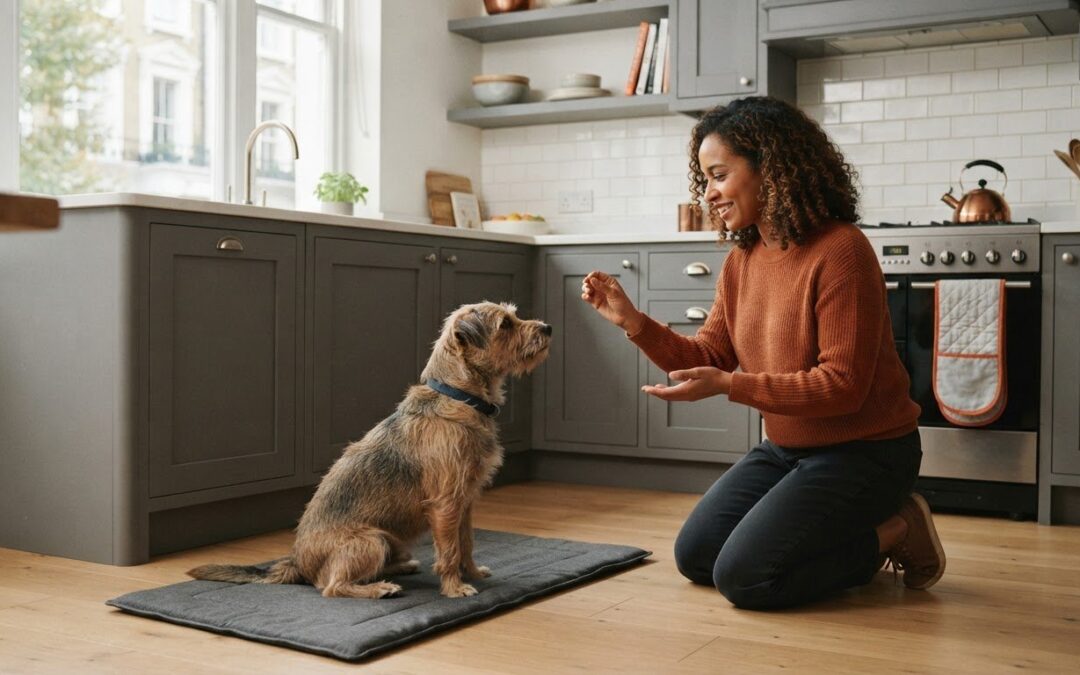
What if the kindest way to stop your dog taking food from the counter is to make stealing less rewarding, rather than trying to catch them in the act? If you’ve turned away for a moment and found dinner gone, you’re not alone. Counter surfing can quickly become a habit because finding food is rewarding, even when you look away briefly. It can also put your dog at risk if they reach unsafe food or objects.
It’s understandable to feel frustrated, especially when the behaviour seems hard to interrupt. But scolding after the food is gone won’t show your dog what to do instead. A more effective plan combines management, which reduces opportunities to practise food-stealing, with reward-based training that teaches a useful alternative.
In this guide, you’ll learn how to stop counter surfing with practical changes to your kitchen routine and simple steps for teaching your dog to settle on a mat or move away from food. You’ll also learn how household consistency helps, when a sudden change in appetite warrants a veterinary check, and when personalised one-to-one training could help you adapt the plan to your dog and home.
Key Takeaways
- Counter surfing can be rewarding for dogs, so even occasional food finds may encourage another attempt.
- Pair kitchen management, which prevents practice, with training that teaches your dog what to do instead.
- Use a simple home plan to spot tempting opportunities and build a practical alternative into everyday routines.
- Learn how to stop counter surfing without frightening or punishing your dog, and why consistency across the household matters.
- Repeated attempts, household challenges or safety concerns may be a good reason to seek personalised one-to-one training support.
What Is Counter Surfing, and Why Is It a Problem?
You turn to answer the door or put the kettle on, then return to find food missing. That can feel frustrating, especially because it may happen in seconds. From your dog’s perspective, an accessible smell or object is an invitation to investigate, not a deliberate attempt to break a household rule.
Counter surfing is a dog reaching for or taking food and other tempting items from kitchen worktops or counters. It matters for more than a tidy kitchen: your dog may grab something unsafe before you can intervene. Understanding what counts as counter surfing, and what makes it rewarding, helps you respond without blame.
What counts as counter surfing?
The behaviour doesn’t have to involve a dramatic leap. Your dog may jump up, put their paws on a worktop or stretch their neck to reach an item near the edge. They might take a sandwich, lick a plate or investigate packaging, medication or another object left within reach. The common feature is accessing something from a kitchen surface.
Dogs do this to explore and obtain things they find appealing. It isn’t evidence of spite, dominance or a plan to challenge your authority. Some breed descriptions also mention the behaviour: the Portuguese Water Dog and counter surfing entry on Wikipedia offers one breed-specific example, but individual dogs vary. Whatever your dog’s breed, focus on what they can reach and what they find rewarding.
Why does it feel so difficult to stop?
Finding food can make another attempt worthwhile, even if your dog only gets access occasionally. A successful reach may reward the behaviour immediately, while an unsuccessful one may prompt them to try again later. You may also miss attempts when you’re in another room or not realise your dog has found crumbs or a dropped morsel.
This can make progress feel inconsistent: you might see fewer attempts, then discover a stolen snack after a brief distraction. That doesn’t mean your dog is stubborn or that training has failed. It may mean the opportunity and reward are still present sometimes.
There’s also a practical safety concern. Some human foods, such as chocolate or grapes, can be dangerous for dogs, and a dog may swallow packaging or another unsuitable object along with food. Keep potentially hazardous items out of reach while you work on the behaviour. If your dog has eaten something that may be harmful, seek veterinary advice promptly.
Learning how to stop counter surfing isn’t about catching your dog in the act or expecting them to understand an unwritten kitchen rule. It means making tempting items harder to access while teaching a behaviour you’d rather see. The two steps work together: managing the environment reduces chances to practise food-stealing, while an alternative gives your dog a clear, rewarding option. That’s a more realistic foundation for everyday progress than relying on interruption alone.
Why Dogs Counter Surf: Food, Opportunity and Reinforcement
To understand why the behaviour continues, look at what happens from your dog’s point of view. A smell draws them towards the worktop; reaching or stretching may uncover food. If the search pays off, that result can make the same action more likely next time. In learning, this is reinforcement: when a behaviour leads to something rewarding, it’s more likely to happen again.
Accessible food rewards successful searching, making your dog more likely to search the same surfaces again. The reward doesn’t need to appear every time. If your dog finds a morsel only occasionally, that unpredictable success can still make another attempt worthwhile. This is why a stretch that seems fruitless today may be repeated tomorrow.
What might your dog be getting from the behaviour?
Food is an obvious reward, but the search itself can also be engaging. Dogs use their noses to gather information, and sniffing around a kitchen may offer an interesting activity as well as the chance of finding something edible. This isn’t a moral failing or a sign your dog is trying to upset you. It’s practical opportunity-seeking, shaped by what they can access and what they discover.
Notice the details without judging yourself or your dog. Does your dog investigate while you’re preparing food, or after everyone leaves the table? Do they focus on a particular surface or return when the kitchen is quiet? These patterns can show you when access is easiest and help you plan changes that suit your household.
Which household patterns can keep it going?
Everyday routines can create repeated opportunities without anyone intending to. Food may be left unattended while you answer the door, carry plates to the table or clear up after a meal. Cooking can leave ingredients within reach, and a snack forgotten on the worktop may become an unexpected find. Household members may also have different habits, so your dog encounters inconsistent access.
Keep a brief, neutral record of attempts and any successful finds. Note what was happening just beforehand, where your dog was, what was within reach and whether they got anything. For example:
- Food left out during cooking or meal preparation.
- Plates or leftovers on the worktop during clearing up.
- Different routines among people in the household.
This isn’t a scorecard. It’s useful information. You may discover that attempts cluster around one routine, making it easier to adjust the setup and agree on a consistent response. That’s a practical first step in learning how to stop counter surfing: address the conditions that keep the behaviour rewarding, not just the behaviour after it happens.
If household routines make consistency difficult, personalised one-to-one dog training can help you shape a plan around your dog and daily life in London.
Management or Training? Why You Need Both to Stop Counter Surfing
It’s natural to wonder whether clearing the worktops or using a gate is just putting off the problem. In fact, management is an important part of an ethical training plan: it reduces opportunities to practise food-stealing while you build a behaviour you’d like to see instead. Neither approach has to do all the work alone.
Management
Prevents access to tempting items and reduces chances to rehearse counter surfing.
Training
Teaches and rewards a practical alternative, such as settling on a mat.
Management alone doesn’t teach your dog what to do when food is present. Training alone can also be difficult if your dog keeps getting chances to reach the worktop and find a reward. Combining them gives your dog fewer opportunities to practise the unwanted behaviour while making the preferred choice clearer.
What management can do while training is underway
Put unattended food away, keep tempting items out of reach and clear surfaces after cooking or eating. If you can’t supervise your dog, use a suitable barrier or a separate comfortable space to keep them safely away from the kitchen. These steps aren’t a failure or a shortcut. They’re practical support that protects your dog and makes learning easier.
Each time your dog gets food from the counter, the behaviour may be reinforced. Preventing access means fewer successful attempts competing with your training. It also gives you breathing room to practise without constantly watching for a jump or stretch. Choose arrangements that work for your home, and make sure everyone follows the same routine.
What training adds to the plan
First, teach an alternative away from tempting food. For example, reward your dog for going to a mat and relaxing there in a quiet part of the home. Start with a simple version your dog can succeed at, then practise calmly and repeat. Once the behaviour is familiar, gradually work on using it around ordinary kitchen activity.
Reward the behaviour you want to see. Scolding or startling may interrupt a moment, but it doesn’t show your dog where to go or what to do instead. It can also make the interaction worrying for them. A calm cue, followed by a reward when your dog settles in the chosen place, builds a clearer association.
Think of the cleared worktop or barrier as a bridge, not the whole destination. Management keeps the situation safer and reduces rehearsal; training builds a useful skill for everyday life. If you’re unsure how to adapt reward-based practice to your dog and household routines, personalised one-to-one dog training can provide tailored guidance as you work on how to stop counter surfing.
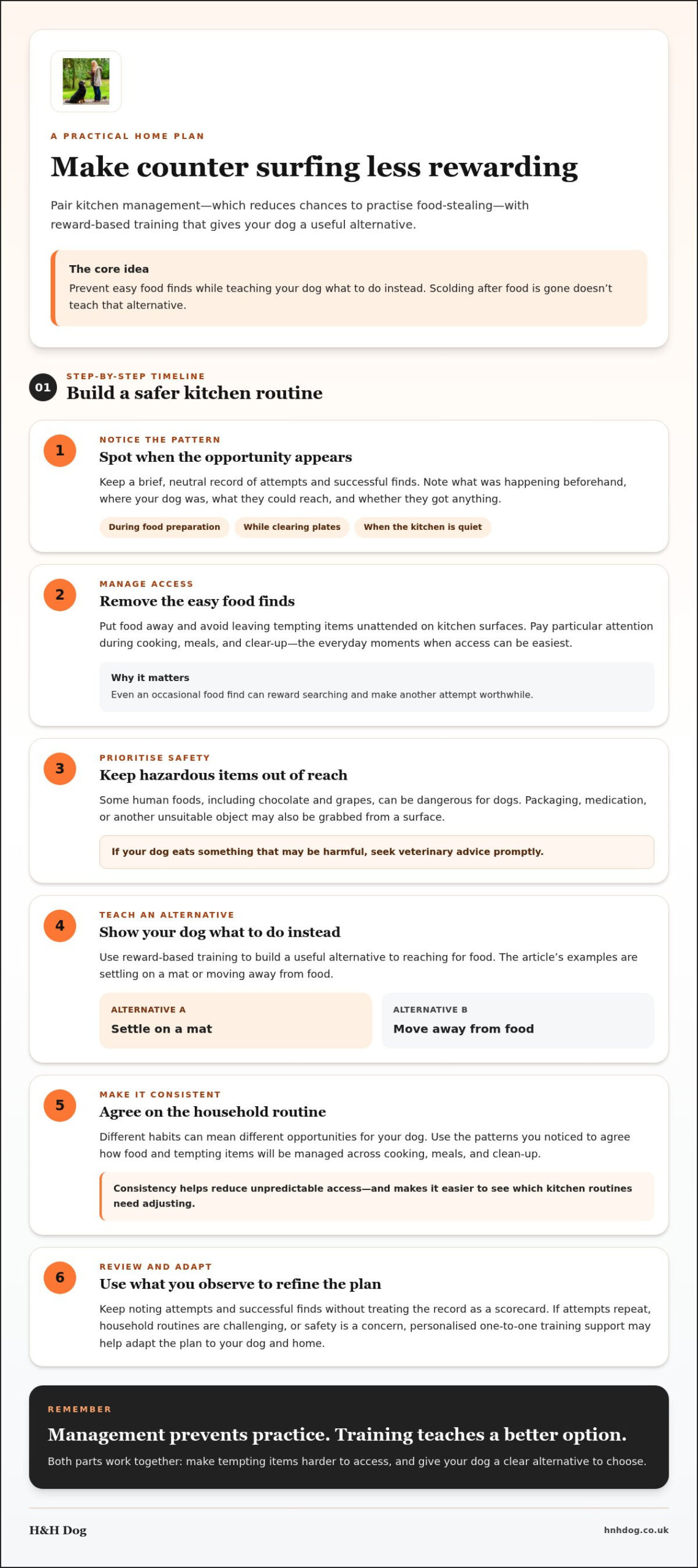
How to Stop Counter Surfing: A Step-by-Step Home Plan
A workable plan starts with the kitchen you have, not an expectation that your dog will suddenly ignore every tempting smell. Set up the environment to prevent easy wins, then teach a calm behaviour your dog can practise successfully. Build gradually and adjust the steps to suit your home and dog.
Prevent access, practise an alternative, then increase difficulty gradually. Follow the steps in order, and keep management in place while your dog learns.
- Audit the kitchen. Look at the room from your dog’s point of view. Note which surfaces they can reach, when food or other tempting items are left out, and where they could wait comfortably away from food preparation. Start by removing immediate opportunities: put food and appealing objects away whenever they’re unattended.
- Plan for busy moments. Decide how you’ll manage access while cooking, eating or clearing up, especially when you can’t supervise. A suitable gate or another safe way to keep your dog out of the kitchen can help. Agree on a simple household routine so everyone puts food away and responds consistently, rather than leaving access to chance.
- Choose an alternative behaviour. Pick something clear and practical, such as resting on a mat away from food preparation. Begin in a quiet setting with no food on the worktop. Guide your dog towards the mat if needed, then reward them for going there and settling. Keep practice calm and easy enough for your dog to succeed.
- Practise before adding distractions. Repeat the mat behaviour in the same low-distraction setting until your dog is comfortable choosing it. Then practise with a mild change, such as you moving around the room, while keeping food safely out of reach. Reward your dog for staying on the mat so that choice remains worthwhile.
- Increase difficulty in small steps. Gradually introduce ordinary kitchen activity, such as handling a utensil or preparing food while your dog remains at a comfortable distance. Change one aspect at a time, and keep rewards available for the alternative behaviour. If your dog leaves the mat or tries to reach the worktop, calmly make the setup easier again. A step back is useful information, not failure.
Keep the kitchen managed throughout practice. The aim isn’t to test your dog by leaving tempting food within reach; it’s to help them learn the alternative without repeated chances to rehearse counter surfing. Consistent routines and gradual practice can build a response that fits everyday life.
If you’d like tailored support applying these steps to your dog and household, arrange one-to-one dog training with H&H Dog.
When Personalised Dog Training Can Help with Counter Surfing
Home practice can be hard to manage when your dog keeps finding food, several people share kitchen duties, or the layout makes it difficult to prevent access. If repeated attempts are creating safety worries, or your dog struggles to settle away from the worktop, tailored support can help you work out what to adjust. You don’t have to wait until the situation feels unmanageable.
Before seeking help, note when attempts happen, what was going on and what your dog could reach. This gives a trainer a clearer picture of the routines involved. The aim isn’t to find fault, but to understand what your dog is responding to and make a plan that suits your household.
What tailored support can address
A personalised plan can help identify patterns you may not have spotted, such as attempts during meal preparation, when one family member is busy or in a particular part of the kitchen. From there, management and alternative-behaviour practice can be adapted to your dog, your home and the moments that are most challenging.
That might mean choosing a comfortable place for your dog to settle, creating a shared routine for keeping food out of reach or adjusting practice so it feels manageable. The goal is a humane, practical approach that fits everyday family life, rather than a rigid exercise that’s difficult to maintain.
A supportive next step with H&H Dog
H&H Dog provides one-to-one lessons and behavioural help using positive-reinforcement methods. The team includes IMDT-certified professionals and has Over 20 years of experience. Individual attention helps tailor guidance to your dog’s needs and household routines. H&H Dog also has a 5-star rating from 77+ Google reviews.
If you’re looking for guidance that connects training principles with real home routines, the dog training guide for North London offers further practical insight. If counter surfing feels difficult to manage alone, one-to-one training is a supportive next step. You can continue safe management at home while working with a trainer to shape a plan that feels clear, kind and realistic for your dog.
Make the Next Kitchen Moment a Chance to Practise
Your next step doesn’t need to be a perfect training session. Choose one part of your kitchen routine that often feels tricky and make it easier for your dog to succeed. As the new habit becomes familiar, you can build on it at a pace that feels manageable for both of you.
Learning how to stop counter surfing is an ongoing process, not a test your dog has to pass. Notice small signs of progress, such as choosing their resting place while you prepare food, and keep adapting the plan when family routines change. If you’d value guidance shaped around your dog and home, H&H Dog’s personalised training offers a supportive next step. H&H Dog is recognised as a Top 3 trainer in Watford.
Explore personalised dog training with H&H Dog and take the next step towards calmer kitchen routines. With patience and a plan that suits your household, you and your dog can keep moving forward together.
Frequently Asked Questions
Can counter surfing be stopped if my dog has been doing it for years?
Yes, an established habit can still change, although progress may take patience and consistency. Your dog has had plenty of practice, so begin by making successful food finds less likely and rewarding a different choice in situations they can handle. Keep expectations realistic: occasional slips don’t mean there’s no progress, but everyone in the household needs to follow the plan so the old behaviour isn’t rewarded unpredictably.
Is counter surfing a sign that my dog is hungry?
Not necessarily. A dog may reach for food because it’s accessible and appealing, even if they’ve eaten their usual meals. Consider whether their feeding routine and portions are appropriate for their individual needs, and discuss diet with your vet if you’re unsure. If the behaviour begins suddenly alongside a marked increase in appetite, thirst or urination, arrange a veterinary check to look for a possible health cause.
What should I do if my dog steals something dangerous from the counter?
Contact your vet promptly if your dog eats something potentially harmful, such as chocolate, grapes, medication or an unknown substance. Keep the packaging or note what was taken and roughly when, as this can help the vet advise you. Don’t wait for symptoms to appear, and don’t try to make your dog vomit unless a veterinary professional specifically tells you to. For urgent concerns, call an emergency veterinary practice.
Can a baby gate help stop a dog from counter surfing?
Yes, a suitably fitted baby gate can keep your dog out of the kitchen during food preparation or other busy moments. Choose a setup your dog can’t easily push through, climb over or become caught in, and make sure they have a comfortable place elsewhere. A gate manages access; it doesn’t teach a kitchen behaviour by itself, so combine it with supervised practice and rewards for a suitable alternative.
How do I stop my dog counter surfing when I am not in the kitchen?
Don’t rely on your dog to make a different choice while unsupervised. Before you leave the room, put food and other tempting items away, then use a closed door, suitable gate or safe separate area to prevent access. Give your dog an appropriate place to rest. Practise any alternative behaviour while you’re present first, so you can reward it and make sure the setup suits your dog.
Why does my dog counter surf only when nobody is watching?
Your dog may simply find more opportunities when the room is quiet and nobody is nearby to manage access. That doesn’t mean they’re acting out of spite or consciously breaking a rule. Look for clues after the event, such as displaced packaging or a plate moved from the edge, and note what was left accessible. This can help you spot patterns without needing to catch your dog in the act.
Should I tell my dog off for counter surfing?
Scolding is unlikely to teach your dog what you’d prefer them to do, and a frightening response can make training less comfortable. If you see an attempt, calmly guide your dog away if it’s safe, then reward them for moving to an appropriate place. Afterwards, change the setup to prevent another opportunity. If your dog has something dangerous, prioritise safety and contact your vet if they’ve swallowed it.