
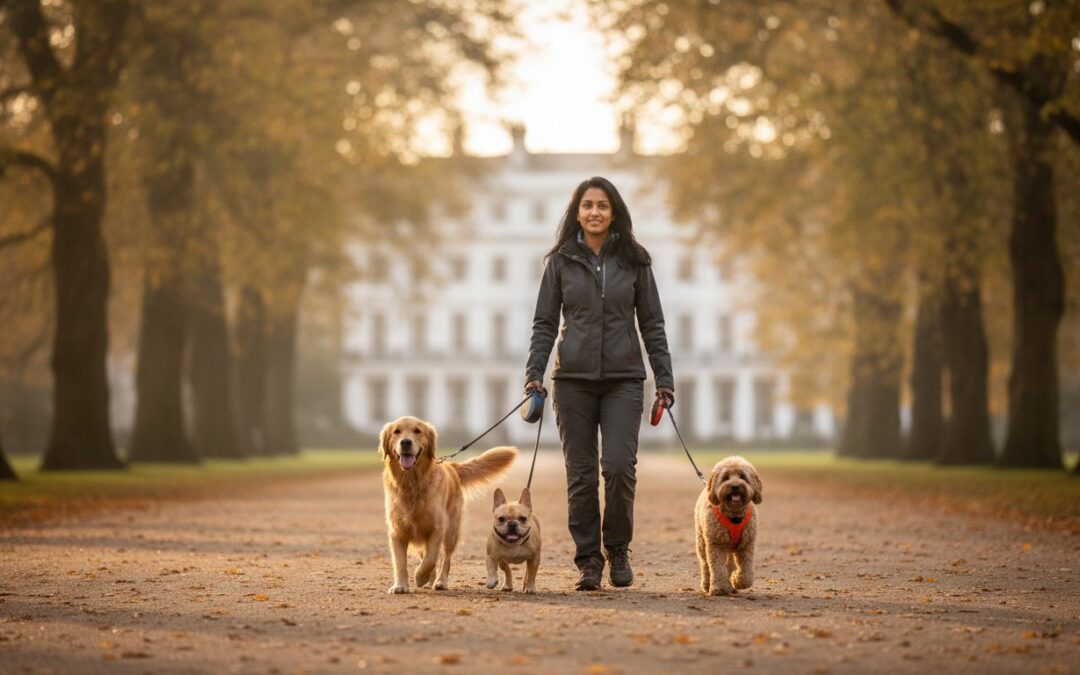
What if the secret to a perfect London morning isn’t just finding a green space, but knowing exactly how to “hack” the city’s most famous park to suit your dog’s specific temperament? Finding the best dog walking routes Regent’s Park provides requires more than just a map; it requires an understanding of how the environment affects your dog’s emotional well-being. It’s common to feel a sense of overwhelm when faced with the intricate patchwork of lead regulations or the bustling crowds that often gather near the boating lake.
We believe that every outing should be a partnership built on mutual understanding and respect for your dog’s needs. This guide offers a professional walker’s perspective to help you navigate the landscape with calm confidence and ethical care. You will discover exactly where off-lead exercise is permitted, identify the quietest trails for focused training, and locate the most welcoming spots for a well-earned refreshment. By the end of this article, you will have a clear plan for a rewarding one to two hour walk that prioritises your dog’s welfare and your own peace of mind.
Key Takeaways
- Navigate the 2026 Royal Parks regulations with ease by identifying specific off-lead zones and formal gardens where leads are required for conservation.
- Plan your visit using the best dog walking routes Regent’s Park offers, selecting paths like the Avenue Gardens for enriching scent-work or the Broad Walk for controlled socialisation.
- Boost your dog’s physical fitness and confidence by incorporating the Primrose Hill incline, ensuring a safe transition from the main park’s level terrain.
- Locate essential dog-friendly amenities, from card-only refreshment stops at The Espresso Bar to the strategically placed hydration stations found throughout the grounds.
- Understand how professional group walking can transform a standard outing into a structured social learning experience that builds your dog’s long-term emotional health.
Navigating Regent’s Park: An Expert Guide to Dog Walking Rules
Understanding the bylaws of Regent’s Park is the first step toward a stress-free outing. As of 2026, the Royal Parks have refined their dog walking policies to balance the needs of wildlife, pedestrians, and our canine companions. Success in this environment depends on your commitment to “Effective Control.” This isn’t just a legal term; it’s a professional standard. It means your dog returns immediately when called, ignores the local wildfowl, and doesn’t approach strangers or other dogs without an invitation. Adopting this mindset ensures that the park remains a welcoming space for everyone.
The ‘Green Zone’ off-lead areas near the Hub provide a dedicated space where dogs can exercise freely while remaining under the close supervision of their owners. When planning the best dog walking routes Regent’s Park provides, you’ll quickly see that the most rewarding paths are those where you and your dog move in harmony with the park’s zoning system. Professional walkers recognize that these rules are designed to ensure the park remains a shared resource. For instance, the regulation limiting professional walkers to four dogs helps maintain a manageable environment, and following similar principles of awareness will significantly improve your personal experience.
Understanding the Red, Orange, and Green Zones
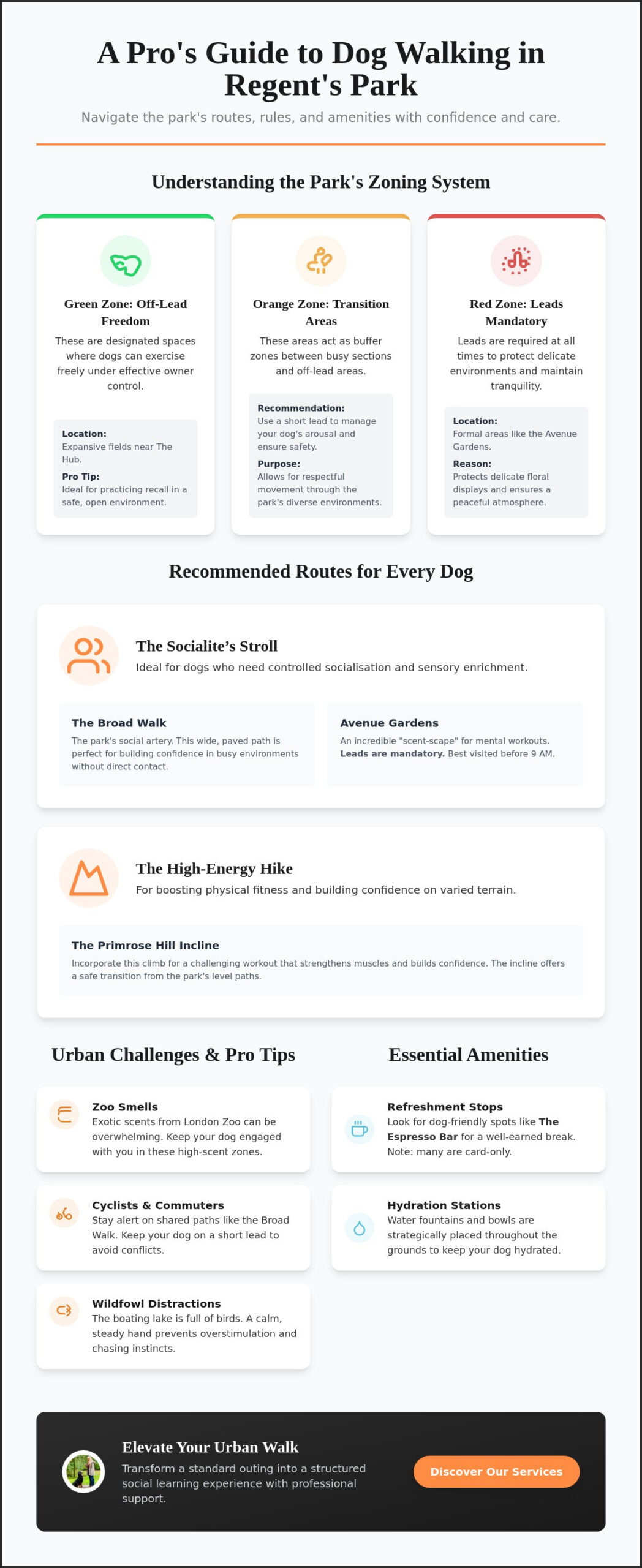
The formal Avenue Gardens are strictly “Red Zones.” In these areas, leads are mandatory to protect the delicate floral displays and maintain the tranquil atmosphere of the historic gardens. “Orange” areas act as transition points; here, using a short lead is a respectful way to manage your dog’s arousal as you move between busier sections. The “Green” sanctuary consists of the expansive fields near the Hub. These areas are ideal for practicing recall in a safe, open environment where your dog can enjoy a sense of freedom without the restriction of a lead.
Managing Sensory Overload: Cyclists, Wildfowl, and Zoo Smells
The proximity to London Zoo creates a unique olfactory challenge for many dogs. Exotic scents can trigger intense tracking instincts; it’s helpful to keep your dog engaged with you during these high-scent moments to prevent them from becoming overwhelmed. When walking the Broad Walk, stay alert for commuters and cyclists who share the space. Near the boating lake, the abundance of wildfowl requires a calm, steady hand to prevent your dog from becoming overstimulated by the movement of the birds. By identifying the best dog walking routes Regent’s Park has to offer, you can choose paths that match your dog’s current ability to handle these specific urban distractions.
The Socialite’s Stroll: The Broad Walk and Avenue Gardens
For the dog who thrives on observation and polite interaction, certain paths stand out as the best dog walking routes Regent’s Park provides. The Broad Walk serves as the park’s primary social artery. This wide, paved thoroughfare is ideal for dogs needing to build confidence in a bustling environment without the pressure of direct physical contact. It allows for plenty of “flight distance” if your dog feels overwhelmed, making it a professional’s choice for socialisation training. By walking here, you’re teaching your dog that they can remain calm and focused even when the world around them is moving quickly.
Beyond the social benefits, the Avenue Gardens offer an incredible sensory experience. While leads are mandatory here according to the Dogs in The Royal Parks policy, the floral displays provide a complex “scent-scape” that acts as a deep mental workout. Engaging a dog’s nose is often more tiring than a high-speed run. To enjoy this route at its best in 2026, aim for a visit before 9:00 AM. This allows you to avoid the heaviest tourist footfall while the morning dew still holds the freshest scents for your dog to explore.
Leash Manners in the Formal Gardens
The geometric layout of the Avenue Gardens provides a perfect setting for practicing loose lead walking. You can use the clear lines of the paths to set boundaries and reward your dog for staying by your side. In narrower sections, managing on-lead greetings is vital. We recommend a “three-second rule” for sniff-and-move-on interactions to prevent tension from building. If you’re working on these skills and want professional guidance, our 1-to-1 dog training can provide the bespoke support you need to master these high-traffic areas.
The Italian Garden Loop
If your dog prefers visual stimulation over physical play, the Italian Garden Loop is a quieter sub-route that offers plenty of “look and see” opportunities. The structured stone landmarks and benches serve as excellent “settle” spots. Teaching your dog to relax on a mat or a specific patch of grass while people pass by is a foundational skill for any urban dog. We suggest avoiding the area around the Ready Money Drinking Fountain during peak puppy-play hours, typically between 10:00 AM and 12:00 PM, as the high energy can be counterproductive for dogs seeking a more tranquil experience. This loop remains one of the best dog walking routes Regent’s Park offers for maintaining emotional balance in a busy city.
The High-Energy Hike: Primrose Hill and the Outer Circle
For dogs with boundless energy, the gentle meanders of the inner gardens simply won’t suffice. If your companion requires significant physical exertion to feel settled, the northern extension of the park is essential. The steep gradient of Primrose Hill offers a superb cardiovascular workout that engages different muscle groups than flat pavement walking. It’s a challenging environment that helps high-stamina breeds burn off steam while enjoying one of the most iconic vistas in the city. This specific terrain is often cited among the best dog walking routes Regent’s Park offers for those looking to improve their dog’s overall fitness and sleep quality.
Transitioning between the main park and the Hill requires a steady hand. You’ll need to navigate the bridge safely, which means briefly returning to a short lead to manage the proximity of traffic and other pedestrians. Once you’ve crossed, the environment opens up significantly. The Outer Circle provides a consistent, long-distance perimeter walk of approximately 4.3 kilometres. This circuit is the “gold standard” for professional dog walking in North London. It allows for a sustained, rhythmic pace that helps high-energy dogs enter a calm, focused state of “work” during their exercise.
Summiting Primrose Hill Off-Lead
While much of the Hill is an off-lead sanctuary, you must stay mindful of the boundaries. The lower slopes are perfect for long-distance fetch or recall games. However, as you approach the summit, the social dynamics can become intense. You’ll likely encounter several other off-lead dogs. If your dog has a high prey drive, the birds circling the skyline viewpoints can be a major distraction. We recommend keeping a high-value reward ready to maintain focus. This ensures the experience remains a positive reinforcement session rather than a chaotic chase.
The Zoo Perimeter and Canal Path
For a unique sensory experience, follow the path that skirts the edge of London Zoo. Your dog will encounter a “scent trail” unlike any other in London. It’s not uncommon for dogs to stop and stare as they catch sight of giraffes or camels through the perimeter fencing. These visual distractions are excellent for “look at that” training, where you reward your dog for calmly observing unusual sights. When moving toward the Regent’s Canal border, be aware that the towpath sections can be narrow. Keep your dog on the side away from the water to ensure safety when passing cyclists or other walkers. This variety of textures and sights makes it one of the best dog walking routes Regent’s Park can provide for a truly holistic outing.
Essential Amenities for a Stress-Free London Walk
When you are planning the best dog walking routes Regent’s Park provides, your logistical preparation is just as important as the path you choose. Navigating 395 acres of parkland requires a clear understanding of where to find support when your dog needs a break, a drink, or even medical attention. A successful outing relies on your ability to anticipate these needs before they become stressors. By mapping out the park’s amenities, you ensure that every walk remains a positive, bonding experience rather than a series of hurdles to overcome.
Hydration is a priority, especially during the warmer months of 2026. While many public fountains are scattered throughout the park, “doggy bars” with fresh water are most reliably found near the main catering hubs. The Hub, located in the centre of the sports fields, offers a spacious, dog-friendly environment that is perfect for a mid-walk rest. If you prefer a quicker stop, The Espresso Bar near the Broad Walk provides a convenient location for a takeaway coffee while your dog relaxes on the wide, paved surrounding area. Waste management is equally well-integrated; you will find a high density of bins near all major entry gates and along the Outer Circle, making it easy to maintain the park’s cleanliness.
Safety is the foundation of peace of mind. It is wise to have the contact details of local veterinary practices saved before you set off. The Village Vet near Park Square and the Beaumont Sainsbury Animal Hospital near the Gloucester Gate exit are the closest emergency points. Knowing these locations allows you to focus entirely on your dog’s welfare during your visit.
Dog-Friendly Pitstops and Refreshments
The Regent’s Bar & Kitchen is a popular choice for those seeking a more substantial break. Dogs are welcome in the outdoor seating areas, provided they remain on a lead and don’t disrupt other guests. For dogs that feel overwhelmed by crowds, look for the “secret” quiet benches tucked away near the northern end of the Inner Circle. These spots offer a tranquil sanctuary for a few minutes of calm. Your urban excursion kit should always include a portable water bowl, a long-line lead for the Green Zones, and high-value treats to reward focused behaviour in busy areas.
Training Opportunities in a Royal Park
The expansive fields surrounding The Hub are ideal for long-line recall training. This area provides enough space to practice distance commands without the risks associated with being entirely off-lead in a new environment. You can also use the perimeter of the children’s playgrounds for controlled socialisation; by keeping a respectful distance, you teach your dog to remain neutral in the presence of high-pitched noises and fast movement. Understanding how your dog perceives these stimuli is vital. Gaining dog behaviourist insights can help you interpret subtle body language, ensuring you never push your dog beyond their emotional threshold. If you find these busy environments challenging, our behavioural consultations offer a tailored path toward a more relaxed shared life.
Elevating Your Urban Walk: Why Professional Support Matters
Maintaining a consistent routine in a city that never stops is a significant challenge for many of the 49% of London households that now share their lives with a dog. While you may have identified the best dog walking routes Regent’s Park offers, finding the time to navigate them with the necessary focus and patience isn’t always possible. This is where professional support transitions from a luxury to an essential component of ethical pet care. By partnering with a knowledgeable mentor, you ensure that your dog’s emotional and physical needs are met even when your own schedule is demanding. Your peace of mind is just as important as your dog’s welfare.
Our approach is rooted in the belief that every outing should be a bespoke experience. We don’t believe in a one-size-fits-all model for urban exercise. Instead, we select specific paths among the best dog walking routes Regent’s Park provides based on your dog’s individual temperament, energy levels, and social maturity. This customized care allows your dog to experience the park as a place of joy and learning rather than a source of sensory overwhelm. We act as an advocate for your dog, ensuring their perspective is always respected during their time outdoors.
The Benefits of Professional Group Walking
Group dog walking provides a structured environment where your dog can build social confidence under expert supervision. In a busy setting like Regent’s Park, a professional walker acts as a steady hand, guiding the group through “Green Zones” for vital off-lead exercise while managing the complexities of London’s bustle. For dogs that show signs of lead reactivity or anxiety, professional handling ensures they remain below their emotional threshold. This careful management fosters a sense of security, helping your dog become a more relaxed and resilient urban companion. It’s about quality of interaction, not just quantity of steps.
Booking Your Dog’s Next Adventure
We are proud to support communities across North and North West London, providing a premium service that values long-term emotional health over quick fixes. A holistic lifestyle involves more than just exercise; it’s about integrating various aspects of care into a seamless routine. You might consider pairing our walking sessions with a Full Groom or a Bath & Brush to maintain physical comfort, or perhaps 1-to-1 dog training to further strengthen your bond. By entrusting your dog’s care to a dedicated professional, you transition from being a stressed owner to a relaxed spectator of your dog’s joy. Explore our professional dog walking services today and take the first step toward a more balanced life together.
Mastering Your Regent’s Park Experience
Navigating one of London’s most iconic green spaces is a journey of partnership and discovery. By understanding the 2026 zoning regulations and selecting the best dog walking routes Regent’s Park has to offer, you provide your dog with an enriching, stress-free environment. Whether you’re seeking the sensory delights of the Avenue Gardens or the physical challenge of Primrose Hill, your focus should always remain on your dog’s emotional well-being. A successful walk is measured by your dog’s calm confidence and the shared joy of a life well-lived in the city.
We understand that the complexities of urban life can sometimes make consistent, high-quality outings a challenge. With over 20 years of professional pet care experience, our team of expert trainers and behaviourists is here to provide the steady hand you need. We offer tailored walks designed specifically for North London’s unique urban landscape, ensuring every dog receives bespoke care based on their temperament. We invite you to book a professional group walk for your dog in London and join a community dedicated to ethical, supportive pet care. Together, we can transform every outing into a rewarding adventure that strengthens your bond and supports your dog’s long-term health.
Frequently Asked Questions
Are dogs allowed off-lead in Regent’s Park?
Dogs are permitted off-lead in many of the park’s expansive open spaces, provided they remain under effective control at all times. You’ll find the most freedom in the large fields near the Hub and on the slopes of Primrose Hill. However, you must use a lead in designated areas such as the boating lake and the Community Wildlife Gardens to protect the local ecosystem and nesting birds.
Where are the best dog-friendly cafes in Regent’s Park?
The Hub Cafe and The Espresso Bar are excellent choices for a mid-walk break with your companion. Both locations offer ample outdoor seating where your dog can settle while you enjoy a refreshment. For those exploring the best dog walking routes Regent’s Park provides, the Regent’s Bar & Kitchen also offers a welcoming atmosphere for four-legged guests in its external seating areas.
Can I walk my dog near the London Zoo section of the park?
You can walk your dog along the public paths that border London Zoo, but it requires a high level of focus. The exotic scents of animals like giraffes and camels can be incredibly stimulating for many dogs. We recommend using high-value rewards to keep your dog engaged with you, ensuring they remain calm as you navigate this unique sensory environment together.
Are there any areas in Regent’s Park where dogs are strictly prohibited?
Dogs are strictly prohibited from entering several formal areas, including Queen Mary’s Gardens, the Avenue Gardens, and St. John’s Lodge Garden. They are also not allowed in children’s playgrounds or specific wildlife enclosures. These rules are enforced to protect delicate floral displays and ensure the safety of all visitors. Always check the clear signage at gate entrances to stay informed of current restrictions.
What is the best time of day to walk a dog in Regent’s Park to avoid crowds?
Arriving before 8:30 AM is the most effective way to enjoy a peaceful outing before the park becomes busy with tourists and commuters. The pedestrian gates open at 5:00 AM daily, offering a quiet window for dogs that prefer a more tranquil environment. Walking during these early hours allows your dog to enjoy the best dog walking routes Regent’s Park offers with significantly less environmental stress.
Is there a specific ‘dog map’ for Regent’s Park available?
While a standalone “dog map” isn’t published, the official Royal Parks maps clearly mark the lead-only and dog-free zones. We suggest adopting the professional walker’s mental map: use the open “Green Zones” for off-lead exercise and the formal paths for structured lead work. This logical approach helps you navigate the park’s 395 acres while respecting the needs of wildlife and other park users.
How do I get to Regent’s Park with my dog on public transport?
Dogs are welcome on London Underground trains and buses if they are kept on a lead or carried. The nearest stations are Regent’s Park, Baker Street, and Great Portland Street. If your dog is new to public transport, travelling during off-peak times ensures they have more space to feel secure. This helps them arrive at the park gates in a calm and receptive state of mind.
What should I do if my dog gets overstimulated by the park’s wildlife?
If your dog becomes fixated on squirrels or waterfowl, increase the distance between them and the wildlife immediately. Redirect their attention with a calm command or a favourite toy to help them disengage. By understanding that their excitement is a natural response to the environment, you can manage the situation with patience and empathy, ensuring the walk remains a positive experience for both of you.
https://shorturl.fm/QPpHU
https://shorturl.fm/hPm9h