
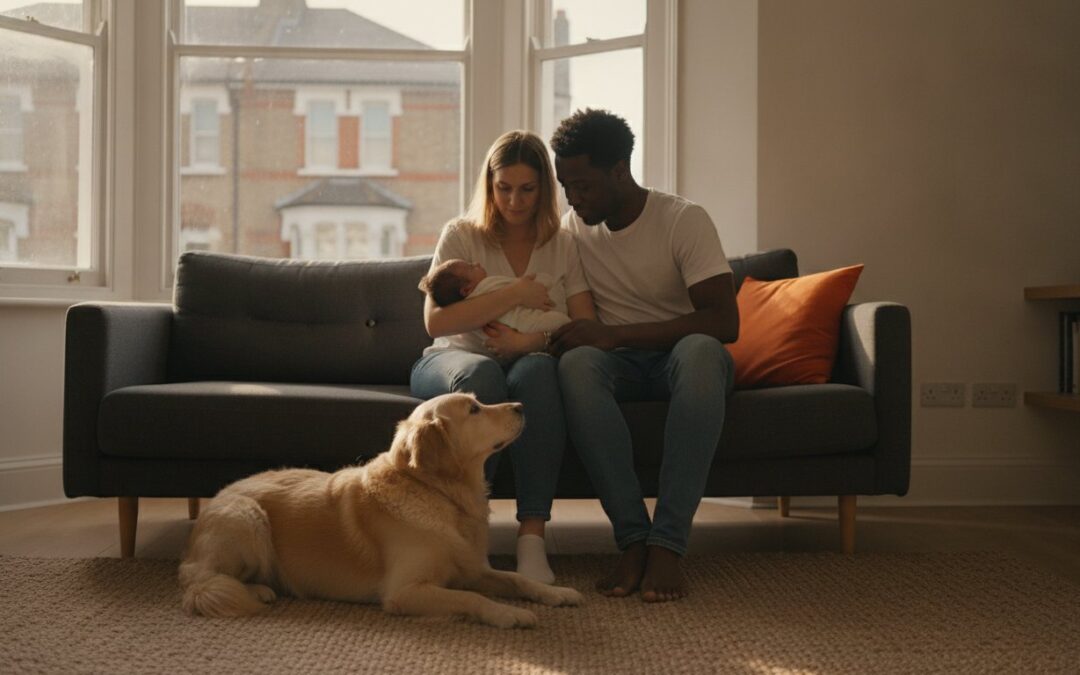
You are standing in your sunlit London flat, looking at the newly assembled cot, and wondering exactly how to introduce dog to a new baby London style. It’s a moment of quiet reflection that many expectant parents share, often accompanied by a flicker of worry about unpredictable behaviour or the logistics of managing a dog in a compact urban space. You want to ensure your dog feels secure and included rather than sidelined by the new arrival. It’s completely natural to feel a sense of guilt about your time being split, especially when navigating busy city life and the latest 2026 regulations regarding public spaces.
This guide will show you how to master a safe, stress-free introduction by focusing on proactive emotional preparation and practical safety measures that respect both your dog’s welfare and your family’s peace of mind. We’ll explore bespoke training techniques, advice for smaller living environments, and essential updates on local dog control orders to ensure a confident transition for everyone involved. By adopting your dog’s perspective and fostering a shared life, you can build a household where both your baby and your pet thrive together.
Key Takeaways
- Begin environmental preparation at least three months before your due date by gradually introducing baby equipment to prevent “new object” anxiety.
- Refine core skills such as the “Settle” and “Leave It” commands to ensure safety and a calm atmosphere during nursing or when managing dropped items.
- Follow a structured, neutral-ground protocol for how to introduce dog to a new baby London, prioritising a low-key homecoming that acknowledges your dog’s emotional state.
- Develop urban-specific management techniques for navigating narrow pavements and high-stimulation environments like Hampstead Heath with a pram and your dog.
- Recognise the markers for when to transition from home-led training to bespoke 1-to-1 behavioural consultations for tailored, expert support in your home.
Preparing Your Dog for a New Baby Before the Big Arrival
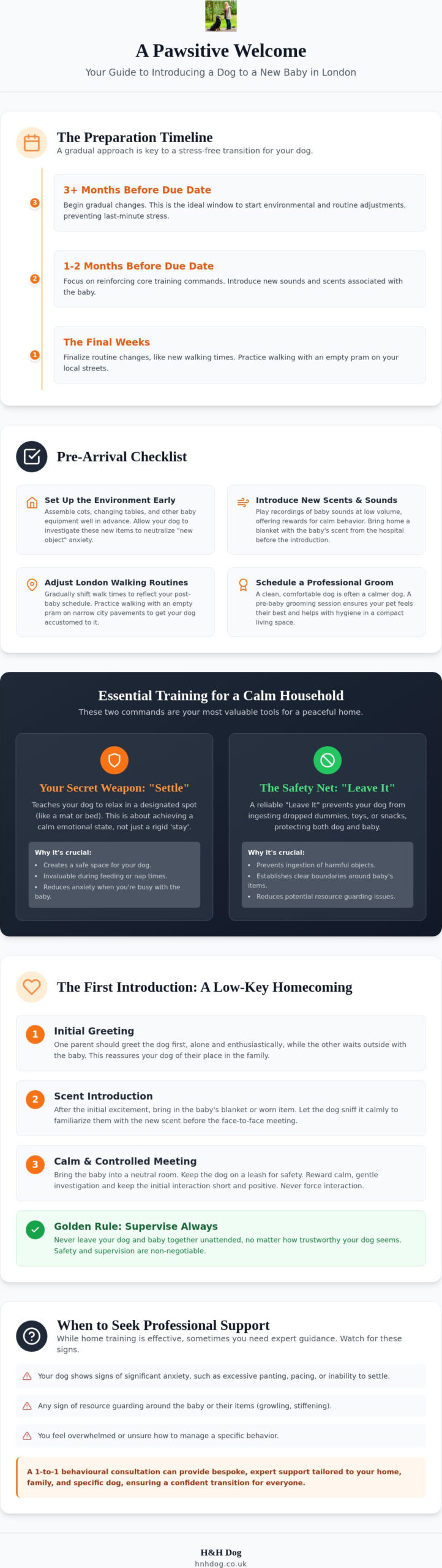
Preparation should begin at least three months before your due date. This timeline provides a vital buffer for your dog to adjust to shifting household dynamics without the immediate pressure of a newborn’s presence. Dogs thrive on predictability, so any changes to their environment or daily schedule must be introduced slowly to prevent stress. Start by setting up larger pieces of baby equipment, such as cots and changing tables, well in advance. Allowing your dog to investigate these items while they are stationary helps neutralise “new object” anxiety, ensuring the nursery doesn’t become a source of fear once the baby occupies it.
A fresh start physically can also support your dog’s emotional wellbeing. Scheduling a professional mobile dog grooming session ensures your pet is comfortable, clean, and free from coat irritation before the family focus shifts. A dog that feels physically at ease is less likely to be irritable or reactive. This proactive step also addresses hygiene concerns, allowing you to focus entirely on learning how to introduce dog to a new baby London parents often find that a clean, well-groomed dog makes the initial close-quarters living in a city flat much more manageable.
The Scent and Sound Protocol
Dogs experience the world through their senses, and the arrival of a baby introduces a cacophony of new inputs. You can prepare them by playing recordings of crying or gurgling sounds at a low volume, gradually increasing the intensity while offering high-value rewards. This creates a positive association with baby noises. Scent is the primary sensory medium through which dogs perceive and understand their social environment. To facilitate this, have a partner bring home a “hospital cloth” or a worn baby grow before the newborn arrives. Place the item in a neutral area and reward your dog for calm, curious sniffing. This allows the baby’s scent to become a familiar, non-threatening part of the home’s olfactory landscape.
Adjusting Your London Walking Routine
Your walking schedule will inevitably change once the baby arrives. If you currently walk your dog at 7:00 AM but expect this to shift to midday, start making that transition now. When you begin to shift these routines, observing your dog’s reactions is essential for understanding dog behavior in response to environmental change. Practise walking with the pram empty on your local North London streets. This helps your dog learn to walk alongside the wheels without darting or weaving, which is crucial for safety on narrow pavements. If your schedule becomes too demanding, considering group dog walking can be a brilliant way to maintain your dog’s social needs and exercise levels during those first few hectic weeks.
Essential Training Skills for a Calm Household
Training serves as a vital bridge of communication, providing your dog with a clear understanding of what is expected when their world begins to shift. Even for an adult dog with years of experience, refreshing the basics using reward-based puppy training techniques is highly effective. These methods focus on partnership rather than control, ensuring your dog feels secure in their role. Mastering specific skills now will significantly reduce stress when you are navigating the practicalities of how to introduce dog to a new baby London life often entails, such as managing a curious pet while nursing in a compact living room.
Refining the “Leave It” command is equally essential. In a household with a newborn, items like dummies, muslin cloths, or even dropped snacks become high-value curiosities. A reliable “Leave It” prevents your dog from ingesting potentially harmful objects and maintains a clear boundary around the baby’s belongings. The ASPCA’s guide to introducing dogs and babies emphasises that consistent, positive reinforcement for these behaviours creates a predictable environment for both the animal and the child.
The “Settle” Command: Your Secret Weapon
The “Settle” command is arguably the most valuable tool in your repertoire. Unlike a “Stay,” which often implies a temporary, rigid physical posture, a “Settle” encourages a physiological shift into a relaxed emotional state. To teach this, use a dedicated mat or bed and reward your dog for choosing to lie down and relax their body. Gradually increase the duration, rewarding the moments where their breathing slows and their head rests. This skill allows your dog to be a calm observer during nappy changes or feeding times, preventing them from feeling excluded while ensuring they remain at a safe distance. If you feel you need tailored guidance to perfect these skills, a bespoke 1-to-1 dog training session can help you implement these routines within your specific home layout.
Establishing Boundaries Without Exclusion
Physical boundaries, such as baby gates, should never feel like a punishment. Instead, frame these “baby-only zones” as a positive safe space for your dog to rest away from the noise. Introduce gates months in advance, feeding your dog treats through the bars so they associate the barrier with good things. It is vital to maintain your bond during this transition; even five minutes of focused, 1-to-1 interaction can reassure your dog that they are still a cherished member of the family. By teaching your dog to respect the nursery threshold now, you prevent the frustration that arises from sudden, unexpected exclusion later.
The First Introduction: Safe Steps for Bringing Baby Home
The moment you step through your front door with your newborn marks the beginning of a new chapter for your entire household. While the anticipation is high, the most successful introductions are those that remain intentionally low-key. Dogs are incredibly sensitive to human emotion; if you are tense or overly anxious, your dog will mirror that state. By following a structured homecoming protocol, you can manage the initial excitement and set a calm tone for the days ahead. This is a critical phase in how to introduce dog to a new baby London parents often find most daunting, but with a steady hand, it becomes a manageable transition.
Safety is the foundation of this process. It is a fundamental rule of responsible ownership that you must never leave a dog and baby unsupervised, regardless of the dog’s history or temperament. Even the most gentle pet can react unpredictably to a sudden noise or movement from a newborn. Maintaining a “safety first” mindset protects both your child and your dog’s emotional wellbeing, ensuring that every interaction is a positive building block for their future bond. For more detailed guidance on the weeks leading up to this moment, the Dogs Trust offers an excellent resource on preparing your dog for a new baby which complements the steps outlined here.
The Homecoming Strategy
When you arrive home, have one parent enter the house alone first to greet the dog. This allows your pet to express their initial joy and expend some energy without the baby being present. Once the dog has settled, the parent carrying the baby can enter. Keep your dog on a lead during this first interaction to ensure you have gentle control. Encourage your dog to remain calm with “four paws on the floor” and offer quiet praise or small treats for relaxed behaviour. This approach prevents the dog from feeling that the baby is a barrier to their usual affection, instead positioning the newborn as a calm addition to the family unit.
Reading Your Dog’s Body Language
Understanding your dog’s subtle communication is essential during these early meetings. Look for signs of stress that might be easily missed, such as “whale eye” where the whites of the eyes are visible, frequent lip licking, or repetitive yawning. These signals indicate that your dog may be feeling overwhelmed by the new situation. Displacement behaviours are normal canine actions, such as sudden scratching or sniffing the ground, performed out of context when a dog feels conflicted or uncertain. If you notice these signs, calmly increase the distance between the dog and the baby. Intervening early, before a dog feels the need to growl or retreat, helps maintain a sense of security and trust within your urban home.
Managing the London Lifestyle: Walks, Space, and Socialising
Navigating the capital’s unique landscape requires a shift in how you view your daily routines. In a city where square footage is a luxury, learning how to introduce dog to a new baby London parents often find, is as much about managing the external environment as the internal one. The transition from solo walks to pram-led excursions on narrow North London pavements can be a significant adjustment for even the most well-behaved dog. It’s about finding a new rhythm that respects your dog’s need for movement while ensuring the safety and comfort of your newborn.
Maintaining your dog’s physical and mental health is vital for a harmonious household. If you find your capacity for long outings has temporarily diminished, engaging professional dog walking services can provide the necessary consistency your dog craves. This ensures they remain a happy, tired, and settled member of the family while you navigate the first few months of parenthood. A dog that has had their social and physical needs met is far more likely to remain calm when the baby is crying or when space feels tight.
Urban Walking Challenges
London streets offer a sensory overload of sirens, buses, and dense crowds that can overwhelm a dog already adjusting to a new family member. Practising “pavement etiquette” is essential; use the pram as a physical buffer between your dog and the road or other pedestrians. If your dog shows signs of reactivity in busy parks like Hampstead Heath or Highgate Wood, try to identify quieter windows for exercise. Early mornings or mid-afternoon on weekdays often provide a more serene environment. This reduces the pressure on your dog, allowing them to enjoy their time outdoors without the stress of constant high-stimulation encounters.
Small Space Management
In smaller London flats, creating distinct “zones” is a practical way to ensure everyone has a sense of security. If floor space is limited, consider utilising vertical space by providing a raised bed where your dog can retreat. Establishing a “safe den” in a quiet corner, away from the baby’s main activity areas, gives your dog a place to decompress. You can also use white noise machines to mask the intrusive sounds of London street life, which prevents your dog from becoming hyper-vigilant. On days when walks are shorter, mental stimulation through snuffle mats or food puzzles can effectively tire your dog out within the confines of your apartment.
Professional Support for a Harmonious Family Life in London
While many parents successfully navigate the initial stages of cohabitation using the techniques discussed in previous sections, some situations require a deeper level of psychological insight. Recognising when to transition from home-led guidance to the expertise of a professional dog behaviourist is a sign of responsible, proactive ownership. In the high-pressure environment of a city, where space is often shared closely, having a clear, evidence-based strategy is essential for everyone’s safety. Understanding how to introduce dog to a new baby London families find, often involves addressing complex emotional layers that go beyond basic obedience.
Professional intervention provides a bespoke roadmap tailored to your dog’s unique temperament and your specific household layout. At H&H Dog, we utilise non-coercive, supportive methods that prioritise the animal’s emotional health. This partnership-based approach ensures that your dog doesn’t just “behave,” but actually feels secure and included in the changing family dynamic. By focusing on the underlying motivations for certain actions, we help you build a relationship rooted in mutual trust rather than fear or suppression.
Signs You Need Expert Intervention
It’s vital to monitor your dog for persistent guarding behaviour around baby equipment like cots, prams, or nursing chairs. This isn’t a sign of “protection,” but rather a signal that your dog feels their resources or space are under threat. You should also look for signs of extreme withdrawal, such as a dog that suddenly stops engaging with the family or shows symptoms of lethargy and depression. These internal emotional states can be just as critical as outward reactivity. A formal behavioural consultation can identify these triggers early, providing you with a structured plan to prevent incidents before they occur.
The H&H Dog Approach
With over 20 years of experience supporting families across the North London and Watford areas, we understand the nuances of urban pet ownership. Our 1-to-1 dog training and behavioural sessions take place within your own home, allowing us to observe and address challenges in the environment where they actually happen. We don’t believe in generic, mass-market fixes. Instead, we offer personalised plans that adapt as your child grows. The transition from a stationary newborn to a mobile, unpredictable toddler presents new challenges for any dog. Our ongoing support ensures you have the tools to foster a safe, respectful, and lifelong bond between your child and your pet.
Creating a Secure Future for Your Growing Family
Navigating the shift from a pet-centric home to a multi-species family is a significant journey. You’ve seen that success lies in the details; starting scent protocols early, refining essential commands, and adapting your urban walking routines to the reality of London’s streets. These proactive steps ensure your dog feels like a partner in this new chapter rather than a bystander. By prioritising your dog’s emotional state alongside your newborn’s needs, you’re fostering a household where everyone feels safe, secure, and included.
Every dog is an individual, and sometimes the complexities of city living require a more customised approach. If you’re seeking clarity on how to introduce dog to a new baby London, our team is here to provide steady, expert mentorship. We bring over 20 years of experience to the North London and Watford communities, utilising only evidence-based, non-coercive methods that value long-term emotional health. Book a bespoke behavioural consultation with H&H Dog today to create a tailored plan for your family’s unique needs. You can move forward with confidence, knowing you’re building a foundation of mutual respect for both your child and your faithful companion.
Frequently Asked Questions
Is it normal for my dog to act jealous of the new baby?
It is common for dogs to exhibit behaviour that looks like jealousy when their routine is disrupted. Understanding how to introduce dog to a new baby London parents find, involves recognising that these shifts are emotional responses to a change in social structure rather than a human grudge. By maintaining small pockets of dedicated time for your dog, you help them understand that their bond with you remains secure despite the new arrival.
How can I introduce my dog to the baby’s smell before we leave the hospital?
You can facilitate scent introduction by having a family member bring a worn item of baby clothing home from the hospital. Place the item in a neutral space and allow your dog to investigate it at their own pace. Offering praise for calm curiosity helps create a positive association with the baby’s unique scent before the physical meeting occurs in your home.
Can I leave my dog and baby in the same room if the dog is well-behaved?
You must never leave a dog and baby unsupervised in the same room, regardless of how well-behaved your pet has been in the past. Dogs communicate through subtle body language that can be easily missed by busy parents. Constant, active supervision is the only way to ensure the safety of both your child and your dog during this sensitive transition period.
What should I do if my dog growls at the new baby?
If your dog growls, calmly and immediately increase the distance between them and the baby without using punishment or shouting. A growl is a vital communication tool that indicates your dog is feeling overwhelmed, frightened, or uncomfortable. Suppressing this warning can lead to a bite without notice, so it is essential to seek professional support to address the underlying stress and manage interactions safely.
How do I manage dog walks in London when I have a newborn?
Managing walks in the city often requires utilising professional group dog walking to maintain your pet’s activity levels while you care for your newborn. When learning how to introduce dog to a new baby London life, sticking to quieter streets or parks during off-peak hours helps avoid the sensory overload of busy pavements. This ensures your dog remains exercised and settled, reducing the likelihood of frustration-based behaviours within your home.
Should I send my dog away to stay with relatives when the baby first arrives?
Sending your dog away can often increase their anxiety and make the eventual homecoming much more stressful for everyone involved. It is generally better to keep your dog at home so they can gradually adjust to the new sounds and smells of your baby. This helps them understand how the family dynamic has changed, fostering a sense of inclusion and security from the very beginning.
How can I make sure my dog still feels loved with a baby in the house?
Ensure your dog feels loved by scheduling short, focused sessions of 1-to-1 interaction every single day. Even five minutes of gentle grooming or a quick game of food puzzles can reassure them of their place in the family. Including your dog in low-stress activities, such as sitting nearby during feeding times on their mat, helps them feel like a valued participant in your new family life.
Will my dog’s behaviour change permanently after the baby arrives?
Your dog’s behaviour will naturally evolve as they adapt to the presence of a child, but these changes don’t have to be permanent or negative. With consistent, reward-based training and ethical management, many dogs become more settled and observant as they find their new role. The goal is to build a stable routine that respects your dog’s emotional needs while ensuring a safe household for your child.