
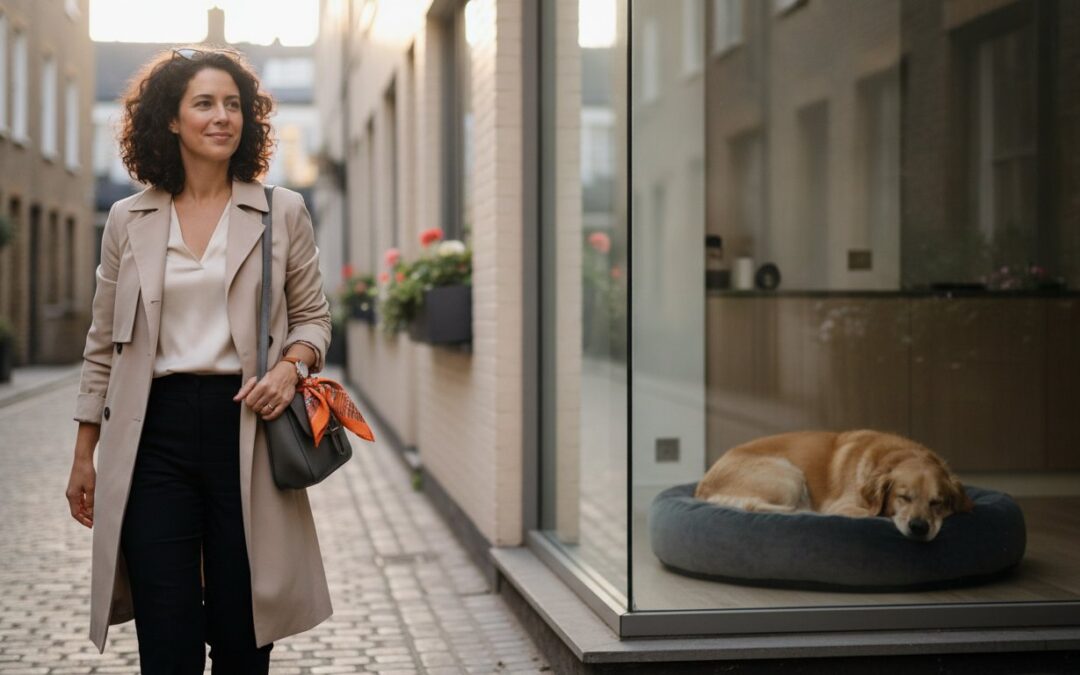
You’re standing in the supermarket aisle, heart racing as you check your phone for the third time in ten minutes, half-expecting a text from your neighbour about the barking echoing through your building’s hallway. For many owners, the dream of city living feels like a cage when your dog’s distress keeps you tethered to your flat. With 49% of London households now sharing their lives with a canine companion, the pressure of maintaining a quiet, damage-free home in close quarters has never been higher. It’s a heavy burden to carry the constant guilt of leaving, especially when you’re worried about your tenancy or the well-being of your best friend.
We understand that separation anxiety isn’t a lack of obedience; it’s a profound panic disorder that requires a gentle, structured solution. By seeking professional dog separation anxiety training London, you can master the science of sub-threshold training to help your dog feel calm and secure when home alone. This guide provides a clear path toward urban freedom, explaining how to build your dog’s confidence without ever crossing the line into fear. You’ll learn the mechanics of desensitisation and how a bespoke, evidence-based approach can finally give you the freedom to visit the gym or shop with total peace of mind.
Key Takeaways
- Understand that separation anxiety is a clinical panic disorder, requiring a compassionate, sub-threshold approach rather than simple obedience training.
- Learn how to manage the unique pressures of city living, such as communal noise and neighbour concerns, through specialised dog separation anxiety training London.
- Discover how to establish an accurate baseline for your dog’s tolerance and create a low-stress departure zone to foster a sense of security.
- Explore the mechanics of systematic desensitisation to rewrite your dog’s emotional response to being alone, ensuring long-term emotional health.
- See why bespoke 1-to-1 behavioural consultations are essential for assessing specific London home layouts and providing a customised path to freedom.
What is Dog Separation Anxiety? Understanding the Panic Response
Separation anxiety is frequently misunderstood as a simple lack of training or a dog being difficult. In reality, it’s a clinical panic disorder where a dog genuinely cannot cope with being left alone. When you begin your journey with dog separation anxiety training London, it’s vital to view the situation through this lens of emotional distress rather than misbehaviour. For a deeper look at the physiological and psychological aspects of this condition, Understanding Dog Separation Anxiety provides a useful foundation for how these episodes manifest and why they occur.
It’s helpful to distinguish between true anxiety and separation-related boredom, which is common in busy urban environments. A bored dog might chew a slipper because it provides mental stimulation. An anxious dog, however, is in the grip of a survival response. They aren’t choosing to be destructive; they’re trying to escape a perceived threat. This is why the cry it out method is scientifically outdated and deeply harmful. Forcing a dog to endure a panic attack alone only reinforces their fear and erodes the trust in your relationship. Effective dog separation anxiety training London focuses on building confidence slowly, ensuring the dog never feels overwhelmed.
Living in a compact London flat often leads to the velcro dog phenomenon, where your pet follows you from the kitchen to the bathroom. This constant proximity makes the eventual departure even more jarring. The emotional toll on you is significant, too. The constant worry about your dog’s distress and the potential for property damage can make you feel like a prisoner in your own home.
Common Symptoms in London Dogs
Urban living presents unique challenges when managing anxiety. Because we live in such close proximity to others, the symptoms are often noticed by the community before the owner. Typical signs include:
- Vocalisation: Persistent howling, whining, or barking that often leads to friction with neighbours in shared buildings.
- Destructive behaviour: Targeted damage to exit points, such as clawing at door frames or ripping up carpets in rented accommodation.
- Physiological indicators: You might find puddles of drool (hypersalivation), pacing patterns, or toileting accidents specifically located near the front door.
The ‘Why’ Behind the Panic
Panic responses are rarely the result of a single factor. Genetics play a heavy role, as do early life experiences, particularly for rescue dogs who have faced multiple rehoming cycles. We also see a spike in cases following sudden routine shifts, such as the transition from working at home to returning to a London office. Because every dog’s history is unique, consulting a dog behaviourist London is essential for an accurate diagnosis. They help you peel back the layers of your dog’s specific triggers, ensuring the training plan respects their emotional limits and promotes long-term recovery.
The Science of Recovery: How Sub-Threshold Training Works
Recovery from a panic disorder requires a fundamental shift in perspective. You aren’t teaching your dog a new trick; you’re helping their brain form new, safe associations. This is where sub-threshold training becomes the cornerstone of effective dog separation anxiety training London. By keeping your dog just below the point of panic, you allow them to remain in a “learning state.” Once a dog crosses that threshold into a full-blown panic attack, the part of the brain responsible for learning effectively shuts down. Understanding the science of canine anxiety reveals that systematic desensitisation is the most ethical way to rewrite these deep-seated emotional responses.
Many owners try to use traditional obedience commands like “Sit” or “Stay” when they leave. While these are useful skills, they don’t address the underlying emotional hijack. You can’t ask someone to “stay” their way out of a phobia. Instead, we focus on “management.” This is the practice of ensuring your dog never reaches that state of terror in the first place. This management gives the nervous system the quiet environment it needs to heal and begin making lasting progress. If you’re feeling overwhelmed by the logistics of this process, a 1-to-1 behavioural consultation can provide a structured roadmap tailored to your specific home layout.
The Departure Protocol
Dogs are masters of observation. They know you’re leaving long before you touch the door handle. They watch for “pre-departure cues” like you picking up your keys, putting on a specific coat, or even the way you put on your shoes. Part of our dog separation anxiety training London involves de-sensitising these triggers. We might pick up the keys twenty times a day without leaving, eventually breaking the link between the sound and the stress. From there, we build duration incrementally. We start with mere seconds behind a closed door, only increasing the time when your dog remains completely relaxed.
Why Consistency is Non-Negotiable
The “No-Absence” rule is often the hardest part for city owners to implement, but it’s vital. Every time your dog is left to panic, it resets their progress. Consistency means ensuring they are never alone for longer than they can handle. This is where professional dog walking London services become a lifeline. They provide the necessary companionship to bridge the gaps in your schedule. To track progress accurately, we recommend using a remote camera to monitor subtle body language changes, such as lip licking or tight ears, which signal the threshold is being approached.
Navigating Separation Anxiety in London Flats and Shared Spaces
Living in London often means sharing walls, ceilings, and floors with others. This proximity creates a unique “London Pressure” that owners in rural areas rarely face. When you’re undertaking dog separation anxiety training London, the fear of a noise complaint or a frustrated letter from a neighbour can be just as stressful as the dog’s panic itself. Managing these social relationships is a vital part of the recovery process. You aren’t just training your pet; you’re managing a community dynamic to buy your dog the time they need to heal.
The city environment is a cacophony of triggers. From the constant hum of traffic to the sudden wail of sirens, urban dogs are bombarded with sensory input. In high-density housing, the sound of a lift moving or a neighbour’s footsteps in the corridor can be enough to spike an anxious dog’s cortisol levels. Successful training involves creating a “Safe Zone” within your urban floor plan, ensuring your dog has a predictable, low-stimulus space where they can truly relax.
Managing Noise and Neighbours
Proactive communication is your best tool for maintaining good relations. Talk to your neighbours early and explain that you’re working with a professional on a structured plan. Most people are significantly more patient when they know the noise isn’t being ignored and that the goal is long-term silence. Explain that your dog separation anxiety training London relies on keeping the dog below the point of vocalisation, which means you’re actively preventing the barking they dread.
To support your dog, use white noise machines or calming music to mask hallway sounds. These auditory buffers are among the most effective home-alone success tips for flat dwellers. Legally, showing that you’re taking active, documented steps to mitigate distress can also be helpful if your tenancy agreement has strict pet clauses.
Optimising the Small Home Environment
In a smaller flat, every square foot matters. Visual barriers are essential; closing blinds or using frosted window film can prevent your dog from reacting to street-level activity. While pheromone diffusers can offer a subtle layer of support, they are never a substitute for behavioural work. They function best as part of a holistic environment where triggers are minimised.
A bespoke 1-to-1 assessment is far more effective than generic online advice for London homes. A mentor can physically walk through your layout to identify specific triggers, such as the vibration of a communal front door or the buzz of an intercom. For those days when life gets in the way of your training schedule, lean on local resources. Utilising trusted sitters or daycare options in Watford and North London ensures your dog is never forced to cross their threshold, protecting the progress you’ve worked so hard to achieve.
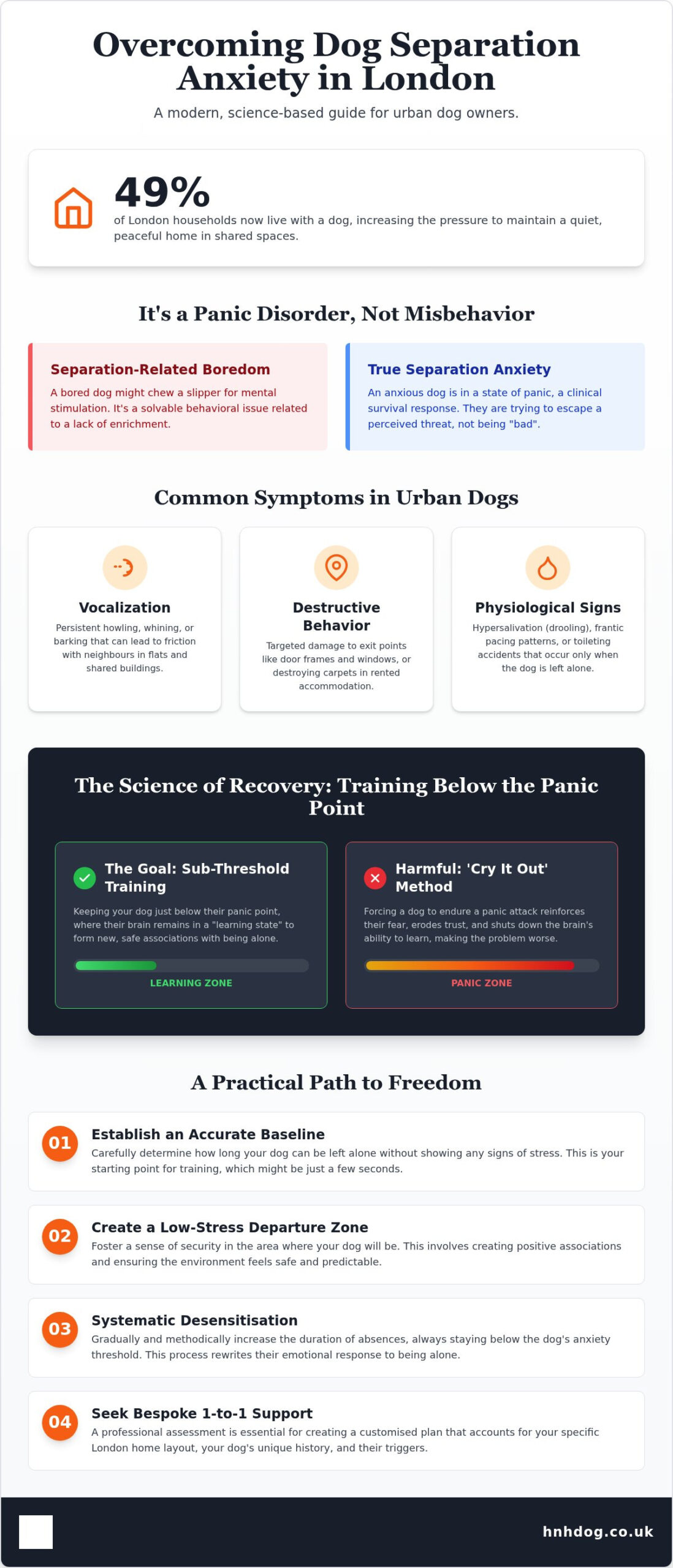
Building a Training Plan: Practical Steps for Home-Alone Success
Creating a structured roadmap is the only way to move from guesswork to genuine progress. When you embark on dog separation anxiety training London, your plan must be as dynamic as the city itself. Success isn’t found in a one-size-fits-all online course; it’s found in the small, daily adjustments you make based on your dog’s specific emotional state. This process requires patience, but the result is a dog that truly understands they are safe. A logical, step-by-step approach ensures that you never push your dog beyond their ability to cope.
- Step 1: Baseline Assessment. Use a remote camera to observe exactly when your dog begins to show signs of worry. Do they pace after thirty seconds? Does their breathing change after two minutes? This is your starting point.
- Step 2: Environment Setup. Designate a departure zone that feels secure. This might be a specific room or a comfortable corner of your flat where external triggers are minimised.
- Step 3: Graduated Departures. Begin leaving for durations your dog can easily handle. If their baseline is ten seconds, your first training departures might only be five seconds.
- Step 4: Data Tracking. Keep a log of every session. Note the time of day, the duration, and your dog’s body language. Patterns will emerge that help you avoid setbacks.
- Step 5: Professional Review. If progress stalls, it’s time to tweak the protocol. An expert eye can spot subtle errors in your timing or environment that you might have missed.
The First 48 Hours: Immediate Management
The most important first step is to stop the cycle of panic immediately. This means suspending all alone time. Every time your dog panics, their brain reinforces the idea that being alone is dangerous. You’ll need to arrange a support network of friends, family, or professional sitters for essential errands. If you are starting with a younger pet, following robust puppy training principles can often prevent these anxious patterns from ever taking root by teaching independence and confidence from an early age.
Advanced Training Skills
Once your management is in place, you can focus on foundation skills. Teaching a “Settle” on a mat provides your dog with a clear job to do while you move around the house. We build value for this Safe Zone through calm play and specific rewards, making it the most reinforcing place in the home. Only when your dog is consistently relaxed during these simulated departures do we introduce real-world scenarios, such as a quick trip to the local shop. If you’re ready to build a bespoke plan for your pet, book a behavioural consultation to begin your journey toward a calmer, more secure home life.
The H&H Approach: Bespoke Support for London & Watford Dogs
With over 20 years of industry experience, H&H Dog has witnessed the profound impact that the fast-paced city environment can have on canine mental health. We don’t subscribe to the generic, mass-market models that often dominate the industry today. We believe that effective dog separation anxiety training London requires a deep, empathetic understanding of both the individual dog and the specific urban environment they inhabit. While many providers have transitioned to remote-only packages, we recognise that the nuances of a physical home layout are often the key to unlocking progress.
Individualised 1-to-1 Training
Your London or Watford home has its own unique sensory profile, from the specific acoustics of a communal hallway to the vibration of a passing bus. Our 1-to-1 behavioural consultations allow us to act as a steady, knowledgeable mentor, identifying these subtle triggers in person. This bespoke support is significantly more effective than a standardised online course because it allows for immediate, real-time adjustments based on your dog’s internal emotional state. We’ve helped hundreds of families across North London and North West London navigate these hurdles with a calm confidence that ensures every challenge has a manageable, ethical solution.
Integrating Your Dog’s Lifestyle
A dog’s emotional well-being is a holistic puzzle; you cannot treat separation anxiety in a vacuum. If a dog is already over-stimulated by a stressful grooming routine or lacks proper mental enrichment, their baseline anxiety will remain too high for effective learning. Integrating supportive services like mobile dog grooming Watford ensures your pet receives essential care without the added trauma of a busy salon environment. This keeps their stress levels low, making them much more receptive to the dog separation anxiety training London process.
Structured walking similarly provides the mental decompression and physical relaxation needed for a dog to settle into a deep, restorative sleep while you’re away. Our commitment to non-coercive, evidence-based methodology means we prioritise your dog’s welfare above all else. We avoid outdated, adversarial terms, opting instead for a partnership rooted in mutual respect. If you’re ready to move away from the guilt of leaving your pet behind, taking the first step by booking your behavioural consultation will set you on a clear, actionable path toward long-term urban freedom.
Reclaiming Your Freedom and Your Dog’s Peace
Living with a dog who panics when left alone is an exhausting emotional journey, especially within the high-pressure environment of the city. We’ve explored how understanding the panic response and masterfully applying sub-threshold training can rewrite your dog’s emotional associations. By managing your home environment and following a structured, graduated plan, you can move away from the cycle of guilt and neighbour complaints toward a life of genuine urban freedom.
You don’t have to navigate this complex process alone. With over 20 years of professional experience, we specialise in providing force-free, ethical support for families across North London and Watford. Our bespoke approach ensures that your training plan respects your dog’s unique limits while accounting for the specific layout of your home. If you’re ready to start your journey with expert dog separation anxiety training London, we’re here to act as your steady mentor.
Book a 1-to-1 behavioural consultation with H&H Dog today and take the first step toward a calmer, more secure future for you and your pet. Improvement is inevitable with the right guidance, and we look forward to helping you and your dog thrive together in the city.
Frequently Asked Questions
How long does it take to fix dog separation anxiety?
Recovery varies significantly based on the dog’s history and the owner’s consistency. It’s helpful to view this as a marathon rather than a sprint. Some dogs show progress in weeks, while others require many months of sub-threshold work. The goal is always long-term emotional stability rather than a quick, forceful fix. We focus on incremental wins that build a lasting foundation of trust.
Should I use a crate for a dog with separation anxiety?
Generally, crates are not recommended for dogs experiencing true separation panic. Many anxious dogs feel trapped, which can lead to confinement distress and self-injury. Instead of a crate, we suggest creating a larger Safe Zone or using baby gates. This allows the dog to move freely without feeling claustrophobic while you work through their structured training plan and build their confidence.
Can I train my dog myself or do I need a professional behaviourist?
While you’ll do the daily work, a professional provides the essential roadmap and objective observation. Separation anxiety is a complex panic disorder, and misreading subtle body language can lead to painful setbacks. A professional 1-to-1 behavioural consultation ensures your plan is bespoke to your London home layout, helping you avoid common pitfalls and stay on the most efficient path to recovery.
Will getting another dog help my dog’s separation anxiety?
Rarely does adding a second dog resolve the issue. Separation anxiety is typically about the specific bond with the human owner, not a general fear of being alone. You might end up with two dogs who are stressed or one who mirrors the other’s panic. It’s better to focus on individualised dog separation anxiety training London before considering expanding your canine family.
Do calming treats or plug-ins actually work?
These tools can be supportive aids, but they aren’t a standalone cure. Pheromone diffusers and calming supplements may lower a dog’s baseline stress slightly, making them more receptive to learning. However, they must be used alongside a robust, evidence-based desensitisation programme. Think of them as a gentle breeze behind your sails rather than the engine driving the entire recovery process.
How much does separation anxiety training cost in London?
Costs vary across the city depending on the level of support and the trainer’s professional expertise. Some specialists offer intensive multi-week packages, while others provide hourly behavioural consultations. While we don’t list specific industry averages here, investing in expert guidance early often saves money in the long run by preventing property damage and ensuring the training is effective from the very start.
My dog starts barking the moment I pick up my keys; what should I do?
This is a classic pre-departure cue that needs to be desensitised. You should pick up your keys frequently throughout the day without actually leaving the house. By sound-conditioning the keys in a neutral context, you break the association between that noise and your departure. This is a core component of dog separation anxiety training London, helping your dog remain calm.
Is it ever too late to start training an older rescue dog?
It is never too late to help a dog feel safe and secure. While older rescue dogs may have deeply ingrained patterns, their brains remain plastic and fully capable of learning new associations. We use the same gentle, non-coercive methods regardless of the dog’s age. With patience and a customised approach, even senior dogs can learn that being home alone isn’t something to fear.