
What if the traditional advice for toilet training assumes you have a private lawn and a back door, rather than a fourth-floor flat and a slow-moving lift? For many owners, puppy house training London style feels like a logistical puzzle that standard manuals simply don’t solve. It’s often exhausting to balance conflicting advice about puppy pads while your new companion is overwhelmed by the sirens and scents of a busy urban street.
We understand that you want a clean, accident-free home and a reliable routine that fits your busy lifestyle, but the unique pressures of high-rise living can make progress feel slow. You can master these logistics and achieve lasting results with our expert, evidence-based urban survival guide. This article explores how to build a bespoke routine that respects your dog’s perspective, helps your puppy communicate their needs, and manages the transition to the outside world with calm confidence. By understanding the underlying motivations behind your puppy’s behaviour, you can create a partnership that ensures a clean home and a happy, well-adjusted city dog.
Key Takeaways
- Shift your perspective to see house training as a vital communication system that fosters mutual understanding between you and your puppy.
- Navigate the specific challenges of puppy house training London by prioritising neutral exposure to urban stimuli like buses and sirens during the critical learning window.
- Compare the effectiveness of puppy pads and real grass balcony solutions to find the most ethical and practical fit for your specific living arrangement.
- Prioritise ‘Check-In’ training to ensure your puppy remains focused on you amidst the heavy distractions of busy city parks and pavements.
- Discover how bespoke 1-to-1 support addresses the unique logistical hurdles of North London living for a cleaner, more harmonious home.
The Foundations of Puppy House Training in London
At H&H Dog, we view the foundations of house training as a sophisticated communication system rather than a mere physical habit. It is about teaching your puppy how to navigate a human environment that doesn’t naturally make sense to them. When you approach puppy house training London from a place of partnership and empathy, you aren’t just preventing accidents. You are building a bond of trust that serves as the bedrock for all future learning. Our philosophy centres on the animal’s perspective, ensuring they feel safe and understood throughout the process.
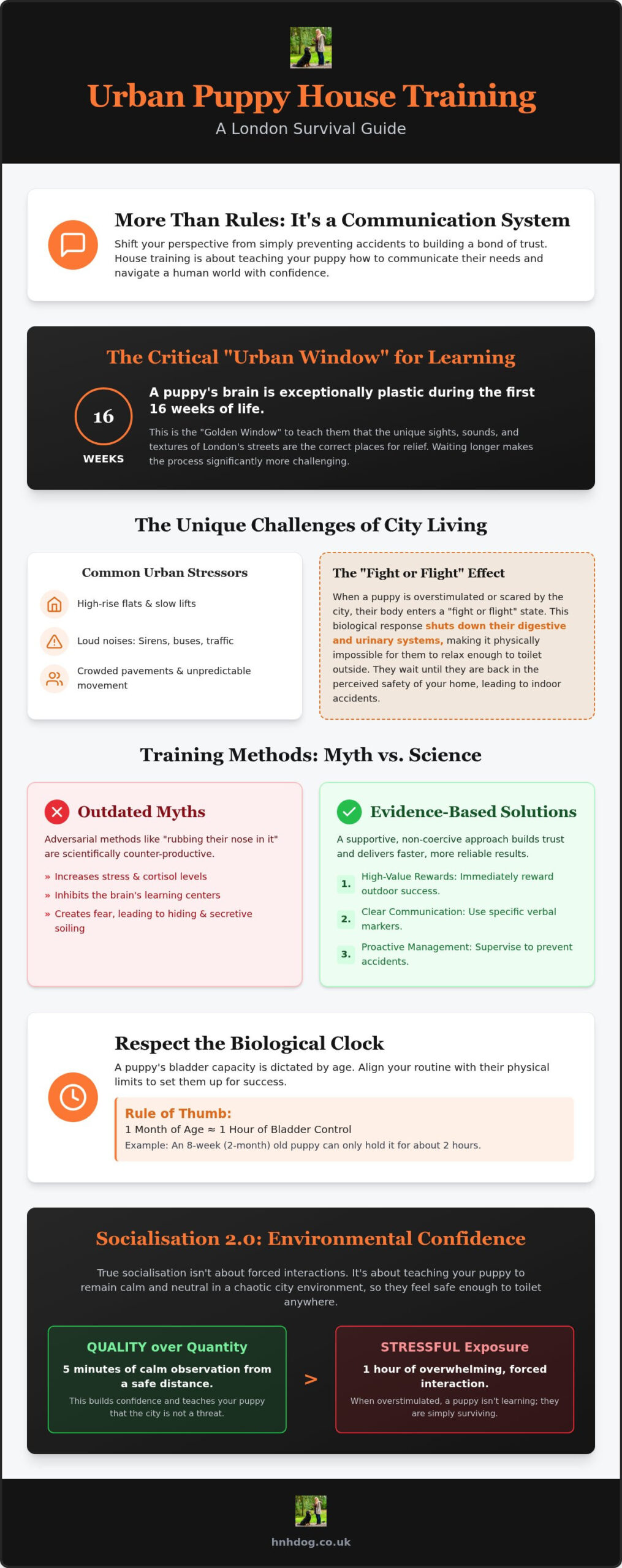
The first 16 weeks of a dog’s life represent a critical “urban window” where their brain is exceptionally plastic. In a city as stimulating as London, this period is vital. It’s the time to teach them that the textures and scents of the city streets are the appropriate places for relief, even amidst the roar of traffic or the rush of pedestrians. Waiting too long to establish these boundaries can make the process significantly more challenging as they grow older and more set in their ways.
The Biological Clock: Understanding Puppy Development
You must respect your puppy’s physical limitations to avoid frustration. A puppy’s bladder capacity is strictly dictated by their age. As a general rule, a healthy puppy can typically hold their bladder for roughly one hour for every month of their life. An eight-week-old puppy, for example, physically cannot wait longer than two hours. Consistency is the currency of success in our fast-paced city. If your routine is unpredictable, your puppy cannot learn to predict their own needs. We focus on this “Golden Window” for neuroplasticity to ensure these habits become second nature before the adolescent phase begins. By aligning your schedule with their biology, you set them up for inevitable success.
Evidence-Based Methods vs. Outdated Myths
Contemporary behavioural science has thoroughly debunked the harmful myth of “rubbing a dog’s nose in it.” This adversarial approach is scientifically counter-productive because it spikes cortisol levels. High stress actually inhibits the part of the brain responsible for learning. In high-distraction environments like North West London, fear is the enemy of progress. If a puppy fears your reaction to an accident, they may simply learn to hide their needs from you, leading to secretive soiling.
Instead, we advocate for non-coercive, supportive methods that prioritise mutual understanding. Positive reinforcement creates faster, more reliable results by making the desired action rewarding. Consider these core components of a modern approach:
- High-Value Rewards: Use premium treats to reward outdoor successes immediately, competing with the heavy distractions of London life.
- Clear Communication: Use specific verbal markers to signal exactly when your puppy has done the right thing.
- Proactive Management: Supervise your puppy closely to prevent accidents before they happen, rather than reacting after the fact.
This partnership-based model ensures your puppy remains confident and eager to learn, even in the most bustling urban settings.
Socialisation 2.0: Environmental Confidence for City Pups
Socialisation is often misunderstood as a series of forced interactions with other dogs and people. In reality, successful puppy house training London depends on your dog’s ability to remain neutral in a chaotic environment. If your puppy is hyper-vigilant or startled by the screech of a bus or the rattle of a skateboard, their body enters a “fight or flight” state. Biologically, this response shuts down the digestive and urinary systems. It becomes physically impossible for them to relax enough to toilet until they are back in the perceived safety of your home.
Urban environments present a unique set of challenges that can overwhelm a young mind. Common triggers include:
- Emergency sirens and loud vehicle horns
- Air brakes and engine noise from London buses
- The high-pitched rattle of skateboards on concrete
- The unpredictable movement of crowded pavements
Focus on “Quality over Quantity” during your outings. Five minutes of calm observation from a safe distance is worth more than an hour of stressful exposure. This approach builds the essential puppy training skills needed to ensure your dog feels safe enough to perform their business anywhere in the city. When a puppy is overstimulated, they aren’t learning; they are simply surviving.
Noise Desensitisation for Urban Living
London sounds can be relentless. Whether it’s the heavy traffic in Watford or the rumble of the Tube, noise is a major barrier to outdoor success. Use a “distance and reward” strategy. Start far enough from the noise source that your puppy can acknowledge it without reacting, then reward that calm acknowledgement. You can also play recordings of city sounds at a low volume during meal times at home to create positive associations. A calm emotional state is the prerequisite for successful puppy house training London.
Safe Exploration in North London Parks
Large green spaces like Hampstead Heath or Gladstone Park offer wonderful opportunities, but they can be overwhelming for a new arrival. Narrow London streets often force “on-lead” greetings, which can trigger reactivity and anxiety. Watch for early signs of stress: lip licking, yawning, or a tucked tail. If these occur, move to a quieter area immediately. Our 1-to-1 puppy training sessions are designed to help you identify these subtle cues before they lead to indoor accidents, ensuring a smoother transition to city life.
Toilet Training Logistics for London Flats and Houses
Living in a high-rise flat in North West London introduces logistical hurdles that standard manuals often ignore. If you reside on the fourth floor, the simple instruction to “go outside” involves a long corridor, a potentially slow lift, and a busy lobby. This journey can take several minutes; often longer than a young puppy’s bladder can wait. To succeed with puppy house training London, you must implement a specific “Transit Protocol.” Carrying your puppy through the communal areas of your building is a highly effective management strategy. Most puppies have a natural instinct not to soil the person carrying them, which buys you the precious time needed to reach the pavement safely.
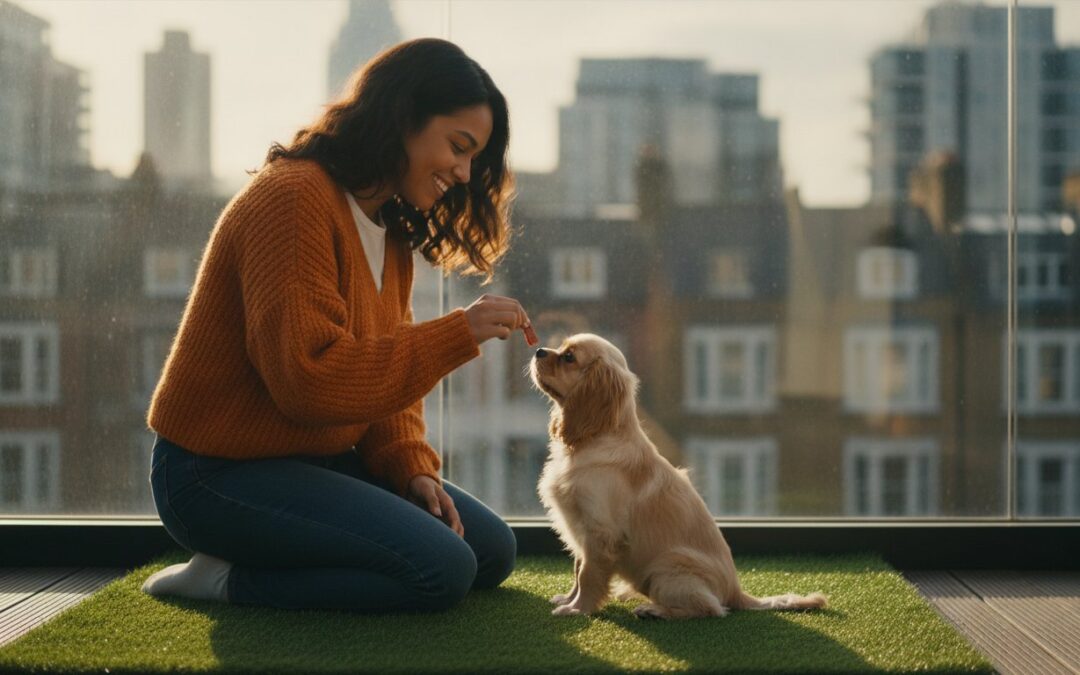
When you lack immediate garden access, choosing the right substrate for an indoor or balcony relief station is vital. While puppy pads are widely available, real grass patches for balconies are often superior because they maintain the scent and texture association with the outside world. This helps prevent the confusion that occurs when a puppy learns to use a carpet-like pad indoors but is then expected to use grass outdoors. You can find excellent foundational advice in the RSPCA’s guide to toilet training, which emphasises consistency and positive reinforcement as the most ethical path forward.
Success Without a Private Garden
If you must use an indoor relief station, placement is everything. Keep it away from their bed and food to respect their natural hygiene instincts. Scent marking plays a significant role in their learning process. Use enzymatic cleaners for any accidents to completely remove the pheromones that signal “this is a toilet.” Standard household cleaners often contain ammonia, which actually smells like urine to a dog and can encourage repeat accidents in the same spot. As your puppy grows, gradually move the station closer to the door to facilitate the transition to the street.
Routine and Environmental Management
Managing the environment is easier when you create a “Puppy Zone.” This is a smaller, gated area of your flat where your puppy can be supervised easily. It prevents them from wandering into another room to have an unsupervised accident. Follow a strict “Sleep, Eat, Play, Pee” cycle. Every time your puppy wakes up, finishes a meal, or stops playing, they should be taken to their designated toilet spot immediately. Crate training is another vital safety tool for urban apartment living. It provides a secure space that mimics a natural den, helping your puppy develop better bladder control while keeping them safe when you cannot provide 100% supervision.
Essential Skills for the Urban Puppy Curriculum
While the previous sections focused on the physical logistics of puppy house training London, long-term success in the city requires a specific set of engagement skills. In a bustling urban environment, your puppy needs more than just basic obedience. They need the ability to focus on you despite the surrounding chaos. We prioritise “Check-In” training, which encourages voluntary eye contact, over traditional cues like “sit.” A puppy that is looking at you is a puppy that isn’t scavenging for litter or becoming overwhelmed by the sights and sounds of a busy high street. This foundational focus creates a calmer emotional state, making it much easier for them to remember their house training rules when they are out in public.
“Leave It” is another life-saving skill that every London dog must master. Our streets are often littered with discarded food and urban debris that can be dangerous if ingested. By teaching your puppy that ignoring these items leads to a higher-value reward from you, you prevent potential health emergencies and build a partnership based on trust rather than conflict. This skill is particularly important during the early stages of puppy house training London when your dog is still learning the difference between acceptable and unacceptable items to interact with outdoors.
Reliable Recall Under High Distraction
A “Bulletproof Recall” is the key to enjoying safe off-lead time in large green spaces like Fryent Country Park. Many owners wait until they are at the park to start training, but this is a recipe for frustration. You must start in the low-distraction environment of your hallway. We often suggest using a whistle for recall because its sound is consistent and carries across long distances; it cuts through the noise of North West London traffic more effectively than a human voice. It helps your puppy distinguish your signal from the hundreds of other voices they hear daily, even when competing with the lure of squirrels or other dogs.
Loose Lead Walking on Busy Pavements
Navigating crowded pavements requires patience and the right technique. We recommend the “Stop-Start” method for narrow London walkways. If the lead becomes taut, the walk simply pauses until the puppy relaxes the tension. This teaches them that pulling never gets them where they want to go. A well-fitted harness is usually better for urban pups than a collar, as it protects their neck from injury if they are startled by a sudden noise. Managing “frustrated greeters” who want to say hello to every passerby is easier when you have a clear plan for redirection. If you’re feeling overwhelmed by these city-specific challenges, our 1-to-1 puppy training offers the bespoke, professional guidance you need to succeed.
The H&H Dog Difference: Bespoke 1-to-1 Puppy Support
Choosing the right support system is the most significant decision you will make in your dog’s early life. While many local providers offer standardised group classes, these environments are often too overstimulating for effective learning. A puppy struggling with the basics of puppy house training London shouldn’t be expected to focus while surrounded by ten other barking dogs in a community hall. At H&H Dog, we leverage a 20-year legacy in the Watford and North London communities to provide a superior alternative. Our 1-to-1 puppy training is the premium choice for busy Londoners because it respects your time and your dog’s emotional welfare, offering a calm environment where real progress can happen.
Tailored Training for Your Unique Home
Every London home presents different logistical challenges. We don’t believe in generic advice because a garden flat in Watford requires a different strategy than a penthouse in North West London. During a bespoke session, we assess your specific layout to identify potential “accident hotspots” and refine your management plan. This might include walking through your building’s communal areas or visiting your local park to practice engagement skills in the exact environment where you spend your time. By customising our approach to your dog’s specific breed and temperament, we ensure that the foundations you build are sustainable for the long term.
A Holistic Approach to Puppy Welfare
Successful house training is about more than just a clean carpet; it is about emotional regulation. A puppy that can remain calm and communicate their needs is a puppy that will thrive in all aspects of city life. This early investment in behavioural health pays dividends as your dog matures. For example, a dog that has learned to be comfortable with handling and calm in new environments will find future sessions for mobile dog grooming in Watford far less stressful. We view ourselves as your lifelong partner in pet care, providing a steady hand as you move from those first toilet training hurdles to seeking professional dog walking in London.
Our evidence-based, non-coercive methods ensure that your dog’s perspective is always respected. By choosing a 1-to-1 behavioural consultation, you are preventing expensive and stressful issues from developing later in life. It’s about creating a shared life based on mutual understanding rather than force. To begin your journey with a knowledgeable mentor who is as invested in your peace of mind as you are, you can book your first bespoke session through our website today. Let’s work together to make puppy house training London a manageable and rewarding experience for both you and your new companion.
Embracing a Harmonious Future with Your Urban Puppy
Your journey through the complexities of puppy house training London doesn’t have to be a source of stress. By shifting your perspective to see toilet training as a vital communication system, you’re already setting your companion up for success. We’ve explored how proactive environmental management and neutral exposure to city stimuli create a puppy who feels safe enough to perform their business anywhere. These foundations are the first step toward a lifetime of mutual understanding.
Success in a busy city requires a customised approach that respects your dog’s emotional state. With over 20 years of professional experience, H&H Dog specialises in solving the unique urban challenges found across North London and Watford. We use only evidence-based, non-coercive methods to build a partnership of trust. You can book your bespoke 1-to-1 Puppy House Training session today to receive expert guidance tailored to your specific home layout and routine.
You now have the tools to turn a potentially chaotic situation into a predictable, clean routine. With patience and the right professional mentorship, a harmonious city life with your puppy is well within reach. We’re here to support you every step of the way.
Frequently Asked Questions
When should I start puppy house training in London?
You should begin puppy house training in London the moment your new companion arrives home. The “urban window” for learning is most effective during the first 16 weeks of age, when a puppy’s brain is highly receptive to new textures and environments. Waiting for full vaccinations to establish a routine can lead to confusion. Start by introducing your designated toilet area and rewarding calm, successful attempts right away to build a positive association.
How do I toilet train a puppy if I live in a flat with no garden?
Success in a flat requires a structured “Transit Protocol” to navigate lifts and lobbies without accidents. We recommend carrying your puppy through communal areas to prevent them from soiling the hallway floor. If you lack a private garden, a real grass patch on a balcony can provide a consistent substrate that maintains a strong association with the outdoors. This method bridges the gap between your living space and the street effectively.
Are puppy pads a good idea for London apartment living?
Puppy pads can be a useful management tool in high-rise buildings, but they often create substrate confusion. Many puppies learn to associate absorbent, carpet-like textures with toileting, which can lead to accidents on your actual rugs. If you must use them, transition to the street or a grass balcony patch as quickly as possible. This ensures your puppy house training London remains focused on long-term, outdoor reliability rather than indoor habits.
How long does it take to house train a puppy in the city?
Most puppies achieve basic reliability within four to six weeks of consistent training, though full physical control may take several months. In a busy city, environmental stressors like loud traffic or crowded pavements can occasionally cause minor setbacks. Progress depends on your ability to maintain a predictable schedule and manage your puppy’s emotional state. Consistency is the primary factor in how quickly your puppy learns to communicate their needs effectively.
What should I do if my puppy has an accident on my rug?
Remain calm and avoid any form of verbal or physical punishment, as this only creates fear and secretive behaviour. Simply move your puppy to another room and clean the area thoroughly with an enzymatic cleaner to remove all pheromone traces. Standard household cleaners often contain ammonia, which smells like urine to a dog and can encourage them to soil the same spot again. Focus on preventing the next accident through better management.
Can I take my puppy outside to toilet before they are fully vaccinated?
You can and should take your puppy outside to toilet in low-risk areas before they are fully vaccinated to capitalise on the critical socialisation window. Avoid high-traffic dog parks or areas with significant waste from unknown animals. Your local pavement or a quiet corner of a nearby street is usually appropriate for quick toilet breaks. Always consult your vet about the specific disease risks in your North London neighbourhood to ensure a safe balance.
Why is my puppy toileting inside after we just came back from a walk?
This often happens because the outdoor environment is too overstimulating for your puppy to relax. The sounds of London traffic or the presence of other people can trigger a “fight or flight” response, which temporarily shuts down their digestive system. Once they return to the safety of your flat, their body relaxes, leading to an immediate accident. Focus on finding quieter spots or spending longer periods outside until they feel safe enough to go.
How many times a day does a 12-week-old puppy need to go out?
A 12-week-old puppy typically needs to go outside every two to three hours during the day. This is because their physical bladder capacity is still limited by their age and development. You must also take them out after every transition, including waking from a nap, finishing a meal, or a period of play. Establishing this high-frequency routine is a core part of puppy house training London and ensures fewer indoor accidents while building their confidence.