
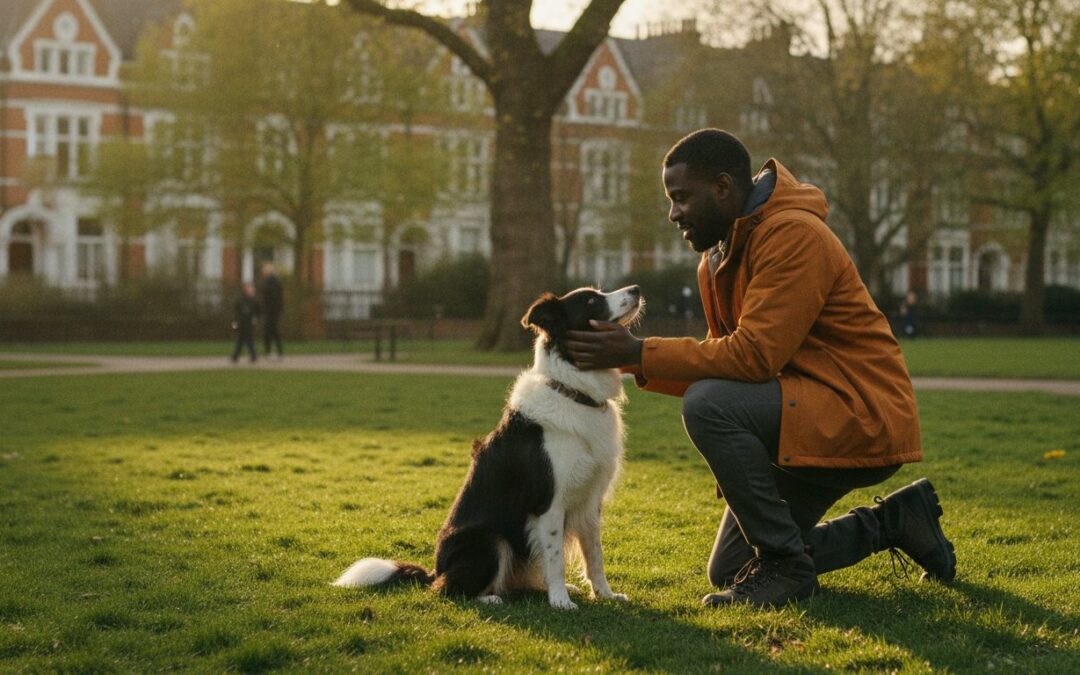
What if the key to your dog listening in a crowded park isn’t about exerting dominance, but about refining your shared language? Many owners struggle with the outdated notion that they must ‘rule’ their household, yet this often leads to a disconnect where the dog feels stressed rather than secure. You likely want to learn how to build a strong bond with your dog so they choose to engage with you, whether you’re walking through a busy park in North London or preparing for a grooming session. It’s frustrating when your dog seems to ignore you, and it’s even harder when you feel their anxiety rising during essential care.
This guide provides evidence-based techniques and professional insights to transform your relationship into a deep, trust based partnership. We’ll explore how to demystify canine psychology, replace coercive methods with supportive communication, and implement bespoke routines that foster a calm, cooperative household dynamic. By understanding your dog’s internal emotional state, you can move away from quick fixes and toward a life of mutual respect and genuine connection. Improvement is inevitable when you have the right guidance to support your dog’s unique temperament.
Key Takeaways
- Understand the biological role of oxytocin and how predictability creates a secure, trust-based attachment between you and your dog.
- Discover practical daily routines, including hand-feeding and ‘do nothing’ time, to learn how to build a strong bond with your dog through shared calm.
- Learn specific engagement games to help your dog choose you over the distractions of busy urban environments like North London parks.
- Reframe grooming and physical care as cooperative trust exercises that empower your dog rather than causing them stress.
- Recognise when professional 1-to-1 support or a behavioural consultation is the most ethical path to repairing a fractured relationship.
Understanding the Science of the Canine-Human Bond
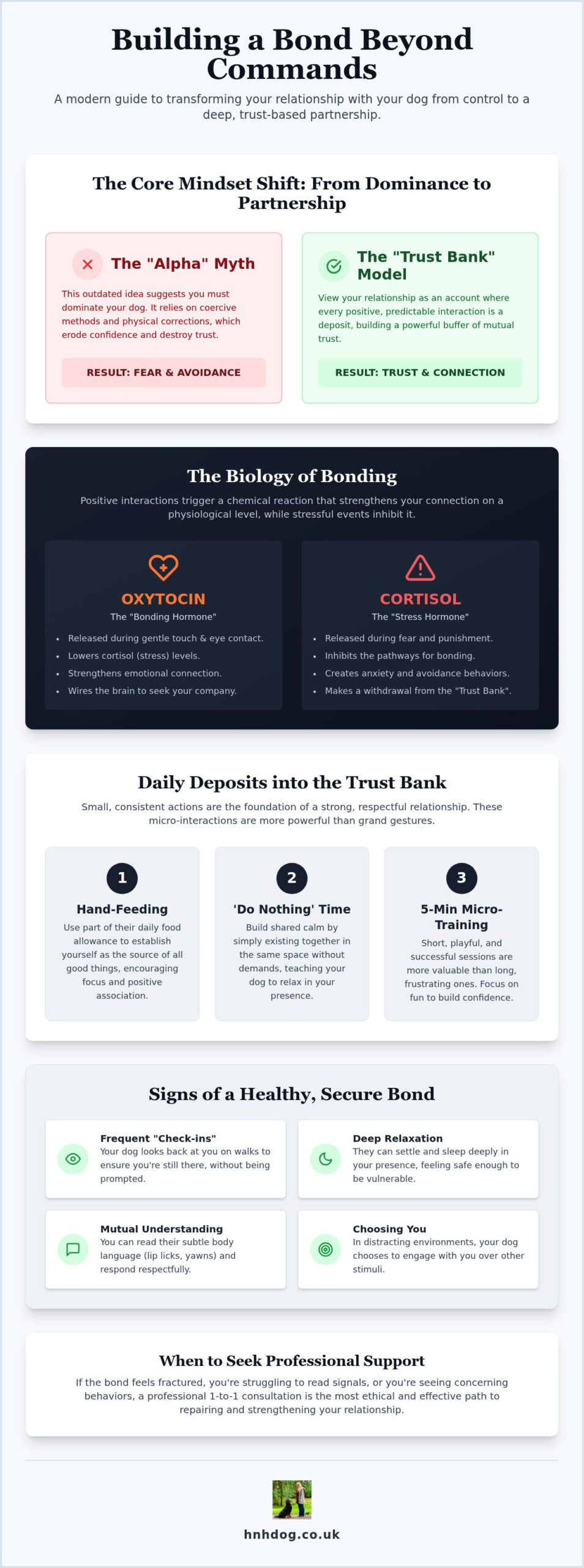
A bond isn’t a vague emotional concept. In the context of canine psychology, it’s defined as a secure attachment rooted in predictability and safety. When your dog can accurately predict that your presence leads to positive outcomes and safety, their nervous system shifts from a state of vigilance to one of relaxation. Understanding how to build a strong bond with your dog begins with shifting your perspective from control to cooperation. It’s about becoming a reliable partner rather than a source of unpredictable pressure.
This connection is supported by biology. Research shows that positive interactions, such as gentle touch or sustained eye contact, trigger the release of oxytocin in both species. This “bonding hormone” lowers cortisol levels and strengthens the emotional bridge between you. It’s a physiological feedback loop; the more you engage in mutually enjoyable activities, the more your brains are wired to seek out each other’s company. This is why forced interactions or “flooding” a dog with scary stimuli often backfires, as the resulting stress inhibits these chemical pathways.
We must also address the “Alpha” myth. Modern science has thoroughly debunked the idea that dogs are constantly trying to dominate their owners. Using dominance based training or physical corrections doesn’t build respect; it builds a fear-based avoidance that destroys trust. Think of your relationship as a “Trust Bank Account.” Every positive interaction, like a calm walk or a successful training session, is a deposit. Every scary or painful event is a withdrawal. When you focus on how to build a strong bond with your dog through daily deposits, you create a buffer of trust that helps you both handle life’s inevitable stressors.
The Difference Between Obedience and Connection
A dog that obeys every command out of fear isn’t actually bonded to their owner. They’re simply performing a cost-benefit analysis to avoid punishment. True connection is found in positive reinforcement dog training, where the dog is given the power of choice. When a dog chooses to engage with you because they find the interaction rewarding, the resulting behaviour is more reliable and enthusiastic. This “engagement” is the hallmark of a healthy bond; it’s that moment your dog looks at you for guidance without being prompted.
Signs of a Healthy, Strong Bond
You can observe the strength of your bond through subtle behavioural markers. A securely attached dog will frequently “check in” during walks, looking back to ensure you’re still with them. They’ll also be able to settle and sleep deeply in your presence, showing they feel safe enough to lower their guard. Understanding their body language is like learning a shared dialect. When you respond appropriately to their subtle signals, like a lip lick or a yawn, you’re telling them that their voice is heard and respected.
Daily Habits to Build Trust and Mutual Respect
Building a relationship doesn’t require grand gestures; it thrives on the consistency of your daily micro-interactions. If you’re wondering how to build a strong bond with your dog, look first at your routine. Hand-feeding part of their daily allowance is an excellent way to establish yourself as the source of all ‘good things’ while encouraging focus. It’s not about making them work for every crumb, but about creating a positive association with your presence. Similarly, practicing ‘do nothing’ time allows you to exist in the same space without demands. This builds a calm, shared energy where your dog feels no pressure to perform, only the comfort of your company.
Clear boundaries provide a sense of safety. When rules are consistent, your dog doesn’t have to guess what’s expected, which reduces anxiety. To maintain this trust, you must become fluent in their body language. Recognising a subtle ‘whale eye’ or a stiffened posture helps you avoid ‘trust withdrawals’, those moments where we accidentally push a dog past their comfort zone. If you’re struggling to read these signals, a 1-to-1 dog training session can help you translate your dog’s unique communication style and refine your daily interactions.
Micro-Training: 5 Minutes of Focus
Keep training sessions brief. Five minutes of focused, successful engagement is far more valuable than an hour of frustration. Use this time for lighthearted tricks rather than strict commands to keep the atmosphere playful and pressure-free. Capturing is a bonding technique where you simply wait for your dog to offer a desirable behaviour naturally and then immediately reward it. This method encourages your dog to think and volunteer engagement, rather than just waiting for a prompt.
The Power of Play
Play is a powerful social glue. Every dog has a preferred style, whether it’s high-intensity chasing, a focused game of tug, or using their nose for scent work. When you identify and participate in their favourite activity, you become a partner in their joy. Understanding how to build a strong bond with your dog involves seeing every game as an investment in your future cooperation. Using play as a reward makes you the most interesting thing in their world. This shared excitement translates directly to the real world; a dog that finds you fun is much more likely to choose you over a distraction when you’re practicing recall in the park.
Bonding in the City: Navigating London’s Challenges
Living in a bustling environment like North London or Watford introduces unique stressors that can strain the relationship between you and your dog. High-density urban areas—filled with sirens, heavy traffic, and crowded pavements—often put dogs in a state of hyper-vigilance. When a dog is overwhelmed by city stimuli, they’re physically unable to focus on their owner. Learning how to build a strong bond with your dog in this context requires you to become their ‘safe haven.’ This means actively advocating for their space and proving that you can handle the environment so they don’t have to. By stepping between your dog and a scary stimulus, you reinforce the idea that you’re a reliable protector.
Engagement games are essential for maintaining focus on busy streets. Simple exercises like ‘touch’ or ‘find it’ (scattering a few treats on a clean patch of pavement) can redirect your dog’s attention away from a passing bus and back to you. These micro-wins build a history of shared success in challenging environments. Instead of dragging your dog through a crowd, find a quiet corner to reset. This approach shifts the dynamic from you ‘dragging’ them through the city to the two of you navigating it as a coordinated team.
Engagement Walks vs. Decompression Walks
Not every dog walking session needs to be a training mission. It’s vital to distinguish between engagement walks, where you practice focus, and decompression walks, or ‘sniffaris.’ During a sniffari, you let your dog lead the way and sniff to their heart’s content. This allows them to process the world at their own pace, which significantly lowers their stress levels. For quiet bonding away from the North West London crowds, seek out the wooded trails of Hampstead Heath or the quieter corners of Gladstone Park. These environments provide the mental reset your dog needs to feel secure in your partnership.
Socialising Without Stress
A common misconception is that a well-bonded dog must meet every other dog they see. In reality, forced greetings on a lead can cause immense frustration and harm your bond. True socialisation is about neutrality—the ability to remain calm in the presence of others. Professional group dog walking can be an excellent tool for this, as it allows dogs to exist in a pack environment under expert supervision without the pressure of direct, face-to-face confrontation. When you protect your dog’s space from ‘off-lead’ intruders in the park, you prove you’ve got their back, which is a massive deposit in your trust account.
Maintenance as Bonding: Grooming and Physical Care
Grooming is often viewed as a purely hygienic necessity, yet it represents some of the most intimate physical contact you have with your dog. When handled correctly, it becomes a powerful trust exercise rather than a stressful ordeal. If you’re exploring how to build a strong bond with your dog, reframing these maintenance sessions is a vital step. By introducing ‘Cooperative Care,’ you give your dog a voice in the process. This involves teaching them ‘start button’ behaviours, such as resting their chin on a towel to signal they’re ready to be brushed. When the dog knows they can opt-out by moving away, their confidence in you grows, and the likelihood of developing handling sensitivity or defensive biting significantly decreases.
Physical comfort is the foundation of a stable temperament. A dog in pain from matted fur or overgrown nails is likely to be irritable or reactive. Regular maintenance ensures your dog remains in a state of physical ease, which directly supports a calm household dynamic. By proactively managing their physical health, you remove potential barriers to a deep, trust based partnership. You aren’t just cleaning them; you’re ensuring their internal emotional state remains balanced and free from the distraction of physical discomfort.
The Benefits of Mobile Grooming for the Bond
Choosing mobile dog grooming in Watford eliminates the stress of car travel and the sensory overload of a busy salon. In a mobile van, your dog receives dedicated one-to-one attention in a familiar environment. This calm atmosphere prevents the ‘cortisol spikes’ associated with loud dryers and barking dogs in commercial centres. A dog that finishes their groom feeling relaxed is far more likely to trust your handling when you need to check their paws or brush them at home. It’s a bespoke approach that respects their individual temperament.
Building a Grooming Routine
Success lies in a gradual approach. You might start with a simple ‘Bath & Brush’ session to desensitise your dog to the feeling of water and professional tools without the duration of a full styling. During home sessions, use high-value rewards to create a positive association with the brush. A professional Full Groom builds trust through expert handling that respects your dog’s individual temperament and physical limits. To ensure your dog’s next groom is a positive experience, book a stress-free session in our mobile grooming van today.
When to Seek Professional Support to Repair the Bond
Sometimes, despite your best intentions, you may find that the connection with your dog feels strained or fractured. Identifying these ‘bond fractures’ early is crucial for long-term emotional health. They often manifest as reactivity toward other dogs, persistent fear of everyday objects, or a ‘shut-down’ state where the dog becomes unresponsive and withdrawn. If you are struggling with how to build a strong bond with your dog because of these complex behaviours, it is time to seek expert help. A qualified dog behaviourist acts as a translator. They help you understand the internal motivations behind these actions so you can address the root cause rather than just the symptoms.
Professional guidance is particularly effective because it breaks the cycle of owner frustration. Dogs are incredibly sensitive to our emotional states; when you feel confused or irritated, they sense that tension, which further inhibits trust. Engaging in 1-to-1 training allows for a focused, calm environment where you can learn without the distractions of a group class. This individualised attention ensures that every exercise is tailored to your specific situation, making the process of repairing your relationship much faster and more ethical. You move from a place of guesswork to a place of confident, informed action.
Bespoke Care for Individual Temperaments
Every dog is an individual. A ‘one-size-fits-all’ approach rarely works for complex bonding issues. A nervous dog requires a different set of tools than a high-energy dog that struggles with impulse control. A professional behavioural assessment provides a roadmap for your unique partnership. The goal shifts from ‘fixing’ a problematic dog to enhancing a shared life. By understanding your dog’s specific temperament, you can implement customized strategies that respect their limits while gently expanding their comfort zone. This bespoke care ensures that how to build a strong bond with your dog becomes a manageable, step-by-step process.
Investing in Your Shared Future
Building a bond is a long-term commitment that starts from the moment you bring a new pet home. Early puppy training sets a vital foundation for a 15-year partnership, preventing common ‘urban stress’ issues before they take root. Expert mentorship provides the peace of mind that you are moving in the right direction, replacing doubt with a clear, actionable path forward. Whether you are starting with a new puppy or looking to repair a connection with an adult dog, professional support ensures your relationship is built on a bedrock of mutual respect. To begin your journey toward a deeper partnership, contact H&H Dog for a bespoke training or grooming consultation today.
Building a Partnership That Lasts a Lifetime
A deep connection with your dog isn’t something that happens overnight; it’s the result of consistent, ethical choices made every day. By understanding the biological foundations of trust and replacing outdated dominance myths with cooperative care, you’ve already taken the first step in learning how to build a strong bond with your dog. Whether you’re navigating the busy streets of North London or establishing a calm grooming routine at home, remember that your dog’s internal emotional state is the true priority. When they feel heard and protected, they’ll naturally choose to engage with you.
If you’re facing specific challenges or simply want to enhance your relationship, professional mentorship can provide the steady hand you need. With over 20 years of expert experience in London, we specialise in bespoke 1-to-1 training and behavioural support tailored to your dog’s unique temperament. We also offer stress-free mobile grooming delivered to your door, ensuring essential care remains a positive trust exercise. Book a bespoke consultation with H&H Dog today to start your journey toward a more harmonious shared life. You don’t have to navigate these challenges alone; we’re here to support you and your dog every step of the way.
Frequently Asked Questions
How long does it take to build a strong bond with a new dog?
The timeline for bonding varies significantly based on a dog’s individual history and temperament. While some dogs connect within days, many follow the three-three-three rule: three days to decompress, three weeks to learn your routine, and three months to feel truly at home. Building trust is a gradual process of consistent, predictable interactions. You’ll find that how to build a strong bond with your dog depends more on the quality of your daily micro-interactions than a specific number of weeks.
Can I bond with an older rescue dog as well as a puppy?
Yes, you can absolutely form a deep connection with an older rescue dog. While puppies bond through shared exploration, senior dogs often connect through the peace and security you provide. Many owners find that rescue dogs possess a unique capacity for gratitude once they feel safe in a stable environment. The bonding process might require more patience if they have a history of trauma, but the resulting partnership is often incredibly resilient and rewarding.
My dog doesn’t like being cuddled; does this mean we aren’t bonded?
Physical affection is only one of many ways dogs express connection. Many dogs actually find hugging or close physical restraint stressful because it limits their movement. If your dog chooses to sit near you, leans against your legs, or makes frequent eye contact, these are clear signs of a healthy bond. Respecting their personal space and physical boundaries is an act of advocacy that actually strengthens their trust in you over time.
Will my dog bond more with the dog walker than with me?
Dogs are capable of forming multiple meaningful relationships without diminishing their connection to you. A professional dog walker provides valuable socialisation and exercise, but you remain the primary source of safety, home routine, and long term security. Think of a walker as a supportive mentor in your dog’s life. Their presence enriches your dog’s day, which often leads to a more relaxed and happy companion when you are together at home.
What are the first signs that my bond with my dog is improving?
One of the most reliable signs is the “check-in” during walks in busy areas like Gladstone Park. If your dog voluntarily looks back at you for guidance, they are showing they value your input. Other indicators include a softer body posture, a tail wag that involves the whole back end, and the ability to settle into a deep sleep while in the same room as you. These behaviours signal that your dog feels truly safe.
How can I rebuild trust if I’ve accidentally scared my dog?
Rebuilding trust requires a return to a very predictable, low pressure routine. Avoid the temptation to over-compensate with forced affection, as this can be overwhelming for a worried dog. Instead, focus on making small “trust deposits” through quiet activities like scattering treats or simply sitting nearby without making demands. If the incident caused a significant fracture, a behavioural consultation can provide a bespoke plan to help you navigate the repair process with professional guidance.
Does professional grooming help or hurt the owner-dog bond?
Professional grooming can significantly help your bond by removing the stress of complex hygiene maintenance from your personal relationship. Using a mobile dog grooming service ensures the process happens in a calm, one-to-one environment. When a professional handles the technical aspects of coat care, your dog associates the “work” with the groomer and the “comfort” with you. This prevents the friction that often arises when owners struggle with difficult grooming tasks at home.
Why does my dog listen to me at home but ignore me in the park?
This common challenge is usually a matter of “environmental competition” rather than a lack of love. In a quiet North London flat, you are the most interesting thing in the room. In a park, you are competing with squirrels, other dogs, and enticing scents. To address this, you must learn how to build a strong bond with your dog that functions in high distraction settings. This involves gradually generalising your training and proving that engaging with you is more rewarding than the environment.