
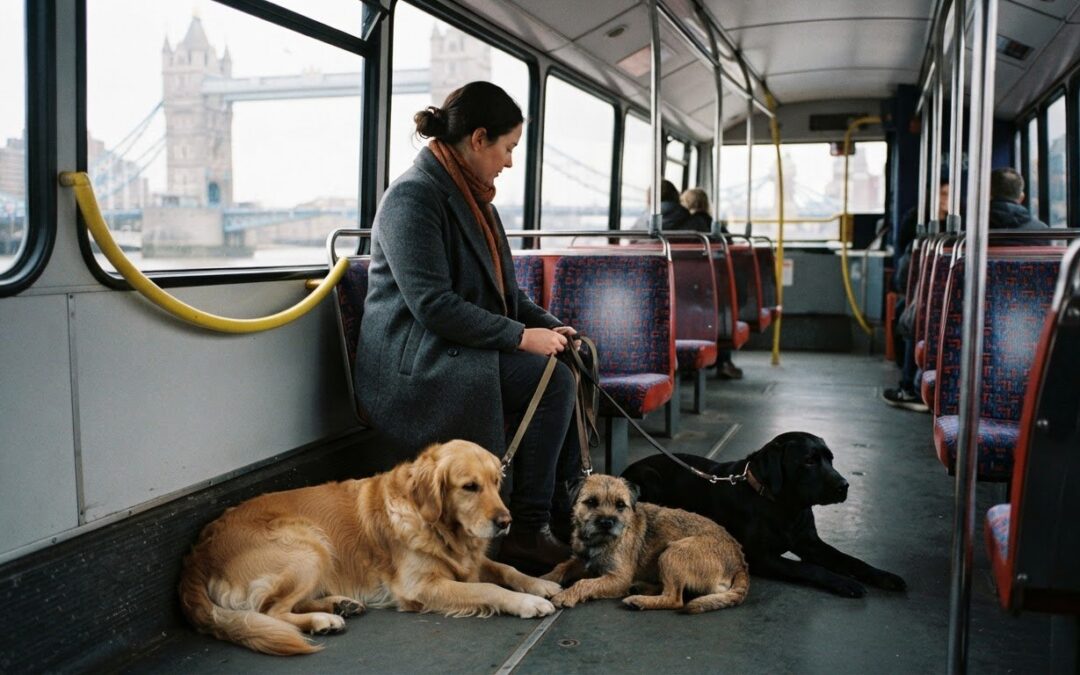
A dog-friendly hotel is only part of how to travel with a dog in London. London has over 100 pet-friendly hotels, and dogs travel free on most public transport, including the Underground and buses. Keep your dog on a lead, or in a container if they’re small, and plan journeys outside rush hour for a calmer trip.
When planning how to travel with a dog in London, look beyond finding somewhere that welcomes dogs. Your stay also needs to feel manageable for your dog, with room to settle and a journey that won’t overwhelm them. Plan around your accommodation’s location, transport options and your dog’s comfort, and consider how easily they can rest after busy outings.
This guide covers finding dog-friendly places to stay and travelling by Tube, bus or taxi, with practical ways to avoid busy times. You’ll also find tips for making journeys more comfortable, so you can shape the day around your dog’s needs rather than rushing from one stop to the next.
Key Takeaways
- Choose accommodation with your dog’s needs in mind, including a comfortable place to rest and easy access to suitable walks.
- If travelling to Great Britain from abroad, allow for the required wait after your dog’s first rabies vaccination.
- Plan taxi journeys around your dog’s comfort, and make arrangements for a ride that accepts dogs before setting off.
- Explore how dog walking and grooming services can support your dog’s routine while you’re in London.
1. Looking for dog-friendly hotels in London?
London has over 100 pet-friendly hotels. To decide where to stay, consider your itinerary, your dog’s needs and nearby walking routes. Planning how to travel with a dog in London starts with choosing a base that makes toilet breaks and quieter walks practical. Compare each hotel’s dog policy, room arrangements and access to outdoor space before booking.
If you’re travelling to Great Britain from abroad, plan your dog’s travel paperwork before setting dates. After a pet’s first rabies vaccination, travellers must wait at least 21 full days before travelling to Great Britain, according to the Department for Environment, Food & Rural Affairs. Pets may be quarantined for up to 4 months if Great Britain’s pet travel rules aren’t followed, according to the Department for Environment, Food & Rural Affairs. Extra rules apply if a pet arrives in Great Britain more than 5 days before or after its owner, according to the Department for Environment, Food & Rural Affairs.
Dogs are permitted in most London parks, including the eight Royal Parks, subject to local restrictions. Battersea Park covers 81 hectares, and dogs may explore most of it off-lead. Regent’s Park covers 410 acres, but dogs must be on leads and aren’t allowed in some areas, including the rose gardens. Check signs, keep your dog in sight and plan walks around their comfort.
For a Thames outing, a riverside walk offers an outdoor option; access on boat trips depends on each operator’s rules. Museums, galleries, shops and other indoor attractions set their own dog policies, so plan around places that allow dogs. Knowing how to travel with a dog in London also means leaving time to rest between busy activities.
To find dog-friendly restaurants, pubs and cafes, check whether dogs are welcome indoors, outdoors or in both areas. Choose a spot where your dog has room to settle, then pair the visit with a nearby walk.
If your dog gets lost, alert nearby staff and give them a clear description and your phone number. Before going out, identify a local veterinary practice and keep its details, along with your dog’s relevant health information, easy to access.
2. Dogs on the London Underground and buses
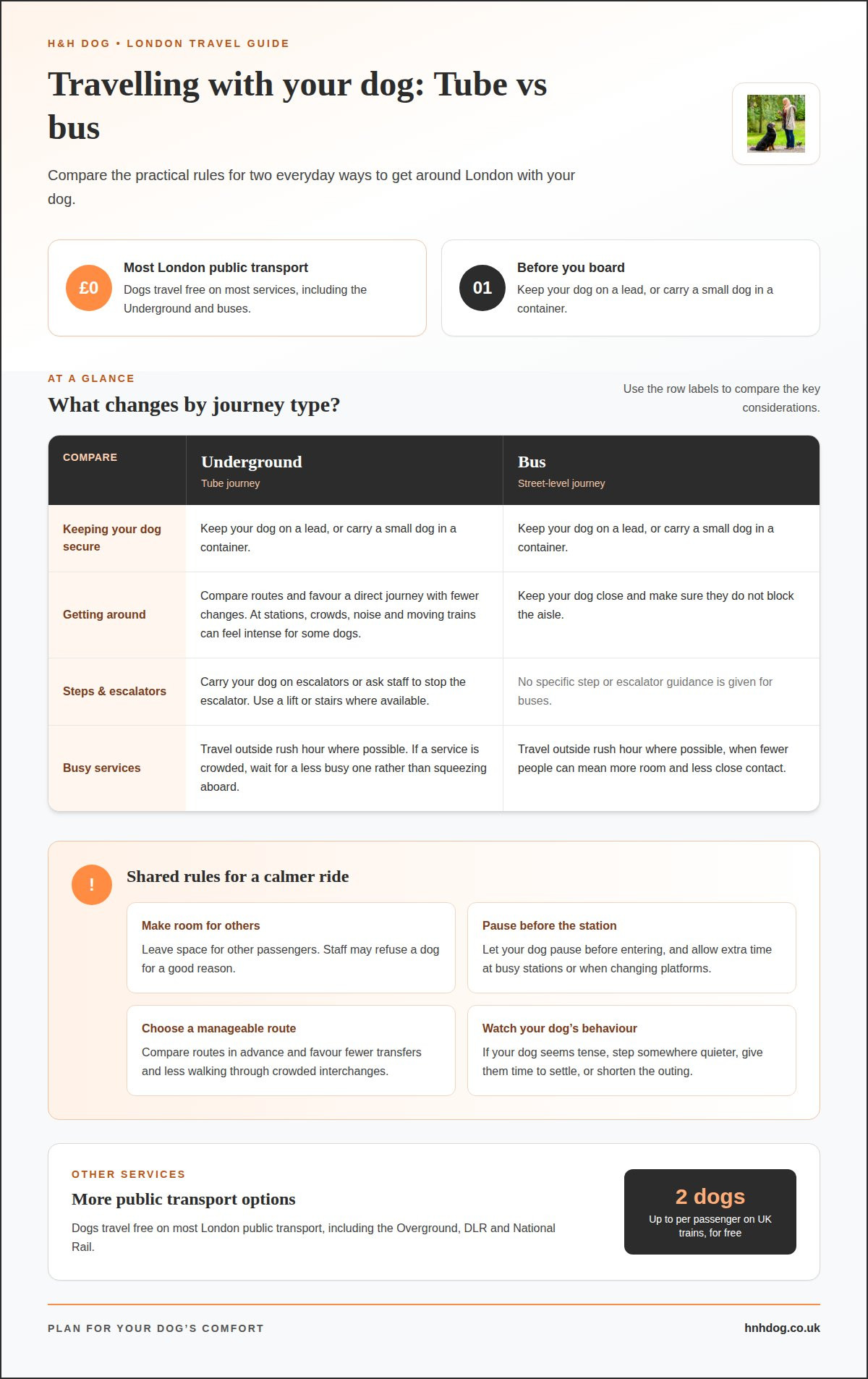
Dogs travel free on most London public transport, including the Underground, buses, Overground, DLR and National Rail. To work out how to travel with a dog in London, start by choosing a route your dog can manage. Keep your dog on a lead or carry a small dog in a container. Staff may refuse a dog for a good reason, so leave room for other passengers.
Before setting off, compare routes and favour direct journeys with fewer changes. Let your dog pause before entering a station, where crowds, noise and moving trains can feel intense. On escalators, carry your dog or ask staff to stop the escalator. Use a lift or stairs where available, and keep your dog close on buses without blocking the aisle.
On trains in the United Kingdom, each passenger can take up to two dogs for free. For a longer journey, plan where your dog can rest and keep water within reach. If you’re changing at a busy station, allow extra time to leave the platform calmly rather than hurrying through the crowd.
Museums and galleries set their own access policies, so don’t assume dogs are allowed indoors. Choose outdoor activities, such as a walk through a public space, and plan indoor visits separately. Working out how to travel with a dog in London means matching the day’s activities to your dog’s comfort, not just choosing the quickest route.
For travel to Great Britain from abroad, dogs must be microchipped before rabies vaccination. After a pet’s first rabies vaccination, travellers must wait at least 21 full days before travelling, according to the Department for Environment, Food & Rural Affairs. If you aren’t transferring ownership, complete the required declaration. If someone else is travelling with your dog, it may be helpful to give them written permission.
If a familiar walking routine would help during your stay, explore Group Dog Walking as part of your plans.
3. Avoiding busy travel times
When travelling with a dog, it’s advisable to take the Tube or a London bus outside rush hour. Fewer people can mean more room and less close contact with bags, feet and sudden movement. Plan around a quieter journey instead of trying to fit every outing into the busiest part of the day.
Choose a direct route where possible. Before leaving, use a journey planner to compare stations and changes, then favour the route with fewer transfers and less walking through crowded interchanges. At a station, pause away from the entrance and let passengers pass before approaching the gates. If your dog looks tense, step aside and give them time to settle.
Apply the same principle to outdoor activities. For example, travel to Hampstead Heath when your dog can manage the journey calmly, then enjoy a walk before crowds build. Keep your dog close near entrances, narrow paths and busy roads. In parks, follow local signs and keep them in sight, even where off-lead access is allowed.
Leave extra flexibility in your schedule for National Rail connections or a delayed bus. A missed connection can mean waiting on a crowded platform, so choose a route with a quieter alternative where practical. Keep water accessible, and avoid feeding or exercising your dog immediately before a journey if that tends to make them uncomfortable.
A familiar kennel-style carrier may help a small dog feel secure, but introduce it well before travel, not at a busy station. Keep it secure and easy to lift, and let your dog rest in it at home first. If a service is crowded, staff may refuse a dog for a good reason. Step back and wait for a less busy service rather than squeezing aboard.
Let your dog’s behaviour guide the pace. Panting, pulling away or repeatedly scanning the platform can signal that the environment feels too intense. Move somewhere quieter, shorten the outing or return to your accommodation. A flexible plan helps your dog experience London at a manageable pace.
4. Taking a taxi with a dog
A taxi can simplify a London journey when a crowded station or long walk doesn’t suit your dog. Mention your dog when arranging the ride, and give the booking service practical details: your dog’s size, whether they’ll travel in a carrier and how much luggage you have. This helps establish how much space the journey requires.
Choose a pickup point where your dog has room to approach the vehicle calmly. A hotel entrance or quieter side street may be easier than a busy kerb outside a station. Keep the lead on before opening the door, then guide your dog in without rushing. Make sure your belongings won’t block their space or the driver’s view.
If your small dog uses a carrier, bring one they already recognise. Place it on a stable surface and secure it according to its instructions. If there’s room, bring a familiar blanket for a larger dog. Familiar smells can make a vehicle feel less strange, especially when your dog is visiting London for the first time.
Keep the ride straightforward. Give the driver the destination clearly and mention useful drop-off details, such as a hotel entrance rather than a nearby main road. If your dog becomes unsettled, speak calmly and avoid forcing contact. A short pause before setting off can help them adjust to the movement and sounds.
Plan transport around your dog’s comfort as well as your schedule. For example, take a taxi for the final leg after a walk or when luggage makes public transport difficult. Bring water and waste bags, and keep them accessible rather than buried in a suitcase. Leave plenty of time to collect your belongings and help your dog get out safely.
Taxi arrangements vary, so explain your dog’s needs before the journey. If the ride can’t accommodate your dog, consider another option, such as a quieter bus journey or walking between nearby places. A flexible plan keeps the trip calm and manageable.
H&H Dog
H&H Dog can support your dog’s care routine during a London visit, though it doesn’t arrange accommodation or transport. If you want familiar care while you’re occupied or after a busy day, Group Dog Walking may suit your dog’s routine. For coat care, choose from Full Groom, Bath & Brush and Puppy’s First Groom.
Choose support based on your dog’s age, temperament and comfort with new experiences. Keeping familiar routines in mind can help you plan a stay that feels more manageable for both of you. For personalised dog care, contact H&H Dog.
Make your next London visit feel more manageable
A thoughtful plan for how to travel with a dog in London starts with noticing what helps your dog feel settled. Give them time to pause, keep familiar routines where possible and adjust plans if the surroundings feel too intense. The aim isn’t to fit every attraction into one visit, but to enjoy shared experiences at your dog’s pace.
Before your next outing, consider what support would make your dog’s routine easier. H&H Dog offers Full Groom, Bath & Brush and Puppy’s First Groom, with care tailored to each dog’s needs. For a visit or ongoing support, get in touch to discuss a suitable next step.
Contact H&H Dog for help with planning care around your dog’s needs. With a little preparation and a patient pace, you can make London feel more comfortable for both of you.
Frequently Asked Questions
What are the rules for taking dogs on the London Underground, buses, trains and trams?
Dogs travel free on most London public transport, including the Underground, buses, Overground and DLR. On National Rail, each passenger can take up to two dogs for free. Keep your dog under control, and remember that staff may refuse access for a good reason. For tram journeys, follow the operator’s own conditions rather than assuming Tube rules apply.
Do dogs need to be on a lead or carried on London public transport?
On London Underground trains and buses, dogs must be on a lead or, if small, inside a container. Choose a lead that lets you keep your dog close without blocking other passengers. At escalators, carry your dog or ask staff to stop the escalator. A carrier can also help a small dog feel more secure in a busy station.
How much does it cost to take a dog on public transport in London?
Dogs travel free on most London public transport, and each passenger can take up to two dogs on trains for free. This includes the Tube, buses, Overground, DLR and National Rail. Keep your dog close so they don’t obstruct doors or aisles. Before a tram journey, check the operator’s fare and animal conditions.
Are dogs allowed in London taxis, black cabs and rideshare services?
Whether a dog can travel in a taxi, black cab or rideshare vehicle depends on the service and journey. Arrange a dog-friendly ride before travelling, and describe your dog’s size and whether they’ll use a carrier. Keep your dog on a lead when getting in and out, and bring a towel or blanket to help them settle without muddying the seat.
Which London attractions, museums and landmarks are dog-friendly?
Access varies by attraction, so don’t assume a museum, gallery or indoor landmark admits pet dogs. Build your itinerary around outdoor places where dogs are permitted, then plan indoor visits separately. In parks, follow signs about restricted areas and lead rules. This lets you enjoy time together outdoors without arriving somewhere that can’t accommodate your dog.
Where can dogs stay in London, and what are typical pet fees and restrictions?
London has over 100 pet-friendly hotels, but each property sets its own dog policy. Fees and restrictions can depend on the hotel, room and dog, so there isn’t one typical charge to rely on. Before booking, look for rules covering dog size, rooms, unattended pets and access to shared spaces. Choose accommodation that fits your dog’s routine as well as your plans.