
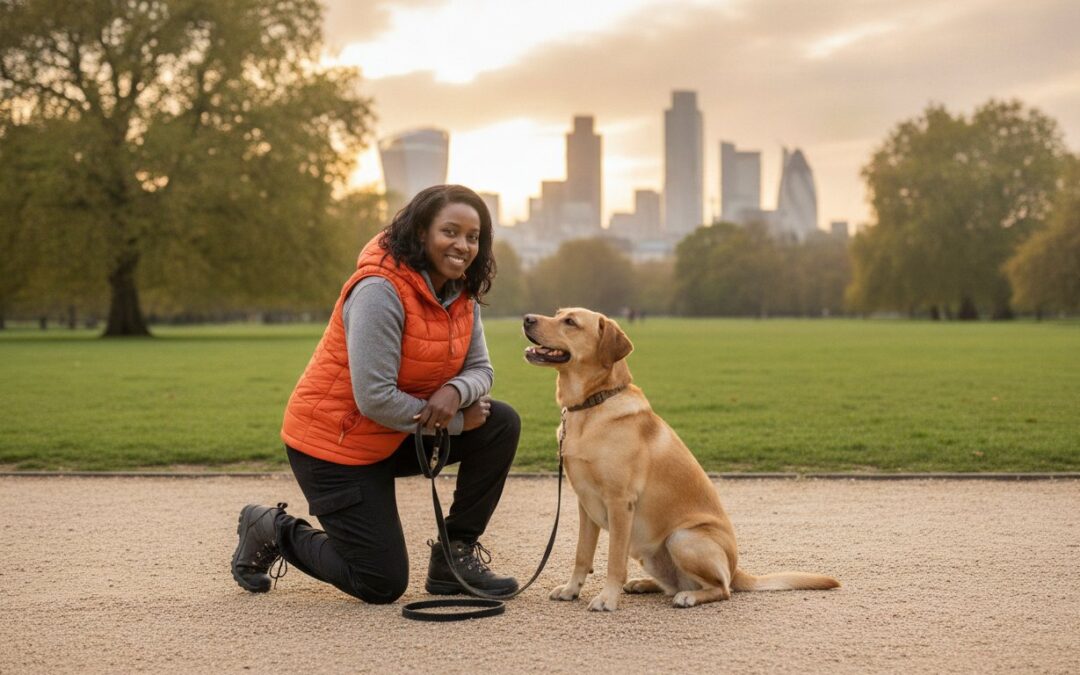
What if the reason your dog ignores you near Watford’s busy roads isn’t “stubbornness,” but a simple breakdown in your shared language? It’s a frustrating realization for many owners who feel that searching for dog training Watford only leads to more conflicting online advice and park-side embarrassment. You want a companion who listens because they understand you, not because they fear you.
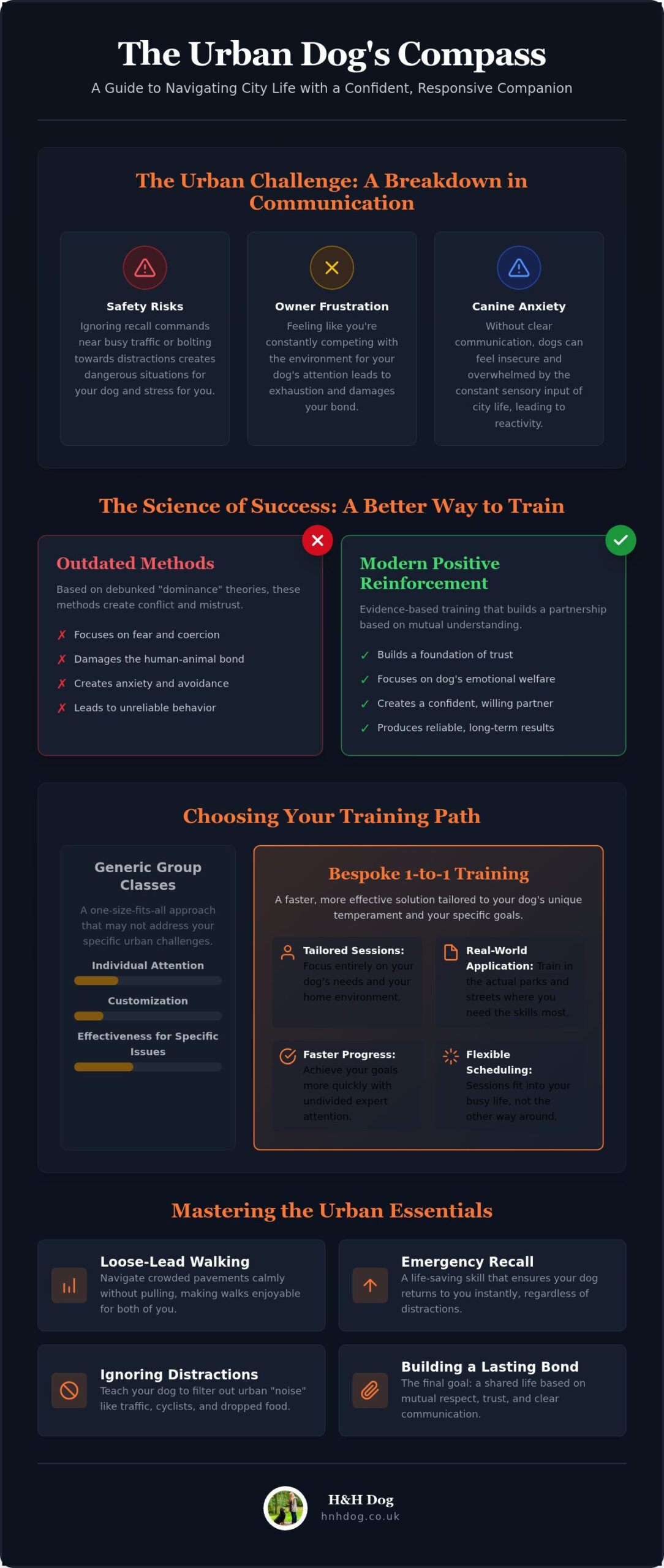
You likely know that sinking sensation when your dog bolts toward a squirrel in Hampstead Heath or ignores a recall command near traffic. It’s exhausting to feel like you’re constantly competing with the environment for your pet’s attention when you just want a peaceful afternoon together. You deserve to feel confident and calm, knowing your dog is safe and responsive regardless of the distractions around them.
This guide reveals how evidence-based, positive obedience training can replace that tension with a reliable, trust-based bond. You’ll discover how to communicate in a way your dog actually understands, ensuring their safety and your peace of mind on even the most crowded streets. We’ll explore the logic behind modern methodology, the pitfalls of outdated myths, and the practical path to achieving a calm, responsive pet during every walk through Cassiobury Park.
Key Takeaways
- Modern obedience training serves as a vital communication bridge that ensures your dog’s safety and confidence within the unique challenges of an urban environment.
- Evidence-based, positive reinforcement methods focus on your dog’s emotional welfare, creating a reliable response built on trust rather than fear or coercion.
- Investing in bespoke 1-to-1 dog training Watford provides a faster, more effective alternative to generic group classes by tailoring every session to your pet’s specific temperament.
- Mastering essential urban skills like loose-lead walking and emergency recall allows for stress-free visits to busy local spaces such as Cassiobury Park or Hampstead Heath.
- Long-term success depends on a holistic approach that prioritizes understanding your dog’s internal motivations and fostering a shared life based on mutual respect.
What is Dog Obedience Training and Why Does it Matter in London?
Modern obedience training is far more than a set of mechanical responses to verbal cues. It’s a sophisticated communication bridge that allows you and your pet to understand one another’s intentions clearly. Dog training has evolved significantly from its historical roots; today, it focuses on partnership rather than control. When you seek out professional dog training Watford, you’re investing in a shared language that translates across every environment you visit together. This “functional obedience” prioritizes skills that matter in your daily routine, such as ensuring your dog can settle quietly in a local cafe or ignore a dropped piece of food on a busy high street.
Beyond physical exercise, learning provides essential mental enrichment that keeps your pet’s mind sharp. A dog’s brain requires regular challenges to stay healthy and balanced. Without this cognitive outlet, boredom often manifests as destructive habits like chewing furniture, digging, or excessive barking. Many owners find that bespoke dog training Watford sessions are the key to resolving these indoor frustrations. By engaging your dog’s mind through positive, evidence-based learning, you’re providing a constructive way for them to spend their energy. This mental workout is often more tiring than a long walk, leading to a much calmer and more contented presence in your home.
The Safety Factor on Busy London Streets
London and Watford present a unique set of sensory challenges for any animal. A reliable “stop” or “wait” cue isn’t just a convenience; it’s a life-saving necessity when navigating the narrow pavements and high-speed traffic of North London. Urban dogs must learn to process a constant stream of sirens, cyclists, and dense crowds without losing their focus on you or becoming overwhelmed. Effective training helps them filter out this “noise” so they can remain responsive even in chaotic situations.
Obedience serves as a safety-critical communication tool that allows urban dogs to navigate complex environments without fear or risk.
Beyond Commands: Building a Trust-Based Bond
Clear communication is the most effective way to reduce canine anxiety. When your dog understands exactly what’s expected of them, they feel more secure and confident in their surroundings. Training shouldn’t feel like a chore for either of you; it’s a fun, rewarding activity that strengthens your emotional connection through shared success. By focusing on mutual respect and non-coercive methods, you’re building a relationship where your dog chooses to listen because they trust your guidance implicitly. To see how these principles apply across the wider capital, you can explore The Ultimate Guide to Dog Training in North London for more tailored advice on city living.
The Science of Success: Understanding How Dogs Actually Learn
Effective dog training Watford relies on a clear understanding of canine psychology and the principles of operant conditioning. Modern, evidence-based methods prioritize positive reinforcement because it’s ethically superior and produces more reliable results. When your dog associates a specific action with a positive outcome, they’re more likely to repeat that behaviour. This approach builds a foundation of trust rather than one of fear or avoidance. It turns every session into a collaborative effort where your pet is an active participant in their own education.
To communicate success effectively, we use “markers.” These are precise signals, like a clicker or a consistent verbal cue, that tell the dog exactly what they did right at the moment it happened. This precision removes the guesswork for your pet. If you’re considering 1-to-1 dog training, you’ll see how quickly these markers can accelerate progress. Many local owners find that tailored dog training Watford provides the specific focus their pet needs to thrive in a busy town. We must also move away from outdated “dominance” theories. Dogs aren’t seeking to be a “pack leader.” They’re simply looking for clear, consistent guidance. Attempting to enforce a hierarchy often creates unnecessary conflict and damages the bond you’re trying to build.
Motivation vs. Manipulation
Understanding motivation is key to success in high-distraction environments. While treats are a common tool, they’re only one part of the puzzle. We often use “life rewards,” such as the opportunity to sniff a favourite tree or a brief game of fetch, to reinforce good choices. The value of the reward must match the difficulty of the task. Your timing must be impeccable; the “one-second rule” is vital. If you wait too long to provide feedback, your dog may associate the reward with a completely different action. This clarity helps you stay within UK laws for dog owners, which require your pet to be under control at all times in public spaces.
The Impact of Stress on Learning
A dog’s emotional state directly dictates their ability to process information. When a dog becomes over-aroused or stressed, their brain enters a state where learning is physically impossible. They aren’t being “naughty” when they ignore you; they’re simply overwhelmed. You might notice signs of stress like yawning, intense panting, or a sudden loss of focus. If your pet struggles with these emotional responses, a Dog Behaviourist London can help you identify triggers and develop a plan to build their confidence. Training should always be paused if your dog shows signs of shutdown, ensuring that every experience remains positive and productive.
Group Classes vs. 1-to-1 Obedience Training: Which is Right for You?
Choosing between a group environment and individual support is a pivotal decision for your dog’s development. While group classes are often marketed as the default option for every pet, they rarely account for the specific temperament of the individual. For owners looking for effective dog training Watford, a bespoke approach often proves far more efficient. A standard curriculum designed to suit twelve different dogs simultaneously can’t address the nuances of your pet’s emotional state or their specific reactions to urban stimuli. This “one size fits all” model often leaves complex or nervous dogs behind, as they struggle to keep up with a pace that doesn’t respect their unique needs.
Individual sessions allow us to practice in the environments where you actually live and walk. Instead of a sterile community hall, we can work on the pavements of your own Watford neighbourhood, addressing the real-world distractions you face every day. This context-specific learning ensures that your dog’s progress isn’t limited to a training centre but translates directly to your daily life together. It’s about building reliability where it matters most: on your local streets and in your own home.
When to Choose 1-to-1 Professional Support
Individual support is particularly vital if your dog displays leash reactivity, extreme distraction, or anxiety in public spaces. In these cases, the undivided attention of a professional trainer ensures that every exercise is calibrated to your dog’s exact threshold. We can move at a pace that respects your dog’s learning curve, building their confidence before gradually introducing more complex challenges. This tailored mentorship helps you feel more in control of the situation, providing a clear path forward that generic classes simply cannot offer. It’s a faster, more focused way to reach your goals while keeping your pet’s welfare at the forefront.
The Limitations of Group Environments
The concept of “socialisation” in a group class is often misunderstood. For many dogs, being in a room full of barking, excited, or fearful peers creates a state of over-arousal that makes focusing on you nearly impossible. Rather than learning to be calm, they may learn that other dogs are a source of stress or chaotic excitement. This environment can be particularly damaging for nervous pets who may feel trapped or overwhelmed by the proximity of strangers. One bespoke session focused on your dog’s internal emotional state often achieves more sustainable progress than four weeks of struggling through a generic group class. By removing the pressure of a crowded environment, we allow your pet the mental space they need to truly process new information and build lasting habits.
Mastering the Urban Essentials: Key Skills for London Dogs
Navigating the sensory-rich environment of North London or Watford requires a specific toolkit that goes beyond basic “sit” and “stay.” Urban living demands high-level responsiveness because the stakes are higher; a dropped chicken bone or a sudden cyclist can lead to a dangerous situation in seconds. When we approach dog training Watford, we focus on a “distraction hierarchy.” This means we don’t expect a dog to listen in a crowded market before they can listen in a quiet hallway. We build skills systematically to ensure they hold up under pressure.
The “Leave It” command is arguably the most important safety skill for a city pet. From discarded takeaway to harmful litter, the ability to turn away from a hazard instantly is vital. Similarly, teaching your dog to settle in a local dog-friendly café isn’t just about manners. It’s about helping them feel calm and secure while the world moves around them. This emotional stability is what allows you to enjoy a shared life without constant stress, transforming a frantic outing into a relaxed social experience.
Building a Bulletproof Recall
A reliable recall is your dog’s ticket to freedom in open spaces like Cassiobury Park. We achieve this through a structured, three-step progression that ensures the cue becomes a reflexive response:
- Step 1: The Foundation. Establish your chosen recall cue in a low-distraction environment, such as your living room. Reward every single successful response with high-value reinforcement to build a strong positive association.
- Step 2: Controlled Distractions. Move to your garden or a quiet outdoor space. Introduce mild distractions, like a rolling ball or a distant noise, to ensure the cue remains your dog’s primary focus.
- Step 3: Real-World Generalisation. Take the training to your local park using a long-line for safety. This allows your dog to practice returning to you amidst the complex smells and sights of Watford while you maintain total control.
Polite Pavement Manners
Narrow pavements in London often force dogs into close proximity, which can be stressful for “frustrated greeters” who feel an intense need to say hello to every passerby. We teach a “middle” or “side” position to keep your dog focused on you and physically safe from passing traffic. By maintaining a clear structure during walks, you reduce your pet’s anxiety and prevent the frustration that leads to pulling. If you’re ready to transform your daily walks into a peaceful experience, our bespoke 1-to-1 dog training provides the individualised attention needed to master these urban essentials.
The H&H Dog Approach: Bespoke Training for London & Watford Owners
At H&H Dog, we bring over 20 years of professional industry experience to every session. Our work across North London and Watford is rooted in a deep commitment to non-coercive, evidence-based methods. We don’t just look at what your dog is doing; we look at why they’re doing it. Before we begin any physical dog training Watford owners find that we prioritise an assessment of the animal’s internal emotional state. This ensures we’re addressing the root cause of a behaviour rather than just masking a symptom. It’s a logical, ethical approach that respects the animal’s perspective at every stage.
We understand the pressures of urban life. When looking for dog training Watford, you deserve a mentor who values long-term emotional health over quick, forceful fixes. That’s why we bring our expertise directly to you. Home-based sessions allow us to observe your dog in their most comfortable environment. We then transition to local parks or high streets to test those skills in the real world. This progression ensures that the communication we build is robust and reliable. You won’t just see results in a quiet room; you’ll see them on the busy streets where it matters most.
Tailored to Your Dog’s Temperament
Every animal is an individual with a unique history. We don’t believe in “standard” training plans. They ignore the specific nuances of your pet’s personality. Instead, we integrate learning into your existing daily routines. This might involve refining how your dog behaves during a Full Groom or ensuring they remain calm during a Bath & Brush. For nervous or sensitive dogs, our extensive background in mobile dog grooming has taught us the value of extreme patience. We understand that building trust takes time. We’re happy to move at your dog’s pace. Your pet’s welfare is always our primary concern.
Ongoing Support for Long-Term Success
Learning is a lifelong journey. It isn’t a one-off event. As your dog matures, their needs will change. We offer a holistic service model that supports your pet’s development throughout their life. For instance, our professional dog walking services are an excellent way to reinforce good habits. Consistency is the key to reliability. It ensures the progress we make in our 1-to-1 sessions is maintained while you’re busy. If you’re ready to build a deeper, more respectful bond with your pet, book your 1-to-1 obedience consultation with H&H Dog today.
Transforming Your Relationship Through Clear Communication
Building a reliable bond with your pet in an urban landscape requires more than just luck. It’s about establishing a consistent, trust-based language that keeps your dog safe and confident. By prioritising your dog’s emotional state and using positive, evidence-based methods, you can navigate the busy streets of London and Watford with ease. You’ve learned that bespoke support is often the most effective route to resolving complex challenges like leash reactivity or poor recall.
Whether you’re struggling with a nervous pet or simply want to sharpen your urban essentials, expert guidance makes all the difference. With over 20 years of industry experience, we specialise in handling nervous and reactive dogs with a patient, non-judgmental approach. Our services are fully insured and DBS checked for your peace of mind. If you’re ready to invest in professional dog training Watford, we are here to support your journey toward a calmer, happier life together.
Book Your Bespoke 1-to-1 Training Session
Your dog is always learning. Let’s ensure they’re learning to trust and understand you every step of the way.
Frequently Asked Questions
How much does dog obedience training cost in London?
Industry rates for professional support in London and Watford vary based on the trainer’s expertise and the complexity of your dog’s needs. Generally, bespoke home visits are priced higher than generic group classes due to the individualised attention and travel involved. It’s vital to consider what a session includes, such as follow-up support, as these factors contribute to the overall value of your pet’s education and your own peace of mind.
Is my dog too old to start obedience training in Watford?
Dogs can learn new skills at any stage of their lives. While it’s ideal to start with puppy training, an older dog’s ability to focus can actually make certain aspects of dog training Watford more straightforward. We adapt our pace to suit your pet’s physical capabilities and history. Whether your dog is a senior or a young adult, we focus on building their confidence and strengthening your communication through gentle, non-coercive methods.
How long does it take to see results from 1-to-1 training?
You will often notice a change in your dog’s focus during the very first session. However, lasting behavioural change is a process that requires consistent practice between our visits. 1-to-1 training is significantly faster than generic group classes because we focus entirely on your pet’s unique temperament. Most owners see substantial improvement in reliability within three to five sessions, depending on the complexity of the specific behaviours we are addressing together.
Do you use treats or clickers in your training sessions?
We utilise positive reinforcement, which frequently involves high-value treats and markers like clickers or verbal cues. These tools allow us to pinpoint the exact moment your dog succeeds, making the learning process much clearer for them. By rewarding good choices, we build a foundation of trust and motivation. We also integrate “life rewards,” such as play or sniffing, to ensure your dog remains responsive even when you don’t have food in your hand.
Can you help with a dog that is reactive to other dogs on the lead?
We specialise in supporting dogs that struggle with leash reactivity or anxiety in public spaces. These situations often stem from an underlying emotional state, such as fear or frustration, rather than a lack of obedience. Through a behavioural consultation, we identify your dog’s specific triggers and develop a management plan. This helps your pet feel safer, allowing them to process information and learn calmer ways to respond to other dogs during walks.
What should I bring to my first training session in North London?
For your first session in North London, please have a variety of high-value treats that your dog finds irresistible. A standard fixed-length lead and a comfortable harness are usually best for maintaining control without causing discomfort. It’s also helpful to have your dog’s favourite toy nearby if they are motivated by play. We’ll handle the professional equipment, but having these familiar rewards ready ensures your pet feels motivated and secure from the start.
Do you offer training for puppies as well as adult dogs?
We provide tailored support for every life stage, from a puppy’s first lesson to advanced obedience for adult dogs. Our puppy training focuses on essential early socialisation and building a reliable foundation of core skills. For adult dogs, we often address more complex habits or work on generalising their existing knowledge to high-distraction urban environments. Each plan is bespoke, ensuring the level of challenge is appropriate for your pet’s age and experience.
Why is my dog obedient at home but ignores me at the park?
This common challenge is usually due to a lack of generalisation. Dogs are context-specific learners; they might understand a cue in your kitchen but find the distractions of a park overwhelming. When you engage in dog training Watford, we work on gradually increasing the distraction hierarchy. By practicing in the environments where your dog actually struggles, we help them learn that your cues matter just as much in the park as they do at home.