
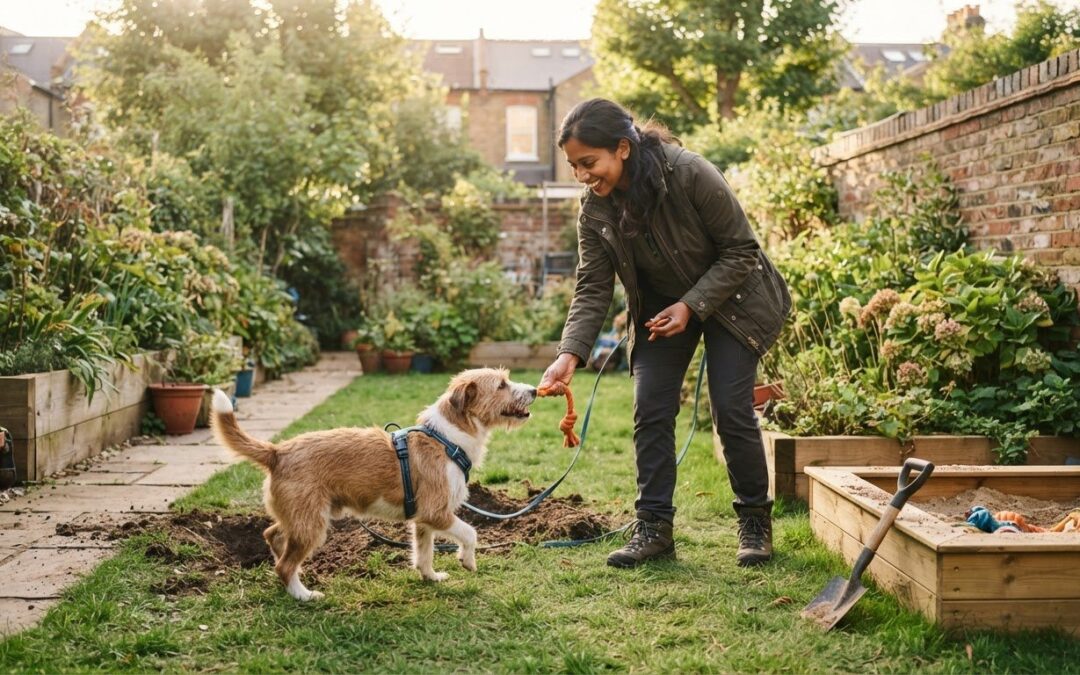
What if the best way to protect your garden isn’t to stop your dog digging altogether, but to give that urge a safer outlet? If you’re searching for how to stop a dog from digging in the garden, you may be tired of finding ruined borders or fresh holes in the lawn. It’s understandable to feel frustrated, especially when you’re unsure whether the cause is instinct, boredom, excess energy or anxiety.
Digging is communication, not simply bad behaviour. Blocking access or telling your dog off may limit the damage, but it won’t necessarily meet the need behind it. A more effective, kinder approach starts by noticing when and where your dog digs, then adjusting their routine and environment to suit them.
This guide will help you identify possible reasons for digging and follow a practical plan to protect your garden while teaching alternatives. You’ll learn how to combine supervision and suitable barriers with enrichment and reward-based training, and when persistent or sudden changes call for advice from a qualified behaviour professional or your vet. Progress takes patience, but understanding your dog is a useful place to start.
Key Takeaways
- Notice where and when your dog digs, and what’s happening around them, to spot patterns that may point to an underlying need.
- Learning how to stop a dog from digging in the garden starts with understanding the behaviour, not assuming your dog is being defiant.
- Reduce access to problem areas, consider your dog’s likely needs, and reward a suitable alternative while you’re supervising.
- Choose garden management that fits your household, from limiting access to setting up a safe, permitted digging spot where practical.
- If digging persists or changes suddenly, consider a tailored behaviour plan or speak with your vet, especially if your dog seems unwell or gets hurt.
Why Dogs Dig in the Garden: Understanding the Behavior
A freshly dug border can be frustrating, but digging isn’t automatically defiance. It can serve different purposes: exploring a scent, following movement underground, making a comfortable resting place, playing, or trying to reach somewhere beyond a fence. The same action can mean different things for different dogs, so look at the setting and your dog’s body language before choosing how to respond.
Successful training starts by understanding what digging does for your dog, then offering a safe way to meet that need. This fits with the broader principles of understanding dog behaviour: actions make more sense when considered in context, not in isolation.
What might your dog be trying to achieve?
Notice what happens just before your dog starts. If they sniff one spot intently or react to movement in the soil, digging may be exploration or prey-seeking. A shallow hollow in a sunny or warm area could be an attempt to make a resting place. Seeking cooler ground is another possibility on a warm day. None of these clues proves a single cause, but each gives you something useful to observe.
Digging can also be play, a way to use energy, or an attempt to reach an interesting area, such as the other side of a boundary. If it happens during long periods without activity, boredom or unmet activity needs may be contributing. Treat these as possibilities, not diagnoses. Your dog’s posture, pace, focus and surroundings help complete the picture.
What patterns can reveal the trigger?
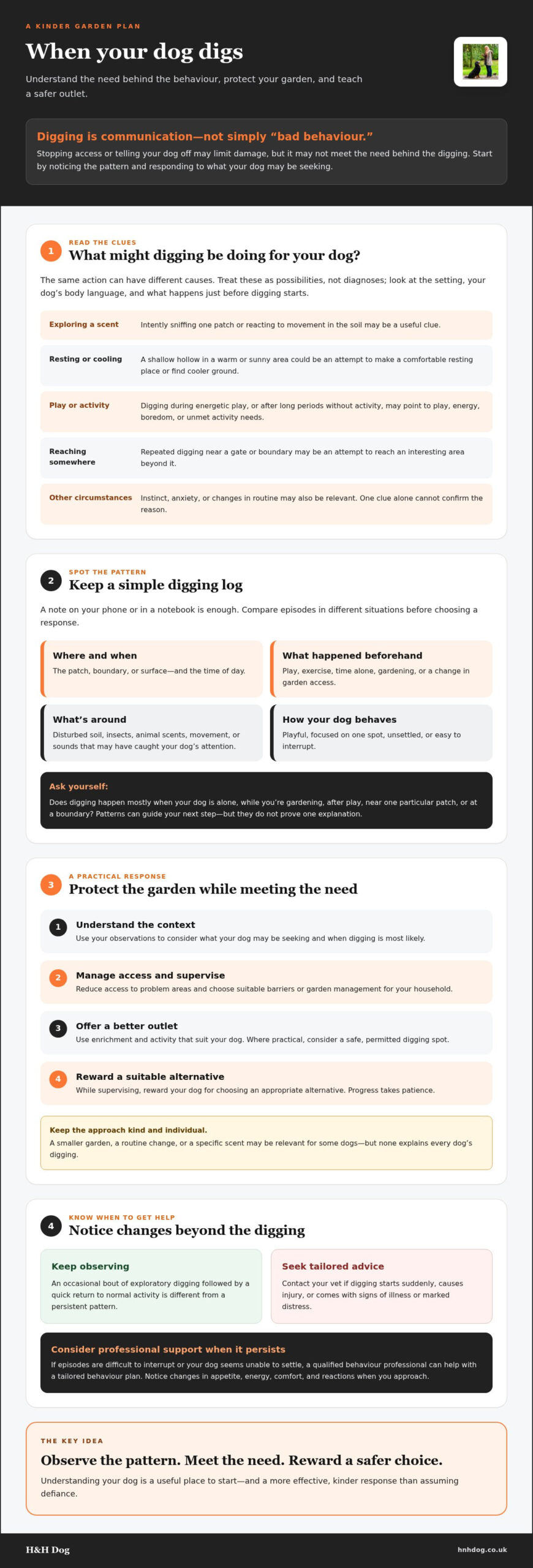
Before changing the garden or starting a training plan, keep a brief record of each episode. Note where it happens, the time of day, how often it occurs, what your dog was doing beforehand, and any environmental clues such as scents, sounds or movement. A note on your phone is enough.
Compare what you see in different situations. Does digging happen mostly when your dog is alone, or while you’re gardening nearby? Does it begin during energetic play, after sniffing a particular patch, or when your dog approaches a gate? Digging during play may have a different context from repeated attempts to reach a boundary. Patterns can suggest what your dog is seeking, but they don’t confirm one explanation on their own.
This observation gives you a more individual starting point for how to stop a dog from digging in the garden. Instead of relying on a generic deterrent, you can shape your next steps around the circumstances in which your dog digs and what they may be trying to achieve.
How to work out what is triggering your dog’s digging
Once you’ve noticed a pattern, look more closely at what happens around each episode. The aim isn’t to label your dog from one observation. It’s to gather enough context to choose a response that fits, rather than changing the garden or routine based on a guess.
Check the garden, routine, and recent changes
Use a simple log on your phone or in a notebook. For each episode, record:
- Where and when: note the patch, boundary or surface, plus the time of day.
- What happened beforehand: record recent play, exercise, time alone, gardening, or a change in access to the garden.
- What you can observe: look for disturbed soil, insects, animal scents, movement, or sounds that might have drawn your dog’s attention.
- How your dog behaved: note whether they seemed playful, focused on one spot, unsettled, or easy to interrupt.
Consider whether anything has changed in your dog’s routine, activity, or time spent alone. In a smaller urban garden, limited room to explore or play may be relevant, though it won’t explain every dog’s digging. For example, repeatedly digging near one plant could point to an interesting scent. Digging after a routine change may prompt you to consider the wider circumstances. These are clues, not proof.
Separate an occasional habit from a welfare concern
An occasional bout of exploratory digging, followed by a quick return to normal activity, is different from repeated episodes that are difficult to interrupt or seem to leave your dog unable to settle. Notice the whole picture, including changes in appetite, energy, comfort, or reactions when you approach. Digging alone can’t diagnose distress or tell you exactly what your dog is feeling.
If the digging starts suddenly, causes an injury, or comes with signs of illness or marked distress, contact your vet for advice. For further background, VCA Animal Hospitals’ guidance on destructive digging discusses possible behavioural and health-related considerations. Seek veterinary guidance rather than relying on a garden deterrent when your dog’s wellbeing may be affected.
Context, frequency, and accompanying behaviour guide the next step; no single clue tells the whole story. If your notes show a persistent pattern and you’d like help considering your dog’s circumstances, one-to-one dog training and behavioural consultations may be worth exploring. Check current availability for your location.
How to stop a dog digging: a humane step-by-step training plan
Once you have a clearer idea of what may be prompting the digging, build a plan around prevention and teaching, not punishment. Understanding common reasons why dogs dig can help you choose an appropriate alternative, but your dog’s needs and the garden’s layout should guide the details.
Use this sequence as a starting point, adjusting it to your dog and household:
- Prevent rehearsal. Supervise garden time where possible and calmly guide your dog away as soon as you see them preparing to dig. Temporarily protect vulnerable beds with safe, secure barriers. Don’t leave your dog alone around garden hazards or insecure boundaries.
- Meet the likely need. If your dog seems drawn to scents, offer a sniffing activity. If they’re looking for play or more engagement, provide an appropriate game or activity. An alternative is more useful when it meets some of the same need as digging.
- Teach a different response. Practise a simple cue such as “this way” away from the digging spot. Start in an easy setting, reward your dog for turning towards you, and gradually practise near the garden areas that usually attract them.
- Reinforce the choice you want. When your dog responds to the cue, moves away from a tempting patch, or settles into another activity, reward them promptly with praise, play or a suitable treat.
Manage access while you teach a new habit
Supervision lets you step in early, before digging becomes absorbing. Keep your voice and movements calm, then redirect your dog to an activity they can succeed at. If you can’t supervise, use a secure area away from garden hazards and prized beds. Barriers are a management tool, not a complete training solution, but they can protect the garden while your dog learns what to do instead.
Reward a suitable alternative
Timing matters. If you wait until your dog has been digging for some time, it may be harder to interrupt and reward a different choice. Practise the cue when your dog is calm, then use it early when a trigger appears. Avoid shouting, frightening or physically punishing your dog. These responses can cause distress and don’t show them which behaviour will work better.
Short, consistent practice and clear rewards help your dog understand the alternative. Progress may vary, so adjust the plan if the same situations keep leading to digging. For more training foundations, explore positive reinforcement dog training. If you’d prefer individual guidance, H&H Dog offers one-to-one dog training; check current service availability for your location.
How to protect the garden while giving your dog better outlets
Garden management works best when it protects vulnerable areas and gives your dog appropriate ways to explore. Consider the purpose of each option: barriers can restrict access, supervised activities can redirect attention, and a permitted digging spot can offer an outlet when digging itself is enjoyable. You don’t need to use every approach. Choose what’s safe and practical for your garden and your dog.
Enrichment can include scent games, such as hiding a few pieces of your dog’s food for them to sniff out, or supervised play together. Tailor activities to what your dog enjoys and can do comfortably. More exercise may help if your dog needs more activity, but it won’t necessarily address digging linked to scent, comfort, access-seeking or another cause.
Create a safe, permitted digging area
If your household has room and you’re happy to allow digging, a clearly defined spot can channel the behaviour rather than punish it. Choose a suitable area, make it inviting, and encourage your dog to investigate. Reward them for using that spot, particularly while they’re learning where digging is permitted. Supervise the first visits and check the ground for hazards before each use. If a digging area isn’t practical for your space or family, choose another outlet instead.
Use garden management without creating new risks
Protect planting with stable barriers that can’t easily topple or create sharp edges, traps or frightening obstacles. Check that any plants, garden treatments and materials are suitable for use around pets before introducing them. If you’re unsure about a product or plant, seek reliable advice rather than assuming it’s safe.
Rotate suitable activities to keep them engaging. One day, invite your dog to sniff out food in an appropriate spot; another time, offer a supervised game or a calm exploration of the garden. Keep the experience positive, and notice whether your dog stays interested or needs a different option. These adjustments can help you work out how to stop a dog from digging in the garden without relying on barriers alone.
If you’d like support choosing training and enrichment approaches that fit your dog, ask about one-to-one dog training. Check current availability for your location.
When garden digging continues: know when to seek tailored help
If digging persists despite consistent management and training, it doesn’t mean you’ve failed. Your dog may need a different outlet, or the plan may not yet address what makes digging rewarding for them. Revisit your observations and adjust the approach to your dog’s routine, environment and responses rather than simply increasing restrictions.
Contact your vet if digging begins suddenly, your dog is injured, or you notice possible signs of illness or marked distress. Digging alone can’t establish a health or behaviour problem, but a sudden change or wider shift in your dog’s wellbeing deserves attention. If your vet rules out medical concerns, a trainer or behaviour professional can help you assess the situation and adapt your plan. Support can guide steady progress, but it isn’t a guaranteed quick fix.
What to prepare before asking for support
Your notes can help make the conversation more specific. Bring your observation log, including where and when digging happens, possible triggers, how often it occurs and what you’ve already tried. Describe your dog’s usual routine, garden access and any recent changes at home. It also helps to set a realistic goal, such as fewer incidents in a particular bed or safer use of a permitted digging area. Share what has helped, even briefly, so advice can build on your experience.
When personalised training may help
One-to-one training can help you work through the details of your dog’s behaviour and develop practical steps that suit your household. If digging appears alongside wider behaviour concerns, such as difficulty settling or distress when left alone, you may find dog behaviour support in London a useful place to explore broader support options.
There isn’t one response that suits every dog. If you’re still considering how to stop a dog from digging in the garden, return to the pattern you’ve observed and discuss what might make the behaviour worthwhile for your dog. Owners in Watford, North London and North West London can explore H&H Dog’s support, including one-to-one dog training and behavioural consultations. Check current service availability for your location.
Take the next step towards a garden that works for everyone
Lasting progress starts with understanding what digging may be doing for your dog. Notice the patterns, then use calm management and reward-based training to protect vulnerable areas while offering suitable alternatives. There’s no single fix for every dog, so adjust your approach as you learn what helps your own.
If you’re still considering how to stop a dog from digging in the garden, remember that consistency and patience matter more than a quick correction. Sudden changes, injuries or signs of illness or distress are reasons to speak with your vet. For persistent digging, individual guidance can help you review the plan and your dog’s needs.
H&H Dog offers one-to-one dog training and behavioural consultations, with individualised care from a professional team with more than 20 years of industry experience. Explore tailored dog training support and check current service availability for your location. With thoughtful steps, you can make progress while supporting your dog’s wellbeing.
Frequently Asked Questions
Why does my dog keep digging holes in the garden?
Dogs may dig to explore, follow a scent or prey, make a comfortable resting spot, play, or meet another need. Notice where and when it happens, what your dog was doing beforehand, and their body language. A pattern can offer clues, but digging alone doesn’t prove one cause. Consider recent changes to routine too. If digging starts suddenly or comes with other concerning changes, contact your vet for advice.
Can I stop my dog digging without punishing them?
Yes. Supervise garden time, temporarily restrict access to vulnerable areas, and consider what need may be prompting the digging. Calmly redirect your dog to a suitable activity, then reward them for engaging with it. This helps teach a useful alternative. Shouting or physical punishment can cause distress without showing your dog what to do instead. Progress depends on your individual dog and consistent practice, so adjust the plan if it isn’t helping.
How do I stop my dog digging under the fence?
Supervise garden access and observe what may be motivating your dog to dig beneath the fence, such as an interesting scent or a desire to reach somewhere. Use a secure barrier that can’t trap or injure them, and manage access while you teach another response. If your dog seems distressed when separated or repeatedly tries to escape, speak with your vet or seek guidance from a qualified behaviour professional.
Will giving my dog a digging area make them dig more?
A safe, clearly defined digging area gives some dogs an acceptable outlet, but it won’t suit every dog or automatically stop digging elsewhere. If you choose to create one, make it inviting, supervise your dog at first, and reward them for using it. Keep other garden beds protected while they learn. If digging continues in unwanted places or your dog seems distressed, reassess the setup and consider tailored advice.
What should I do if my dog suddenly starts digging in the garden?
First, note when and where the digging happens, and consider whether anything has changed in your dog’s routine or environment. Sudden digging can have different explanations, so don’t assume one cause from the behaviour alone. If your dog also seems unwell, is injured, unusually distressed, or markedly different from usual, contact your vet for advice before treating the change as a training issue.
How much exercise does a dog need to stop digging?
There’s no single amount of exercise that will stop every dog digging. A suitable routine depends on your dog’s age, health, temperament and existing activity. Offer appropriate movement and mental enrichment, such as sniffing games, while also considering other triggers and managing garden access. More exercise alone may not address digging linked to scent, comfort or access-seeking. If the behaviour persists, seek individual guidance rather than simply increasing activity.
When should I contact a dog trainer about digging?
Consider tailored support if digging persists despite consistent changes, creates safety concerns, is difficult to interrupt, or appears alongside wider behaviour changes. Contact your vet first if the behaviour starts suddenly or your dog may be ill or injured. An observation log of triggers, locations, timing and what you’ve tried can help a trainer understand the context. H&H Dog offers one-to-one training and behavioural consultations in Watford, North London and North West London; check current availability for your location.