
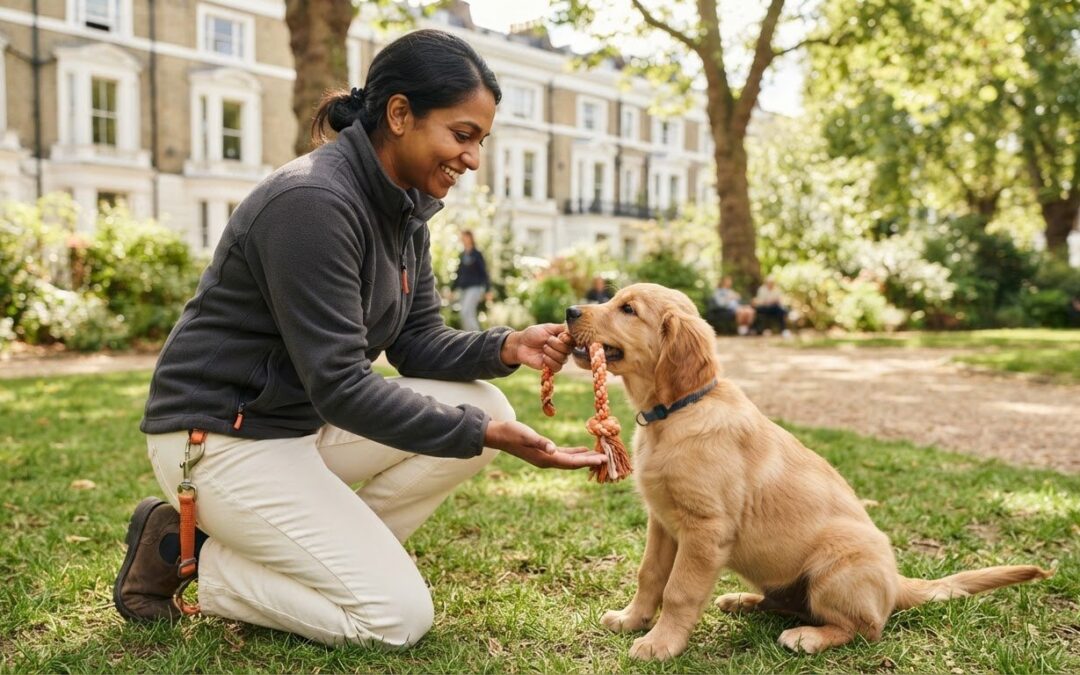
What if the answer to how to stop puppy play biting too hard isn’t to tell your puppy off, but to show them what gentler play looks like? Sharp teeth on your hands, ankles or clothes can make play stressful. Mouthing is common as puppies explore and play, but calm, consistent feedback helps them learn how much pressure is too much.
This guide explains how bite inhibition develops and what to do when play bites hurt. You’ll learn when to pause the game, how to redirect your puppy to a toy, and how to keep play manageable. The goal isn’t to punish or frighten your puppy. It’s to make the rules clear while keeping you both safe and comfortable. If painful biting continues despite consistent practice, personalised puppy training or one-to-one support can help you choose an approach suited to your puppy’s needs and temperament.
Key Takeaways
- Puppy mouthing is common. Bite inhibition develops as your puppy learns to control the pressure of their mouth.
- Notice bite pressure, repetition and whether your puppy can pause and settle, but don’t treat any single clue as a diagnosis.
- For how to stop puppy play biting too hard, use a calm sequence: pause movement, briefly end interaction, then offer an appropriate toy.
- Keep play short and supervised, use toys rather than hands, and adjust the environment if your puppy is getting overexcited.
- If painful biting persists or feels difficult to interrupt, personalised training can help. Speak with your vet if the behaviour changes suddenly or pain may be involved.
Why does your puppy play bite too hard?
Painful play bites can make spending time with your puppy stressful, especially when teeth catch your hands, ankles or clothing. Mouthing is common puppy behaviour: puppies use their mouths to explore and play. That doesn’t mean you have to accept bites that hurt. Calm, clear feedback helps your puppy learn which kinds of contact let play continue.
Bite inhibition is a puppy’s developing ability to control the force of mouth contact. Learning takes time. Your puppy gradually learns that harder pressure changes how you respond and whether the game continues. For a broader overview of dog training principles and bite inhibition, see Wikipedia’s summary of training approaches and early learning.
What is bite inhibition, and how do puppies learn it?
During play, a sudden nip can be your cue to pause or calmly end the interaction. This gives your puppy useful feedback: gentle contact can keep the game going, while painful pressure brings it to a stop. The aim isn’t to frighten your puppy or expect them to stop mouthing immediately. It’s to make the difference between softer and harder contact clear through consistent, appropriate responses.
Progress can take time, and your puppy may need reminders in different situations. Responding in a similar, neutral way helps make the feedback easier to understand.
Why might play bites suddenly become harder?
Bite pressure can change with the situation. Excitement may build during a lively game; frustration may arise if your puppy can’t reach something they want; and tiredness can make it harder for them to settle. Teething may also make chewing more appealing. These are possible contexts, not diagnoses. A single painful play bite doesn’t mean your puppy is aggressive.
Look for patterns rather than drawing conclusions from one moment. Make a brief note of when the biting starts, what happened beforehand and what follows. Did it begin after a long play session, when you stopped interacting, or as your puppy became more animated? This context can help you understand what your puppy may need and choose a response that fits the situation.
How to tell when play biting is getting too rough
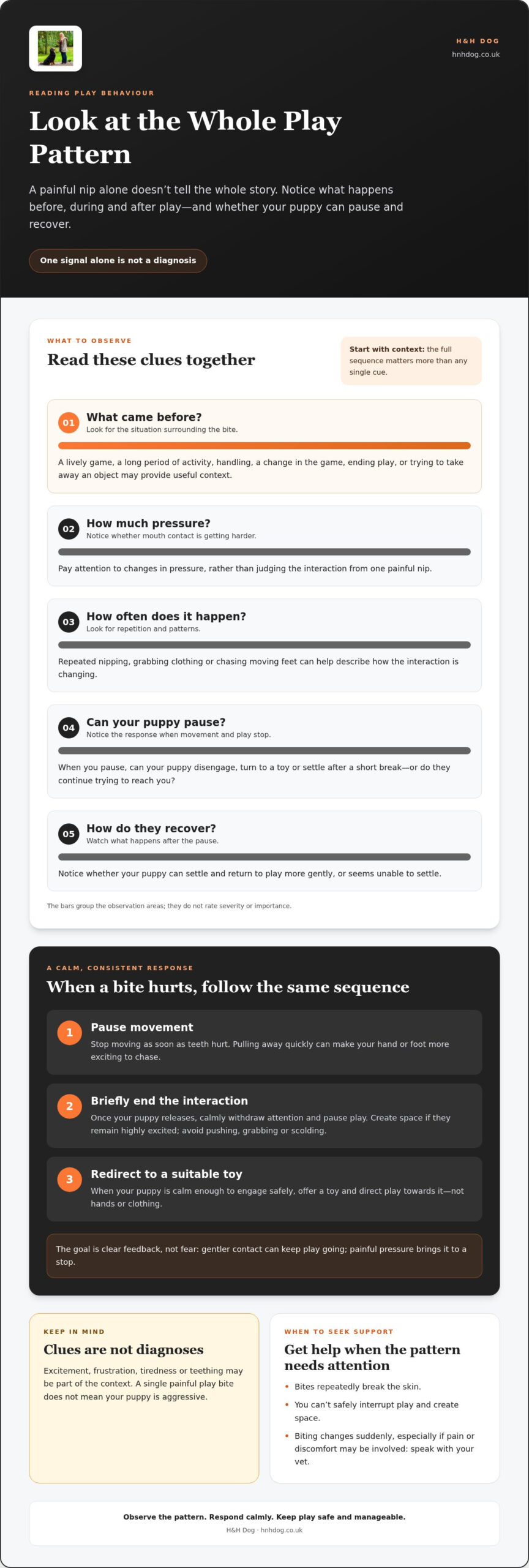
A painful nip can catch you off guard, but one moment doesn’t tell the whole story. Consider how much pressure your puppy uses, how often it happens, what was going on just before, and how they respond when play pauses. Their whole body and the sequence of events matter more than any single signal.
One sign alone can’t distinguish common play mouthing from behaviour that needs individual assessment. Consider the full pattern, the context and your puppy’s ability to pause and recover. The ASPCA guide to puppy mouthing and biting also discusses normal puppy mouthing and when behaviour may need closer attention.
Which play signals should you observe?
Notice how the interaction changes. Is your puppy’s mouth pressure increasing? Are they nipping repeatedly at hands, grabbing clothing or chasing moving feet? When you stop moving and pause, can they disengage, turn to a toy or settle after a short break? Notice their overall behaviour too: do they return to play calmly, or seem unable to settle? Describe what you see without treating a particular posture or action as proof of aggression.
A simple record can reveal useful context. Jot down:
- When it happens: for example, during a lively game, after a period of activity or as you end play.
- What came before: movement, handling, a change in the game or an attempt to take away an object.
- What follows: whether your puppy responds to a pause, redirects to a toy or continues biting.
- How they recover: whether they can settle and re-engage more gently, or remain highly aroused.
These are context clues, not a diagnostic checklist. Patterns can help you decide what to adjust, but avoid labelling an isolated painful play bite as aggression. If you’re unsure how to interpret what you’re seeing, personalised puppy training support can help you assess the behaviour in context.
When should you take a closer look?
Seek individual training guidance if bites repeatedly break the skin or you can’t safely interrupt play and create space. A sudden change in biting, especially alongside signs of pain or discomfort, is a reason to speak with your vet. Getting help is a supportive step, not a judgement on you or your puppy. It can help clarify what may be driving the behaviour and shape a suitable plan.
How to stop a puppy play biting too hard: a calm response
If you’re wondering how to stop puppy play biting too hard, use the same calm sequence each time: pause movement, end the interaction briefly, then offer an appropriate toy when play can safely resume. A predictable change in what happens next helps your puppy learn. Consistency means repeating that neutral pattern, not making your response louder or more forceful.
What should you do immediately after a painful bite?
As soon as teeth hurt, stop moving. Pulling your hand or foot away quickly can make it more exciting for your puppy to chase. Once your puppy releases, calmly withdraw your attention and pause play. If they stay highly excited or keep trying to reach you, create space without pushing, grabbing or scolding them. The aim is to make the game unavailable for a moment, not to frighten your puppy.
When your puppy is calm enough to engage safely, offer a suitable toy and direct play towards it. A toy gives them an appropriate outlet for mouthing and helps keep hands and clothing out of the game. The AKC tips for stopping puppy biting and teaching bite inhibition also describe pausing play and redirecting to toys.
Should you yelp or say ‘ouch’?
Vocal feedback works for some puppies, but a high-pitched sound can make others more excited. Watch what your puppy does next. If they pause or soften their play, a brief, calm word may help. If they become more animated, skip the noise and quietly end the interaction instead. There’s no single vocal cue that suits every puppy.
After the pause, restart only when your puppy can focus on the toy or interact without immediately launching back at your hands. Keep your movements gentle and the play manageable. If biting becomes painful again, repeat the same sequence. Changing tactics repeatedly or escalating consequences can make the interaction confusing; a steady response gives your puppy a clearer pattern to learn from.
Shouting, smacking, holding your puppy’s mouth shut or using other physical corrections can frighten them and don’t teach the gentler behaviour you want. Stay neutral: stop play when teeth hurt, then make an appropriate toy part of the next opportunity to play. If you’d like guidance tailored to your puppy, personalised puppy training can help you build a consistent approach around their needs and temperament.
How to prevent hard play biting with routines and redirection
Prevention starts with noticing what helps your puppy stay engaged without becoming overexcited. A toy, a pause or a change to the surroundings may help, depending on what’s happening. Choose the option your puppy can respond to in that moment rather than repeating a strategy that makes play more intense.
Which response works best in different play situations?
If your puppy can still focus, guide their mouth towards a suitable toy and praise calm interest in it. If they’re too excited to engage with the toy or keep returning to your hands, pause play and give them a chance to settle before trying again. If biting tends to start around moving feet, sleeves or busy play, adjust the set-up before you begin: sit down, clear away distractions or choose a quieter space.
Keep play short and supervised, and use toys rather than hands as playthings. This makes the rules clearer: toys are for mouthing, while hands and clothing aren’t part of the game. If the same situation repeatedly leads to hard biting, change the conditions before play begins instead of waiting for your puppy to become overwhelmed.
How can daily routines support gentler play?
Play is only one part of your puppy’s day. Build in suitable opportunities for play, rest and enrichment, adjusting them to your puppy rather than following a rigid schedule. If biting repeatedly happens during high-energy moments, the activity may be too stimulating or your puppy may need a quieter break. Keep safe, suitable chew toys within reach and notice when your puppy chooses one calmly.
For several days, jot down when biting occurs, what was happening beforehand and which response helped your puppy settle. You may notice that changing the play space, offering a toy earlier or allowing a rest makes interactions easier. This kind of pattern-spotting can help you choose what to change in the situations your puppy finds most challenging.
Small, thoughtful adjustments can make play more predictable for you both. If a general approach isn’t progressing, explore personalised puppy training for support shaped around your puppy’s needs and temperament.
When puppy play biting needs personalised training support
Some painful mouthing is part of puppy play, but extra support can help if it continues despite a consistent response. Consider individual guidance if bites repeatedly hurt, your puppy struggles to pause when play ends, or you’re concerned about keeping people safe. Asking for help doesn’t mean you’ve failed or that your puppy is bad. It gives you a chance to understand the pattern and decide what to try next.
What can personalised puppy training help you work on?
A tailored approach looks beyond the bite itself. A trainer can help you observe what tends to happen beforehand, identify situations that make play harder to interrupt, and choose calm, consistent responses that suit your puppy. The plan can account for your puppy’s temperament and your household routines, so the advice is practical for the moments when biting occurs. A puppy training guide can also help you build consistency across everyday learning.
H&H Dog offers puppy training, one-to-one dog training and behavioural consultations, with support personalised to each dog’s needs and temperament. The team brings more than 20 years of industry experience, which can be helpful when a general approach isn’t progressing and you want guidance shaped around your puppy and home.
What should you do next if the biting remains painful?
Keep a brief record to make patterns easier to explain. Note how often painful bites happen, what was going on beforehand, where your puppy tends to bite, and what helps them pause or settle. These details can support a more useful conversation about next steps and help identify situations where a routine adjustment or individual guidance may help.
If the biting starts suddenly or you suspect your puppy may be in pain, speak with your vet. Training can help you respond to learned behaviour and everyday play patterns, while a vet can assess possible medical causes. If the biting remains difficult or you’re unsure how to keep play safe, explore H&H Dog’s puppy training or behavioural consultation support for guidance tailored to your puppy. You don’t need to work out how to stop puppy play biting too hard alone.
Build gentler play one calm response at a time
Learning how to stop puppy play biting too hard starts with noticing what’s happening, then responding predictably. Pause play when teeth hurt, redirect to a suitable toy when your puppy can engage, and adjust the routine or environment if excitement keeps building. Bite inhibition develops through consistent, kind feedback, not punishment, and progress takes patience.
If painful biting persists or you’re unsure what’s driving it, tailored guidance can help you find a practical approach for your puppy and household. H&H Dog offers personalised puppy training and behavioural consultations, supported by more than 20 years of team experience. Explore personalised puppy training with H&H Dog and take the next step towards calmer, more comfortable play. H&H Dog supports dog owners in Watford, North London and North West London. With patience and the right support, you and your puppy can keep building a positive relationship.
Frequently Asked Questions
Is it normal for a puppy to play bite too hard?
Yes, mouthing and play biting are common ways for puppies to explore and interact. But normal doesn’t mean you need to accept painful bites. Your puppy is still learning to control the pressure of their mouth, so respond calmly when play hurts and guide them towards gentler contact. Notice what’s happening before and after the bite, too. Excitement, tiredness or teething may affect how play unfolds.
How do I stop my puppy biting my hands during play?
To learn how to stop puppy play biting too hard, use a predictable response: stop moving, calmly pause the interaction, then offer a suitable toy when your puppy is settled enough to play safely. Avoid using your hands as toys, even during gentle games, so the difference between hands and playthings stays clear. If your puppy keeps going for your hands, create space and try again when they’re calmer.
Should I yelp when my puppy bites too hard?
A yelp or “ouch” may help some puppies pause, but it can make others more excited. Watch what your puppy does after you make the sound. If they become more animated, avoid repeating it and use a quiet pause instead. There’s no need to shout or startle them. Choose the response that helps your puppy disengage and return to calmer play, rather than one that escalates the moment.
Can teething make a puppy’s play biting worse?
Teething may make chewing more appealing, so your puppy might seek out hands, clothes or toys more often. It’s one possible influence, not a complete explanation for every painful bite. Offer appropriate chew toys and redirect your puppy towards them, while keeping play calm and supervised. If your puppy seems uncomfortable, is reluctant to eat, or their behaviour changes suddenly, speak with your vet for advice.
When should I worry about puppy biting?
Seek individual guidance if painful biting keeps happening, repeatedly breaks the skin, or you can’t safely pause play. A single hard bite doesn’t prove aggression, so look at the pattern and surrounding context. If the behaviour changes suddenly or you suspect pain, contact your vet. H&H Dog offers tailored puppy training and behavioural consultations in Watford, North London and North West London to help owners understand their dog’s needs.
How long does it take to teach a puppy bite inhibition?
There isn’t one set timescale. Puppies learn at different rates, and progress depends on their experiences, temperament and how consistently people respond. Look for gradual changes, such as your puppy accepting a pause or choosing a toy more often, rather than expecting biting to stop overnight. If you’re unsure whether your approach is helping, keep brief notes on when biting happens and what response supports calmer play.
What should I do if my puppy gets more excited when I stop play?
Keep your response quiet and avoid turning the pause into another exciting interaction. Stop moving, calmly create space, and wait until your puppy can settle before offering a toy or restarting play. If they repeatedly become more animated, the play may be too stimulating or going on longer than they can comfortably manage. Try a quieter setting, shorter play and a suitable rest or calming activity.