
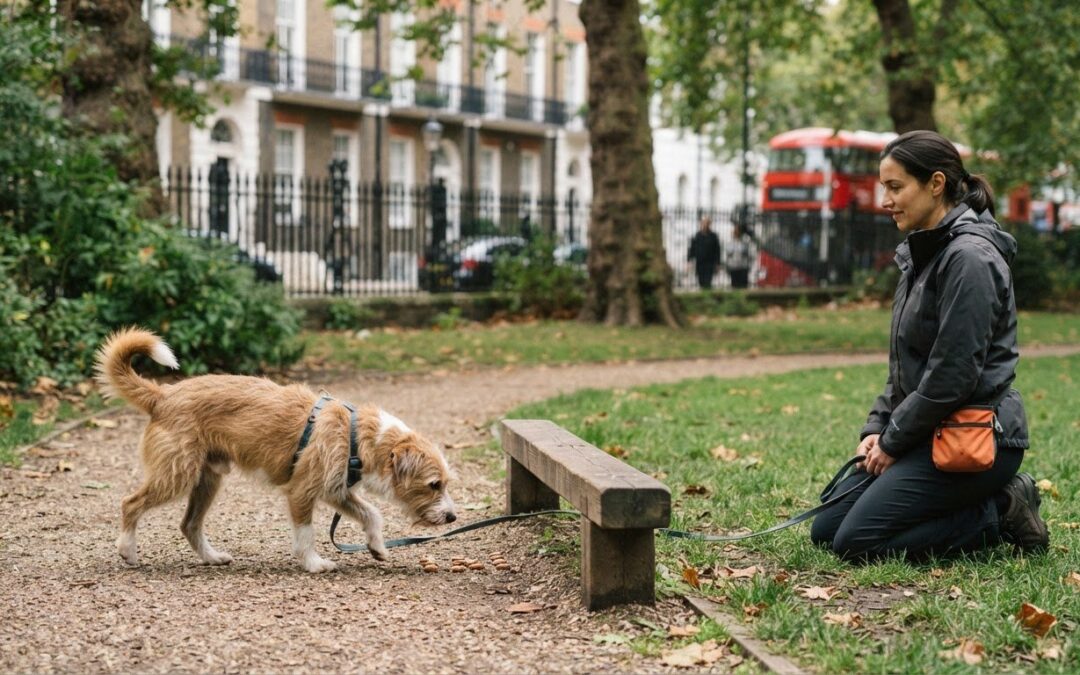
Helping a shy dog feel braver often starts with giving them more choice, not asking them to face their fears. It can be hard to tell whether your dog is frightened or simply cautious, and pushing ahead when they’re uncomfortable may make an experience feel less safe. The most effective confidence building exercises for shy dogs are gentle, repeatable and guided by how your dog is coping in the moment.
You don’t need to turn every walk or quiet moment at home into a training session. Small, achievable experiences can help your dog explore at their own pace. Their body language can also show whether an exercise feels manageable or it’s time to pause. This guide shares practical ideas for everyday routines, explains what to look for and explores when personalised one-to-one training or a behavioural consultation may help. Progress isn’t about making your dog seem bold; it’s about helping them feel safer, one choice-led step at a time.
Key Takeaways
- Learn how to distinguish a moment of caution from signs that your dog needs more space.
- Use confidence building exercises for shy dogs that you can adapt by changing the distance, duration or difficulty.
- Compare gentle home games, exploration in familiar places and observing the world from a comfortable distance.
- Build a simple routine and keep brief notes to spot what helps your dog feel at ease.
- Explore when personalised one-to-one training or a behavioural consultation could offer a more tailored next step.
Why shy dogs need confidence-building exercises at their own pace
Confidence-building isn’t about making a dog approach every person, greet every dog or tolerate situations they find difficult. It’s about helping them feel safer and more able to choose whether to pause, move away, explore or engage. Having room to choose their distance can help a dog stay comfortable enough to take in what’s happening around them.
Shyness also isn’t a fixed label. A dog may be relaxed at home but cautious on a busy pavement, or comfortable with familiar people yet uncertain around strangers. One pause doesn’t tell you everything. Consider the setting, what happened just before and whether your dog’s response changes when more space is available.
Gradual practice lets your dog notice a challenge while staying able to cope; overwhelming exposure asks them to endure more than they can manage. Confidence building exercises for shy dogs should be adjusted to the individual in front of you, not treated as a test they need to pass.
What does a shy dog look like in everyday situations?
Your dog might pause when someone approaches, keep a wider distance from another dog or choose not to investigate an unfamiliar object. These actions can reflect caution, but no single signal proves that a dog is frightened. Think about what happened immediately beforehand, whether the behaviour is typical for your dog and what changes when they have more room.
Notice posture, movement and willingness together. Your dog may become still, turn away, move more slowly or stop taking part in something they usually enjoy. Learning to read Dog communication and body language can help you interpret signals in context rather than relying on one gesture.
What should confidence-building achieve?
A useful goal isn’t instant boldness. Look instead for your dog recovering more readily after a surprise, showing curiosity from a comfortable distance or choosing to take part in a familiar activity. Voluntary engagement might be a brief look towards something new, followed by turning away or returning to you.
Progress can look different across places, people and activities. A dog who feels confident in a quiet courtyard may still find a crowded street difficult, and that doesn’t erase what they’ve learnt elsewhere. Keep expectations flexible. The aim is growing comfort, not changing your dog’s temperament or reaching a fixed milestone by a particular date.
Let your dog’s response guide what happens next. If they can observe, move freely and remain interested in their surroundings, the experience may be manageable. If they become less willing to engage or seem unable to settle, make it easier by creating distance or ending the activity. A pause is information, not failure. Responding to it protects trust and helps you choose a more comfortable starting point next time.
How to make confidence exercises feel safe and achievable
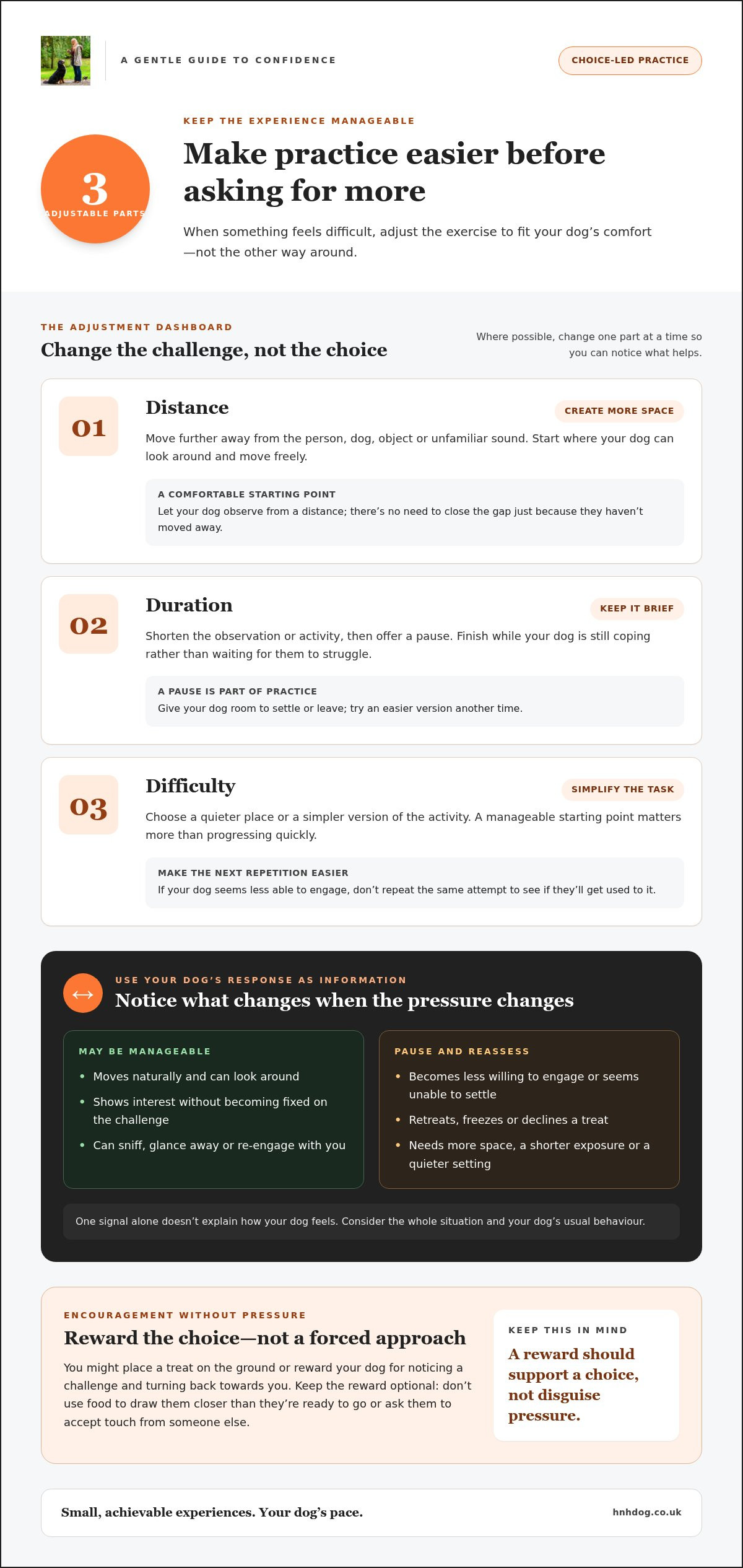
Set up practice so your dog can notice something new without feeling trapped by it. You can adjust three parts of an exercise: distance from the challenge, how long your dog encounters it and how difficult the task is. Where possible, change one part at a time. That makes it easier to see what helps your dog stay comfortable.
For example, if your dog is watching a person from across a quiet space, begin at a distance where they can look around and move freely. There’s no need to close the gap just because they haven’t moved away. Let them observe, then finish while they’re still coping. For confidence building exercises for shy dogs, a manageable starting point matters more than how quickly you progress.
- Distance: Move further away from a person, dog, object or unfamiliar sound.
- Duration: Keep the observation or activity brief, then offer a pause.
- Difficulty: Choose a quieter place or a simpler version of the task.
Use reward-based encouragement to make the experience more positive. You might place a treat on the ground or reward your dog for noticing a challenge and then turning back towards you. Keep the reward optional. Don’t use food to draw your dog closer than they’re ready to go, and don’t ask them to accept touch from someone else. A reward should support a choice, not disguise pressure.
How can you tell whether an exercise is manageable?
Look for your dog being able to move naturally, take in their surroundings and show interest without becoming fixed on the challenge. They might glance towards it, sniff the ground or choose to re-engage with you. Retreating, freezing or declining a treat are reasons to pause and assess, but one signal alone doesn’t explain how your dog feels. Consider the whole situation and your dog’s usual behaviour.
How should you adjust a difficult exercise?
If your dog seems less able to engage, don’t repeat the same attempt to see if they’ll get used to it. Increase the distance, shorten the exposure or move to a quieter setting. Then give them space to settle or leave. A break isn’t a setback; it lets your dog recover and keeps participation voluntary. You can try an easier version another time.
If your dog hesitates, make the next repetition easier. This simple rule helps you respond to what your dog is communicating instead of asking them to push through. Keep your movements calm, avoid blocking their route away and finish the exercise quietly if they need to stop.
If it’s hard to judge what adjustment would help, personalised one-to-one dog training can provide guidance shaped around your dog’s temperament and pace. H&H Dog offers individual training and behavioural consultations, drawing on more than 20 years of experience.
Which confidence-building exercises suit your shy dog?
The right activity depends on your dog’s temperament and what’s happening around them that day. A food search at home may feel easy, while the same dog might find a familiar outdoor route busy if there are sudden noises or people passing close by. Choose an exercise your dog can opt into, and let their response guide whether to continue.
Confidence doesn’t require direct contact with unfamiliar dogs. Your dog can practise noticing another dog from a comfortable distance, then choosing to look away, sniff or move with you. Calm observation and voluntary disengagement are useful experiences too.
| Exercise | Suitable starting point | Signs to make it easier |
|---|---|---|
| Optional food search | Scatter a few pieces of food in a familiar, uncluttered room. | Your dog doesn’t investigate, moves away or seems unsettled; simplify the space or stop. |
| Novel object exploration | Place a harmless everyday object at a distance, without moving it towards your dog. | Your dog avoids the area or becomes still; increase distance or remove the object. |
| Outdoor observation | Watch everyday activity from a quiet, familiar spot at a comfortable distance. | Your dog struggles to look away or choose to move; find more space or head home. |
Which indoor exercises can help a cautious dog?
In a room your dog already knows, scatter a few pieces of their usual food across a clear patch of floor. Let them search if they choose; don’t guide them towards each piece. You can also place a novel, non-threatening object in the room and allow your dog to investigate, watch or ignore it.
Keep the activity brief. If your dog leaves, let them. Participation is optional, and simply being able to share a room with something new without pressure can be a useful starting experience.
How can you practise confidence outdoors?
Begin in a familiar, relatively quiet place where your dog has room to move away. From a distance they can manage, let them watch ordinary activity, such as a person walking past. You’re not trying to get closer; you’re giving your dog time to notice the scene and decide what to do.
Allow sniffing and retreat breaks rather than using a treat to draw your dog towards people, dogs or other distractions. If they choose to turn away, go with them. The most suitable confidence building exercises for shy dogs are the ones that fit your dog’s comfort in that moment, not a fixed progression through increasingly difficult situations.
How to build a simple confidence routine and track progress
A predictable routine makes it easier to notice what your dog finds comfortable and what might need adjusting. Keep the steps simple, and treat your dog’s response as useful information rather than a score. The aim is to create a manageable opportunity for confidence building exercises for shy dogs, not to complete a particular task every time.
Try this short sequence:
1. Choose a setting. Pick a familiar place where your dog can move freely and where you can control how close you get to potential distractions.
2. Offer one simple activity. This might be a familiar game or a chance to observe something from a distance. Give your dog the option to join in, watch or move away.
3. Observe and finish. Notice your dog’s posture, movement and willingness to engage. End calmly while they’re still comfortable, or stop sooner if they seem unsettled.
Keep a brief note after each practice. Record the setting and what was happening, how your dog responded and what seemed to help. For instance: “Quiet courtyard, watched a passer-by, then sniffed and re-engaged after we moved further away.” These details can reveal patterns that are easy to miss from memory alone.
How often should you practise confidence exercises?
Look for brief, repeatable opportunities that fit naturally into your routine, rather than setting a target number of repetitions. A comfortable experience is more useful than finishing a planned session. If your dog seems tired, distracted or unsettled, pause, simplify the activity or leave it for another time.
How can you recognise meaningful progress?
Compare your dog with their own earlier responses, not with another dog’s behaviour. Progress might mean choosing to take part more often, returning to a familiar activity sooner after a surprise or seeming more at ease in a setting that used to feel uncertain. It doesn’t have to mean moving closer to a person or distraction.
Look for patterns across your notes, while remembering that comfort can vary with the place, the people present and the day itself. One difficult outing doesn’t cancel out a more settled response elsewhere. For wider context on situations where individual help may be useful, read this London dog behaviourist guide. You can also discuss training foundations for your dog’s everyday life in London with H&H Dog.
If your notes show that everyday practice repeatedly feels difficult or progress is uncomfortable, tailored support may help you understand what to adjust. H&H Dog offers personalised one-to-one training and behavioural consultations shaped around each dog’s temperament. Explore personalised dog training support as a possible next step.
When personalised support can help a shy dog move forward
Home practice can be a helpful starting point, but it isn’t always easy to work out why an exercise feels difficult or what to change next. If your dog repeatedly struggles to settle, everyday activities are becoming harder to manage or you can’t find a comfortable starting point, tailored guidance may help you plan a more suitable approach. This isn’t a sign that you’ve failed. It’s a way to understand what your dog needs and protect their welfare as you move forward.
What can one-to-one guidance add?
One-to-one training can take account of your dog’s temperament, history and everyday environment rather than relying on a general exercise plan. A trainer can help you identify what your dog is responding to, spot manageable starting points and adjust practice to suit their signals. H&H Dog offers personalised one-to-one dog training and behavioural consultations, drawing on more than 20 years of experience.
That individual perspective can be especially useful when a dog’s responses vary. For example, they may cope with one familiar route but find a different setting difficult, or respond differently to people depending on how close they are. Looking at the full context helps you decide what to practise, what to make easier and when your dog needs a break. The purpose is practical support, not pressure to meet a fixed milestone.
When should owners seek additional advice?
Consider personalised support if confidence-building exercises repeatedly leave your dog unsettled, if progress has stalled despite making practice easier or if fear is limiting walks and other everyday routines. If your dog’s behaviour changes suddenly or noticeably, speak with your vet, as a health issue may be contributing. A trainer can then help you consider appropriate exercises alongside any veterinary advice.
Bring brief notes about the situations your dog finds difficult, what you’ve tried and how they responded. This can make it easier to discuss patterns and identify a first step that feels achievable. You don’t need a perfect record or to know exactly what your dog is feeling; careful observations are enough to begin a useful conversation.
The best confidence building exercises for shy dogs are those that can be adapted to the individual dog, rather than pushed through on a schedule. H&H Dog’s personalised support keeps your dog’s temperament and pace at the centre of the training process, helping you make thoughtful, practical choices together. There’s no need to wait until daily life feels unmanageable to seek guidance.
If you’d like support tailored to your dog, explore personalised dog training support from H&H Dog.
Let your dog’s next step be a small one
Your dog doesn’t need to become fearless to enjoy a fuller, more comfortable life. The next step might simply be noticing what helps them feel secure and making room for more of it. Keep their choices at the centre, and let confidence building exercises for shy dogs remain flexible as their needs change from one day or situation to another.
If you’re unsure how to adapt practice or would value a plan shaped around your dog, H&H Dog offers personalised one-to-one training and behavioural consultations. The team brings more than 20 years of industry experience to supporting dogs and their people with individual guidance. Explore personalised dog training support and consider what a comfortable next step could look like for you both.
There’s no need to rush. With patient, thoughtful support, you can keep building understanding together, one manageable experience at a time.
Frequently Asked Questions
What is the first confidence-building exercise to try with a shy dog?
Start with a simple choice your dog can make in a familiar room. Place two well-known toys or resting spots within easy reach, then give your dog time to select one, or neither. Avoid calling them over or pointing repeatedly. This small exercise lets you notice what they choose freely and whether they seem comfortable. If they walk away, respect that response and try another time.
Can adult or rescue dogs learn to feel more confident?
Yes, adult and rescue dogs can develop greater comfort through experiences that suit them as individuals. Their past may be unknown, so avoid assuming you know why a particular situation feels difficult. Focus on what your dog can manage now, such as settling in a quiet room while a visitor sits calmly at a distance. In London, familiar routines and predictable surroundings can offer a helpful foundation while you learn your dog’s preferences.
Should I use treats when helping a shy dog build confidence?
Treats can be useful if your dog wants them, but they aren’t essential. Try placing a small piece on the floor rather than holding it out near a person or unfamiliar object; your dog can decide whether to take it and where to stand. Some dogs prefer their usual food, a favourite toy or simply more space. If your dog won’t eat, don’t keep offering food as an invitation to approach.
How can I build my shy dog’s confidence on walks?
Plan routes with room to change direction, rather than getting caught on a narrow pavement with a distraction approaching. In London, you might choose a quieter street or a less busy section of a familiar green space, then leave if the surroundings become difficult. Let your dog set the pace for sniffing and exploring. A walk can be worthwhile even if you take a short route and avoid close encounters.
Should I make my shy dog meet more people and dogs?
No. Repeated greetings aren’t necessary for confidence, and close contact may feel uncomfortable rather than helpful. Ask people not to approach, reach over your dog or invite them to say hello. With other dogs, prioritise enough space for your dog to remain at ease and continue on without a greeting. Success can mean calmly sharing an area, not interacting. Your dog’s comfort matters more than appearing sociable.
How long does it take for confidence-building exercises to work?
There isn’t a set timetable. A dog may respond differently depending on the place, the people nearby, their health and how settled they feel that day. Rather than looking for a particular finish date, notice whether familiar situations become easier to manage over time. If your dog’s responses worsen or daily activities become harder, pause the exercise and consider tailored advice instead of increasing the challenge.
Can I help a shy dog if they will not take treats?
Yes. Food isn’t a requirement for helping your dog feel safer. Give them the option to move away, choose a quieter route or engage with a familiar activity they enjoy. A dog may refuse food because they aren’t hungry, don’t value that treat or feel uncomfortable in the moment, so consider the broader context. If their appetite changes outside training too, speak with your vet.