
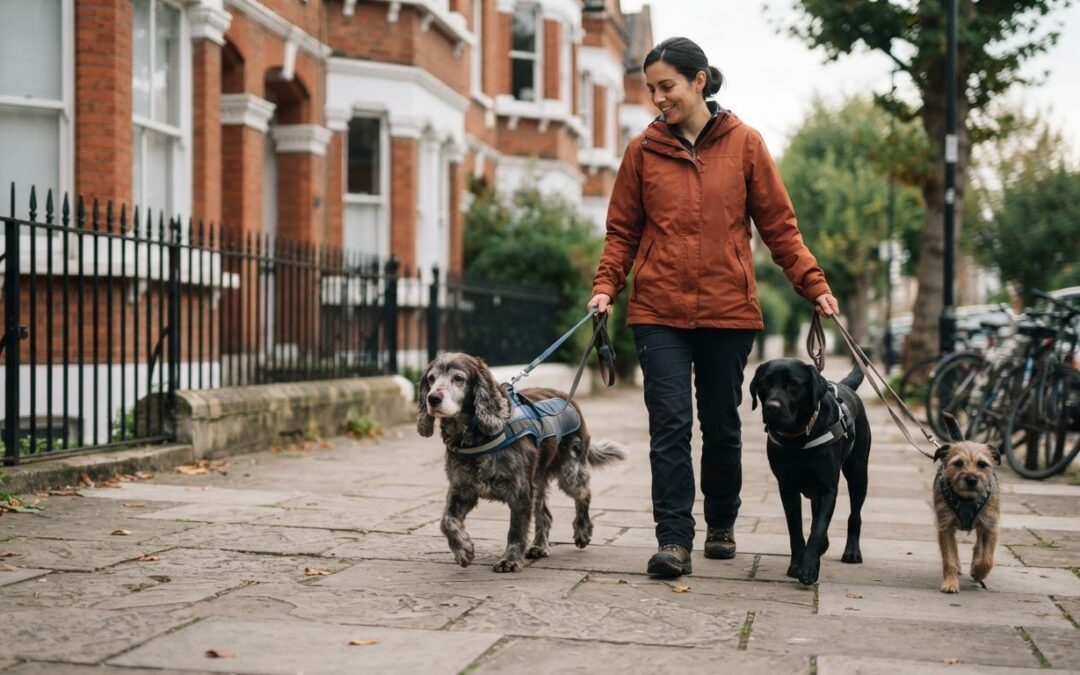
The right dog walker for dogs with medical needs understands your dog’s condition, follows their care instructions and adapts each walk to their comfort and ability. Clear guidance on routine medication, warning signs, pace and route helps keep care consistent and your dog feeling safe.
When your dog has additional needs, you need more than someone confident with a lead. You need to know their routine will be respected and that the walker can respond calmly if your dog seems uncomfortable or their condition affects the outing.
Assess the walker’s hands-on experience, safety preparations and ability to follow routine medication instructions. Discuss routes, mobility equipment and your dog’s individual limits so you can make a considered choice that supports their wellbeing.
Key Takeaways
- Start with short, straightforward routes and adapt the pace to your dog’s comfort and mobility.
- Assess a walker’s hands-on experience, relevant qualifications, insurance and pet first aid training.
- For a stable, vet-controlled condition, clear care instructions help the walker follow your dog’s established routine.
- Discuss medication timing, what to do if a dose is missed, and which changes in your dog’s wellbeing should prompt a call to you.
How a professional dog walker starts with short, simple walking routes
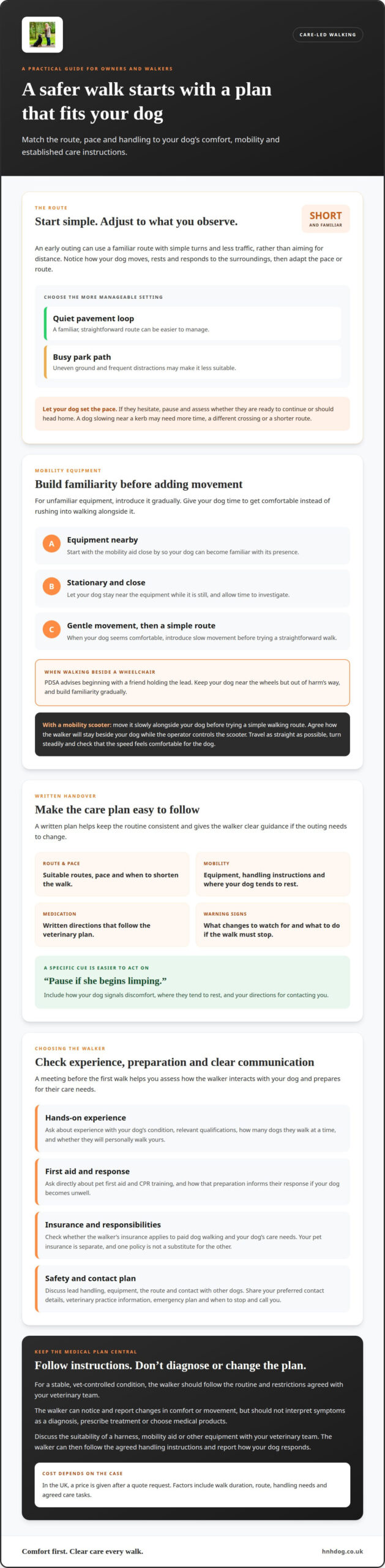
A professional matches the walk to your dog’s current comfort, mobility and usual routine. For an early outing, that might mean a short, familiar route with simple turns and less traffic, rather than aiming for distance. The walker can observe how your dog moves, rests and responds to their surroundings, then adjust the route or pace. For example, a quiet pavement loop may be more manageable than a busy park path with uneven ground and frequent distractions.
Walking beside a wheelchair calls for careful positioning and a gradual, positive introduction. PDSA advises beginning with a friend holding the lead while the dog walks beside the mobility aid. Keep your dog near the wheels but out of harm’s way. Build familiarity before moving on: let the dog investigate the aid, then introduce movement at a comfortable pace. With a mobility scooter, for example, move it slowly alongside the dog before trying a simple walking route.
Give the walker a written care plan covering suitable routes and pace, mobility equipment, medication directions, warning signs and what to do if the walk needs to stop. Include practical details such as where your dog tends to rest and how they signal discomfort. Specific instructions, such as “pause if she begins limping”, are easier to follow.
Tailored care also means letting your dog participate at their own pace. If they hesitate, the walker can pause and assess whether they are ready to continue or should head home. A dog who slows near a kerb, for instance, may need more time, a different crossing or a shorter route. Group Dog Walking is a different setting, so consider whether other dogs and their pace suit your dog’s mobility and comfort.
What to look for in a dog walker’s experience, insurance and first aid training
A meeting before the first walk helps you assess the walker’s experience, safety preparations and communication, as well as how they interact with your dog.
Experience and First Aid Training to look for in a dog walker
Ask how long the walker has worked with dogs, what hands-on experience they have with your dog’s condition, and whether they hold a relevant qualification. PDSA advises asking how many dogs they walk at a time and whether they will personally walk yours. Ask directly about pet first aid and CPR training. A useful answer should explain how that preparation informs their response if your dog becomes unwell.
Explain your dog’s condition, usual signs of discomfort, routine instructions and emergency plan. Give the walker your preferred contact details, veterinary practice information and clear directions about when to stop the walk and contact you. Specific examples help, such as describing how your dog behaves when tired.
Whether your pet insurance covers an incident during a walk depends on your policy wording. Your cover is separate from the walker’s insurance, so don’t treat one policy as a substitute for the other.
Safety Checks and Insurance to look for in a dog walker
Ask about the walker’s insurance and whether it applies to paid dog walking and your dog’s care needs. Discuss lead handling, equipment, the planned route and contact with other dogs. Agree who is responsible for your dog throughout the outing and how the walker will tell you about any change in routine.
If a mobility scooter is part of the walk, agree how the walker will stay beside your dog while the scooter operator controls the vehicle. The operator should travel as straight as possible, turn steadily and check that the speed feels comfortable for the dog. For support with calm handling and cooperation, one-to-one dog training can help build relevant everyday skills.
Experience with stable, vet-controlled conditions
Even with a stable, vet-controlled condition, your dog needs exercise suited to their individual limits. The walker should follow the routine and restrictions agreed with your veterinary team, not change the plan or interpret symptoms as a diagnosis. If the care plan calls for a steady pace and pauses when your dog is tired, those instructions should shape the outing. Relevant experience includes recognising your dog’s usual behaviour and reporting changes clearly.
Ask how the walker adapts their handling to your dog’s condition and responds if their comfort or movement changes. The walker’s role is to follow agreed instructions and share observations, not prescribe treatment or choose medical products. Discuss the suitability of a harness, mobility aid or other equipment with your veterinary team. The walker can then follow the agreed handling instructions and report how your dog responds.
In the UK, the price depends on the case and is given after a quote request; factors include the walk’s duration, route, handling needs and agreed care tasks.
If your dog is unfamiliar with mobility equipment, introduce it gradually before using it on walks. Start with the equipment nearby, then let your dog stay close while it is stationary. When they seem comfortable, introduce gentle movement. This gradual desensitisation gives your dog time to get used to the equipment without rushing them into walking alongside it.
A professional can use reward-based handling and familiar cues to support calm movement, while keeping the veterinary plan central. For example, a dog who pauses beside a mobility aid should be given time, not pulled forward. Puppy Training or 1-to-1 Dog Training can build useful everyday skills, such as settling beside equipment or responding to a recall cue. Training supports cooperation; it doesn’t replace veterinary advice or authorise changes to care.
How a professional dog walker cares for dogs that need routine medication
Medication routines need clear handovers, not guesswork. Owners should provide written instructions that match the veterinary plan, including the medication name, prescribed dose, timing and any directions about food. The walker should know whether medication is expected during the outing or before or after it. Keep the medicine in its original packaging, with your dog’s belongings, so the instructions remain clear.
Before walks begin, agree who gives each dose and how it will be recorded. If medication administration is part of the agreed care, explain the method your dog already accepts, such as giving medicine with a specific food. The walker should follow your instructions exactly, never change the dose or timing independently, and tell you promptly if your dog refuses or spits out medicine.
Include clear instructions for missed or uncertain doses. The walker should follow your contingency plan rather than guess whether to repeat a dose. Provide your veterinary practice’s contact details and explain when you want the walker to call you. If your dog refuses a dose, for example, the walker can record what happened and contact you before taking further action.
Medication care also involves observing your dog before, during and after the walk. The walker can note changes such as unusual tiredness, reluctance to move or a different response to familiar cues, then report them factually. These observations can help you share useful information with your veterinary team, but they don’t replace a veterinary assessment. Update the written care plan if the prescribed routine changes, and give the walker the new instructions before the next outing.
If your dog’s established routine suits a shared walk, explore Group Dog Walking as a possible part of their care schedule.
H&H Dog
H&H Dog offers Group Dog Walking, with care tailored to each dog’s needs and temperament. If your dog has a medical condition, discuss how their usual routine, mobility and comfort fit with a walk. Share the veterinary instructions that shape their daily activity, and explain what they find difficult or reassuring. This helps you decide whether a group walk suits your dog instead of assuming the same setting works for every dog.
For some dogs, familiar company and a suitable walking routine can be part of a balanced week. Others may feel more comfortable with a quieter approach. Clear information about your dog helps shape the conversation and keeps their welfare central.
If you’d like to discuss your dog’s walking needs, contact H&H Dog.
Make the next step feel manageable
Choosing a dog walker for dogs with medical needs is about more than arranging an outing. It means finding a routine that fits your dog’s life and helps them feel secure while you’re apart. Turn your observations into a shared plan: note what helps your dog settle, what makes them uncomfortable and what updates you’d like after a walk. These details provide a practical starting point and keep your dog’s experience at the centre.
If you’re ready to discuss the support that may suit your dog, contact H&H Dog about your dog’s care. You can explain their individual needs and talk through a thoughtful way forward. With clear communication and a pace that respects your dog, the next step can feel calmer for both of you.
H&H Dog for personalised dog care
If you’re looking for a dog walker for a dog with medical needs, H&H Dog offers personalised care tailored to each dog’s individual needs and temperament. With over 20 years of experience, the team can help you consider the care that best suits your dog.
Alongside Group Dog Walking, H&H Dog offers grooming, puppy training, one-to-one dog training and behavioural consultations. Talk with the team about which service best fits your dog and the care you’re looking for.
Frequently Asked Questions
What should I look for when choosing a dog walker experienced with dogs with medical needs in the UK?
Choose a dog walker who can explain how their experience fits your dog’s needs and routine. When looking for a dog walker for dogs with medical needs, ask whether the same person will walk your dog, how many dogs they take together and how they transport dogs to walking locations. Clear answers help you judge whether the practical arrangements suit your dog, not just whether the walker sounds confident.
What qualifications or training should a dog walker have to care for a dog with medical conditions?
Look for hands-on experience with dogs, a relevant qualification where possible, and pet first aid and CPR training. Ask how that training helps the walker respond in an emergency, such as recognising when a walk should stop and contacting you. Training doesn’t make a walker a veterinary professional, so their role should stay within your agreed care instructions.
Can UK dog walkers administer medication or provide special medical care?
A walker should administer routine medication only when this has been explicitly agreed and they have clear instructions from you. Explain what to do if your dog refuses a tablet, rather than leaving the walker to decide whether to offer another dose. A walker should not diagnose a condition, change medication or replace veterinary care. Agree in advance how they should report any concerns.
What risks should I consider when choosing a dog walker for a medically vulnerable dog?
Consider whether the route, transport and walking group might make your dog uncomfortable or harder to monitor. A dog that tires quickly, for example, may struggle if the group’s pace can’t be adapted. Ask how the walker would respond if your dog suddenly slows, seems unwell or needs to head home. Their plan should put your dog’s welfare ahead of completing the outing.
How can I find and choose a specialist dog walker near me in the UK?
Start with your postcode and look for a walker who serves your part of London and understands your dog’s routine. H&H Dog provides dog walking in NW1-NW8, NW11, N2, N3, N6 and W9. Arrange a conversation before the first walk, describe the support your dog needs and discuss whether the walking arrangement fits their comfort and daily care.