
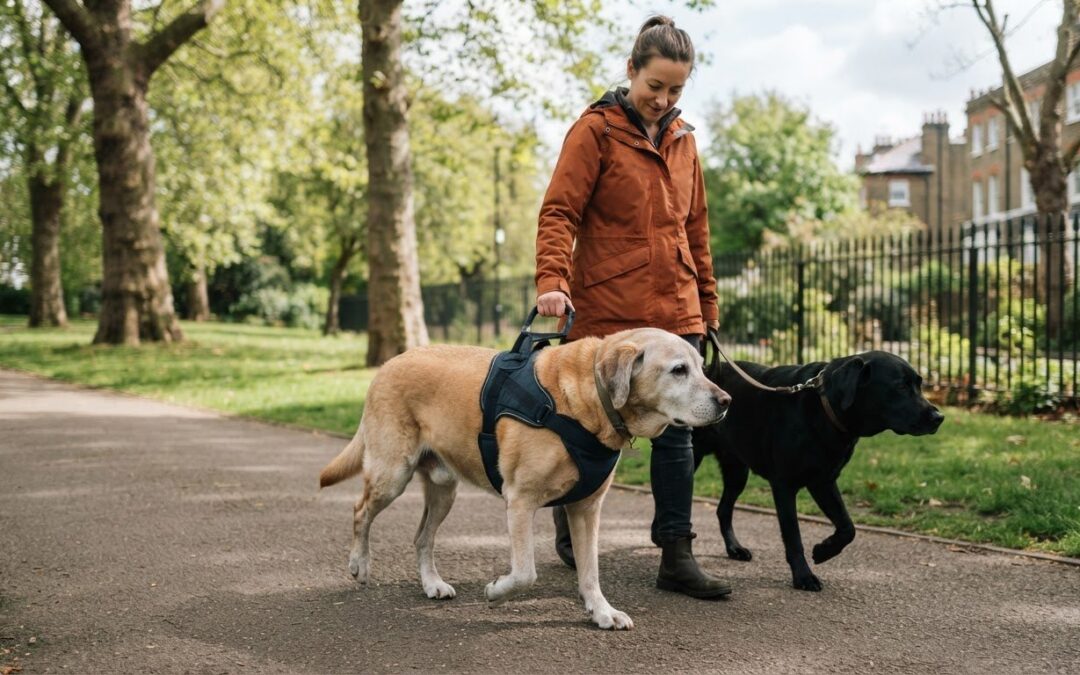
Arthritis doesn’t automatically mean your dog should stop walking. A dog walker for dogs with arthritis can make outings gentler, starting with short walks of around 5 to 10 minutes and increasing the time only if your dog copes comfortably. If your dog limps or doesn’t want to continue, the walk should end so they can rest.
It’s understandable to worry that exercise might worsen joint pain. Gentle movement at a pace your dog can manage can help them enjoy time outdoors without pushing through discomfort.
This guide covers choosing a suitable pace and route, using support harnesses, avoiding activities that may aggravate painful joints, and recognising signs of discomfort. You’ll also learn what to discuss with a professional dog walker so outings can be shaped around your dog’s needs.
Key Takeaways
- Use a well-fitting harness and suitable support to help your dog move at a comfortable pace.
- Choose steady, low-impact routes and avoid activities that can jar or strain painful joints.
- Watch your dog’s movement and willingness to continue, and end the walk if discomfort appears.
- Keep exercise consistent and tailored to your dog’s comfort, adjusting the plan as their needs change.
1. Slings and support harnesses
A support harness with two handles can help steady a dog when standing, walking, using stairs or getting into a car. The handles allow a controlled lift when needed, while your dog should still bear weight where able. A sling offers support and a safety net, not a way to stop your dog bearing weight.
On walks, a well-fitting harness and lead help the handler guide the pace and prevent sudden running or jumping. Check the fit: rubbing, slipping or pressure can make movement harder. Ask the walker how they’ll use your dog’s harness, where they’ll hold it and what they’ll do if your dog hesitates. Support should help your dog feel secure, not force them to continue despite discomfort.
Braces and orthopaedic supports need careful selection. Wraps may help ease pain and swelling around the wrist or ankle, but on other joints they can slip, rub, restrict movement or provide unsuitable compression. Custom orthotics may also cause sores over time and need adjustments. Ask the veterinary professional overseeing your dog’s care which support is appropriate.
When choosing a London dog walker, focus on how clearly they discuss your dog’s mobility, equipment, pace and signs of discomfort. Ask for a specific example of how they’d adapt an outing if your dog struggled to stand or wanted to turn back. If you’re considering group walks, ask how the walk is managed and whether it suits your dog’s needs.
Ask what insurance cover the walker holds and which local legal requirements apply to their service. Get clear details before agreeing to walks. At home, a sturdy, wide, non-slip ramp can help with steps or car access; rugs with non-slip pads or yoga mats can improve indoor traction. Let the walker know where these are and how your dog uses them.
2. Activities that can aggravate painful joints
Sudden changes in distance or pace can overload an arthritic joint. A long weekend walk after quiet weekdays may be harder on the joints than steady, familiar activity. Hard pavements, gravel and rocky paths can jar sore limbs; steep inclines, steps and deep mud demand extra effort. A gentle, level route reduces these challenges. Repeated ball chasing may also be unsuitable, as abrupt stops and turns can strain joints even when your dog seems eager to play.
Jumping down from a car, sofa or high step can put force through a dog’s front legs. Use a suitable ramp or stairs, and avoid routes that involve repeated climbing. Slippery floors make running especially risky, while uncontrolled play with faster or heavier dogs can lead to sudden twists or collisions. A walker should keep play calm and controlled, letting your dog pause instead of encouraging them to match another dog’s speed or strength.
Joint wraps and orthotics also need care. Wraps may help around the wrist or ankle, but elsewhere they can slip, rub, restrict movement or provide unsuitable compression. Custom orthotics can cause rubbing sores over time and may need adjustment. Check your dog’s comfort and skin after use, and follow the veterinary professional’s advice on fitting and ongoing use. Support should assist movement, not hide signs that an activity is too difficult.
Before each outing, the walker can consider the ground, weather and your dog’s movement that day. For example, replacing a rocky incline with a level grassy route avoids avoidable impact. If discomfort appears, stop the activity and let your dog rest. A gentler walking routine can prioritise steady movement and your dog’s comfort over distance or pace.
3. Choosing suitable walks and exercise
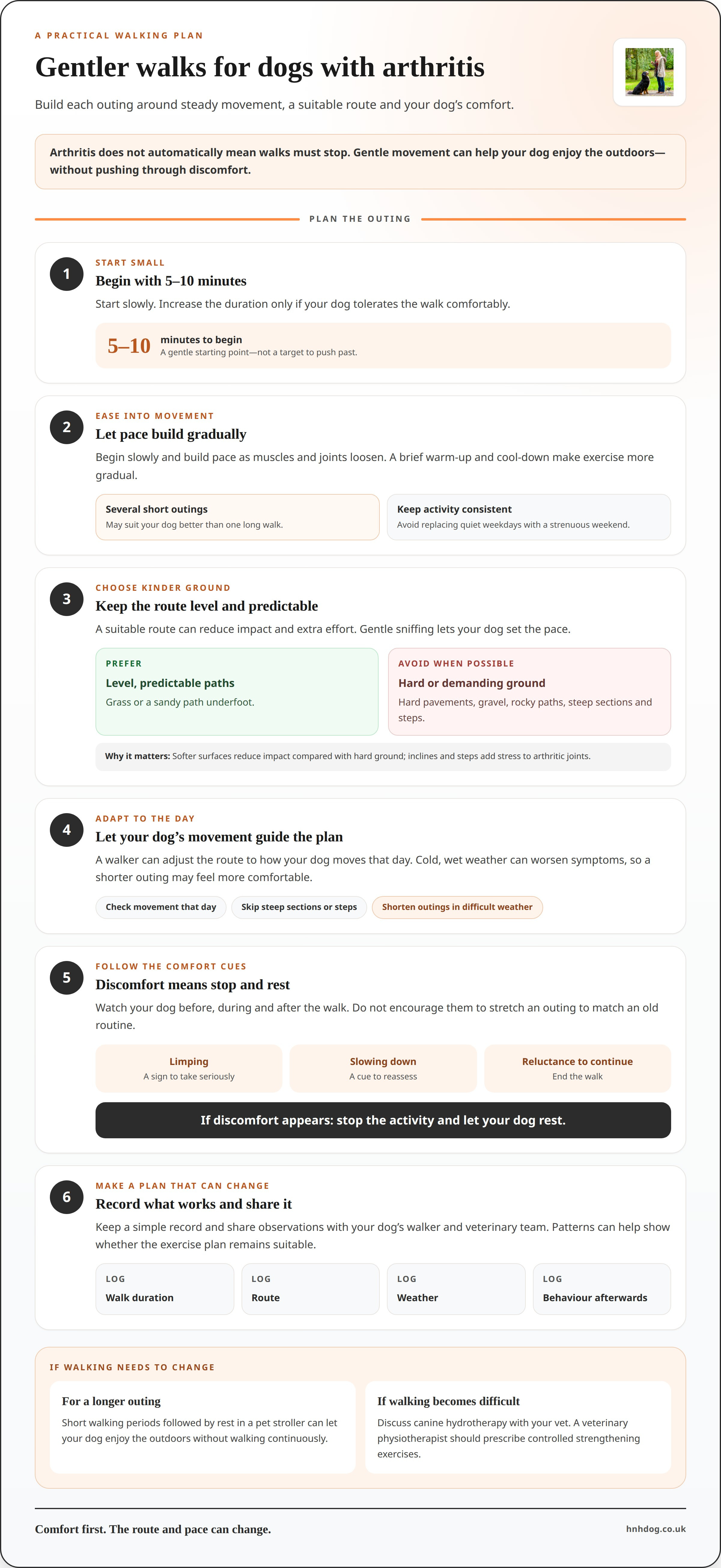
Begin with a walk of around 5 to 10 minutes, then increase duration only if your dog tolerates it well. Start slowly and build pace as muscles and joints loosen. A brief warm-up and cool-down help make exercise more gradual, while several shorter outings can suit a dog better than one long walk. Keep activity consistent across the week rather than replacing quiet weekdays with a strenuous weekend.
Choose a level, predictable route with grass or a sandy path underfoot. Softer surfaces reduce impact compared with hard ground, and gentle sniffing lets your dog set the pace. A walker can adapt the route to how your dog moves that day, avoiding steep sections or steps that add stress to arthritic joints. Cold, wet weather can worsen symptoms, so shorter outings may feel more comfortable on difficult days.
Watch for limping, slowing down or reluctance to continue. If your dog shows discomfort, end the walk and let them rest. For a longer outing, short walking periods followed by rest in a pet stroller can help your dog enjoy the outdoors without walking continuously. If walking becomes difficult, discuss canine hydrotherapy with your vet; a veterinary physiotherapist should prescribe controlled strengthening exercises.
A UK dog walker’s price depends on factors such as walk length, individual care needs and whether the walk is one-to-one; the price is given after a quote request. During planning, explain your dog’s usual pace, signs of discomfort and any limits on jumping or route surfaces. A good fit means the walker can follow that individual routine, rather than expecting your dog to keep up with a standard pace or distance.
4. Monitoring pain and quality of life
Notice how your dog moves before, during and after each walk. Limping, reluctance to set off, slowing down or stopping can signal discomfort. If your dog avoids a familiar route they once enjoyed, they may be showing that something has changed. Don’t encourage them to stretch an outing to match an old routine.
Keep a simple record of walk duration, route, weather and your dog’s behaviour afterwards. Note, for example, whether they seemed comfortable on grass but hesitant on hard ground, or stiffer after a longer outing. Share these observations with the person walking your dog and your veterinary team. Patterns can help them assess whether the exercise plan remains suitable.
A persistent or recurring limp warrants veterinary advice. Contact your vet urgently if your dog’s condition suddenly deteriorates despite treatment. Changes in appetite, movement around the home or willingness to play can also show whether daily life is becoming harder. Monitor your dog’s weight and body condition regularly, as excess weight can add demands to painful joints.
An arthritis-aware walker should have practical experience adapting outings to a dog’s pace and responding calmly to signs of pain. Ask how they record changes, what they do if your dog limps and how they follow your vet’s advice. Their role is to notice and communicate changes, not diagnose pain or prescribe therapy.
Use those observations to review the plan when your dog’s comfort or mobility changes. A shorter outing may be appropriate after a difficult day, while recurring symptoms call for veterinary input before extending walk duration. Discuss suitable walking support for your dog’s needs.
H&H Dog
H&H Dog offers Group Dog Walking for owners who need professional support with their dog’s regular outings. If your dog has arthritis, share their comfortable pace, signs of discomfort and any veterinary guidance so their needs can inform the walking plan.
Group walking won’t suit every dog. A dog who needs a quieter pace, frequent pauses or close individual attention may find a group outing difficult. Consider whether the setting suits your dog’s mobility and comfort. Their welfare should guide the decision, not an expectation that they keep up.
Contact H&H Dog to discuss your dog’s walking needs and whether Group Dog Walking is a suitable fit.
Make the next walk feel manageable
Your dog’s relationship with the outdoors can change, so treat each outing as part of an ongoing partnership, not a test of progress. A suitable dog walker for dogs with arthritis will respect your dog’s signals and put their comfort ahead of a fixed distance or pace. Small adjustments can help preserve the pleasure and connection of a familiar outdoor routine.
When planning the next step, share what helps your dog feel settled and what makes walks difficult. Clear communication helps a walker understand your dog as an individual, while veterinary advice can guide decisions about changing mobility or pain. The aim isn’t to push for more, but to support a life that still includes comfortable, worthwhile outings.
Contact H&H Dog for walking support and discuss what could suit your dog. A thoughtful plan can help you move forward at your dog’s pace.
Frequently Asked Questions
Should you walk a dog with arthritis?
Yes, if your dog can move comfortably and the exercise suits their needs. Gentle, regular outings can maintain routine and movement, but a walk shouldn’t become a test of endurance. If your dog seems uncomfortable, stop and let them rest. A sudden change in mobility or walking behaviour needs attention, not encouragement to push through.
How do you choose a dog walker for a dog with arthritis in the UK?
Choose a dog walker who listens to your dog’s needs and explains how they respond to changes in movement. Ask how they’ll share updates after walks, adapt on a difficult day and handle equipment your dog already uses. A dog walker for dogs with arthritis should follow your instructions and put your dog’s wellbeing ahead of a fixed route or schedule.
What walking duration and exercise is recommended for dogs with arthritis?
Initial walks are around 5 to 10 minutes, with duration increased only if your dog tolerates the activity well. Several shorter outings may suit better than one long walk, and consistent daily movement is preferable to a strenuous weekend after quieter days. Your dog’s comfort should guide progression. For controlled strengthening exercises, a veterinary physiotherapist should prescribe the programme.
How should a professional dog walker adapt walks for a dog with arthritis?
A professional should tailor the outing to your dog’s mobility that day, choosing a familiar, level route and allowing pauses. They can avoid busy paths where sudden turns or crowding could make movement harder. On longer outings, short walking periods with rest in a pet stroller may be an option. Clear updates help you and the walker understand what your dog manages comfortably.
What warning signs of pain or worsening arthritis should a dog walker watch for?
A walker should watch for limping, slowing, reluctance to set off or unwillingness to continue, and stop if your dog shows discomfort. Tell them about changes you’ve noticed at home, such as difficulty rising, so they can report similar behaviour outdoors. Persistent or recurring limping warrants veterinary advice; contact your vet urgently if your dog suddenly deteriorates despite treatment.