
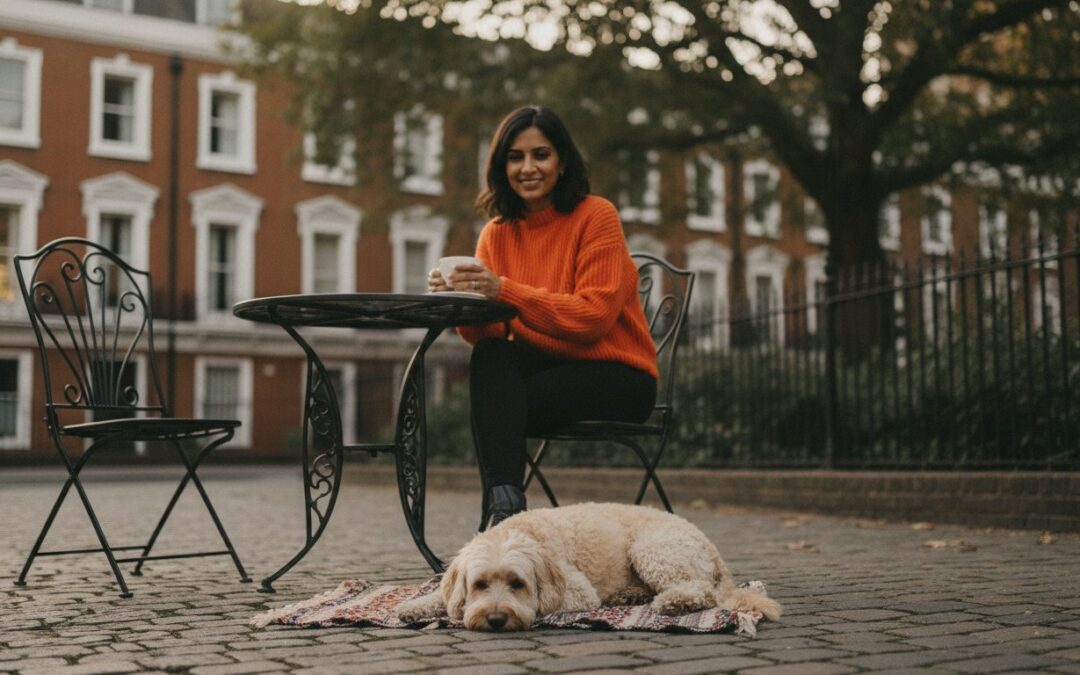
Imagine sitting outside a charming Upper Street café, your flat white is steaming, and your dog is perfectly settled at your feet, ignoring the bustle of Islington. For many owners, the reality is closer to a frantic tangle of leads, a tipped-over latte, and the stinging heat of embarrassment as your dog barks at a passing spaniel. It’s a common struggle in our vibrant borough, but achieving a relaxed outing is entirely possible with the right approach. Our specialised cafe-friendly dog training Islington transforms these stressful outings into moments of genuine connection. We believe that a dog’s ability to settle isn’t just about obedience commands; it’s about emotional regulation and feeling safe in a busy urban environment.
You likely feel that a quiet coffee with your companion shouldn’t feel like a tactical operation, and you’re right. We understand the anxiety that comes with managing a stressed dog in a crowded space, which is why we’ve developed techniques that prioritise your dog’s internal calm over outward compliance. This guide will show you how to master the art of the cafe settle using evidence-based, ethical methods. We’ll explore how to build focus amidst distractions, how to read your dog’s subtle stress signals, and highlight the best local Islington spots for your first successful training visits.
Key Takeaways
- Understand the vital distinction between a physical ‘Down-Stay’ and a ‘Settle’, focusing on your dog’s internal emotional calm rather than just outward compliance.
- Discover how bespoke cafe-friendly dog training Islington helps you navigate the unique challenges of the borough, from narrow pavements to high-foot-traffic seating areas.
- Learn to use the ‘Islington Cafe Hierarchy’ to select the most appropriate local environments for your dog’s current skill level, ensuring every outing is a success.
- Master the ‘Arrival Ritual’ and the importance of a pre-visit decompression walk in Highbury Fields to set your dog up for a relaxed, stress-free experience.
- Explore why 1-to-1 training is the most effective way to address individual temperaments and build the impulse control needed for a peaceful social life.
Why Cafe-Friendly Dog Training is an Essential Islington Lifestyle Skill
Being ‘cafe-friendly’ is often misunderstood as simply having a dog that is tolerated by staff or patrons. In reality, cafe-friendly dog training Islington is about cultivating a dog that remains emotionally neutral and relaxed despite the sensory overload of a North London coffee shop. It’s the difference between a dog that is ‘held’ in a stay and one that genuinely chooses to rest. A truly cafe-ready dog isn’t just behaving; they are comfortable.
Islington presents a unique set of stressors for our companions. Think of the narrow pavements outside Camden Passage or the tight seating arrangements in local independents. When you try to ‘wing it’ without preparation, you risk flooding your dog with more stimuli than they can process. This often leads to hyper-vigilance, where every clattering spoon or passing toddler becomes a trigger. Instead of socialising, you’re unintentionally teaching your dog that cafes are places of high arousal and anxiety. This can reinforce bad habits like barking for attention or lunging at passing leads, making future outings even more difficult.
The Reality of Urban Dog Ownership in North London
Navigating the busy Upper Street corridor requires more than basic obedience; it demands urban resilience. The sheer volume of foot traffic and the constant proximity to other dogs can be overwhelming for even the most socialised pet. We often suggest using Highbury Fields as a vital ‘pre-cafe’ decompression zone. A 20-minute, sniff-focussed walk in the park allows your dog to lower their cortisol levels and satisfy their natural curiosity before you ask them to settle in a confined space. In N1, the expectation for public manners is high, but these manners must be built on a foundation of feeling safe and secure in the city’s buzz.
Training as a Partnership, Not a Chore
Our training philosophy moves away from the outdated concept of ‘control’. We don’t want you to constantly manage your dog; we want you to mentor them. By understanding canine behavior fundamentals, you can interpret what your dog is trying to tell you through their body language. When you act as a steady, predictable hand in a chaotic environment, your dog learns they don’t need to monitor the room for threats. This collaborative approach is central to our cafe-friendly dog training Islington, ensuring both you and your dog enjoy the experience. This partnership leads to a calmer home life, as the skills learned in the cafe-emotional regulation and impulse control-transfer directly to your daily routine.
The Core Foundations: Teaching the ‘Settle’ and Impulse Control
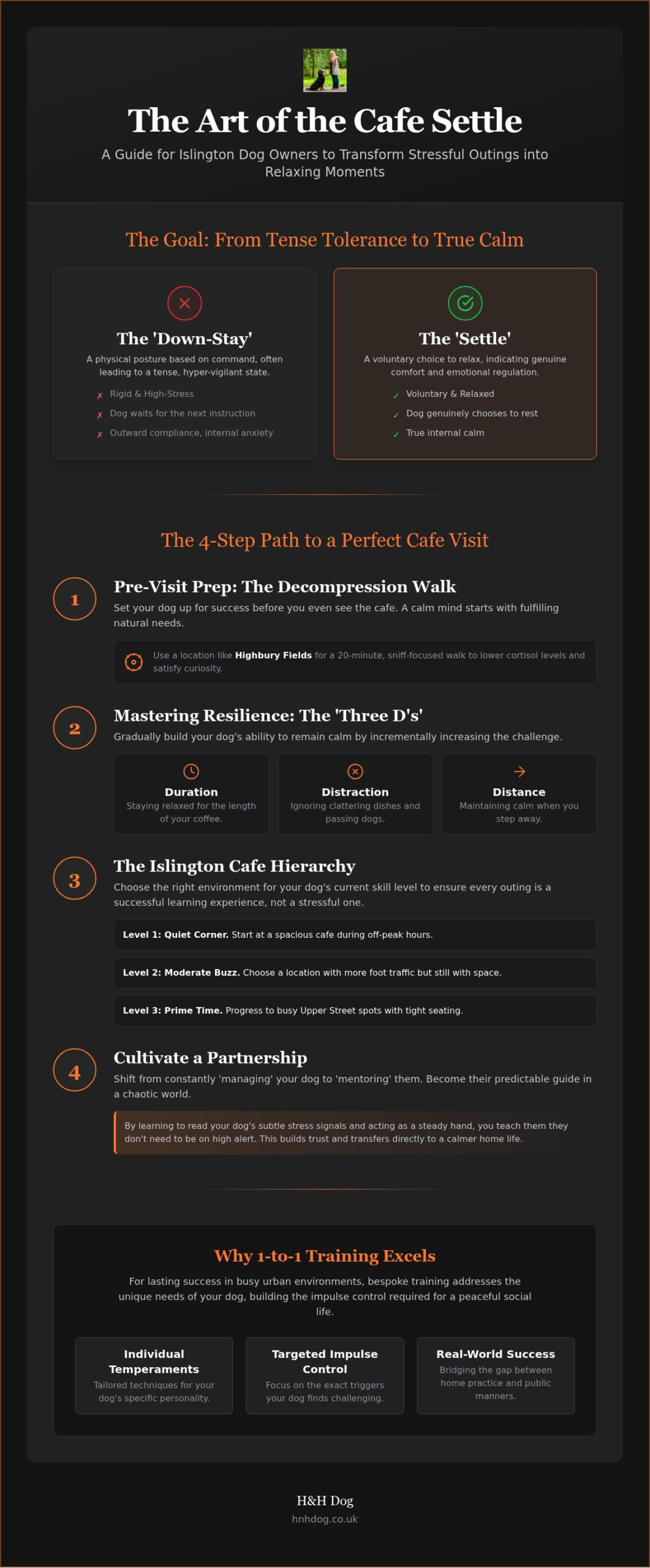
To succeed with cafe-friendly dog training Islington, we must first distinguish between a physical posture and an emotional state. Many owners rely on a ‘Down-Stay’, which is a rigid, often high-stress command where the dog waits for the next instruction. In contrast, a ‘Settle’ is a voluntary choice to relax. While a ‘Down-Stay’ might keep your dog from roaming, it won’t stop them from staring intensely at a neighbour’s plate or whining for attention. True impulse control is the secret weapon that allows your dog to ignore dropped cake or a toddler running past your table.
We work with the ‘Three D’s’ to build this resilience: Duration, Distraction, and Distance. In a cafe context, duration means staying relaxed for the length of your lunch. Distraction is the clatter of a barista’s milk jug, and distance is your ability to briefly step away to collect a napkin without your dog breaking their calm. Integrating these elements slowly ensures your dog feels capable rather than overwhelmed. If you find these foundations challenging to establish alone, our 1-to-1 dog training sessions provide the bespoke guidance needed to bridge the gap between home practice and public success.
Step 1: The ‘Settle’ at Home
Before testing your dog’s patience in a busy N1 bakery, you must build the behaviour in a sanctuary environment. We recommend ‘capturing’ calm moments. When your dog chooses to lie down and sigh, quietly place a piece of kibble between their paws without making a fuss. Introducing a portable training mat or blanket at this stage creates a powerful ‘safe space’ cue that you can eventually take anywhere. A ‘Settle’ is defined as a physiological shift in heart rate and posture, where the dog moves from active monitoring to genuine relaxation. By using low-arousal rewards, you teach your dog that calmness, not excitement, is the goal.
Step 2: Generalising to Low-Distraction Outdoor Areas
Once your dog understands the mat at home, it’s time to move to a quiet outdoor setting. A park bench on the periphery of Highbury Fields is an excellent starting point. Here, you can practice the ‘Leash-to-Table’ transition, ensuring your dog doesn’t get tangled in chair legs or trip up patrons. Use low-value treats like their standard kibble to maintain a low-arousal state; high-value treats can sometimes cause too much anticipation and prevent a true settle. This phase is about teaching your dog that the rules of relaxation apply even when the world is moving around them.
Selecting the Right Environment: Islington’s Training-Friendly Spots
Selecting the right location is just as vital as the foundation work you’ve done at home. Your first attempt at cafe-friendly dog training Islington shouldn’t happen at 11:00 am on a Saturday at a packed Upper Street brunch spot. High-arousal environments like these are ‘final exam’ scenarios, not starting points. Instead, we use a ‘Cafe Hierarchy’ to gradually introduce your dog to increasing levels of environmental pressure. You need to look for specific physical features: under-table clearance that allows your dog to stretch out and ‘corner’ spots where they only have to monitor one or two directions. Staff attitude is another crucial factor. Venues with dog-savvy teams understand that you’re there to work, not just to visit, and they won’t mind if you take a few minutes to settle your dog before ordering.
Level 1: The Quiet Perimeter
Outdoor seating is your best friend during the early stages of socialisation. Spots like GAIL’s Bakery on Upper Street offer a perfect ‘Quiet Perimeter’ where you can sit on the edge of the action without being engulfed by it. This setup allows you to play the ‘Look at That’ game, rewarding your dog for noticing a distraction and then calmly disengaging to look back at you. It is a core part of dog training North London, helping to build neutrality towards the city’s constant movement. By staying on the perimeter, you give your dog the ‘flight’ option if they feel overwhelmed, preventing a reactive outburst before it begins.
Level 2: The Indoor ‘Corner’ Strategy
When you’re ready to move indoors, the layout becomes the most important consideration. Urban Social is a fantastic example of a venue where the seating often allows for the ‘Indoor Corner Strategy’. Placing your dog’s mat in a corner, tucked safely under a table, creates a physical barrier between them and the general foot traffic. This helps your dog feel ‘hidden’ and secure. You must also learn to advocate for your dog’s space. Well-meaning strangers often approach without asking; a polite ‘we’re training right now, so he needs some space’ is a necessary skill for any urban owner. If you’re alone, look for venues with table service or staff who are happy to watch your dog for thirty seconds while you pay, as tethering a dog alone in a busy shop can trigger sudden separation distress.
A Step-by-Step Training Plan for Your First Cafe Visit
Preparation begins long before you reach the cafe door. To set your dog up for success, we recommend a 20-minute decompression walk in Highbury Fields. This isn’t a brisk heel; it’s a ‘sniffari’ designed to let your dog engage their olfactory senses and lower their cortisol levels. By the time you approach your chosen venue, your dog should be in a state of ‘quiet readiness’ rather than high-energy anticipation. The ‘Arrival Ritual’ is your next hurdle. Instead of allowing your dog to pull you through the door, wait for a loose lead at the threshold. This subtle pause communicates that the transition into the cafe requires a different pace and mindset.
The First 5 Minutes: Setting the Tone
When you enter, resist the urge to sit down immediately. Give your dog a minute to ‘sniff and survey’ the immediate area from a standing position. This allows them to process the environment, the other patrons, and the ambient sounds without feeling trapped under a table. Once they seem settled, deploy your training mat in your pre-selected spot and wait for them to offer a voluntary ‘down’. Reward this first settle quietly and calmly. The moment of arrival is the most high-arousal part of the visit because it combines the transition from a busy street with the sensory novelty of a new indoor space.
Troubleshooting Public Disruptions
Even the best-laid plans can face challenges. If another dog enters the cafe and your dog begins to fixate, use an ‘Emergency U-Turn’ to create space or play a quick game of ‘Find It’ by dropping a few pieces of kibble in the opposite direction. This redirects their focus and prevents arousal from escalating into a bark. You also need to manage the human element. If a stranger asks, ‘Can I pet your dog?’, it’s perfectly acceptable to say, ‘He’s in training right now, but thank you for asking.’ Advocating for your dog’s space is essential to maintaining their trust in you as a steady mentor. Keep a close eye on their body language; lip licking, yawning, or a ‘tight’ face are signs they’ve had enough, even if they’re still lying down.
The ‘Exit Strategy’ is just as important as the arrival. Your goal is to leave while your dog is still successful, not when they’ve reached their limit. If you notice their focus is starting to fray, pay the bill and leave immediately. We want every visit to end on a positive note, reinforcing the idea that cafes are places of calm. For those looking to accelerate this process, our 1-to-1 dog training provides the real-world, bespoke support needed to turn these steps into second nature. By practicing in the actual streets and cafes of Islington, we help you build a partnership that thrives in any urban environment.
Bespoke 1-to-1 Training: How H&H Dog Perfects Public Manners
Traditional group classes often struggle to replicate the specific stressors of a North London coffee shop. While a community hall provides a controlled environment, it cannot simulate the narrow pavements of Islington or the unpredictable clatter of a busy espresso machine. This is why 1-to-1 cafe-friendly dog training Islington is the most effective route to success. We take the training out of the classroom and onto the actual streets where you live and socialise. By working in real-world scenarios, we can address your dog’s specific triggers as they happen, providing immediate, ethical solutions that build confidence for both ends of the lead.
We specialise in creating customised plans for dogs with more complex needs, including rescue dogs or those showing signs of leash reactivity. These dogs often require a more nuanced approach that prioritises their emotional safety over simple obedience. Once your dog has mastered the foundations of public manners, these skills can be further reinforced through structured socialisation. Transitioning from 1-to-1 sessions to professional dog walking allows your dog to maintain their social skills under the guidance of an expert who understands their individual temperament and urban needs.
Tailored Support for the Individual Dog
Every dog has a unique threshold for noise, movement, and proximity. A bespoke approach allows us to assess these thresholds accurately without pushing your dog into a state of panic or shutdown. We firmly avoid outdated ‘alpha’ theories or punishment-based methods, which often suppress behaviour through fear rather than changing the underlying emotional state. Instead, we focus on building a partnership based on mutual respect and clear communication. This non-coercive methodology ensures that your dog doesn’t just ‘behave’ because they’re told to, but because they feel safe and secure in your guidance. This bond makes public outings a genuine joy rather than a source of persistent stress.
Taking the Next Step with H&H Dog
If your dog suffers from deep-seated public anxiety or significant reactivity, a standard training session might feel overwhelming. We offer comprehensive behavioural consultations to get to the root of these challenges, providing a steady hand in what can feel like a chaotic situation. With over 20 years of experience navigating the North London dog scene, we’ve helped thousands of owners transform their urban lifestyle. Whether you’re starting with a new puppy or helping an older rescue adjust to the buzz of N1, we provide the expertise to ensure progress is inevitable. Book your bespoke cafe-ready training session today and start your journey toward a more relaxed, shared life in the heart of Islington.
Reclaiming Your Social Life in N1
Mastering the urban settle is about more than just good manners; it’s about fostering a deep sense of security for your dog in the heart of the city. By prioritising emotional regulation over rigid obedience and carefully selecting training-friendly environments, you transform a stressful outing into a shared pleasure. We’ve explored how a voluntary settle and a structured arrival ritual can prevent the common frustrations of tangled leads and public disruptions. These skills don’t just happen by accident; they’re the result of consistent, ethical mentorship that respects your dog’s perspective.
With 20 years of experience specialising in urban dog behaviour, H&H Dog provides the bespoke, 1-to-1 guidance needed to navigate Islington’s busy cafe culture. We don’t believe in generic fixes. Instead, we offer a modern, non-coercive approach tailored to your dog’s individual temperament. Our cafe-friendly dog training Islington ensures you have a steady hand to guide you through every challenge, from narrow pavements to crowded bakeries. Ready to enjoy a quiet coffee with your dog? Book a 1-to-1 training session in Islington today. We look forward to helping you and your companion enjoy everything our vibrant borough has to offer with confidence and calm.
Frequently Asked Questions
Is my dog too old to learn cafe manners?
No dog is too old to learn new social skills. While puppies are often more adaptable, older dogs frequently benefit from the mental stimulation of learning a voluntary ‘settle’. We focus on the individual dog’s pace, ensuring they feel safe and comfortable throughout the process. Cafe-friendly dog training Islington is just as effective for senior companions as it is for young pups, provided we respect their physical limits and energy levels.
What should I do if my dog starts barking in a quiet Islington cafe?
If your dog begins barking, the most effective response is to calmly and immediately exit the environment. Punishment only increases the underlying anxiety that caused the barking in the first place. Once outside, allow your dog to decompress and lower their arousal levels. This ‘exit strategy’ prevents the behaviour from becoming a reinforced habit and preserves your dog’s trust in you as a steady, supportive mentor.
Which cafes on Upper Street are truly dog-friendly?
Upper Street offers several welcoming spots, including GAIL’s Bakery, Urban Social, and Jolene. When choosing a venue, look for establishments that offer enough space between tables so your dog doesn’t feel crowded. Truly dog-friendly cafes aren’t just those that allow dogs inside; they are venues where the staff understand the needs of urban pets. We recommend visiting during off-peak hours to give your dog the best chance of success.
How long should I expect a training session to last?
Our 1-to-1 training sessions typically last 90 minutes. This duration allows enough time for an initial assessment, practical demonstrations, and guided practice without overwhelming your dog. We prioritise quality over quantity, ensuring every minute is productive and focused on your specific goals. For puppies under six months, the first in-home lesson can last up to 2.5 hours to cover essential foundations in a relaxed, non-rushed manner.
Should I feed my dog before going to a cafe for training?
It’s generally better to avoid a full meal before a training session. Using your dog’s daily food allowance as rewards during the visit keeps them motivated and focused. This approach also prevents overfeeding and ensures the treats remain high-value to them. If your dog has a sensitive stomach, sticking to their regular kibble is a safe way to reward calm behaviour without causing digestive upset in a public space.
What equipment do I need for cafe-friendly training?
You will need a standard flat collar or harness, a fixed-length lead, and a portable training mat or blanket. Avoid using extendable leads, as these offer less control and can be a trip hazard in tight Islington cafe layouts. Bringing a specific mat helps your dog identify their ‘safe zone’ regardless of where you are sitting. We also recommend carrying a treat pouch filled with low-arousal rewards to capture quiet moments.
Can a reactive dog ever be cafe-friendly?
Yes, many reactive dogs can learn to settle in public environments with a bespoke, ethical training plan. The goal for a reactive dog is neutrality rather than socialisation. We work on building their confidence and increasing their threshold for triggers like other dogs or sudden noises. Cafe-friendly dog training Islington for reactive pets requires a patient, step-by-step approach that prioritises the dog’s emotional welfare and avoids flooding them with too much stimuli.
How many training sessions does it usually take to see progress?
While every dog is an individual, most owners notice a positive shift in their dog’s focus after just one or two sessions. Long-term progress depends on the complexity of the existing behaviours and your consistency with daily practice. Our 20 years of experience suggests that a structured, 1-to-1 approach is the fastest way to achieve lasting results. We focus on giving you the tools to mentor your dog independently and effectively.