
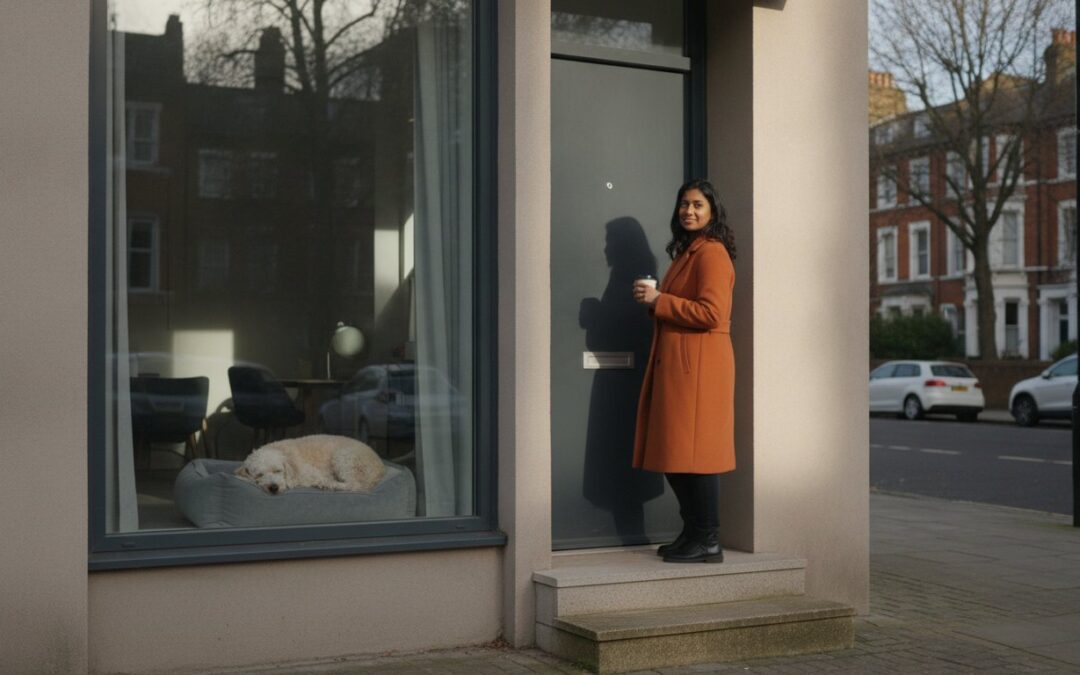
You close your front door and pause on the landing, heart sinking as the first muffled howl echoes through the hallway of your London flat. For many owners seeking dog separation anxiety training London, this moment is defined by a crushing sense of guilt and the looming fear of another complaint from the neighbours. It isn’t just about the shredded door frames or the frantic pacing. It’s the painful knowledge that your companion is in the grip of a genuine panic disorder that they cannot simply grow out of without expert help.
We understand that living in a high-density city adds a unique layer of pressure to an already stressful situation, especially when navigating modern rental agreements and pet damage insurance requirements. You deserve the freedom to visit the gym or grab a coffee without checking your puppy cam every thirty seconds. This guide will show you how to master the science of sub-threshold training to help your dog feel truly secure when home alone. We’ll explore how to build a foundation of emotional safety, moving beyond quick fixes to foster a partnership based on mutual trust and lasting urban freedom.
Key Takeaways
- Recognise that separation anxiety is a clinical panic response rather than a lack of obedience, requiring a compassionate shift in perspective.
- Master the concept of sub-threshold training to build your dog’s confidence by keeping them calm and safe throughout the desensitisation process.
- Implement specific strategies for dog separation anxiety training London to manage unique urban triggers like corridor noises and proximity to neighbours.
- Establish a clear baseline of your dog’s current tolerance to create a bespoke roadmap for increasing their time spent alone comfortably.
- Learn why 1-to-1 behavioural consultations are essential for assessing your specific home layout and providing the individualised care your dog needs.
What is Dog Separation Anxiety? Understanding the Panic Response
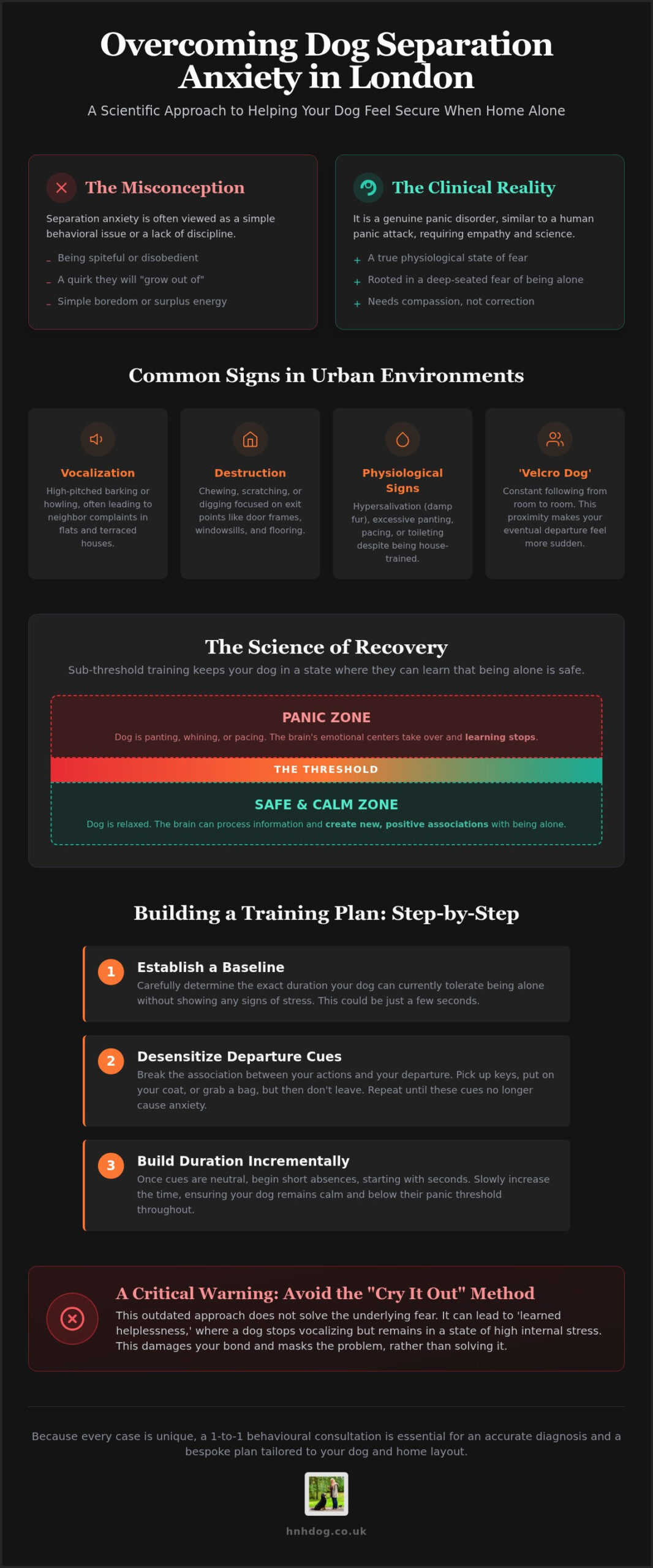
Separation anxiety is often misunderstood as a behavioural quirk or a lack of discipline. In reality, Separation anxiety in dogs is a clinical panic disorder. Your dog isn’t being spiteful when they chew the skirting board; they are experiencing a physiological state similar to a human having a panic attack. This distinction is vital for anyone starting dog separation anxiety training London, as our approach must be rooted in empathy and science rather than frustration.
It’s equally important to distinguish this from separation-related boredom. A bored dog might dismantle a cushion because they have surplus energy. An anxious dog, however, is often focused on the exit points, showing distress before you’ve even left the hallway. The ‘velcro dog’ phenomenon, where your companion follows you from the kitchen to the bathroom, is a common precursor in smaller London homes. This constant proximity makes the eventual departure feel like a sudden loss of safety.
We strongly advise against the ‘cry it out’ method. This outdated approach can lead to shut down or ‘learned helplessness,’ where the dog stops vocalising but remains in a state of high internal stress. This doesn’t solve the problem; it merely masks the symptoms while damaging the bond you share. True progress requires addressing the underlying emotion, not just silencing the outward noise.
Common Symptoms in London Dogs
Living in close proximity to others means certain symptoms carry more weight. When beginning dog separation anxiety training London, we look for specific markers that indicate panic rather than frustration. Vocalisation, such as high-pitched barking or soulful howling, is the most common reason owners seek help after receiving notes from neighbours. In rented accommodation, destructive behaviour often targets door frames or flooring near the entrance. You might also notice physiological signs like hypersalivation, where the dog’s coat is damp upon your return, or pacing and toileting despite being house-trained.
The ‘Why’ Behind the Panic
The triggers for this condition are multifaceted. Many rescue dogs carry a genetic predisposition or have experienced early life trauma that makes solitude feel dangerous. However, even well-settled pets can develop issues following a sudden routine change, such as an owner returning to the office after a long period of working from home. Because every case is unique, seeking a dog behaviourist London is essential for an accurate diagnosis. Understanding the ‘why’ allows us to create a bespoke plan that addresses the root cause of the fear rather than just the outward actions.
The Science of Recovery: How Sub-Threshold Training Works
Recovery isn’t about teaching your dog to obey; it’s about helping them feel safe. Sub-threshold training is the cornerstone of effective dog separation anxiety training London. This methodology focuses on keeping your dog just below the point where panic begins. If your dog starts to pant, pace, or whine, they’ve crossed the threshold, and their ability to learn effectively stops. We want to keep them in a calm, relaxed state so their brain can register that being alone isn’t a threat to their safety.
Systematic desensitisation allows us to slowly rewrite the dog’s emotional response. This is fundamentally different from managing common behavior issues like barking at the postman or pulling on the lead. Traditional obedience commands like “Sit” or “Stay” are cognitive tasks. When a dog is experiencing a panic disorder, the emotional centres of the brain take over, making it impossible for them to “obey” their way out of fear. Success comes from changing how they feel, not just how they act.
The Departure Protocol
Your dog likely knows you’re leaving before you even touch the door handle. These “pre-departure cues”-picking up your keys, putting on your shoes, or grabbing your bag-trigger the anxiety spiral early. We begin by desensitising these triggers, performing the actions without actually leaving. You might put on your coat and then simply sit down to watch television. Once these cues no longer cause stress, we build duration incrementally, often starting with just a few seconds behind a closed door. Our 1-to-1 dog training sessions provide the structured guidance needed to navigate these delicate steps.
Why Consistency is Non-Negotiable
The “No-Absence” rule is often the most difficult part for London owners to implement, yet it’s essential. Every time your dog panics while you’re out, it reinforces the fear and can reset weeks of progress. Management is key to allowing the brain to heal. To maintain this, many clients utilise professional dog walking London services or support from friends to ensure the dog is never left alone during the training phase. Using a camera to monitor body language is vital; you need to see the subtle signs of tension before they escalate into a full episode, allowing you to adjust the training plan accordingly.
Navigating Separation Anxiety in London Flats and Shared Spaces
Living in a high-density urban environment like London introduces unique pressures when addressing separation distress. Unlike suburban settings, where a barking dog might be a minor nuisance, the ‘London Pressure’ is a significant factor. Sound travels easily through Victorian conversions and modern apartment blocks alike. This proximity can lead to deep anxiety for owners who fear complaints or strained relationships with neighbours. Effective dog separation anxiety training London must account for these social and environmental variables to ensure both you and your dog feel supported.
Managing Noise and Neighbours
Transparency is your best tool for managing neighbour relations. We recommend speaking with those living adjacent to you to explain that you are working with a professional on a systematic training plan. Most people are more patient when they know there is an active solution in progress. Under the Renters’ Rights Bill integrated by 2026, landlords cannot unreasonably refuse pets, but they can require pet damage insurance. Keeping neighbours on your side helps protect your tenancy. To mitigate immediate noise, use white noise machines or calming playlists specifically designed for dogs. These tools help your dog cope with unsettling situations like the slamming of a communal front door or heavy footsteps in the hallway.
Optimising the Small Home Environment
Smaller floor plans require creative thinking to establish a ‘Safe Zone.’ This isn’t about confinement; it’s about creating a predictable, low-stress area where your dog feels secure. Visual barriers, such as closing blinds or using window film, can prevent your dog from being triggered by street-level activity or sirens. While pheromone diffusers can offer a subtle supportive layer, they are rarely a standalone cure. They work best as part of a holistic plan. A 1-to-1 assessment is far superior to generic online courses for London residents because it allows a trainer to see your specific layout. We can identify exactly which hallway noises or visual triggers are stalling your progress.
If you are struggling to maintain the ‘no-absence’ rule, look to local London resources, such as trusted daycares or sitters, to bridge the gap while we build your dog’s confidence. A calm dog is also better equipped to handle other aspects of urban life. Once your dog learns to regulate their emotions at home, they will likely find services like local mobile dog grooming services much more enjoyable and less stressful.
Building a Training Plan: Practical Steps for Home-Alone Success
Creating a roadmap for recovery requires a methodical approach that prioritises your dog’s emotional safety over speed. When we design a plan for dog separation anxiety training London, we break the process into manageable phases. This structure helps you stay focused and prevents the overwhelm that often leads to training plateaus. By following these steps, you provide your dog with the predictable environment they need to heal.
- Step 1: Baseline Assessment. You must determine exactly how long your dog can stay calm. Use a camera to watch for the earliest signs of stress, such as lip licking or a change in ear position. If they panic at five seconds, your starting point is four.
- Step 2: Environment Setup. Optimise your Safe Zone. This area should be associated with comfort and security, containing their favourite bedding and items that smell of you.
- Step 3: Graduated Departures. Begin building time away in tiny increments. We often start with simply walking toward the door without touching the handle, gradually progressing to stepping outside for a single heartbeat.
- Step 4: Data Tracking. Record every session in a simple log. Note the duration of the departure and your dog’s reaction. This data reveals patterns and helps you see progress during weeks when it feels slow.
- Step 5: Professional Review. Separation anxiety isn’t a linear journey. When you hit a wall or see a regression, an expert can help you adjust the variables to get back on track.
The First 48 Hours: Immediate Management
The most vital step you can take today is to suspend all alone time. This stops the ‘panic cycle’ and prevents further trauma. We understand this is a significant logistical challenge in a city like London. You’ll need to lean on a support network of friends, family, or professional sitters to ensure your dog is never pushed past their threshold. If you are raising a younger dog, our puppy training principles can help you establish healthy independence early, potentially preventing these issues from developing in the first place.
Advanced Training Skills
Once your dog understands that the door is no longer a threat, we introduce foundation skills like teaching a ‘Settle’ on a mat. This gives your dog a specific job to do, which is to relax in a designated spot. We build high value for this mat through quiet play and calm praise. Eventually, you’ll transition from ‘training’ departures to ‘real’ ones, like popping to the local shop for a pint of milk. These short, successful trips reinforce the idea that you always return before panic sets in. To ensure your plan is perfectly tailored to your dog’s unique temperament, consider booking one of our bespoke behavioural consultations.
The H&H Approach: Bespoke Support for London & Watford Dogs
With over 20 years of experience in the industry, H&H Dog has developed a deep understanding of the specific challenges faced by urban pet owners. While many providers have moved toward remote-only models, our approach to dog separation anxiety training London remains rooted in the value of personal mentorship and physical assessment. We believe that seeing your home layout, hearing the specific hallway echoes, and observing your dog’s subtle body language in their own environment is essential for a successful outcome. This local expertise across North London and Watford allows us to provide a level of nuance that generic online courses simply cannot replicate.
Our methodology is strictly ethical and non-coercive. We reject outdated concepts like dominance or punishment, focusing instead on partnership and emotional health. By using evidence-based, sub-threshold techniques, we ensure your dog never feels the need to panic. This commitment to welfare means we advocate for the animal’s perspective at every stage, providing you with a clear, manageable path toward a quieter, happier home. We act as a steady hand, helping you navigate what can often be a chaotic or stressful situation with calm confidence.
Individualised 1-to-1 Training
A bespoke plan is not a luxury; it’s a necessity for a complex panic disorder. Every London flat and Watford terrace has different triggers, from the frequency of the communal lift to the specific sound of a neighbour’s doorbell. Our 1-to-1 sessions allow us to tailor the desensitisation protocol to these exact variables. As your mentor, we provide the steady hand and non-judgmental support you need to navigate the emotional hurdles of recovery. We’ve seen proven results across North West London communities, helping owners regain their freedom while ensuring their dogs feel truly secure.
Integrating Your Dog’s Lifestyle
Holistic care means looking beyond the moments you are away. A dog with a lower baseline of stress is far more capable of learning to be alone. This is why we integrate other essential services into our care model to support your dog’s overall well-being. For example, a regular mobile dog grooming Watford session can build a dog’s confidence with handling and strangers in a safe, familiar setting. Similarly, structured group dog walking provides the mental enrichment and physical relaxation necessary for a calm mind.
Taking the first step can feel daunting, but you don’t have to face this alone. By booking one of our behavioural consultations, you are choosing a modern, compassionate approach that values long-term emotional health. We are as invested in your peace of mind as we are in your dog’s welfare. Together, we can build a relationship based on mutual understanding and achieve the urban freedom you both deserve.
Reclaiming Your Freedom and Your Dog’s Peace of Mind
Living with a dog who panics the moment you leave is a heavy burden, but it’s one you don’t have to carry alone. By shifting your perspective from managing behaviour to fostering emotional safety, you’ve already taken the most important step. We’ve explored how sub-threshold training rewrites your dog’s internal response, allowing them to feel genuinely secure in your London flat or Watford home. This methodical, science-based approach ensures that every small success builds toward lasting urban freedom.
Effective dog separation anxiety training London requires a mentor who understands the unique pressures of city living. With over 20 years of professional experience, we specialise in providing force-free, ethical care across North London and Watford communities. We’re here to help you navigate the nuances of your specific home layout with bespoke support tailored to your dog’s individual needs. You deserve to enjoy your city life, and your dog deserves to feel safe in it. Take the first step toward a calmer future for you both. Book a 1-to-1 behavioural consultation with H&H Dog today. Progress is possible, and we’ll be with you every step of the way.
Frequently Asked Questions
How long does it take to fix dog separation anxiety?
The timeline for recovery depends entirely on your dog’s individual history and the consistency of your training plan. It isn’t a linear process; you’ll likely see periods of rapid progress followed by plateaus. Most owners should expect to commit several months to the desensitisation process. Rushing the protocol usually leads to regression. We focus on building a solid foundation of trust, ensuring your dog feels safe at every stage of the journey.
Should I use a crate for a dog with separation anxiety?
We generally advise against using a crate for dogs experiencing true separation anxiety. For a dog in a state of clinical panic, confinement often intensifies their distress, leading to barrier frustration or even self-injury. Instead, we recommend creating a larger Safe Zone within your home. This allows your dog to move freely and choose a resting spot that feels secure, which is far more effective for long-term emotional health.
Can I train my dog myself or do I need a professional behaviourist?
While you can implement basic management strategies yourself, a professional behaviourist provides the objective eye needed for complex cases. We help you identify subtle body language cues that you might miss, ensuring your dog stays sub-threshold. Professional guidance is especially valuable for dog separation anxiety training London, where unique environmental factors like communal hallway noises require a bespoke approach to ensure your training plan remains effective and safe.
Will getting another dog help my dog’s separation anxiety?
Adding another dog to the household rarely solves separation anxiety. The panic is specifically related to the absence of the primary attachment figure, which is usually you. While a second dog offers companionship, they don’t replace the security your dog feels when you’re present. In some cases, the new dog may even pick up the anxious behaviours, leaving you with two stressed pets in your London flat.
Do calming treats or plug-ins actually work?
Pheromone plug-ins and calming treats can be useful supportive tools, but they aren’t a standalone cure for a panic disorder. They work best as part of a holistic plan that includes systematic desensitisation. These products may help lower your dog’s baseline stress, making them more receptive to training. Always consult with a professional to ensure you’re using evidence-based products that complement your specific training protocol and environment.
How much does separation anxiety training cost in London?
Industry rates for intensive separation anxiety packages in the UK typically range from £380 to over £700 for multi-week programmes. Some specialist trainers offer session packages starting around £475. These costs reflect the high level of support and expertise required to manage clinical panic effectively. When choosing a provider, look for those who offer bespoke 1-to-1 support tailored to the specific challenges of living in high-density urban areas.
My dog starts barking the moment I pick up my keys; what should I do?
If your dog reacts to the sound of keys, you need to desensitise that specific trigger. Start by picking up your keys multiple times a day without actually leaving the house. You might pick them up and then sit on the sofa or head to the kitchen to make a cup of tea. By detaching the sound from the departure, you help your dog realise that the noise doesn’t always signal a loss of safety.
Is it ever too late to start training an older rescue dog?
It’s never too late to start training an older rescue dog. While their history might mean they have more deeply ingrained fears, the canine brain remains capable of learning and forming new emotional associations throughout life. Older dogs often respond beautifully to the patience and structure of sub-threshold training. We focus on building their confidence slowly, respecting their past experiences while fostering a secure and peaceful future in their new home.