
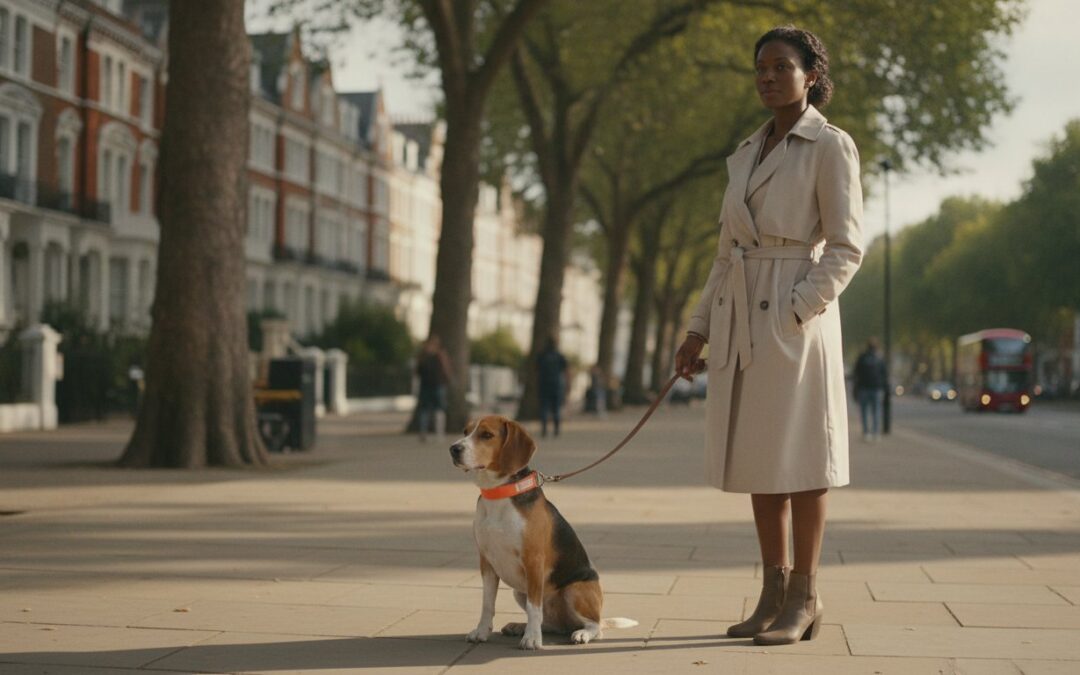
What if the secret to a well-behaved city dog isn’t more trips to the park, but fewer high-intensity interactions? Many owners believe that dog socialisation training London requires constant play dates, yet this often leads to overstimulation and leash reactivity on busy pavements. You likely feel the pressure to let your dog say hello to everyone, only to find yourself managing a frustrated or fearful companion at the end of a lead. It’s exhausting to feel like every walk is a potential conflict, especially when conflicting advice makes you wary of local green spaces or crowded streets.
You deserve to enjoy your local area without a constant hum of anxiety. We’re going to show you how to transform your dog into a calm, confident urban companion by focusing on neutral emotional responses rather than forced greetings. We’ll demystify the difference between play and true socialisation, providing you with the tools to handle sirens, crowds, and cafe culture with ease. This guide offers a clear, ethical roadmap for stress-free walks in North West London and the confidence to navigate any city trigger together as a partnership.
Key Takeaways
- Understand that true socialisation is the process of building emotional neutrality toward the world, distinguishing it from simple play or habituation.
- Identify the common city stressors that lead to trigger stacking, helping you prevent outbursts before they occur on busy streets.
- Learn why bespoke dog socialisation training London is often more effective than group classes, particularly for dogs needing a foundation of trust.
- Master a phased approach to urban exposure that prioritises your dog’s perspective and emotional comfort at every stage.
- Discover how controlled group walking acts as an essential tool for maintaining balanced social skills in a safe, professional setting.
Why Dog Socialisation Training is Critical in London
Socialisation is often misunderstood as a simple series of playdates or trips to the local park. In reality, it’s the foundational process of teaching your dog how to exist comfortably in a world that wasn’t designed for them. For those living in the capital, dog socialisation training London isn’t just a luxury; it’s a vital safety requirement. The city’s high-density living means your dog will encounter more triggers in a ten-minute walk through North London than a rural dog might see in an entire month.
Most experts agree there is a critical period of socialization that occurs early in a puppy’s life. This window is the time when they are most receptive to new experiences and less likely to respond with fear. However, for adult rescue dogs, the process continues as a journey of building trust and reassessing previous fears. Whether you have a new puppy or a nervous rescue, the goal remains the same: creating a dog that feels safe enough to remain calm regardless of the surroundings.
Socialisation vs. Habituation: The Urban Distinction
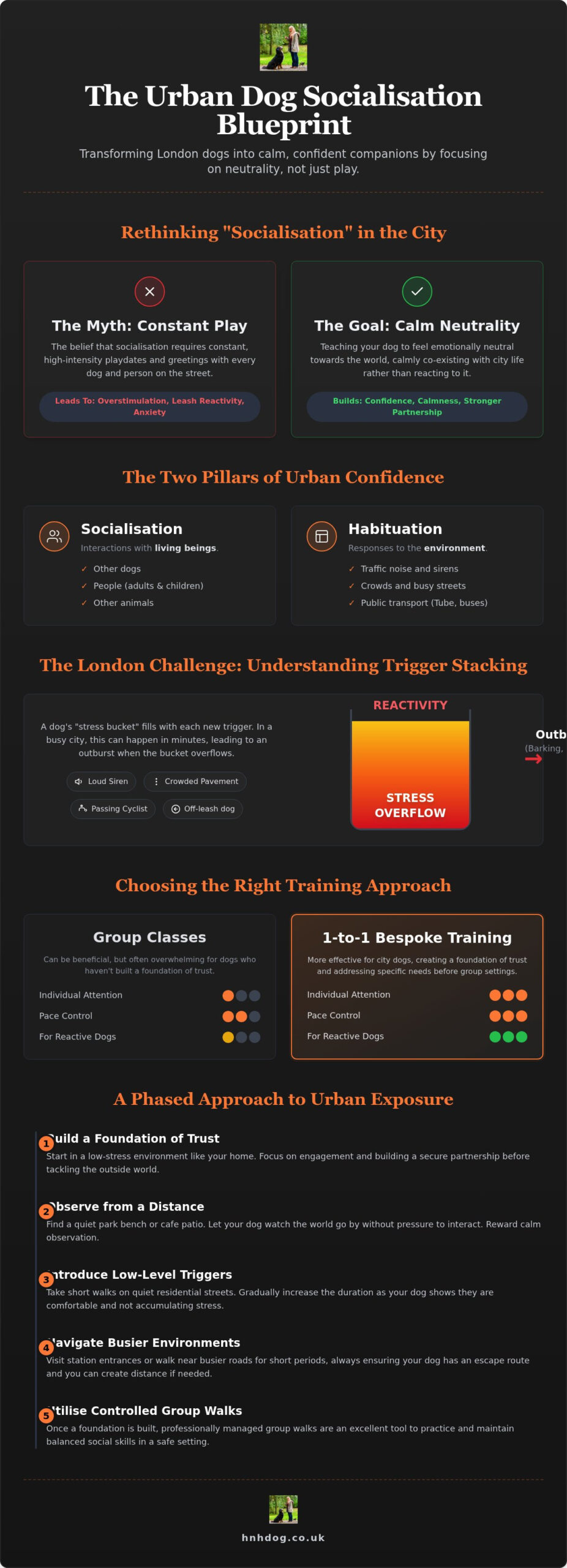
It’s helpful to distinguish between two key concepts that often get grouped together. Socialisation typically refers to your dog’s interactions with living beings, such as other dogs and people. Habituation is about their response to the environment and inanimate objects. A well-socialised dog might enjoy a polite greeting from a neighbour, but a well-habituated dog is one that can ignore the screech of the Tube or the rattle of a passing bus. Habituation is the reduction of a psychological response to a repeated stimulus.
In a busy city, neutrality is often a more valuable goal than exuberant friendliness. You want your dog to see a cyclist or a crowd and think, “that doesn’t matter to me.” By achieving this state of neutrality, you reduce the mental load on your dog. This allows them to remain relaxed and attentive to you even when the environment feels frantic or overwhelming.
The Consequences of Poor Socialisation in the City
When a dog lacks these essential skills, the narrow pavements of London can become a source of intense stress. Without proper dog socialisation training London, a dog may develop fear-based reactivity. This often manifests as barking or lunging at passing dogs because the animal feels trapped by the lack of physical space. They aren’t being “naughty”; they’re simply trying to create distance from something they don’t understand.
Poor socialisation is also frequently linked to broader issues like separation anxiety and noise phobias. If a dog doesn’t feel safe in their general environment, they struggle to settle when left alone or when they hear sudden city sounds like sirens or fireworks. Investing in professional guidance early on is a proactive choice. It prevents the need for more intensive behavioural consultations later, saving you and your dog from months of avoidable distress and frustration.
The London Factor: Unique Challenges for Urban Dog Training
Living in the capital presents a sensory environment that is significantly more intense than a quiet suburb or rural village. For many owners, the greatest hurdle is a phenomenon known as trigger stacking. This occurs when your dog encounters multiple stressors in quick succession; a loud siren, a passing cyclist, and a crowded pavement all within minutes. Each event adds to their internal stress bucket. When that bucket overflows, you see an outburst. Understanding this physiological reality is a cornerstone of effective dog socialisation training London, as it allows you to intervene before your dog reaches their limit.
One common misconception in areas like North West London is the “all-access” dog park mentality. Many owners believe that socialisation requires their dog to meet and play with every canine they see. In reality, forced interactions in high-pressure environments often cause more harm than good, leading to defensive behaviour or over-excitement. Adhering to UK dog welfare laws involves ensuring your dog feels safe and controlled, which often means choosing distance and observation over direct contact. Watching the world from a quiet bench is frequently more productive than a chaotic session in a fenced-in run.
Navigating Busy Streets and Public Transport
Introducing your dog to the London Underground or busy bus routes requires a patient, incremental approach. Start by visiting the station entrance to let them process the unique smells and the rush of air from the tunnels without the pressure of boarding. On street walks, you can implement reward zones by heavily reinforcing your dog for staying in a specific position near your leg when cyclists or heavy foot traffic pass by. This creates a positive association with potentially scary triggers. If these urban environments feel too overwhelming to tackle alone, our 1-to-1 dog training offers a supportive way to build these skills in a controlled, professional manner.
Cafe Culture and Public Etiquette
A truly confident London dog is one that can settle quietly under a table while you enjoy a coffee. This “settle” is perhaps the most valuable skill you can teach. It shifts the dog’s focus from the environment back to a state of relaxation. True socialisation also includes learning the art of being ignored. Your dog needs to understand that they don’t need to greet every stranger who walks past. You can find more detailed guidance on building these foundations in our guide to Puppy Training in London. Teaching your dog that the world is a place to be observed calmly, rather than a series of intense interactions, ensures a much more peaceful life for both of you.
Group Classes vs. 1-to-1 Socialisation Training
Deciding how to approach your dog’s education often feels like a choice between following the crowd or taking a more personalised path. Standard group puppy classes are a popular entry point, offering a cost-effective way to introduce basic cues. However, for many living in the capital, the traditional classroom setting can be counterproductive. The high-energy environment of a hall filled with barking dogs often mirrors the very chaos we are trying to help our dogs navigate calmly on the street.
One significant risk in group settings is a psychological phenomenon called flooding. This happens when a dog is exposed to a trigger at an intensity they cannot handle, with no way to escape. Instead of learning that other dogs are safe, a nervous dog may become sensitised, meaning their fear actually increases. Our bespoke dog socialisation training London prioritises your dog’s emotional threshold. By working 1-to-1, we ensure that every experience remains within their “learning zone,” preventing the accidental reinforcement of fear-based responses.
When to Choose a One-to-One Approach
If your dog is already showing signs of distress, such as barking, lunging, or hiding, a 1-to-1 session is the safest and most ethical starting point. These sessions allow us to work in your dog’s actual environment, whether that’s a busy high street in North West London or your local park. Training in the real world provides context that a community hall simply cannot match. It allows for a customised pace where we only move forward when your dog signals they are ready, building a foundation of genuine trust rather than forced compliance.
The Role of Behavioural Consultations
Sometimes, what looks like a simple lack of manners is actually a deep-seated emotional struggle. It’s vital to distinguish between a dog that hasn’t learned how to walk on a lead and one that is reacting out of a profound sense of self-preservation. A specialist assessment helps identify these root causes, moving beyond surface-level symptoms to address the underlying anxiety. For dogs facing more complex challenges, seeking a Dog Behaviourist London provides the intensive, evidence-based support needed to navigate urban life safely. This level of individualised care is what separates a generic training plan from a truly transformative experience for you and your companion.
A Step-by-Step Socialisation Checklist for North London Owners
Building urban confidence is a structured journey that requires patience and a clear plan. Effective dog socialisation training London relies on a phased approach, ensuring your dog never feels trapped or overwhelmed by the city’s intensity. By breaking the process down into manageable stages, you allow your dog to process information at their own speed, which builds a foundation of genuine security rather than just suppressed fear.
- Phase 1: The “Watch the World” Game. Find a quiet bench in a North London square and simply sit with your dog. Reward them every time they look at a trigger, such as a passing cyclist or a pram, and then look back at you. This builds a positive association with the environment from a safe distance.
- Phase 2: Neutral Exposure. Focus on the sensory details of the city. Introduce your dog to the feel of metal basement grates underfoot or the sudden hiss of air brakes on a red bus. The goal here is habituation, where these sounds and textures eventually become background noise.
- Phase 3: Controlled Interactions. Use “stooge” dogs, which are calm, non-reactive dogs known for their polite social skills. These controlled meetings teach your dog that other canines aren’t a threat, helping to lower their overall arousal levels on the street.
- Phase 4: Generalisation. Once your dog is comfortable in their immediate neighbourhood, the final phase involves generalising these skills across different boroughs. A dog that is calm in a quiet Highgate street might need extra support when first visiting the busier markets of Camden. This gradual expansion of their comfort zone is a key element of comprehensive dog socialisation training London.
Safe Socialisation Spots in North West London
Choosing the right location is just as important as the training itself. In North West London, the quieter corners of Gladstone Park or the lower slopes of Primrose Hill offer excellent vantage points for distance training. These spaces allow you to observe triggers from a hundred yards away, providing the space your dog needs to remain under their emotional threshold. If you’re working on high-stimulus exposure, supermarket parking lots in the early evening can provide a wealth of controlled sights and sounds without the unpredictable chaos of a crowded park. Always try to avoid the “peak hour” rush between 7:00 and 9:00 am when the density of commuters and other dogs is at its highest.
Equipment for Stress-Free Socialisation
Having the right tools helps you feel as confident as you want your dog to be. A well-fitted Y-shaped harness is essential, as it prevents pressure on the neck if your dog lunges or pulls when startled. Using a long-line lead (five to ten metres) in open spaces gives your dog the freedom to sniff and move naturally while you maintain total safety. Always carry high-value rewards, such as small pieces of plain cooked chicken or cheese, to create immediate positive associations with new triggers. If you feel uncertain about managing these situations alone, our personalised 1-to-1 dog training provides the professional support you need to master these urban skills safely.
Bespoke Socialisation Solutions with H&H Dog
With over 20 years of experience navigating the complexities of North London’s streets, we understand that every dog requires a unique roadmap to confidence. Our 1-to-1 training sessions are designed to build a foundation of trust, allowing us to advocate for your dog’s needs in real-world scenarios. This bespoke approach ensures that your dog’s emotional health is prioritised, moving at a pace that feels safe for them while providing you with the mentorship needed to handle urban challenges. Choosing the right dog socialisation training London means looking beyond generic fixes and investing in a partnership that values long-term stability and mutual respect.
Socialisation Through Group Walking
Professional dog walking serves as a vital tool for socialisation maintenance once the initial foundations are in place. It isn’t merely about physical exertion; it’s about the sophisticated management of group dynamics by an experienced professional. Our walkers ensure positive peer experiences by focusing on the concept of “walking with” rather than just “playing with” other dogs. This parallel movement helps dogs learn to exist calmly alongside their own kind without the high-arousal pressure of constant interaction. You can learn more about how we facilitate these controlled, calm environments in our guide to Professional Dog Walking in London.
The Grooming Connection: Socialising for Handling
Comprehensive socialisation must also prepare your dog for the physical realities of city life, including regular hygiene and care. A dog that has been gently introduced to touch and the sound of equipment will find their grooming sessions much less stressful. Whether it’s a Full Groom or a simple Bath & Brush, early positive exposure to handling ensures your companion remains relaxed during the process. This is particularly beneficial for our mobile dog grooming service, where your dog can receive professional care in a familiar setting. By integrating handling into your dog socialisation training London, you’re fostering a lifetime of physical and emotional well-being.
Every challenge your dog faces has a manageable, ethical solution when approached with patience and expertise. We’re here to act as a steady hand, helping you turn the chaos of the city into a shared life of calm and confidence. Contact us today to book a behavioural consultation or a 1-to-1 training session, and take the first step toward a happier, more relaxed urban companion.
Creating a Calmer Future for Your City Dog
Transforming your dog into a confident urban companion is a journey of patience and partnership. We’ve explored how true socialisation is rooted in building emotional neutrality toward city chaos, rather than forcing high-pressure interactions. By following a structured, phased approach and prioritising your dog’s internal emotional state, you can prevent trigger stacking and build a lasting foundation of trust that lasts a lifetime. This mindful perspective ensures that your dog feels safe, allowing their natural personality to shine through even on the busiest pavements.
Expert dog socialisation training London provides the steady hand needed to navigate these complex environments safely and ethically. With over 20 years of professional pet care experience, our expert trainers serve North and North West London with personalised care tailored specifically to your dog’s unique temperament. You don’t have to manage the stress of busy streets or crowded cafes alone. We’re here to ensure that every challenge has a manageable solution, helping you and your dog thrive together in the heart of the city.
Book a 1-to-1 socialisation consultation with H&H Dog today to begin your journey toward a more peaceful urban life. We look forward to helping you build the confidence you both deserve, ensuring a happy and harmonious future for you and your companion.
Frequently Asked Questions
Is it too late to socialise my adult rescue dog in London?
It is never too late to help an adult dog feel more comfortable in the city. While the primary window for puppy development has closed, adult dogs can still learn through a process of counter-conditioning and desensitisation. We focus on building emotional neutrality, helping your rescue dog understand that the busy London environment is not a threat. This journey requires patience and a bespoke approach, but significant progress is always possible with the right guidance.
How often should I take my puppy out for socialisation training?
You should aim for short, high-quality sessions every day rather than long, infrequent outings. For a young puppy, five to ten minutes of calm observation in a new environment is often enough. Quality is much more important than quantity; one positive experience at a quiet cafe is better than an hour of stressful exposure in a crowded market. Always prioritise your puppy’s emotional state to ensure they don’t become overstimulated or tired.
Are dog parks in London good for socialising my puppy?
Chaotic dog parks are often counterproductive for puppy socialisation. These environments can be unpredictable, and a single negative interaction with an over-excited dog can lead to long-term fear or reactivity. Instead, we recommend controlled meetings with known, balanced dogs or professional dog socialisation training London. This ensures that every canine interaction is polite and positive, building your puppy’s confidence rather than overwhelming them.
What should I do if my dog barks at other dogs on the street?
The most effective immediate response is to increase the distance between your dog and the trigger. Barking is usually a sign that your dog feels overwhelmed and is trying to create space. Avoid scolding them, as this can increase their anxiety. Once you’re at a distance where they can remain calm, you can use high-value rewards to reinforce a neutral emotional state. This helps them learn that seeing another dog doesn’t have to be a stressful event.
How is socialisation training different from basic obedience?
Obience training focuses on specific actions, such as sitting or staying on command. Socialisation training is about your dog’s internal emotional response to the world around them. While obedience is about what your dog “does,” socialisation is about how your dog “feels.” A dog can be perfectly obedient but still feel terrified of the Tube. Our goal is to ensure your dog is both well-behaved and genuinely relaxed in their environment.
Can a dog walker help with my dog’s socialisation skills?
A professional dog walker can be an excellent asset for maintaining socialisation through controlled group walks. Our walkers manage group dynamics to ensure that dogs learn to walk calmly alongside one another without the pressure of forced play. This parallel walking builds a sense of pack security and teaches dogs to remain neutral around their peers. It is a fantastic way to reinforce the skills learned during your 1-to-1 training sessions.
What are the signs that my dog is overwhelmed during training?
You should look for subtle body language cues like lip licking, yawning, or pinned-back ears. Other common signs of stress include a tucked tail, excessive panting when it isn’t hot, or a sudden refusal to take high-value treats. If you notice these behaviours, it’s a signal that the environment is too intense. You should calmly move your dog further away from the trigger until they can relax and engage with you again.
Do you offer socialisation training in Watford and North London?
We specialise in providing expert dog socialisation training London across North and North West London. Our team has over 20 years of experience navigating the specific urban challenges of these boroughs, from busy high streets to local parks. If you are located just outside these areas, such as in Watford, please contact us to discuss your specific needs. We always strive to provide the most effective, personalised care for every dog in our community.