
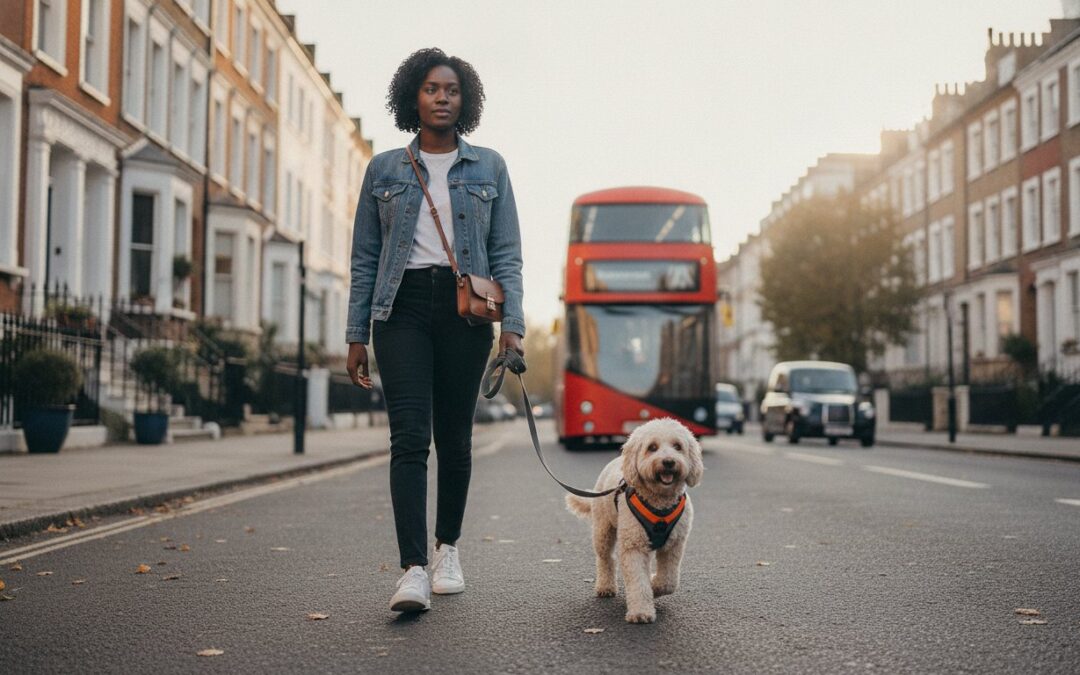
What if your dog viewed the roar of a red double-decker bus not as a terrifying threat, but as mere background noise to a peaceful morning stroll? For many owners in the capital, the reality is often more stressful, involving frantic leash reactivity on crowded pavements or anxiety triggered by a sudden siren. You likely feel that the city is a minefield of distractions that makes a simple walk feel like a marathon of management. It’s a common struggle, but urban life doesn’t have to be a source of constant tension for you or your pet.
Mastering dog training for city living London requires a shift from rigid obedience to fostering true emotional resilience. This 2026 guide provides the expert strategies needed to navigate busy streets and social spaces with a composed, happy companion. We will examine how to settle your dog in a local cafe, handle the latest Public Spaces Protection Orders with ease, and access the personalised 1-to-1 support essential for North London’s unique challenges. By the end, you’ll have a clear, ethical path toward a harmonious shared life in the heart of the city.
Key Takeaways
- Understand why emotional regulation is more critical than traditional obedience when helping your dog navigate the unique psychological pressures of the capital.
- Learn how to master the “settle” command to enjoy relaxed, stress-free visits to London’s cafes and pubs with a calm companion.
- Discover a practical five-step approach to dog training for city living London that prioritises neutral exposure to sirens, buses, and scooters.
- Gain confidence using the Tube and buses by following current TfL guidelines and safety protocols for urban pets.
- Explore the benefits of bespoke 1-to-1 training that addresses your dog’s specific triggers within the context of your own local neighbourhood.
What is Dog Training for City Living?
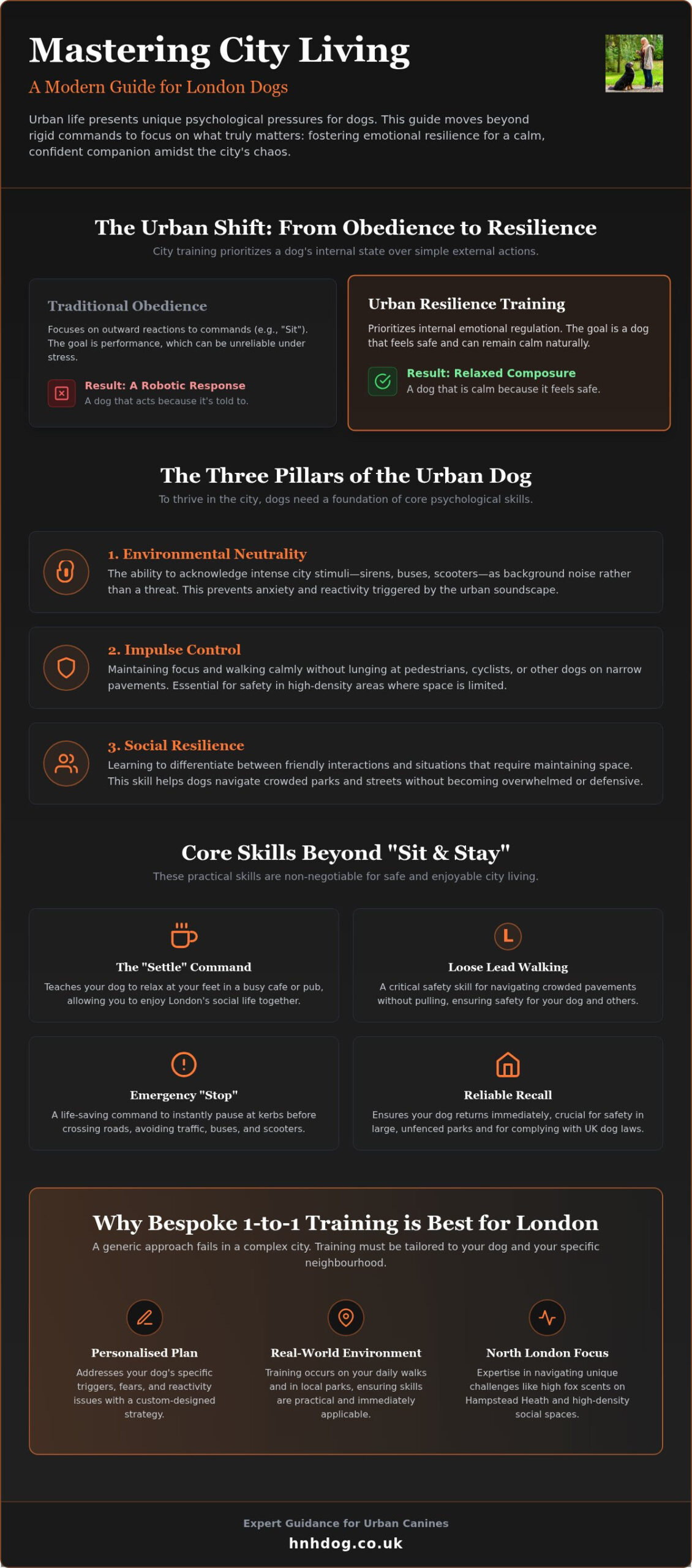
Traditional obedience often focuses on a dog’s outward reaction to a specific command. In a rural setting, this might be enough. However, dog training for city living London is a specialised discipline that prioritises internal emotional regulation over simple performance. It’s the difference between a dog that sits because it’s told to and a dog that remains calm because it feels safe amidst the chaos of a busy high street. Our goal is to move beyond robotic responses toward a state of relaxed composure.
London dogs face psychological pressures that their country counterparts rarely encounter. The constant hum of traffic, the high density of unfamiliar people, and the unpredictable movement of scooters create a high-stimulus environment. While the foundational principles of dog training provide a necessary base, our methodology at H&H Dog draws on over 20 years of experience specifically within North London’s unique landscape. We focus on building a partnership where your dog trusts your guidance in every situation, ensuring their perspective is always respected.
The Three Pillars of the Urban Dog
To thrive in the city, a dog needs more than just basic manners. We focus on three core areas that define a well-adjusted urban pup:
- Environmental Neutrality: This is the ability to acknowledge sirens, pigeons, and rattling buses without reacting. We want these sounds to become background noise rather than triggers for anxiety.
- Impulse Control: Narrow pavements require a dog to walk calmly without lunging at passing pedestrians or cyclists. It’s about maintaining focus despite the extreme proximity of distractions.
- Social Resilience: London is a social hub, but not every interaction is safe or necessary. We teach dogs to differentiate between a friendly greeting and the need to maintain boundaries in crowded spaces.
Why North London Presents Unique Challenges
Training in areas like Hampstead Heath or Highgate requires a bespoke approach. These high-density parklands offer vast spaces but are often filled with intense fox scents and urban wildlife that can override a dog’s focus. Owners must navigate the sudden transition from quiet residential mews to the bustling energy of a local high road. This constant shift in intensity requires a dog that can adapt its emotional state quickly. Our 1-to-1 dog training sessions happen in these actual environments. This ensures the skills you learn are practical and immediately applicable to your daily routine, providing a steady hand in what can often be a chaotic situation.
Core Skills for the Urban Dog: Beyond “Sit” and “Stay”
While basic commands are helpful, they don’t always translate to the high-pressure environment of a capital city. The “Settle” command is arguably the most valuable tool in your arsenal. It’s not a rigid “down-stay,” but rather an emotional state where your dog chooses to relax at your feet in a crowded pub or cafe. This skill allows you to enjoy London’s social life without the constant worry of a restless or vocal pet. It’s about teaching them that “nothing is happening,” which is a vital component of dog training for city living London.
Loose lead walking is another non-negotiable safety requirement. On narrow city pavements, a dog that pulls is a hazard to themselves and others. You need a dog that can navigate a busy high street while maintaining a soft connection on the lead. Similarly, an emergency “Stop” or “Wait” at every kerb is essential for navigating road crossings safely. With the hustle of delivery scooters and buses, your dog’s ability to pause instantly can be life-saving. In larger, unfenced areas like Gladstone Park, a reliable recall is necessary to comply with essential UK dog laws that mandate your dog remains under control at all times.
Desensitisation to City Noises
Sensory pollution is a significant hurdle for many urban pups. The sudden wail of a siren or the rattle of heavy machinery can trigger a flight response. We use counter-conditioning techniques to change your dog’s emotional association with these sounds. For those managing a North West London commute, we recommend gradual exposure strategies. Start by observing a quiet station from a distance before slowly moving closer to the platform. Our bespoke 1-to-1 dog training helps identify these specific triggers, allowing for a tailored desensitisation plan that respects your dog’s pace.
Managing On-Leash Reactivity
London’s “forced proximity” is a primary cause of leash frustration. When walking down a crowded street, your dog is often unable to use natural body language to avoid a confrontation. This lack of space can lead to lunging or barking as a way to create distance. It’s crucial to recognise early warning signs, such as a stiffened posture or a fixed stare, before the behaviour escalates. If your pet struggles with these intense interactions, working with a dog behaviourist London can help you address the underlying fear and rebuild their confidence in social settings.
Developing these skills takes patience and consistency, but the result is a dog that can truly thrive in an urban environment. If you’re looking for professional guidance to refine these behaviours, our 1-to-1 dog training sessions provide the individualised support needed to succeed in your local neighbourhood.
Navigating London’s Hotspots: Parks, Pubs, and Public Transport
London’s social spaces are the ultimate test of your dog’s training. While the city offers an incredible array of dog-friendly venues, success in these environments relies on more than just good intentions. It requires a sophisticated understanding of urban etiquette. Whether you’re visiting a busy park or a local high street, your dog must remain under control to ensure everyone’s safety. This is where dog training for city living London moves from the pavement into real-world lifestyle integration. Adhering to official government guidance on responsible ownership helps prevent your dog from becoming a nuisance in these shared spaces.
Park life in the capital is governed by Public Spaces Protection Orders (PSPOs), which vary by borough. In 2026, councils have greater flexibility to enforce these rules, with fines for dog fouling now reaching up to £500 under the Crime & Policing Act. It’s essential to check local signage to know when your dog must be on a lead, especially near children’s play areas or sensitive wildlife zones. Beyond the law, managing the “friendly stranger” distraction is key. High streets are filled with people who may want to pet your dog without asking. Teaching your pet to ignore these advances ensures they remain calm and focused on you, rather than becoming overstimulated by every passing pedestrian.
Public Transport Confidence
Transport for London (TfL) permits dogs on the Tube, buses, and trains at no charge, but specific rules apply. You must carry your dog on escalators to prevent serious paw injuries; if your dog is too large to carry, always use the lift. We recommend introducing the Tube during off-peak hours at quieter stations like Highgate or Tufnell Park. Start by simply standing on the platform to let your dog absorb the unique sounds and smells of the Underground. Once on board, keep your dog tucked under your seat or close to your legs to maintain clear boundaries in a crowded carriage. This prevents them from being stepped on or causing an obstruction to other passengers.
The Urban Cafe Settle
Becoming a “Pub Dog” is a badge of honour for any London pet. The secret lies in choosing the right table; look for a corner or a spot away from high-traffic walkways where your dog can feel secure. Using a portable mat can provide a clear “place” for them to settle, helping them understand that their role is to relax while you enjoy your coffee. For those looking for the best pet-friendly spots and specific dog training North London advice, selecting venues with outdoor seating can offer a helpful transition before moving into more enclosed, busy spaces. This gradual approach builds the long-term emotional health needed for a truly shared urban life.
A 5-Step Programme for Urban Socialisation
Successful socialisation in the capital isn’t about meeting every dog on the pavement. It’s about teaching your pet to remain neutral and calm while the world moves around them. This structured approach to dog training for city living London ensures your dog develops the emotional resilience needed for a busy urban life without becoming overwhelmed by constant sensory input. We move away from forced interactions, focusing instead on building a sense of safety and trust.
- Step 1: Observation from a distance. Use the “Look at That” game to help your dog process triggers like cyclists or buses. By rewarding them for simply acknowledging a distraction and then calmly looking back at you, you build a positive association without direct confrontation. Distance is your most effective tool during this initial phase.
- Step 2: Neutral exposure. Introduce your dog to the varied textures and sounds of the city. Walking over metal basement grates or tactile paving near crossings helps them become physically confident. At the same time, the rhythmic hum of heavy machinery or the hiss of bus brakes becomes mere background noise rather than a cause for alarm.
- Step 3: Controlled greetings. Use neutral “stooge” dogs and people to practice calm co-existence. The goal is to teach your dog that they don’t need to greet every passer-by, which is essential for maintaining focus in crowded North London parks or narrow residential mews.
- Step 4: High-stimulus micro-trips. Take short, five-minute trips to busy areas like a station entrance or a local high street. These sessions should be brief enough to guarantee success, allowing your dog to “win” the interaction before they become tired or stressed.
- Step 5: Professional consolidation. Working with an expert in 1-to-1 sessions allows you to refine these skills in your specific neighbourhood. This ensures the training is bespoke to the exact distractions you face during your daily routine.
Avoiding “Socialisation Burnout”
Many owners mistakenly believe that more exposure is always better. However, pushing a dog too far can lead to “flooding,” which is a significant psychological risk. Flooding is the psychological risk of exposing a dog to an overwhelming level of stimuli without the ability to escape or process the experience. When this happens, you may notice signs of cortisol spikes, such as dilated pupils, excessive panting, or a refusal to take high-value treats. These stress hormones can take up to 72 hours to leave the system. It’s vital to allow for “decompression days” after visiting high-intensity areas to ensure your dog’s long-term emotional health.
The Role of Group Dog Walking
Structured movement is a powerful tool for building social confidence. Professional dog walking London services provide a safe environment for dogs to learn from their peers. At H&H Dog, our group walks focus on positive peer interaction and collective calm rather than high-arousal play. This teaches your dog how to be part of a group while remaining under control and respecting the space of others. It’s an excellent way to supplement your dog training for city living London, offering consistent, supervised practice in a real-world setting.
If you’re ready to build a more confident, resilient companion, our 1-to-1 dog training provides the bespoke support you need to master these steps in your own local environment.
Why Bespoke 1-to-1 Training is Best for London Living
While group classes offer basic socialisation, they often fall short in the high-intensity environment of the capital. A community hall or a fenced training field cannot replicate the specific sensory triggers your dog encounters on a daily basis. Dog training for city living London is most effective when it takes place in the actual context of your life. Whether it’s the specific rattle of a neighbour’s gate or the unique bustle of your local high street, bespoke 1-to-1 sessions allow us to address these challenges where they occur. This individualised attention ensures that we aren’t just teaching commands, but helping your dog process their specific environment with confidence.
A professional behavioural assessment is the cornerstone of this approach. It allows us to look beneath the surface of an action to understand the underlying emotional state. For example, a dog barking at a delivery driver might be motivated by fear rather than aggression. By identifying these motivations, we can implement ethical, evidence-based strategies that respect your dog’s perspective. With over 20 years of industry experience, H&H Dog provides a steady hand to help you navigate these complexities, moving away from generic models toward a truly customised care plan.
Personalised Behavioural Consultations
Urban living often involves unique spatial challenges, such as navigating narrow corridors or waiting for lifts in a high-rise flat. Our behavioural consultations allow us to create a management plan tailored to your specific home and neighbourhood. We address deep-seated anxieties that a generic class might overlook, ensuring your pet feels secure in their most private spaces. For new owners, early intervention is key to preventing these issues from developing. Starting with professional puppy training London ensures your young dog builds a foundation of resilience from their very first walk.
The H&H Dog Difference
Our commitment to non-coercive, supportive methods sets us apart from traditional, adversarial training. We advocate for your dog’s emotional health, understanding that a calm mind is the prerequisite for a well-behaved companion. Our roots in Watford and North London give us a clear geographic identity and deep local insight into the specific pressures of these areas. When providing dog training for city living London, we don’t offer quick, forceful fixes; instead, we foster a partnership based on mutual understanding and respect. This holistic perspective ensures that your dog doesn’t just survive the city but thrives as a happy, integrated member of your urban lifestyle.
Building a Confident Future for Your Urban Companion
Thriving in the capital requires more than just mastering basic commands; it demands a holistic approach that prioritises your dog’s emotional resilience. We’ve explored how shifting your focus from rigid obedience to neutral exposure and the “settle” command can transform stressful walks into peaceful strolls. Whether you’re navigating the Underground or enjoying a quiet moment in a local cafe, success lies in understanding your pet’s perspective and respecting their pace. Every interaction is an opportunity to strengthen your partnership.
Effective dog training for city living London is never a one-size-fits-all solution. Every neighbourhood, from the hills of Highgate to the streets of Watford, presents unique triggers that require a customised care plan. With over 20 years of expert experience, we provide ethical, non-coercive training methods that foster a deep, lasting bond. By choosing a path of mutual understanding, you ensure your dog doesn’t just adapt to the city, but truly flourishes within it.
Book a bespoke 1-to-1 training session with H&H Dog today and take the first step toward a calmer, more harmonious shared life. You have the tools to succeed, and we’re here to provide the steady hand you need.
Frequently Asked Questions
Is London a good place for a dog to live?
London is an exceptionally dog-friendly city that offers over 3,000 parks and green spaces for exercise and exploration. While the urban environment presents unique sensory challenges, a dog can lead a very fulfilling life here if their needs for mental stimulation are met. Success depends on your commitment to building their confidence so they can navigate busy streets and social venues without stress.
How do I stop my dog from barking at sirens in London?
The most effective approach is to use counter-conditioning to change your dog’s emotional response to the sound. When you hear a siren, immediately offer a high-value treat before your dog has a chance to react. Over time, this teaches them that the loud noise predicts a positive reward. This shift in perspective reduces their anxiety and the perceived need to bark at the passing vehicle.
Can I take my dog on the London Underground?
Dogs are permitted on all Transport for London services, including the Tube and buses, at no extra cost. You must keep your pet on a lead at all times and ensure they do not sit on the seats. For safety reasons, you must carry your dog on escalators. If your dog is too large to carry, you should use the station lifts or stairs instead.
How much does 1-to-1 dog training cost in London?
Rates for personalised sessions in the capital vary depending on the trainer’s expertise and the specific behavioural challenges you wish to address. Many urban owners find that bespoke training offers superior value compared to generic classes because it targets their dog’s unique triggers in their own neighbourhood. It’s best to request a tailored quote that reflects your dog’s specific needs and your location within the city.
What is the best age to start urban socialisation for a puppy?
The critical window for socialisation is between 3 and 16 weeks of age, making this the ideal time to introduce urban stimuli. Starting professional dog training for city living London during this period helps your puppy form positive associations with sirens, crowds, and traffic. Early intervention ensures they develop the emotional resilience needed to remain calm as they mature into adulthood within a busy environment.
How do I find a dog trainer in North West London who uses positive methods?
Look for a professional who prioritises evidence-based, non-coercive methodology and has extensive experience in your local area. A good trainer should offer a behavioural assessment to understand your dog’s underlying motivations. At H&H Dog, we provide bespoke 1-to-1 support across North West London and Watford, focusing on ethical partnership and long-term emotional health rather than using outdated, forceful fixes.
What should I do if my dog is scared of buses and scooters?
You should use a gradual desensitisation process, starting at a distance where your dog feels safe and relaxed. Reward them for calmly observing the movement of vehicles without reacting. This specific type of dog training for city living London ensures your pet isn’t flooded with fear. By slowly decreasing the distance over several sessions, you help them build the confidence to handle these common urban distractions.
Are there enough dog-friendly parks in North London for training?
North London is home to some of the finest training grounds in the country, including Hampstead Heath and Gladstone Park. These spaces provide excellent opportunities to practice recall and neutrality amidst various distractions. Always check the local borough’s Public Spaces Protection Orders, as some areas may require your dog to be on a lead to ensure the safety and comfort of all park users.