
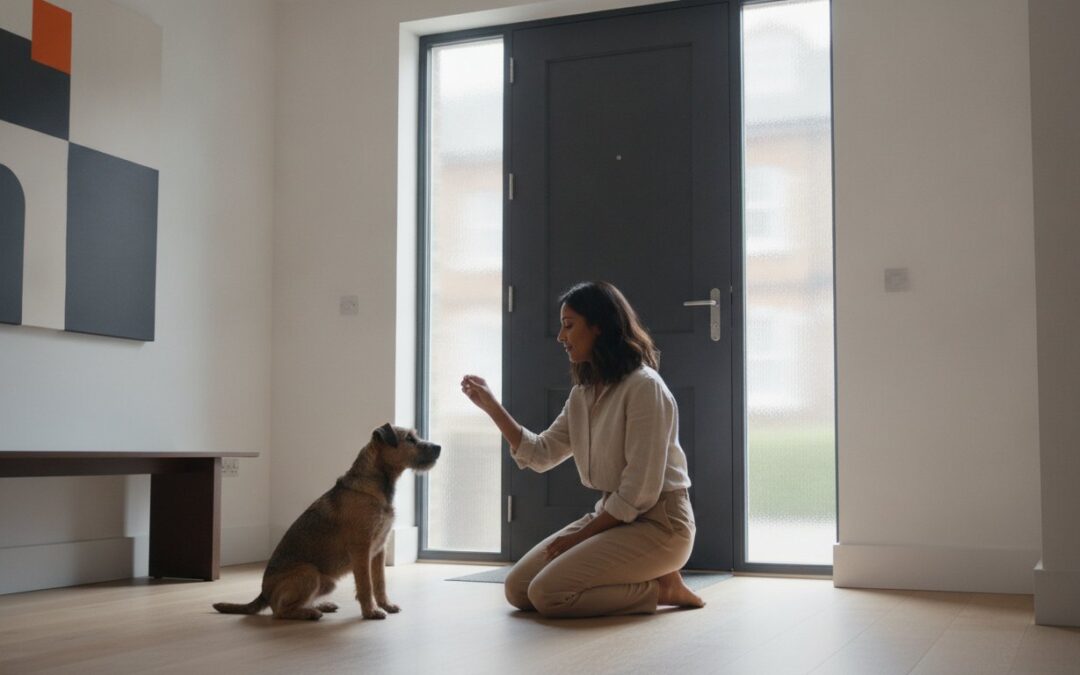
Did you know that persistent dog barking is the number one noise irritation for 55% of people in the UK? If you live in a busy borough, mastering how to stop dog barking at the door London style is about more than just peace and quiet; it’s about maintaining your wellbeing and your relationship with those around you. It’s incredibly draining to feel your heart race every time the letterbox rattles or a delivery driver approaches. You want your home to be a sanctuary, but instead, it feels like you’re constantly on edge, waiting for the next outburst.
We understand that you’re looking for a way to regain control without resorting to outdated, forceful punishments that damage your bond. You can transform this reactive cycle into a moment of calm confidence by focusing on your dog’s internal emotional state rather than just their outward actions. This guide explores ethical, urban-focused training methods designed to address the root of your dog’s anxiety. We’ll provide a clear, step-by-step path toward a quieter, more harmonious household where the doorbell is no longer a trigger for chaos.
Key Takeaways
- Understand the psychological distinction between alert and territorial barking to better support your dog’s specific emotional needs.
- Identify the ‘Orient-Assess-React’ sequence to help you intervene before your dog reaches a state of high arousal.
- Implement immediate management strategies on how to stop dog barking at the door London homes frequently experience, such as using visual barriers.
- Learn how to establish a high-value ‘Place’ command that offers your dog a structured, calm alternative to charging the entrance.
- Discover the long-term benefits of bespoke 1-to-1 behavioural consultations that focus on the unique challenges of high-density urban living.
Why Your London Dog Barks at the Door: Understanding the Trigger
Barking is a natural, evolutionary form of communication. It is a tool your dog uses to signal changes in their environment. However, in a high-density city, this natural instinct often tips into over-arousal. When you are researching how to stop dog barking at the door London homes present a specific set of auditory challenges that can make a dog feel they are under constant siege. Understanding why the barking happens is the first step toward a calmer home. We usually categorise this behaviour into two main types: alert barking and territorial barking.
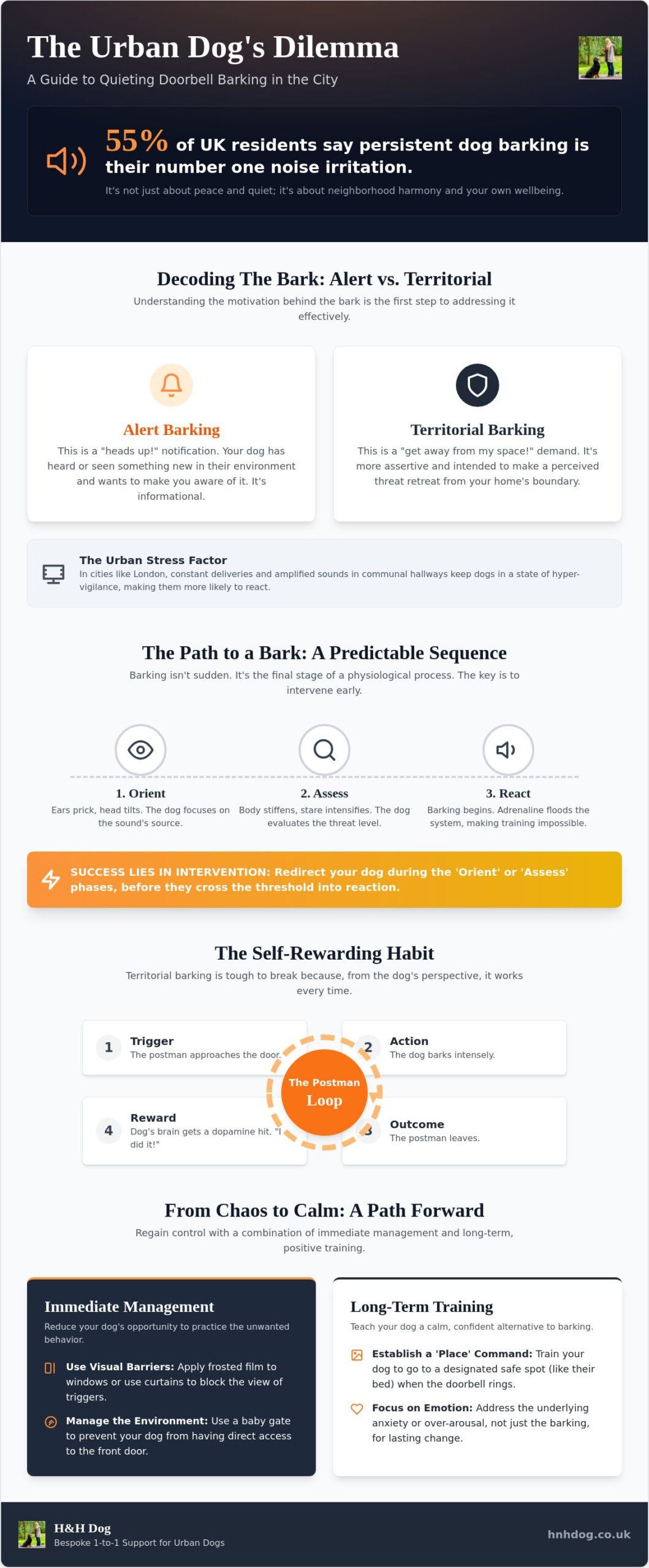
Alert barking is essentially a “heads up” notification. Your dog hears a noise and wants you to know something has changed. Territorial barking is more assertive; it is a “get away from my space” demand. The Science of the Bark shows that domestic dogs have developed these vocalisations specifically to interact with humans, unlike the more limited repertoire of wolves. In the narrow, often tiled hallways of London Victorian conversions or modern apartment blocks, these sounds are amplified. This “echo chamber” effect doesn’t just bother your neighbours; it intensifies your dog’s own reaction as the sound bounces back at them, creating a feedback loop of noise and adrenaline.
Many owners instinctively shout “Quiet!” or “Stop it!” when the barking starts. From your dog’s perspective, you aren’t providing a command. You are simply barking along with them. This social facilitation makes the dog believe the “threat” at the door is significant enough that even the pack leader is shouting. Instead of de-escalating the situation, your vocal intervention often validates their decision to bark in the first place.
The Urban Stress Factor
Living in London means dealing with a relentless delivery culture. Between Amazon parcels, Deliveroo riders, and grocery drop-offs, the communal areas of your building are rarely silent. These are “micro-triggers” that happen dozens of times a day. For a dog, the sound of footsteps in a communal hallway is often indistinguishable from someone approaching your specific front door. This constant stream of stimuli keeps many urban dogs in a state of hyper-vigilance, where their nervous system never truly gets a chance to reset between events.
Fear vs. Protection
It is vital to distinguish whether your dog is acting as a guardian or if they are actually frightened. A dog “guarding” the door often has a stiff posture and forward-leaning weight. A fearful dog may bark while backing away or tucking their tail. Both responses trigger a spike in cortisol, the stress hormone, which can take hours to leave the system. Threshold is the specific physiological point where a dog’s nervous system becomes so overwhelmed by stimuli that they can no longer process new information or follow commands. Once your dog has crossed this threshold, they are no longer choosing to be “naughty”; they are simply reacting to a perceived crisis.
The Science of the Bark: The Orient-Assess-React Sequence
Barking isn’t a random, sudden outburst. It is actually the final step in a predictable physiological sequence. To master how to stop dog barking at the door London owners must learn to read the subtle body language that precedes the first sound. This sequence follows four distinct stages: orienting to the sound, assessing the level of threat, deciding to act, and finally, reacting. When you see your dog’s ears prick or their head tilt toward the hallway, they have already entered the ‘Orient’ phase. If their body stiffens and they stare intensely at the letterbox, they are ‘Assessing’ the situation.
Most training attempts fail because owners wait until the ‘React’ stage to intervene. By the time your dog is mid-bark, their heart rate has spiked and their brain is flooded with adrenaline. They are no longer in a cognitive state where they can process commands or learn new behaviours. The secret to success lies in interception. You must catch your dog during the ‘Orient’ or ‘Assess’ phases. By redirecting their attention before they decide to bark, you prevent the emotional escalation that makes the habit so hard to break.
The ‘Postman’ Reinforcement Loop
Territorial barking is incredibly difficult to stop because it is self-rewarding. Think about the daily visit from the postman. Your dog hears footsteps, barks loudly, and then the postman leaves. In your dog’s mind, their barking successfully chased the intruder away. This “victory” triggers a release of dopamine, which feels good and reinforces the behaviour. They believe they’ve saved the family from a threat. Scolding your dog in this moment rarely works; it often just adds more noise and stress to an already tense situation. Understanding the various reasons dogs bark helps us realise that our dogs are acting on instinct, not spite. To break this loop, we have to prove that barking isn’t what makes the person leave.
Building a New Emotional Association
We want to replace the feeling of suspicion with a feeling of pleasant anticipation. This is called counter-conditioning. The goal is to make the sound of the doorbell a cue for something wonderful, rather than a signal for a defensive standoff. When the door triggers a high-value reward, like a small piece of cheese or a favourite toy, the brain’s wiring begins to change. Consistency across the entire household is vital. If one person shouts while another offers a treat, the dog remains in a state of confusion. Because every home layout is different, a tailored 1-to-1 dog training session can be the most effective way to identify the exact micro-moments where your dog is most receptive to learning.
Immediate Management Strategies for London Flats and Houses
Training is a marathon, not a sprint. While you work on long-term behavioural changes, you must prioritise management. Every time your dog barks at the door, they are practising the habit and reinforcing their own stress. Management isn’t about fixing the problem immediately; it’s about preventing the rehearsal of unwanted behaviour while you build new skills. If you want to master how to stop dog barking at the door London living requires a proactive approach to your dog’s environment.
Visual barriers are often the easiest win for urban owners. If your dog can see shadows moving through a glass panel or silhouettes under a door, they remain on high alert. Frosted window film is a cost-effective, stylish solution for London flats that blocks the visual trigger without losing natural light. You should also consider moving your dog’s bed away from the front door area. Proximity increases the intensity of the reaction. By creating physical distance, you lower the perceived threat level and help your dog feel more secure in their personal space.
Auditory masking is equally vital in high-density living. A white noise machine or a radio playing soft music can effectively drown out the sound of footsteps in the communal hallway. This reduces the number of micro-triggers your dog hears throughout the day. We also recommend the ‘Air-Lock’ method. This involves using baby gates to prevent your dog from physically rushing the door. This physical boundary keeps them in a calmer part of the home when the doorbell rings, preventing the frantic, high-arousal charge that usually precedes a barking episode.
Managing the Communal Hallway
In a London flat, the communal hallway is often a source of constant anxiety. Your dog doesn’t know that the person walking past is just your neighbour from the floor above. They only hear a potential intruder near their territory. Keeping the entry zone a low-excitement area helps lower their baseline stress. Avoid playing high-energy games or having intense interactions near the front door. A dog that is physically and mentally satisfied is often more resilient to these triggers. You can learn more about balancing urban activity in our guide on Professional Dog Walking in London: The Ultimate Guide for Urban Pups.
Delivery Driver Protocols
Our modern delivery culture is a major trigger for territorial dogs. Using a simple “Please Do Not Knock” sign can give you the breathing room needed during the early stages of training. If possible, create a delivery station away from the door, such as a parcel box. This reduces the direct proximity of the person at the door. Ultimately, we want to teach the dog that the doorbell is a cue to go to their designated ‘place’ rather than rushing the entrance. This shift in focus replaces a reactive habit with a functional, calm task that you can reward consistently.
Step-by-Step Training: From Barking to ‘The Settle’
While management stops the habit from worsening, active training gives your dog a functional alternative to the chaos. We want to replace the frantic rush to the letterbox with a calm, purposeful movement toward a designated ‘Place’. This isn’t just about distraction; it’s about teaching your dog a specific job to do when the doorbell rings. If you are researching how to stop dog barking at the door London homes present unique challenges that require a structured approach respecting the dog’s emotional threshold.
To build this new habit, follow these progressive steps:
- Step 1: Establish a high-value ‘Place’, such as a bed or specific mat, positioned well away from the front door. Reward your dog heavily just for being there.
- Step 2: Begin desensitising the triggers by playing doorbell sounds at a very low volume or gently knocking on internal walls. If your dog remains calm, reward them immediately.
- Step 3: Reward the ‘choice’ to remain calm. When the trigger happens and your dog looks toward the door but chooses to stay on their mat, that is the golden moment for a high-value treat.
- Step 4: Gradually proof the behaviour with real visitors. Start with a friend who knows to wait patiently while you work through the process at a pace your dog can handle.
The ‘Settle’ and ‘Quiet’ Cues
Teaching a ‘Quiet’ cue is most effective when you reward the split-second of silence between barks. Use a marker word like ‘Yes’ or a clicker to pinpoint that exact moment of calm. This helps the dog understand that silence, not noise, earns the reward. For a deeper dive into these foundational skills, explore The Ultimate Guide to Dog Training in North London: Expert Tips for Urban Pups.
When Treats Aren’t Enough
If your dog is so aroused that they refuse high-value food, they have crossed their threshold. At this point, the brain’s learning centre has effectively shut down. You must increase the distance between your dog and the door to lower their stress level. If a session becomes too intense, it’s better to reset and try again later when they are in a calmer state. For those dealing with complex reactions that feel unmanageable, a 1-to-1 dog training session provides the bespoke support needed to navigate these high-pressure moments safely.
Bespoke 1-to-1 Support with H&H Dog
While self-guided training provides a strong foundation, complex behavioural issues often require a professional eye to achieve lasting results. H&H Dog brings over 20 years of professional industry experience to your living room, specialising in the unique challenges of urban dog behaviour. When you are struggling with how to stop dog barking at the door London environments often require a more nuanced approach than a generic training class can offer. Because the trigger is rooted in your specific hallway and front door, addressing the problem where it happens is the most effective path forward.
A professional assessment is vital because it identifies the underlying motivation behind the noise. Is your dog truly territorial, or is their reaction a manifestation of deep-seated fear? Distinguishing between these emotional states allows us to apply the correct methodology without causing further stress. Our commitment to non-coercive, welfare-first methods ensures that we never use punishment to suppress a bark. Instead, we work as your mentor to build a relationship based on mutual understanding and trust, ensuring your dog feels safe and supported within their home.
Personalised Training Plans
Every London home has a different layout, from narrow Victorian conversions to modern open-plan apartments. We tailor every session to your specific environment, identifying micro-triggers that might be unique to your building’s communal areas. This bespoke approach is particularly beneficial for nervous dogs and rescue dogs who may find the transition to city life overwhelming. Whether you are in North West London or Watford, our goal is to provide a customised roadmap that respects your dog’s individual pace. For more information on how professional guidance can transform your pup’s life, read our Dog Behaviourist London: A Comprehensive Guide to Expert Support for Urban Pups.
Start Your Journey to a Quieter Home
During your first behavioural consultation, we conduct a thorough analysis of your dog’s history, health, and current emotional state. You won’t receive a one-size-fits-all list of instructions. Instead, you’ll gain a deep understanding of why your dog reacts the way they do and a clear, actionable plan to change that response. We proudly serve Watford, North London, and the surrounding areas, bringing expert mentorship directly to your doorstep. You don’t have to manage this alone; expert help is available to help you regain the peace of your home environment. Book your 1-to-1 behavioural consultation today.
Reclaiming a Peaceful Home Environment
Transforming your dog’s relationship with the front door is a journey that begins with understanding their internal emotional state. By moving away from reactive scolding and focusing on the Orient-Assess-React sequence, you can intercept stress before it escalates into a barking episode. Whether you are implementing environmental management in a busy flat or mastering the ‘Place’ command, consistency is the key to long-term success. Learning how to stop dog barking at the door London living requires patience, but the result is a quieter, more harmonious sanctuary for both you and your pet.
If you feel overwhelmed by the process, professional mentorship can provide the steady hand you need. With over 20 years of professional industry experience, we specialise in urban dog behaviour across North London and Watford. Our compassionate, non-coercive training methods are designed to build a stronger bond while solving complex behavioural issues in the comfort of your own home. You don’t have to navigate these challenges alone. Book a Bespoke 1-to-1 Training Session with H&H Dog and start your journey toward a calmer, more confident life together. Your more peaceful home is well within reach.
Frequently Asked Questions
How long does it take to stop a dog from barking at the door?
Most owners see a noticeable improvement within four to eight weeks of consistent, daily practice. The exact duration depends on how long the habit has been established and how effectively you can manage the environment to prevent the dog from “practising” the behaviour between training sessions.
Are bark collars or ultrasonic devices a good idea for London flats?
We strongly advise against using aversive tools like bark collars or ultrasonic devices. These methods rely on discomfort or fear, which often increases a dog’s underlying anxiety. In the close quarters of a London flat, this added stress can lead to other behavioural issues or damage the bond you share with your pet.
My dog only barks at the postman; why is that?
This happens because of a powerful reinforcement loop. Your dog hears the postman, barks, and then the postman leaves. In your dog’s mind, their barking successfully chased the intruder away. This perceived victory releases dopamine, making the behaviour feel rewarding and necessary to protect the home.
Can I train an older dog to stop barking at the door?
Yes, dogs can learn new behaviours at any age. While an older dog may have a more deeply ingrained habit, they are still capable of rewiring their emotional responses through counter-conditioning. It simply requires a little more patience and a high frequency of rewards to replace the old habit with a new, calmer one.
Should I ignore my dog when they bark at the door?
Ignoring the barking is rarely effective because the behaviour is self-rewarding. The dog feels they are doing a job, so your silence doesn’t provide the feedback they need. Instead of ignoring them, you should provide a calm redirection to a “place” or mat, giving them a functional alternative to the noise.
What is the best way to socialise a puppy to the doorbell?
The best approach is to create a “treat alert” association. Ring the bell at a low volume and immediately give your puppy a high-value treat before they have a chance to react. You want them to believe the doorbell is a signal that something wonderful is about to happen, preventing the development of a defensive response.
How do I stop my dog from barking at people in the communal hallway?
When you are learning how to stop dog barking at the door London apartment living requires, management is your first line of defence. Use white noise machines to mask the sound of footsteps and reward your dog for remaining calm when they hear faint noises. This helps lower their baseline sensitivity to communal activity.
When should I call a professional dog behaviourist for barking issues?
You should call a professional if the barking is accompanied by signs of intense fear, such as trembling or retreating, or if your current training efforts have stalled. A 1-to-1 consultation allows for a bespoke assessment of your dog’s emotional state and the specific triggers within your home layout.