

The doorbell rings, and instead of a single alert bark, your hallway erupts into a cacophony of competitive noise that feels impossible to quiet. It’s a common scene in many UK homes where the dream of a playful pack has been replaced by the reality of managed chaos. Learning how to manage a multi-dog household requires more than just patience; it demands a shift from viewing your dogs as a single unit to advocating for them as individuals. You likely feel the weight of resource guarding during mealtimes or the nagging guilt that you aren’t providing enough one-to-one focus for each unique personality.
We understand that your goal is a home defined by calm, structured routines rather than constant refereeing. This guide provides a professional, evidence-based roadmap to restoring balance through environmental adjustments and ethical training strategies. You’ll discover how to implement clear structures for feeding and play, ensuring every dog feels secure and seen. We’ll explore how to cultivate a quiet environment where your dogs can truly relax in each other’s presence, transforming your household into the harmonious sanctuary you originally envisioned.
Key Takeaways
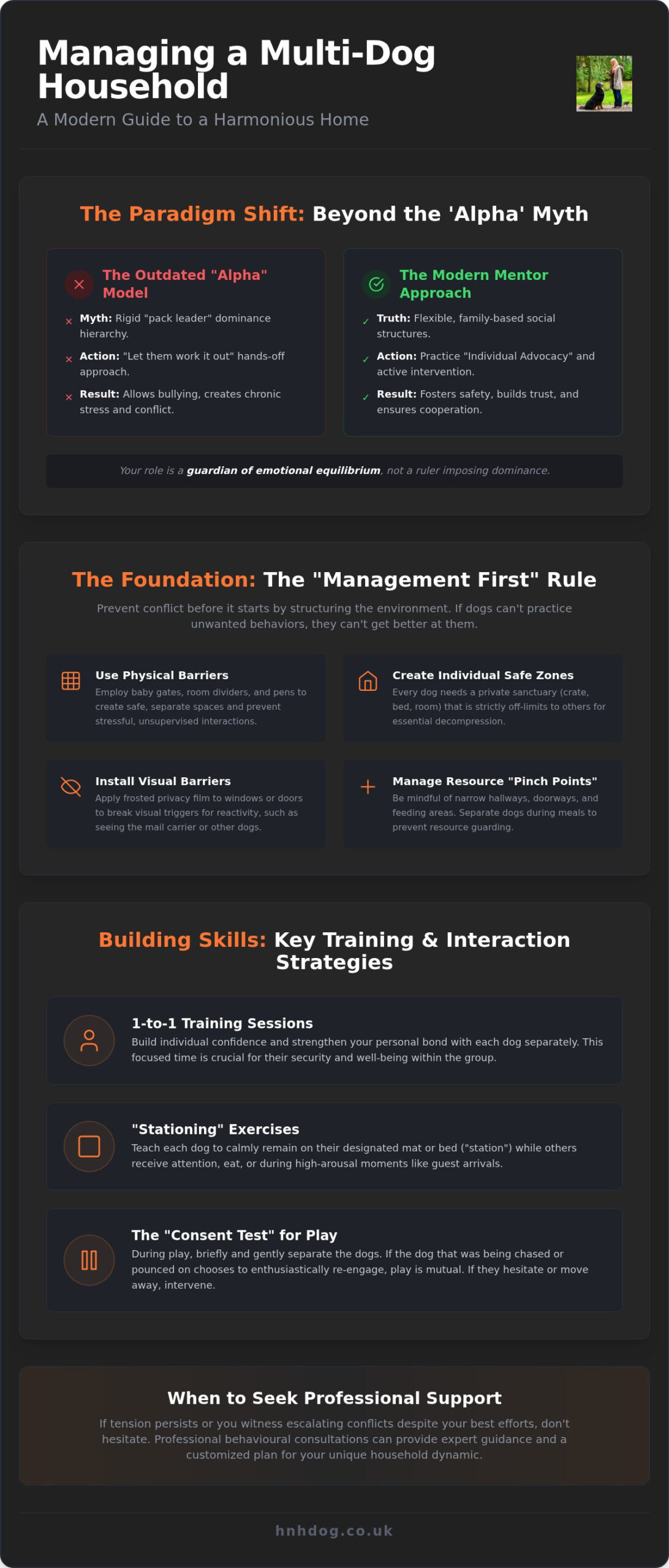
- Move beyond the “alpha” myth by understanding that domestic dogs thrive on a family-based social structure where you act as a mentor rather than a pack leader.
- Implement the “management first” rule to prevent conflict before it starts, using safe zones and barriers to help you learn how to manage a multi-dog household with less stress.
- Build individual confidence through 1-to-1 training sessions and “stationing” exercises that teach each dog to remain calm while others receive attention.
- Use the “consent test” to monitor play and high-arousal situations, ensuring interactions remain mutually enjoyable and respectful for all temperaments involved.
- Recognise when your household could benefit from professional behavioural consultations or group walking to provide much-needed individual outlets and decompression.
The Multi-Dog Dynamic: Beyond the ‘Alpha’ Myth
The traditional view of the “alpha” or “pack leader” has long been debunked by modern canine science. Rather than a rigid, linear hierarchy where dogs fight for the top spot, domestic dogs form social structures that more closely resemble human families. These dynamics are flexible and based on cooperation rather than conflict. When you are learning how to manage a multi-dog household, it’s vital to abandon the dangerous advice of “letting them work it out.” This hands-off approach often allows more confident dogs to inadvertently bully more sensitive ones, leading to chronic stress and fractured relationships. It’s an outdated management strategy that places an unfair emotional burden on your pets.
Instead, we practice Individual Advocacy. This means you actively intervene to ensure every dog feels safe and respected within the group. If one dog is being pestered while trying to rest, you are the one who steps in to provide a break. By protecting each dog’s peace, you prevent the build-up of resentment and the risk of defensive aggression. You aren’t just a referee; you are a guardian of the household’s emotional equilibrium.
Understanding Canine Social Bonds
Dogs within a group develop dyadic relationships, which are unique one-on-one bonds that exist independently of the rest of the pack. The way your senior Terrier interacts with your young Labrador will be entirely different from how that Labrador interacts with a new puppy. These bonds are shaped by age, breed traits, and individual temperaments, requiring a customised approach for each pair. Social contagion is the phenomenon where the emotional state or behaviour of one dog, such as frantic barking at the window, is instantly mirrored and amplified by the others.
The Role of the Human Mentor
Shifting your perspective from a “Pack Leader” to a “Consistent Mentor” significantly reduces household anxiety. A mentor provides guidance and sets clear, kind boundaries that make life predictable for everyone. When outcomes are predictable, the need for dogs to compete for resources or your attention diminishes. Your own emotional state is a cornerstone of this dynamic. If you are rushed or frustrated, the group’s collective arousal levels will rise in response. By maintaining a calm, steady presence, you act as a thermal regulator for the home’s emotional climate, helping your dogs feel secure enough to relax. Understanding these psychological foundations is the first step in discovering how to manage a multi-dog household with genuine empathy and professional skill.
Essential Environmental Management for a Peaceful Home
The cornerstone of a balanced home is the “Management First” rule. Simply put, if your dogs cannot practice unwanted behaviours, they cannot get better at them. In many London homes, where open-plan living and narrow hallways are common, learning how to manage a multi-dog household requires a thoughtful approach to physical space. By using baby gates, room dividers, or even strategically placed furniture, you create a controlled environment that prevents conflict before it starts. This isn’t about restriction; it’s about providing a structured framework where every animal feels safe from unexpected intrusion.
Vertical space is a frequently overlooked tool for harmony. For smaller or more timid dogs, providing access to raised platforms or sturdy furniture where they can observe the room from a height can significantly reduce their anxiety. Likewise, visual barriers are essential for managing reactivity. If your dogs erupt when the post arrives, applying frosted privacy film to the lower half of your front door can break the visual trigger, instantly lowering the household’s collective arousal levels.
Creating Individual Safe Zones
Every dog needs a sanctuary that is strictly off-limits to the others. These safe zones should be viewed as decompression areas rather than places of isolation. When you introduce a dog to their private space, use high-value rewards to build a positive association, ensuring they see it as a choice rather than a punishment. This advocacy ensures that even in a busy home, each individual has a guaranteed spot to rest without the pressure of social interaction. If you notice tension rising despite these changes, our behavioural consultations can help you tailor these zones to your specific property layout.
Managing Resource Access Points
Conflict often occurs at “pinch points,” such as narrow doorways or the kitchen entrance during meal preparation. To master how to manage a multi-dog household, you must identify these high-traffic areas and implement clear protocols. Feeding should ideally occur in separate rooms or behind barriers to eliminate the need for guarding. When it comes to high-value items like long-lasting chews, the rule is simple: if the chews are out, the dogs are separated. This proactive stance removes the motivation for competition, allowing each dog to enjoy their resource in peace without looking over their shoulder.
Structured Routines and Training Individual Skills
Training is the vital glue that holds a managed environment together. While it’s tempting to train everyone simultaneously to save time, dogs struggle to process new concepts when distracted by the presence of their housemates. Mastering how to manage a multi-dog household requires a commitment to individual education. By establishing a direct line of communication with each dog, you reduce the confusion and frustration that often leads to heightened group arousal. This clear, one-on-one dialogue ensures that each dog knows exactly what is expected of them, regardless of what the others are doing.
The 1-to-1 Training Advantage
Short, focused bursts of individual attention are far more productive than an hour of group chaos. Just ten minutes of dedicated focus allows you to tailor your teaching to each dog’s unique temperament and learning speed. For households with a new addition, investing in puppy training is essential to ensure your youngest member develops their own identity and skills. You should focus on building “default” behaviours, such as offering eye contact when unsure; this creates a much calmer collective response even when the whole group is present in the room.
Managing the ‘Doorway Dash’
The exit from your home is a frequent flashpoint for excitement and physical crowding. To keep this transition safe and calm, implement a “wait your turn” rule. You should prepare each dog individually, perhaps asking them to wait behind a baby gate or on a station while you leash their companion. Use specific name cues to signal whose turn it is to move through the threshold. A reliable sit-stay serves as a vital functional management tool that prevents physical crowding and competitive rushing at the doorway. This predictable sequence lowers the stakes and keeps adrenaline levels manageable for everyone involved.
Stationing is perhaps the most transformative skill in a multi-dog home. This involves teaching each dog to remain on their designated bed while you handle, groom, or train another. This creates a structured routine where no one feels the need to compete for your proximity. Similarly, providing separate walks is a powerful way to build individual confidence. For reactive or younger dogs, being out without the “pack” allows them to process the world at their own pace without feeding off the arousal of their housemates. These individual outings are a high form of advocacy that ensures every dog’s emotional needs are prioritised.
Managing High-Arousal Situations: Play, Food, and Visitors
High-arousal moments are the ultimate test of your management systems. When adrenaline spikes, even the most bonded pairs can experience friction. A common challenge in learning how to manage a multi-dog household is handling redirected aggression. This occurs when dogs become fixated on an external stimulus, such as a cat in the garden or a person at the door, and turn their frustration onto each other because they can’t reach the target. Recognising these triggers early allows you to intervene before the tension boils over, protecting the emotional safety of the group. It’s about being proactive rather than reactive.
Safe Multi-Dog Play Dynamics
Healthy play should be reciprocal and fluid. You should look for “self-handicapping,” where a larger or stronger dog intentionally limits their power to keep the game fair. Signs of over-arousal include a change in the pitch of vocalisations, stiff body language, or one dog constantly “pinning” the other without a break. To ensure everyone is having fun, use the “Consent Test.” Gently hold back the dog you suspect is the instigator; if the other dog immediately moves away to sniff or rest, the play was one-sided. If they move back in for more, the game is likely mutual. Implementing mandatory breaks helps keep adrenaline at a manageable level. Use a 3-second rule for intense interactions: pause the play for three seconds, and only let them resume if both dogs remain calm.
Feeding Time Without the Friction
Food is a primary resource that can quickly trigger competitive instincts. Free-feeding is often a recipe for disaster in multi-dog homes because it creates a constant state of low-level vigilance. Instead, use structured mealtimes where every dog has a “job” to do. Slow feeders and food puzzles are excellent for keeping dogs focused on their own task rather than what’s in their neighbour’s bowl. While you might eventually transition to supervised communal feeding, this should only happen once individual boundaries are rock-solid. If your household is struggling with rising tension during these high-stakes moments, our behavioural consultations provide the bespoke support needed to restore peace.
When visitors arrive, the collective excitement can easily spiral into a barking frenzy. By directing each dog to their designated station before opening the door, you prevent the physical crowding that often leads to scuffles. This protocol ensures that the arrival of a guest is a non-event rather than a trigger for chaos. Understanding these arousal patterns is a fundamental part of knowing how to manage a multi-dog household effectively and ethically, ensuring every dog feels secure during the busiest parts of the day.
When to Seek Professional Support in London
Sometimes, despite your best efforts with environment management and structured routines, the atmosphere in your home remains strained. Recognising when you need the help of a dog behaviourist London is a sign of strength and advocacy, not a failure of your care. Professional intervention provides a fresh, objective perspective on complex social dynamics that are often difficult to see when you’re living in the middle of the daily routine. By developing a long-term “Harmony Plan” with a certified expert, you can move from constant firefighting to a state of sustainable peace.
Red Flags: When ‘Grumbles’ Become Dangerous
It is vital to distinguish between a “warning snap” and an actual intent to cause harm. A snap that makes no contact is often a dog’s way of communicating a desperate plea for space. If you punish a growl, you’re removing a dog’s early warning system. This can lead to a dog that bites without any prior signal because they’ve learned that communication is forbidden. Another serious red flag is the “Bully-Victim” dynamic. This occurs when one dog is constantly suppressed, unable to move freely or access resources without looking for permission from a housemate. If you notice persistent tension, frequent hiding, or “staring matches” between your dogs, you should seek specialist guidance immediately.
The Role of Professional Outlets
Managing the logistics of how to manage a multi-dog household in a busy city like London or Watford can be exhausting. Professional dog walking offers more than just exercise; it provides each dog with a vital social outlet away from their home territory. Group walks with H&H Dog allow individuals to decompress and practice social skills in a neutral environment, reducing the pressure they feel within the four walls of your home. Similarly, mobile dog grooming is a stress-free way to maintain multiple coats without the logistical nightmare of transporting several dogs to a busy salon. This bespoke, door-to-door service keeps arousal levels low for everyone.
A harmonious home is built on a foundation of mutual respect and tailored support. If you feel the tension in your home is rising, don’t wait for a serious incident to occur. Book a behavioural consultation with our London experts today to start your journey toward a quieter, more balanced life for you and your dogs.
Restoring the Emotional Balance of Your Pack
Transforming a home from a place of competitive tension into a sanctuary of calm is a deeply rewarding process. By applying the principles of individual advocacy and environmental management, you’ve established the framework for a more respectful shared life. Remember that learning how to manage a multi-dog household is not about enforcing a rigid hierarchy; it’s about becoming a consistent mentor who ensures every dog feels safe and valued. When you focus on their internal emotional states rather than just their outward actions, lasting harmony follows naturally.
If you’re ready to move beyond the stress of barking and resource guarding, we’re here to provide professional, personalised support. Drawing on 20 years of expert experience in North London and Watford, we offer evidence-based, force-free solutions tailored to your unique household dynamic. Book a Behavioural Consultation for Your Multi-Dog Home to receive the mentorship you and your dogs deserve. A quiet, structured, and joyful home is well within your grasp, and with the right guidance, progress is inevitable.
Frequently Asked Questions
Is it better to have two dogs of the same or opposite sex?
Generally, opposite sexes tend to have fewer social conflicts, but individual temperament and socialisation history are the most significant factors. In multi-dog households, matching energy levels and social styles often matters more than biological sex. You should observe how dogs interact with various temperaments before making a decision. This approach ensures you are making an ethical choice based on personality rather than outdated assumptions about pack gender dynamics.
How do I stop my older dog from being annoyed by the new puppy?
You must advocate for your senior dog by providing them with puppy-free safe zones and ensuring they aren’t forced to endure constant pestering. Use baby gates to separate them when the puppy is over-aroused and maintain your older dog’s existing routines. Professional 1-to-1 training can help the puppy learn calm behaviours around their elder, reducing the social pressure on your senior pet. This protects the emotional bond between your dogs.
What should I do if my dogs start fighting over a toy?
Immediately remove the source of conflict and separate the dogs to allow their adrenaline levels to drop. When you are learning how to manage a multi-dog household, it is essential to manage high-value resources proactively. If toy guarding persists, keep toys in a cupboard and only allow them during supervised, separate play sessions. This prevents the cycle of guarding from becoming a habit, ensuring your home remains a safe environment for all.
Can I walk two dogs at the same time if they are both reactive?
Walking two reactive dogs simultaneously is rarely advisable as it often leads to social contagion, where one dog’s barking triggers the other’s. This makes management nearly impossible and increases stress for everyone involved. Instead, walk them separately to focus on individual training. Our professional group walking services in London can provide a structured social outlet for one dog while you work with the other, ensuring each animal’s needs are met.
How do I ensure each dog gets enough individual attention?
Schedule dedicated 10-minute blocks of one-to-one time for each dog every day, focusing on training, play, or grooming. This bespoke attention strengthens your individual bond and reduces the need for dogs to compete for your proximity. Providing separate outings, such as a solo walk or a trip to a local pet-friendly shop, ensures each dog feels seen as an individual rather than just part of a pack. It fosters deep mutual respect.
Should I feed my dogs in the same room or separately?
We strongly recommend feeding dogs in separate rooms or behind physical barriers to eliminate the motivation for resource guarding. Even bonded dogs can feel vulnerable while eating, and physical separation allows them to ingest their food without looking over their shoulder. This structured routine is a cornerstone of how to manage a multi-dog household safely, ensuring mealtimes remain a calm and positive experience. It removes the stress of competition from their daily lives.
What are the signs that my dogs are actually playing and not fighting?
Healthy play is characterised by reciprocal roles, loose body language, and frequent play bows. You should see self-handicapping, where the stronger dog intentionally holds back to keep the game engaging for the other. If the play becomes stiff, silent, or one-sided, it is time to intervene. Use the consent test mentioned earlier in this guide to verify that both dogs are truly enjoying the interaction. This ensures play remains a safe social outlet.
How long does it typically take for dogs to settle into a multi-dog routine?
Most dogs require approximately three to six months to fully adjust to a new multi-dog routine, though this varies based on individual temperaments. The 3-3-3 rule is a helpful guide: three days to decompress, three weeks to learn routines, and three months to feel truly at home. Consistent, predictable management and professional behavioural consultations can significantly smooth this transition, helping your dogs build the confidence they need to relax in each other’s presence.